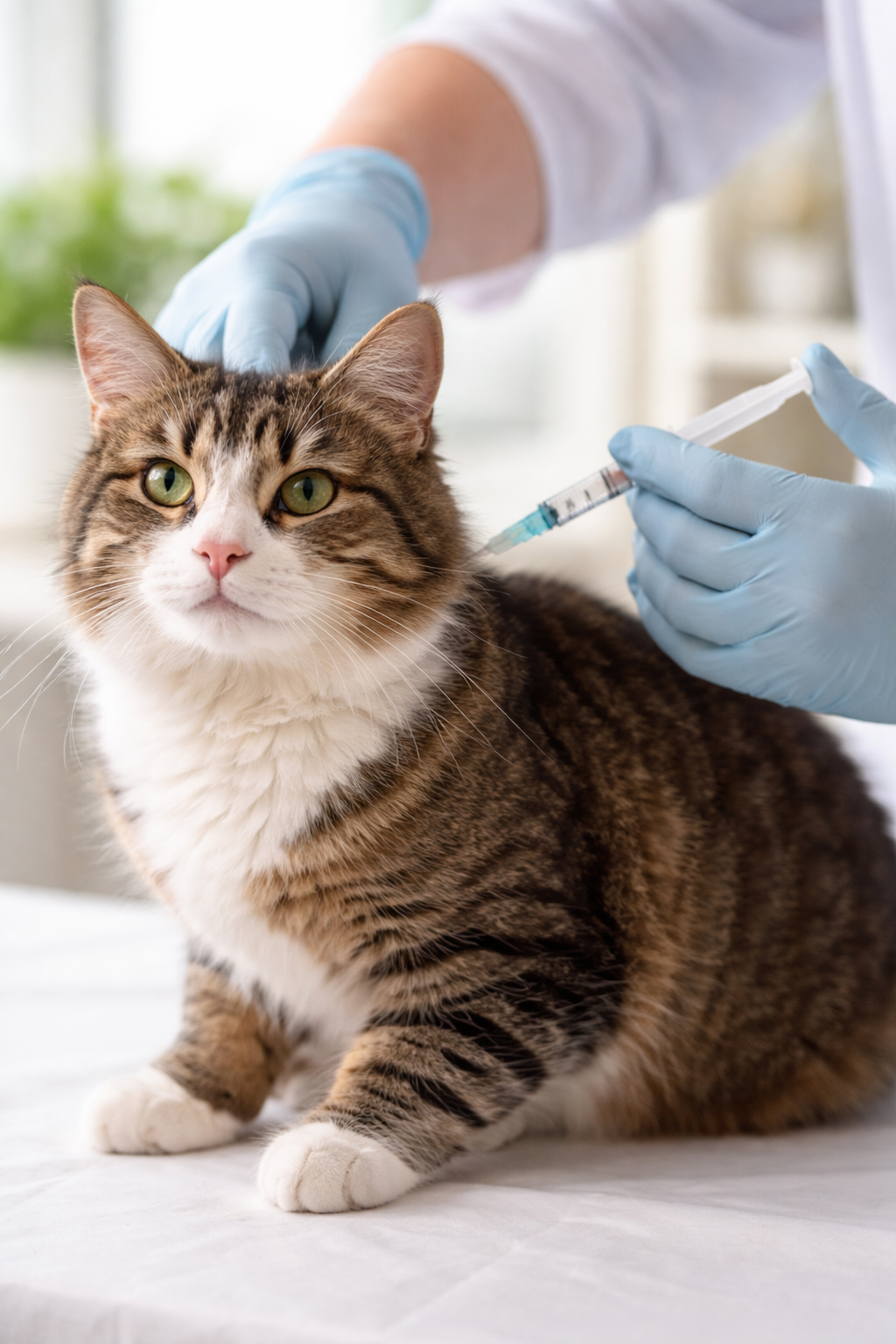
If you are trying to figure out the right cat vaccination schedule in 2026, you are not alone. Most cat owners are searching for the same things: kitten vaccine schedule, indoor cat vaccines, FVRCP vs rabies, FeLV vaccine for cats, adult cat booster schedule, and what to do if a cat vaccine is late. The problem is that a lot of content online is either too shallow, too generic, or written as if every cat lives the exact same life. That is nonsense. A strictly indoor senior cat, a newly adopted rescue kitten, and a young cat that may slip outside do not all carry the same risk.
The smartest way to understand cat vaccines is not to memorize a random list of shots. It is to understand three things: which vaccines are core, when maternal antibodies can interfere with early kitten shots, and how your cat’s lifestyle changes the plan. Once you understand those three, the entire vaccine schedule makes a lot more sense.
Why the 2026 Cat Vaccination Schedule Still Matters So Much
Vaccination is not just a box to tick at the vet. It is one of the main reasons kittens survive high-risk early months and adult cats avoid preventable infectious disease. The core feline vaccines protect against some of the most serious viral illnesses cats face, including feline panleukopenia, feline herpesvirus, and feline calicivirus. In many places, rabies is also treated as essential because of public health risk and local legal requirements.
What trips owners up is timing. A kitten is not born with a clean, empty immune system. Maternal antibodies can temporarily protect a kitten, but they can also interfere with vaccine response. That is why kitten vaccines are not usually a one-and-done event. The schedule is spread across multiple visits because there is a moving window where one kitten may respond well while another may still have enough maternal antibody to blunt the effect of the shot.
This is exactly why shallow articles that say “vaccinate at 8 weeks and 12 weeks and you’re done” are weak. A proper 2026 guide needs to explain why the series continues through at least 16 weeks of age, why some clinicians discuss an additional follow-up later in the first year, and why adult booster timing should be based on both risk and product rules.
Quick Answer: Typical Kitten Vaccination Schedule in 2026
If you want the fast version first, this is the general structure many cat owners are actually looking for when they search “kitten vaccine schedule 2026” or “when do kittens need shots.”
- 6–8 weeks: First wellness exam, parasite plan, and in some cases the first FVRCP vaccine depending on the kitten’s background and risk.
- 8–9 weeks: Common timing for the first routine FVRCP dose if it was not given earlier.
- 11–12 weeks: Next FVRCP booster; FeLV may begin here or around this period depending on the kitten’s risk and your veterinarian’s protocol.
- 12–16 weeks: Rabies is often given in this window, depending on local law and the vaccine product used.
- 15–16+ weeks: Final core kitten FVRCP dose is typically given at 16 weeks or older.
- Later in the first year: Booster planning continues. Some protocols include an additional follow-up for core protection later in kittenhood or around the one-year mark.
That is the big picture, but the details matter. The exact weeks can shift based on where you live, which product your clinic uses, whether the kitten came from a shelter, whether your cat has exposure to other cats, and whether your local laws require a specific rabies timeline.
What Is FVRCP and Why Is It the Backbone of a Cat Vaccine Schedule?
If you search for “cat distemper shot,” “kitten core vaccines,” or “what is FVRCP,” you are really asking about the same backbone vaccine group. FVRCP is the standard short form many clinics use for a combination vaccine that targets:
- Feline viral rhinotracheitis (usually linked to feline herpesvirus)
- Calicivirus
- Panleukopenia (often called feline distemper)
These are not minor illnesses you shrug off. Panleukopenia in particular can be devastating, especially in kittens. Herpesvirus and calicivirus are also major reasons cats develop severe upper respiratory disease, eye problems, oral inflammation, poor appetite, and lingering stress-related flare-ups.
That is why FVRCP sits at the center of nearly every reliable kitten vaccination plan. The goal is not just to “give the shot.” The goal is to time the series so that the kitten develops dependable immunity once maternal antibody protection fades enough for the vaccine to work properly.
Why Kittens Need More Than One Vaccine Visit
This is one of the most misunderstood parts of the topic. Owners often ask, “My kitten already got one shot, why does she need another?” Because one early dose may not be enough. Maternal antibodies are unpredictable. One kitten may be ready to respond strongly at 8 weeks, while another littermate may still have enough maternal antibody to partially block the vaccine.
That is the real reason veterinarians repeat core vaccines every few weeks during early life. The series is designed to reduce the chance that your kitten lands in the worst possible zone: not fully protected by maternal antibodies anymore, but not successfully immunized yet either.
In plain language, the kitten series is not over when you feel impatient. It is over when the immune system has had the right opportunities to respond, including a final core dose at the age where the protection is most likely to “stick.”
Core vs Non-Core Cat Vaccines: What Is the Difference?
This is another thing owners search constantly, and for good reason. Not every cat needs every vaccine, but every cat does need a serious discussion about core vaccines.
Core Cat Vaccines
Core vaccines are the ones considered essential for cats because they protect against severe, widespread, or high-consequence disease. These usually include:
- FPV — feline panleukopenia virus
- FCV — feline calicivirus
- FHV — feline herpesvirus
- Rabies — treated as essential in many regions and often tied to legal requirements
Non-Core or Risk-Based Cat Vaccines
These are not “bad” or “optional junk” vaccines. They are simply more dependent on your cat’s real-world exposure risk. The most important one most owners ask about is:
- FeLV — feline leukemia virus
Other vaccines may be considered in special settings, such as multi-cat environments, shelters, breeding situations, or specific outbreaks. But for the average pet owner, the big practical conversation is usually FVRCP, rabies, and FeLV.
Does My Indoor Cat Really Need Vaccines?
Yes, indoor cats still need vaccines. This is one of the most common English-language search questions for a reason. People hear “indoor-only” and assume “zero risk.” That is lazy thinking.
Even indoor cats can face risk through:
- unexpected escapes through doors, windows, or balconies
- contact with a newly adopted kitten or foster cat
- boarding, travel, or emergency evacuation
- veterinary visits and contaminated carriers or environments
- a lifestyle that changes over time, even if it looks stable today
What indoor status does change is the conversation around risk-based vaccines and long-term booster decisions. It does not erase the need for core protection. A fully indoor cat may have a lower exposure profile, but that does not mean skipping the basics is smart.
If you are specifically wondering about FeLV for an indoor cat, that depends on age, household dynamics, and whether there is any realistic chance of cat-to-cat exposure. Many clinicians are more aggressive about FeLV in kittens and young cats, then reassess once adulthood and lifestyle stability are clearer.
FeLV Vaccine for Cats: Who Actually Needs It?
The FeLV vaccine is one of the most searched and most misunderstood parts of the cat vaccine conversation. Some owners think every cat needs it forever. Others think no indoor cat should ever get it. Both are oversimplified takes.
FeLV is more important when a cat is young, spends time outdoors, lives with cats that go outdoors, joins a multi-cat household, or has an uncertain future lifestyle. It also matters more if you bring new cats into the home, foster, rescue, or cannot guarantee the cat will remain strictly indoors for life.
In practical terms, FeLV is often strongly considered for kittens and younger cats, then reevaluated later. If your cat is a stable, healthy adult with a truly low-risk indoor life, your vet may approach FeLV differently than for a young cat that is still exploring the world or may dash through an open door the second you get too confident.
Rabies Vaccine for Cats: Is It Required?
The honest answer is simple: it depends on where you live, but in many regions rabies vaccination is either legally required or treated as essential because rabies is a fatal zoonotic disease. That means it matters not only for your cat, but for human health too.
This is one reason global or English-language content on cat vaccines can become confusing. A clinic in one state, province, or country may follow a different rabies interval than another because local law and vaccine labeling can differ. That does not mean the science is random. It means you should never copy a rabies rule from another country and assume it applies to your cat.
What matters for a user-first guide is this: ask your vet which rabies product is being used, when the first dose should be given in your area, and what the legally recognized booster interval is where you live.
Detailed 2026 Kitten Vaccine Schedule by Age
6–8 Weeks: First Vet Visit and Early Planning
At this age, the goal is not just “shots.” A good first kitten visit covers body weight, hydration, stool quality, parasites, general exam findings, respiratory signs, appetite, and the kitten’s origin story. Was the kitten adopted from a rescue? Found outdoors? Separated early? Living with other cats? All of that affects how aggressive or cautious the vaccine plan should be.
In some higher-risk settings, veterinarians may start core vaccination earlier. In lower-risk home settings, the first routine FVRCP may begin a bit later. Either way, this first period matters because it lays the foundation for the rest of the vaccine schedule.
8–9 Weeks: First Routine FVRCP for Many Kittens
This is a common starting point for the standard kitten series. If your kitten looks healthy, is eating well, and your vet is satisfied with the initial health check, this may be the visit where the routine FVRCP series starts in earnest.
Owners often make the mistake of thinking the hardest part is over after this appointment. It is not. This visit matters, but it is the beginning of the series, not the finish line.
11–12 Weeks: Booster Visit and FeLV Discussion
This visit is often where the schedule becomes more customized. Your kitten may receive another FVRCP dose, and depending on the household and exposure risk, this is also around the time the FeLV vaccine conversation becomes more concrete.
If your kitten will live with other cats, may spend time outdoors, may be boarded, or came from an uncertain background, this matters. Good medicine is not about blindly repeating shots. It is about asking whether this individual kitten is likely to face FeLV exposure during the first years of life.
12–16 Weeks: Rabies Window
Many kitten vaccine schedules include rabies in this age window, but the exact timing depends on local requirements and the product your clinic uses. That is why two trustworthy clinics may not schedule rabies on the exact same week and still both be doing competent medicine.
The bad move here is to use a random forum post as your legal guide. For rabies, local rules matter.
16 Weeks or Older: Final Core Kitten Dose
This is one of the most important points in the entire schedule. The final core FVRCP dose should typically be given at 16 weeks of age or older. That is not a minor technical detail. It is one of the central ideas in current vaccine guidance because maternal antibodies may still interfere earlier in some kittens.
If you are building a serious piece of content around “cat vaccination schedule 2026,” this is a detail you do not skip. The final dose timing is not filler. It is the difference between a superficial article and one that actually helps people protect their cats.
What About the 6-Month or 1-Year Booster?
This is where a lot of cat owners get confused because different clinics explain it differently. Some protocols emphasize the traditional one-year booster after the kitten series. Some current guidance also discusses a revaccination around 6 months for core protection to help close the maternal-antibody gap in the minority of kittens that may still have interference at the end of the kitten series.
The practical takeaway is this: do not assume your kitten is “set for life” after the 16-week visit. Ask exactly what your veterinarian wants next and why. A good clinic should be able to tell you:
- which vaccine your cat received
- whether the next visit is due around 6 months, 1 year, or both depending on the vaccine and risk
- which boosters are core vs lifestyle-based
- what your cat’s long-term interval is likely to look like
Adult Cat Vaccination Schedule in 2026
Adult cats are where people often make the dumbest mistake: “She had her kitten shots, so she’s probably covered.” Probably is not a plan. Adult vaccination is not about flooding cats with unnecessary injections. It is about risk assessment, product timing, and a consistent preventive care strategy.
For many healthy adult cats that completed the kitten series correctly, the next key question is the first booster after kittenhood and then an appropriate long-term interval. Low-risk adults may receive some core boosters less frequently than every year where product labeling and local guidance allow, while other components, especially rabies, may still follow stricter local rules.
The right adult schedule depends on:
- whether the kitten series was actually completed
- whether the cat lives indoors, outdoors, or mixed
- whether the cat lives alone or in a multi-cat household
- whether your cat boards, travels, fosters, or sees new cats
- which specific vaccine products were used
Adult Cat With Unknown Vaccine History: What Happens Then?
This is a major real-world search intent because so many cats are adopted as strays, rescues, or informal rehomes with incomplete records. If an adult cat has an unknown vaccination history, the solution is not to guess. It is to treat the situation as medically uncertain and let your veterinarian build a catch-up plan.
Depending on the vaccine type and the cat’s age, a vet may recommend an initial vaccine plan followed by another dose a few weeks later for certain components, plus a booster later on. This is another place where people hurt themselves by treating internet anecdotes as if they were protocols.
If you adopted a rescue cat and are trying to get organized fast, it also helps to read what should be done at the first vet visit so you do not walk in unprepared.
What If a Cat Vaccine Booster Is Late?
Another huge search topic is missed cat booster or cat vaccine overdue. The right answer depends on which vaccine was missed, how long it has been overdue, how old your cat is, and whether the earlier series was completed correctly.
Sometimes a schedule can simply be continued. Sometimes a repeat dose or a revised series is recommended. What you should not do is assume that every late vaccine means “start over” or that every delay is harmless. Both extremes are sloppy.
If your cat is overdue, call the clinic and give exact dates from your vaccine record, not rough guesses. “I think it was sometime in spring” is useless. This is one reason every owner should keep vaccine paperwork photographed and backed up.
Should You Vaccinate a Sick Cat?
In general, only healthy cats should be vaccinated. That means if your cat has active vomiting, diarrhea, major lethargy, fever, significant respiratory signs, or another illness under investigation, your vet may delay vaccination until the cat is stable.
This matters more than people realize. Owners sometimes push for vaccination because they want to “get it over with,” but the better priority is making sure the cat is healthy enough to respond appropriately and that the clinical picture is not being confused by an unrelated illness.
If your cat already has eye discharge, sneezing, or upper respiratory symptoms, reading a targeted guide like why cats have eye discharge can help you understand why your vet may want to assess the illness before moving ahead with shots.
Common Mild Side Effects After Cat Vaccines
Most vaccine reactions are mild and short-lived. Common temporary changes can include:
- sleepiness or lower energy for a day
- mild soreness at the injection site
- a small drop in appetite
- slight sensitivity when picked up
These are usually not a reason to panic. What matters is duration and severity.
Call a Vet Urgently If You See:
- facial swelling
- repeated vomiting
- trouble breathing
- collapse or severe weakness
- rapid worsening instead of gradual improvement
A sensible owner watches the cat, uses common sense, and does not confuse “a little sleepy after vaccines” with “a serious reaction is happening.” But they also do not ignore red flags.
How Much Do Cat Vaccines Cost in 2026?
People search this constantly, but the truth is less satisfying than they want. There is no single global answer. Cat vaccine cost in 2026 depends on country, city, clinic type, exam fee, whether you buy a package or a single visit, and which vaccines are being given.
The better question is not “what is the cheapest shot?” but “what is included in the visit?” A solid vaccine appointment is not just an injection. It should include a proper exam, record review, risk assessment, and a plan for what comes next. The clinic that rushes your cat through like a product barcode is not automatically the bargain you think it is.
Most Common Cat Vaccination Mistakes Owners Make
- Assuming indoor cats do not need vaccines
- Stopping after one kitten shot
- Forgetting the importance of the 16-week-or-older final core dose
- Ignoring FeLV risk in young cats
- Using another country’s rabies rules as if they apply everywhere
- Failing to keep vaccine records
- Trying to vaccinate a sick cat just to stay “on schedule” no matter what
- Thinking boosters are either always yearly or never needed
The last mistake is especially common. Cat owners love all-or-nothing thinking. Real preventive medicine is more nuanced than that. Some vaccines follow longer intervals in low-risk adults. Some do not. Some depend heavily on product label and local law. Good care is individualized, not lazy.
Practical Checklist Before Your Cat’s Vaccine Appointment
- Bring every prior vaccine record you have
- Tell the clinic whether your cat is strictly indoor, indoor-outdoor, or lives with other cats
- Mention any recent illness, diarrhea, vomiting, sneezing, or appetite changes
- Tell your vet if your cat was recently rescued, fostered, boarded, or exposed to unknown cats
- Ask what vaccine is being given today and what the next due date will be
- Ask whether FeLV is recommended for your cat’s actual lifestyle
- Confirm the legal rabies interval for your area if rabies is being given
FAQ: 2026 Cat Vaccination Schedule
When do kittens start vaccines?
Many kittens begin core vaccination around 6–8 weeks of age, with follow-up doses every few weeks until at least 16 weeks old. The exact starting point depends on risk, health, and veterinary protocol.
What vaccines do indoor cats need?
Indoor cats still need core protection. The exact long-term plan may differ from a higher-risk outdoor cat, but “indoor only” does not automatically mean “no vaccines needed.”
Is FeLV a core vaccine for cats?
FeLV is often strongly recommended for kittens and risk-exposed cats, then reassessed in adulthood based on lifestyle. It is not a one-size-fits-all forever decision.
When is the final kitten FVRCP dose given?
In a proper kitten series, the final core dose is typically given at 16 weeks of age or older. That timing matters because of maternal antibody interference.
Do adult cats need boosters every year?
Not always for every vaccine. Long-term booster intervals depend on the specific vaccine, your cat’s risk profile, and local rules. Rabies timing in particular may be set by law.
What if my cat missed a booster?
Call your clinic with the exact dates. Some vaccines can simply be continued, while others may need a revised schedule. Do not guess.
Final Word: A Good Cat Vaccine Plan Is Not Generic
The best cat vaccination schedule for 2026 is not the one with the prettiest chart. It is the one that matches your cat’s age, health, environment, and future risk. That means understanding the kitten series, respecting the final core dose timing, taking rabies law seriously, and not treating FeLV like a yes-or-no question without context.
If you have just adopted a kitten or adult cat, it also makes sense to read 10 things to know before adopting a pet. Vaccination is only one part of responsible care, but it is one of the easiest places to make preventable mistakes. Get the schedule right early, keep records, and you make the rest of your cat’s health planning much easier.