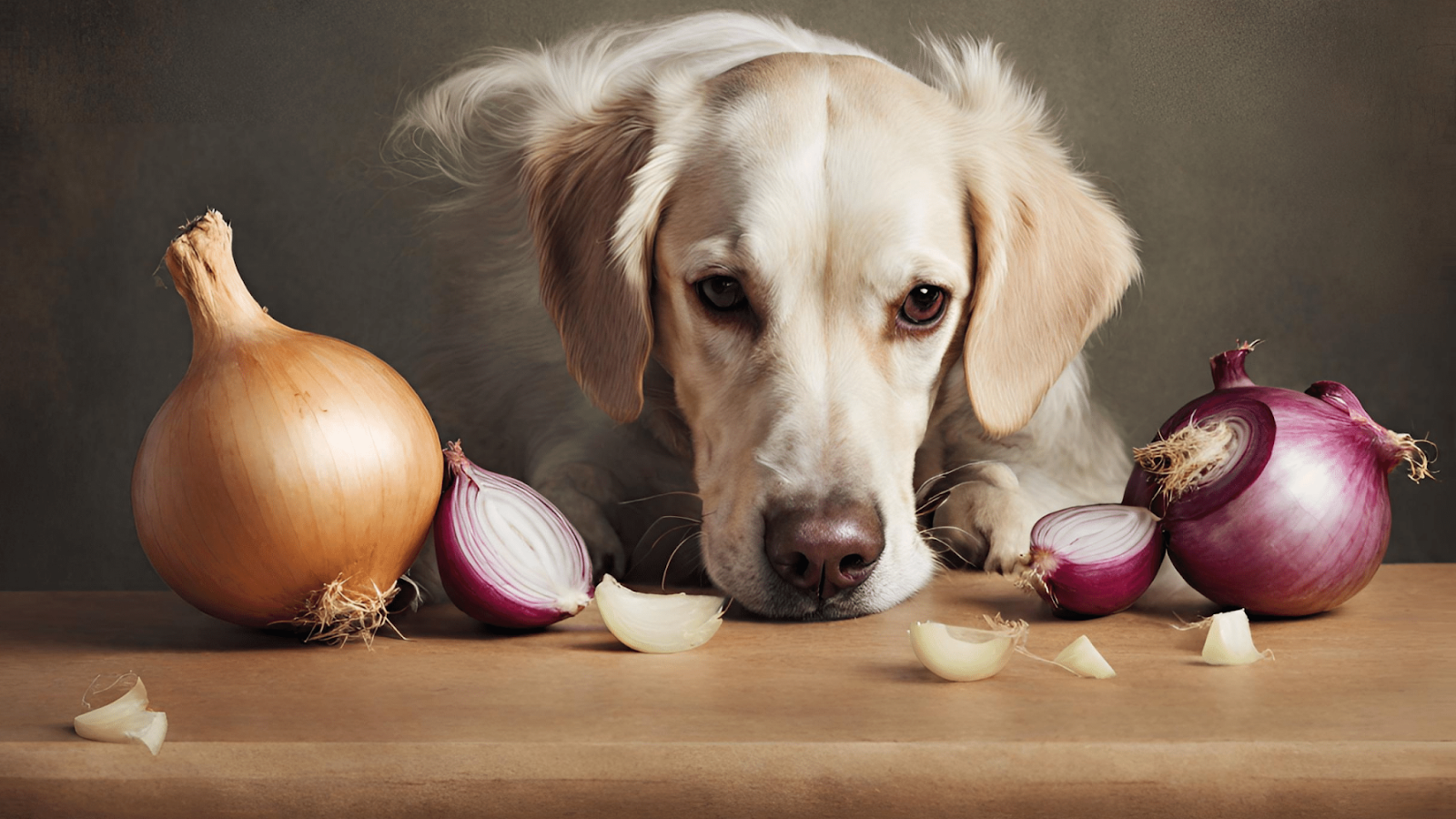
My Dog Ate Onion: What Should I Do?
If your dog just ate onion, it is completely natural to feel worried. Acting quickly and following the right steps can significantly reduce the risk of serious and potentially life-threatening health problems. Onions are genuinely toxic to dogs, and the danger is not limited to raw onion alone: cooked onion, onion powder, garlic, leeks and all members of the Allium family carry the same risk. What makes onion poisoning particularly deceptive is that symptoms do not always appear right away. Damage can build silently over days, which is exactly why you need to act now rather than wait and see.
Why Onions Are Dangerous for Dogs
Onions and all members of the Allium family contain organosulfur compounds that are toxic to dogs. Once absorbed through the digestive system, these compounds damage red blood cells by causing oxidative stress. Over time, the damaged cells can no longer carry oxygen effectively. This condition is called hemolytic anemia, and without treatment it can become life-threatening.
Several factors make onion toxicity particularly serious:
- All forms of onion are toxic. Raw onion, cooked onion, fried onion, onion powder, onion soup and any food prepared with onion all carry the same risk. Onion powder is especially dangerous because it is far more concentrated than fresh onion.
- Garlic is even more toxic. Per kilogram of body weight, garlic is considered approximately five times more toxic than onion.
- Leeks, chives and shallots are also dangerous. All Allium family members should be considered toxic to dogs without exception.
- Damage is cumulative. A single large dose and repeated small amounts over time can both lead to serious poisoning. Dogs fed table scraps regularly are at risk even if no single meal seemed harmful.
- Some breeds are more sensitive. Japanese breeds such as Shiba Inu and Akita are considered more susceptible to onion toxicity than other breeds.
Symptoms of Onion Poisoning in Dogs
This is what makes onion poisoning especially tricky: symptoms often do not appear immediately. Red blood cell damage accumulates gradually, and clinical signs typically become noticeable one to five days after ingestion. Your dog may appear completely fine right now while internal damage is already underway.
Early Gastrointestinal Symptoms
- Vomiting, which may begin within hours of ingestion
- Diarrhea
- Nausea and loss of appetite
- Drooling or irritation around the mouth
- Abdominal discomfort or pain
Later Symptoms Indicating Hemolytic Anemia
- Extreme lethargy and weakness: your dog may refuse to move or seem unusually tired
- Pale, white or yellowish gums: this is a critical warning sign requiring immediate veterinary attention
- Rapid or labored breathing
- Elevated heart rate
- Reddish, pink or brownish urine: this indicates the breakdown of red blood cells
- Fainting or loss of coordination
- Exercise intolerance: difficulty with even short walks
- Collapse in severe cases
Some of these symptoms can resemble reactions caused by parasites or other illnesses. If you are uncertain whether the cause is onion toxicity or something else, the flea, tick and parasite schedule for dogs may help you distinguish between different presentations. However, if onion ingestion is confirmed or suspected, treat it as a poisoning emergency from the outset and contact your vet without delay.
How Long It Takes for Symptoms to Appear
Understanding the timeline for onion poisoning is important because it differs significantly from other types of poisoning:
- Within a few hours: Gastrointestinal symptoms such as vomiting and diarrhea may begin
- 24 to 48 hours later: Red blood cell damage is progressing internally, even if the dog appears normal
- One to five days later: Anemia symptoms become visible: lethargy, pale gums, breathing changes, discolored urine
- Without treatment: Anemia worsens and can lead to organ failure
The most important takeaway: Do not wait for visible symptoms before calling your vet. By the time anemia becomes apparent, significant damage may already have occurred. If you know or suspect your dog ate onion, call your vet immediately.
What To Do Immediately If Your Dog Ate Onion
Stay calm and work through these steps in order. Each one matters.
Step 1: Document What Was Eaten
- Identify the form of onion: raw, cooked, powdered, or contained in a prepared food or dish
- Estimate the quantity as accurately as possible
- Note the time of ingestion
- Keep any packaging or food remnants to show your vet
Step 2: Call Your Vet Right Away
- Do not wait for symptoms to develop before calling
- Provide your dog's weight, breed and age along with the details above
- Follow the vet's instructions precisely, as they may be able to guide you by phone
- If your regular vet is unavailable, go directly to the nearest emergency animal hospital
Step 3: Keep Your Dog Calm and Under Observation
- Move your dog to a quiet, comfortable space
- Prevent running or vigorous activity, as physical exertion can worsen anemia symptoms
- Check your dog's gum color regularly: pale, white or yellowish gums require immediate emergency care
- Do not leave your dog unsupervised
Arriving at the clinic prepared makes a real difference in how quickly your dog gets the right treatment. The guide on what to do at your pet's first vet visit offers practical advice on communicating clearly with veterinary staff during an emergency.
When You Should Contact a Veterinarian
With onion poisoning, the answer is always the same: contact a vet as soon as you know or suspect your dog has eaten onion. Do not wait. Go directly to emergency care if any of the following apply:
- Onion ingestion is confirmed, even with no symptoms present
- Gums are pale, white, grey or yellowish
- Urine appears reddish, pink or brown
- Your dog is extremely weak or unwilling to move
- Breathing is rapid, labored or abnormal
- Your dog has fainted or collapsed
- Your dog is a small breed or a Japanese breed and ate any amount of onion
- Onion powder or garlic powder was ingested in any quantity
Never take a wait-and-see approach with onion toxicity. The damage develops gradually and invisibly. A dog that looks healthy today may be in a medical crisis within 48 hours. Early treatment is what determines whether your dog makes a full recovery.
You can find nearby veterinarians through the Petopic veterinarian directory if immediate professional help is needed, including emergency clinics listed by location.
Dangerous Mistakes Dog Owners Must Avoid
Panic can lead to well-intentioned but harmful decisions. Avoid these critical errors:
- Do not induce vomiting without veterinary instruction. Incorrectly induced vomiting can cause aspiration into the lungs, leading to additional complications. This should only be done in a clinical setting or under direct phone guidance from a vet.
- Do not give milk or water to dilute the toxin. Adding liquid to the stomach may actually accelerate the absorption of the toxic compounds. Give nothing by mouth unless your vet explicitly instructs you to.
- Do not administer any medications on your own. Activated charcoal, antacids and other substances should never be given without direct veterinary authorization. Misuse causes additional harm.
- Do not assume a small amount is safe. Onion toxicity is cumulative, and even modest amounts can cause significant red blood cell damage, particularly in small dogs or sensitive breeds.
- Do not let your dog exercise. Physical activity increases the body's oxygen demand, which worsens the impact of anemia on the heart and lungs.
- Do not spend time researching online before calling your vet. Call first. The early window after ingestion has real clinical value and should not be wasted.
For a broader reference on handling pet poisoning situations across a wide range of toxic substances and household dangers, the pet poisoning symptoms and first aid guide on Petopic provides expert-reviewed guidance for many emergency scenarios.
How Vets Treat Onion Poisoning in Dogs
Treatment depends on how much was eaten, the form it was in, and how much time has passed. Your vet may use one or more of the following approaches:
- Induced vomiting: most effective within one to two hours of ingestion
- Activated charcoal: to reduce further absorption of toxic compounds in the digestive tract
- Complete blood count testing: to measure the degree of red blood cell damage and anemia
- Intravenous fluid therapy: to support organ function and help the body eliminate toxins
- Oxygen supplementation: for dogs whose red blood cells can no longer carry adequate oxygen
- Blood transfusion: required in severe anemia cases where red blood cell levels have dropped critically
- Hospitalization and monitoring: ongoing blood work and observation until recovery is confirmed
When treatment begins before anemia has reached a severe stage, the majority of dogs recover fully. Delayed treatment increases the risk of permanent organ damage and reduces the effectiveness of available interventions.
Foods That May Contain Onion or Garlic
Onion and garlic appear in countless everyday foods that may not seem obviously dangerous. Be aware of the following sources:
- Broths, soups and gravies: most store-bought varieties contain onion or garlic powder
- Baby food: some meat-based varieties include onion powder as a flavoring
- Prepared sauces and seasonings: especially those containing onion or garlic powder
- Pizza, pasta dishes and savory pastries
- Fried or roasted meats prepared with onion
- Fast food leftovers: burgers, wraps and kebabs frequently contain both onion and garlic
- Packaged snack foods and chips: onion and garlic flavoring is common
Important note: If you regularly feed your dog table scraps, the cumulative exposure to small amounts of onion or garlic in cooked meals can be just as dangerous as a single large dose. Checking ingredient labels on any food your dog can access is a habit worth developing.
How To Prevent Onion Poisoning in the Future
- Keep all onions, garlic and related vegetables stored out of your dog's reach
- Avoid feeding table scraps: most cooked dishes contain onion or garlic in some form
- Warn guests and family members: well-meaning people sharing "just a bite" of food can create a dangerous situation
- Use covered, secure trash cans: cooked food scraps disposed of in the trash are still a risk
- Save your emergency vet's number in your phone before you ever need it
Frequently Asked Questions
My dog ate a small piece of onion. Is that really dangerous?
It depends on your dog's size and the form of onion involved. For small breeds or dogs exposed to onion powder, even a small amount can be significant. For any confirmed onion ingestion, the safest step is always to call your vet and describe exactly what happened.
Is cooked onion safer than raw onion for dogs?
No. Cooking does not destroy the toxic compounds in onion. Cooked onion, fried onion, caramelized onion and onion-based sauces are just as dangerous as raw onion. All forms should be kept away from dogs.
My dog ate onion but seems perfectly fine. Should I still call the vet?
Yes, absolutely. Onion toxicity is cumulative and works internally before any visible signs appear. A dog that appears healthy now can develop serious anemia within one to five days. Contact your vet regardless of how your dog currently looks.
How dangerous is onion powder compared to fresh onion?
Onion powder is significantly more toxic by weight than fresh onion because the water has been removed and the compounds are far more concentrated. A teaspoon of onion powder can cause more harm than several slices of raw onion. Treat any exposure to onion powder as an urgent situation.
Is garlic also dangerous? Is it more toxic than onion?
Yes, garlic is considered approximately five times more toxic than onion per kilogram of body weight. Garlic exposure should be treated with the same urgency as onion ingestion. The same applies to garlic powder, which is even more concentrated than fresh garlic.
What should I look at to tell if my dog is getting worse?
Check your dog's gum color regularly. Healthy gums are pink and moist. Pale, white, grey or yellowish gums indicate that red blood cell damage has progressed to a critical level and your dog needs emergency veterinary care immediately. Discolored urine is another urgent warning sign.
How does onion poisoning differ from chocolate poisoning in dogs?
Chocolate poisoning typically causes symptoms within hours of ingestion, while onion poisoning builds gradually over one to five days. This delayed onset makes onion toxicity more deceptive and is one reason why owners should never wait for symptoms before acting. For comparison, you can read more about what to do if your dog ate chocolate to understand how the two differ in urgency and timeline.
At Petopic, our goal is to give dog owners the accurate, expert-reviewed information they need at exactly the moment they need it most. Onion poisoning is one of the most deceptive emergencies in veterinary care because it progresses quietly. Knowing how to respond immediately, and what to avoid, gives your dog the best possible chance of a full recovery.