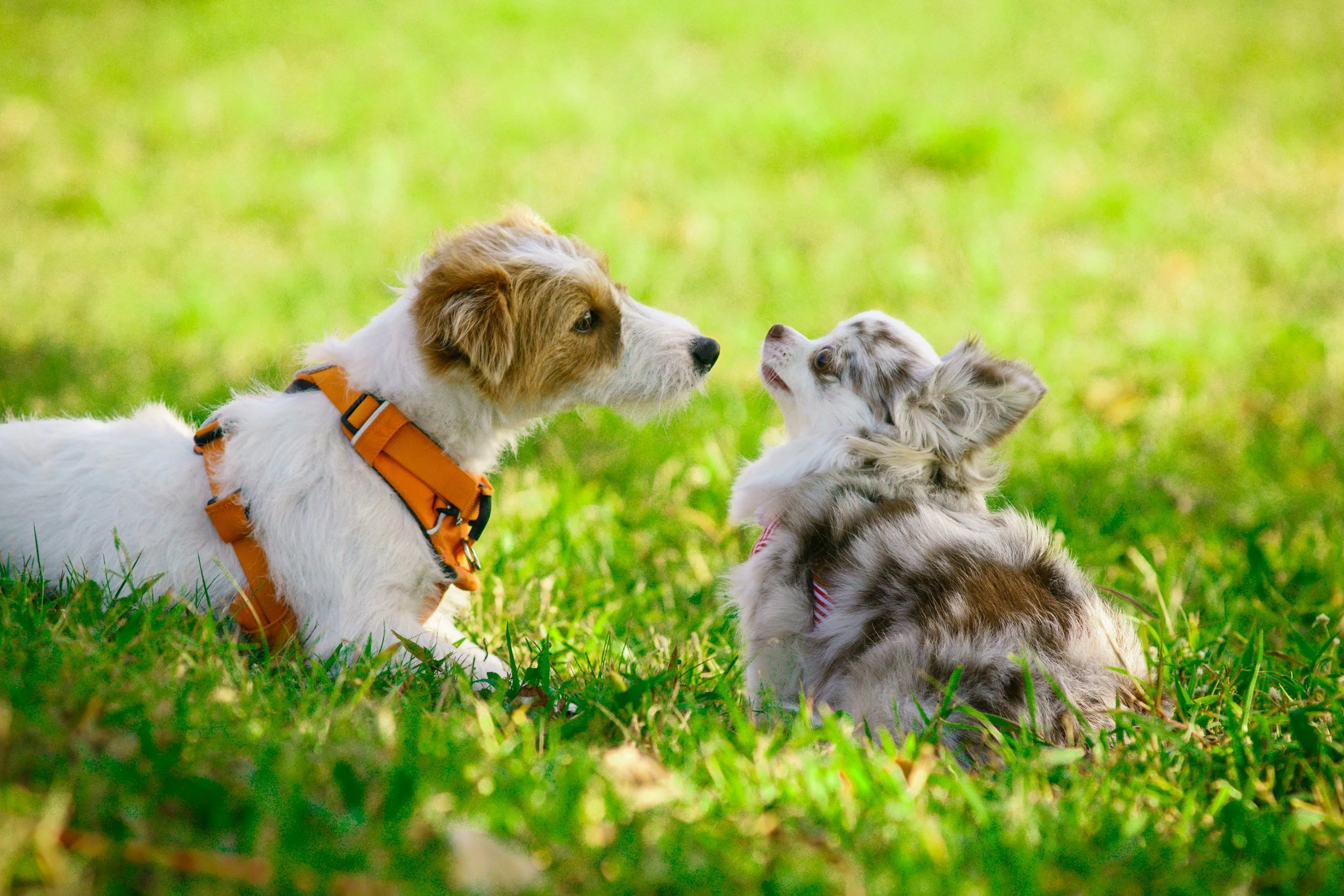
Puppy Socialization Guide
Many dog owners start training with commands like “sit” and “stay,” but experienced trainers and behaviorists agree on one thing: socialization has a far greater long-term impact on a dog’s temperament. A properly socialized puppy learns that the world is safe and predictable. A poorly socialized puppy, on the other hand, is far more likely to develop fear, excessive barking, leash reactivity, or anxiety later in life.
This guide explains what puppy socialization really means, why the 8–16 week window is considered the most important developmental period, and how to follow a practical, real-world plan that builds confidence without overwhelming your puppy.
🎯 What Is Puppy Socialization? (And What It Is NOT)
Puppy socialization is the structured process of safely exposing your puppy to new people, environments, sounds, surfaces, and situations so they learn to remain calm and neutral. It is often confused with obedience training, but they serve very different purposes.
- Socialization: Teaches your puppy what is normal and not scary
- Training: Teaches your puppy what behaviors to perform on cue
In simple terms, training builds skills — socialization builds emotional stability. Both are essential, but without proper socialization, even a well-trained dog can become reactive or fearful.
⏰ Why the 8–16 Week Window Is the “Golden Period”
Between 8 and 16 weeks of age, puppies go through a critical neurological development phase. During this time, their brains are uniquely receptive to new experiences. Positive exposures during this window tend to create lifelong confidence, while lack of exposure can lead to heightened sensitivity and fear responses.
If this period is missed or poorly managed, dogs are statistically more likely to develop:
- ⚠️ Fear of strangers
- ⚠️ Noise sensitivity
- ⚠️ Dog reactivity on walks
- ⚠️ Separation-related behaviors
This stage overlaps directly with the developmental milestones outlined in the first six months puppy care guide, making early planning essential.
💉 Should You Socialize Before Vaccinations Are Complete?
This is one of the most common concerns among new owners. The modern consensus among veterinarians and behaviorists is clear: complete isolation until final vaccinations can create more behavioral risk than carefully managed exposure.
The key is controlled, low-risk socialization:
- ✔️ Carry your puppy in higher-risk public areas
- ✔️ Avoid unknown or unvaccinated dogs
- ✔️ Choose clean, low-traffic environments
- ✔️ Keep early sessions short and positive
Always coordinate your exposure plan with your puppy vaccination schedule to balance safety and development.
📋 Essential Puppy Socialization Checklist
Well-rounded socialization means thoughtful exposure to a wide variety of everyday stimuli. Focus on calm, positive introductions to:
- People of different ages and appearances
- Hats, sunglasses, uniforms, and mobility aids
- Household sounds (vacuum, doorbell, kitchen noise)
- Urban sounds (traffic, buses, distant sirens)
- Different walking surfaces (grass, tile, asphalt, gravel)
- Gentle handling of paws, ears, and mouth
Handling exercises are especially valuable because they prepare your puppy for stress-free exams during the first veterinary visit.
🗓️ A Simple 14-Day Puppy Socialization Plan
Effective socialization does not require overwhelming your puppy. In fact, short, structured exposures are far more effective than long, chaotic experiences.
- Introduce one new experience per day
- Keep sessions around 10–15 minutes
- Pair new experiences with high-value treats
- Watch closely for stress signals
- End on a calm, positive note
The goal is not forced exposure — it is building quiet confidence at the puppy’s own pace.
⚠️ Common Puppy Socialization Mistakes
- 🚫 Flooding the puppy with too much too fast
- 🚫 Forcing interactions with strangers or dogs
- 🚫 Overusing busy dog parks too early
- 🚫 Keeping the puppy overly isolated at home
- 🚫 Ignoring early stress signals
These mistakes significantly increase the risk of future behavior problems and separation anxiety.
🏠 Socializing Puppies in Multi-Pet Homes
If you already have a cat or another dog, early introductions must be carefully managed. Keep initial meetings short, calm, and fully supervised. Allow both animals to disengage freely.
For detailed step-by-step integration, see the dog and cat living together guide.
🧠 Socialization Builds the Dog You’ll Live With for Years
Puppy socialization is not a one-time task — it is a developmental investment that shapes your dog’s emotional resilience for life. Owners who approach this phase with patience, structure, and consistency almost always end up with calmer, more adaptable adult dogs.
Remember: You are not just raising a puppy — you are building your future dog’s confidence system. Done correctly, the benefits last a lifetime. 🐾