Cockatiel: Complete Care Guide, Cage, Diet, Lifespan & Personality
The cockatiel (Nymphicus hollandicus) is one of the most popular pet parrots. Native to Australia and the smallest member of the cockatoo family, cockatiels are intelligent, social, and affectionate—and with proper care can live 16–25 years. This guide covers everything owners search for: cockatiel cage size, diet, whether they talk or whistle, common health problems, and how to keep them happy and healthy.
Cockatiel Quick Facts
Key facts that birdkeepers look for when researching cockatiels.
- Scientific name: Nymphicus hollandicus
- Origin: Australia (mainland; arid and semi-arid open country)
- Size: About 29–33 cm (11–13 in) long; 80–100 g (2.8–3.5 oz)
- Lifespan: 16–25 years with proper care (long-term commitment)
- Cage: Minimum about 60 × 60 × 75 cm (24 × 24 × 30 in); larger is better; bar spacing 1.3–2.5 cm (½–1 in)
- Temperament: Social, affectionate, intelligent; can be nippy without socialization
- Vocal: Whistling and some talking (males often more vocal than females)
- Diet: Pellets, seeds, fresh vegetables and fruit; avoid avocado
Cockatiel History and Origin
The cockatiel is native to mainland Australia, where it lives in arid and semi-arid open habitats—savanna, open woodland, riverine forest, and acacia woodland—often near water. It is the only member of the genus Nymphicus and the smallest of the cockatoo family (Cacatuidae). First described in the late 1700s, it became a staple of aviculture and is now one of the most commonly kept pet parrots worldwide. Wild-type (grey) and many colour mutations (lutino, pied, pearl, cinnamon, etc.) are available.
Cockatiel Appearance
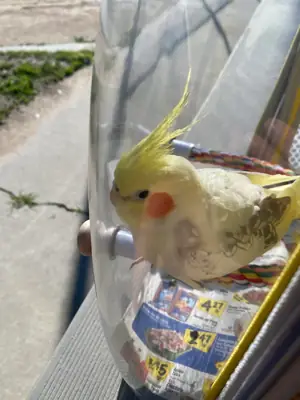
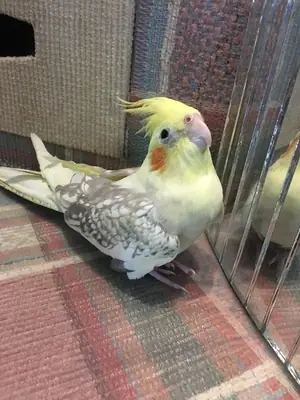
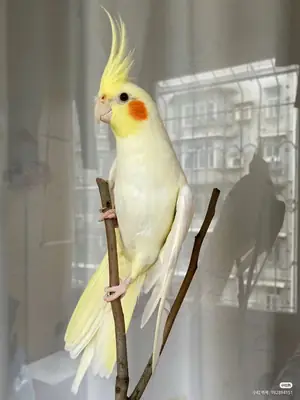
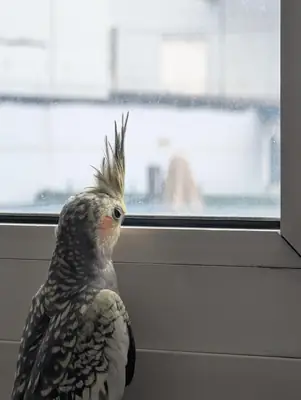
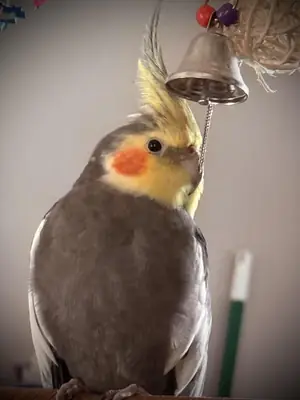
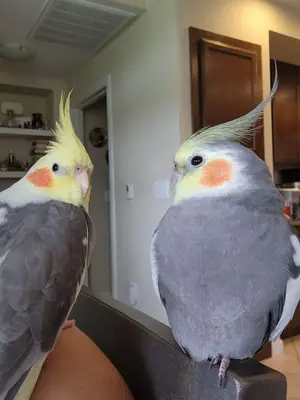
Cockatiels have a slender body, a long pointed tail (about half the total length), and a distinctive crest that they raise or lower with mood. Wild-type birds are grey with a yellow face and orange cheek patch (ear coverts); the wings show white patches in flight. Males typically have a brighter yellow face and no barring on the underside of the tail; females have a greyer face and yellow-and-grey barring under the tail and on the underside of the wings. Juveniles look like females until after the first moult; in many colour mutations, visual sexing is difficult or impossible without DNA or surgical sexing. Cockatiels produce powder down (a fine dust), so they are not ideal for people with severe dust or feather allergies.
Cockatiel Personality and Temperament
Cockatiels are intelligent, social, and affectionate. They bond strongly with their carers and often enjoy perching on a shoulder or finger; they are less likely to enjoy tight cuddling like some parrots. With proper socialization they are gentle and curious; without it they can become nippy or bite. They are trainable—many learn to step up, wave, whistle tunes, or ring a bell. They like interaction and can become bored or loud if left alone too much. They suit older children and adults who can handle a long-lived, attention-loving pet. A single cockatiel will focus on its human; a pair may bond more to each other and be less hands-on with people.
Do Cockatiels Talk?
Some cockatiels learn to talk or mimic words; many are better at whistling than talking. Males tend to be more vocal and more likely to whistle or talk than females, but individuals vary. Teaching takes patience and repetition. Changes in vocalization (e.g. stopping whistling or talking) can be a sign of illness and warrant a vet check.
Cockatiel Cage and Environment
A minimum cage size of about 60 × 60 × 75 cm (24 × 24 × 30 in) is often recommended for one cockatiel; larger is always better so the bird can stretch, flap, and move. Bar spacing should be about 1.3–2.5 cm (½–1 in) so the bird cannot squeeze through or get stuck. Provide multiple perches of different diameters (including natural wood) to keep feet healthy. Include toys (swings, bells, shreddable and foraging toys) and change them regularly to prevent boredom. Place the cage in a well-lit, draft-free area; avoid direct sun, air conditioning drafts, and kitchens (fumes and Teflon risk). Ideal temperature is roughly 18–27 °C (65–80 °F). Allow daily supervised out-of-cage time in a safe, bird-proofed room when possible.
Household Hazards
Cockatiels have sensitive respiratory systems. Keep them away from nonstick (Teflon) cookware fumes, scented candles, air fresheners, aerosol sprays, and smoking. Ensure they cannot reach toxic foods (avocado, chocolate, etc.), open water (toilets, full sinks), or ceiling fans when out of the cage.
Cockatiel Diet and Nutrition
Cockatiels are granivorous (grain- and seed-eating) but do best on a varied diet. A base of high-quality pellets (formulated for cockatiels or small parrots) ensures balanced nutrition; many owners also offer a small amount of seed mix. Add fresh vegetables and fruit (e.g. leafy greens, carrot, broccoli, apple, berries) daily; remove uneaten fresh food before it spoils. Millet spray can be a treat. Provide a cuttlebone or mineral block for calcium. Never feed avocado (toxic); avoid chocolate, caffeine, and high-salt or high-fat human foods. Fresh water must be available at all times and changed daily. Overfeeding seeds alone can lead to obesity and fatty liver disease.
Cockatiel Health and Lifespan
With good care, cockatiels typically live 16–25 years. They often hide signs of illness until they are seriously unwell, so any change in behaviour, appetite, droppings, or breathing needs prompt attention.
Common Health Concerns
- Respiratory disease: Sensitive to fumes, dust, and infection. Avoid Teflon, smoke, and aerosols; ensure good ventilation.
- Egg binding: Female cockatiels can lay eggs even without a mate; binding (egg stuck in the oviduct) is an emergency. Reduce egg-laying by limiting daylight length and removing nest-like spots; see an avian vet if a hen strains or seems unwell.
- Fatty liver disease: Often linked to all-seed diets and obesity. Switch to pellets and vegetables, and manage portion size.
- Chlamydophilosis (psittacosis / “parrot fever”): Bacterial infection; can cause breathing difficulty, nasal discharge, lethargy, and lime-green droppings. Can spread to humans; needs vet treatment.
- Fungal infections, bacterial infections: Can affect digestive or respiratory tract; vet diagnosis and treatment required.
- Cataracts: Cloudy lens, more common in older birds.
Find an avian veterinarian for check-ups and emergencies. Watch for fluffing up, sitting on the cage floor, loss of appetite, abnormal droppings, or laboured breathing and seek help immediately.
Frequently Asked Questions About Cockatiels
How long do cockatiels live?
With proper diet, housing, and vet care, average lifespan is 16–25 years. Some live longer. They are a long-term commitment.
Do cockatiels talk?
Some do; many are better at whistling. Males are often more vocal. Teaching requires patience and repetition.
What size cage does a cockatiel need?
Minimum about 60 × 60 × 75 cm (24 × 24 × 30 in) for one bird; larger is better. Bar spacing 1.3–2.5 cm (½–1 in). The bird should be able to stretch and flap fully.
Can cockatiels live alone?
Yes. A single cockatiel can bond strongly with its owner and enjoy interaction. A pair may be less hands-on with people but keep each other company. Ensure any single bird gets plenty of daily attention.
What do cockatiels eat?
Quality pellets as a base, plus a small amount of seed, daily fresh vegetables and fruit, and cuttlebone. Treats like millet in moderation. No avocado, chocolate, or junk food.
Are cockatiels good for beginners?
They are often recommended as a first parrot because of their size and generally gentle nature—but they still need daily interaction, a proper diet, and a long-term commitment (16–25 years). Research and preparation are essential.
How do you tell if a cockatiel is male or female?
In wild-type adults: males usually have a brighter yellow face and solid grey under the tail; females have a greyer face and yellow/grey barring under the tail and on the wing undersides. Juveniles look like females until after the first moult. In many colour mutations, visual sexing is unreliable; DNA or surgical sexing can be used.
Is the Cockatiel Right for You?
Cockatiels suit owners who can provide a large cage, daily interaction, a varied diet (pellets, vegetables, fruit), and a safe, fume-free home for 16–25 years. They are not ideal for anyone who cannot commit to a long-lived pet or who has severe respiratory or feather allergies. If you are ready for a social, trainable, and affectionate companion, the cockatiel is one of the most rewarding pet parrots.