Giant Angora Rabbit: Complete Breed Guide, Care, Grooming & Wool
The Giant Angora is the largest of the ARBA-recognised Angora breeds and the only one approved for commercial wool production. With a dense, triple-layered coat and gentle temperament, they appeal to fibre enthusiasts and pet owners alike—but their intensive grooming needs and size make them best suited to experienced keepers. This guide covers everything you search for: Giant Angora size, lifespan, daily care, wool harvesting, diet, housing, and health.
Giant Angora Rabbit Quick Facts
Key facts that owners and breeders look for at a glance.
- Origin: United States (Massachusetts, 1980s; ARBA recognised 1988)
- Size: Largest Angora breed; commercial body type
- Weight: Minimum 9.5 lb (4.3 kg) for bucks, 10 lb (4.5 kg) for does; often 10–12+ lb (4.5–5.4+ kg)
- Lifespan: 7–12 years with proper care
- Coat: Dense wool in three fibre types (underwool, awn fluff, awn hair)
- Colour (ARBA): Ruby-eyed white (REW) only
- Grooming: Daily brushing essential; wool harvest every 3–4 months
- Temperament: Gentle, docile, intelligent, friendly; needs confident handling
- Best for: Experienced rabbit owners and fibre crafters
Giant Angora Rabbit History and Origin
The Giant Angora was developed in the United States in the 1980s by Louise Walsh of Massachusetts. Walsh crossed German Angoras with Flemish Giants and French Lops to create a large, wool-producing rabbit that met American Rabbit Breeders Association (ARBA) standards. The breed was officially recognised by ARBA in 1988. Unlike other Angora types, the Giant Angora is the only Angora breed in the US approved specifically for commercial wool production, combining substantial size with a consistent, harvestable fleece.
Giant Angora Rabbit Appearance and Coat
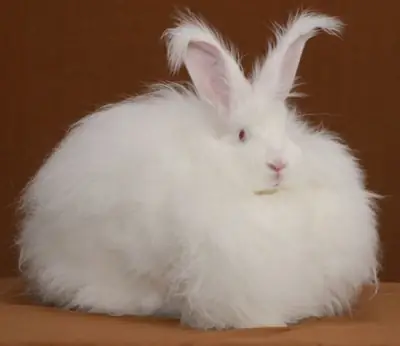
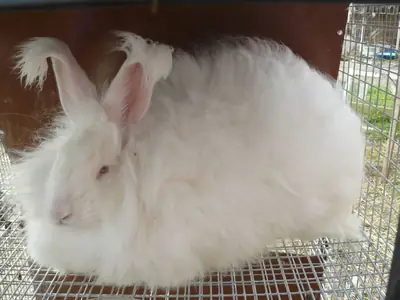
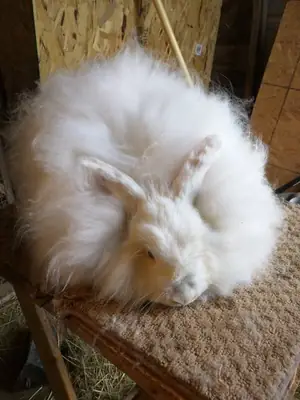
Giant Angoras are immediately recognisable by their size and profuse wool. The face has distinctive forehead tufts, cheek furnishings, and well-tasselled ears. The coat consists of three fibre types: a soft, fine underwool (base layer), a wavy awn fluff (transitional), and straighter awn hair (guard hairs). This structure gives the wool its volume and spinability. ARBA recognises only ruby-eyed white (REW); other colours may exist in non-show or international lines. The body is commercial type—broad, deep, and substantial—built to carry both frame and wool.
Coat Structure and Wool Types
- Underwool: Soft, medium-fine base layer; provides warmth and bulk.
- Awn fluff: Wavy transitional fibres; adds elasticity.
- Awn hair: Straight guard hairs; adds durability to spun yarn.
Wool is typically harvested every 3–4 months by shearing or plucking. A single Giant Angora can produce roughly 340–510 g (12–18 oz) per harvest, or up to about 2 lb (900 g) per year, making them one of the most productive wool rabbits.
Giant Angora Rabbit Temperament and Personality
Despite their large size, Giant Angoras are generally gentle, docile, and friendly. They are intelligent and can bond closely with their carers; many enjoy toys and gentle interaction. Because of their substantial body and heavy coat, they need handlers who are confident and experienced in supporting their weight and avoiding stress on the spine. They are not ideal for very young children or first-time rabbit owners unless there is a strong commitment to learning handling and grooming. With patience, they can be rewarding both as companions and as wool producers.
Are Giant Angora Rabbits Good with Children and Other Pets?
They can live alongside considerate, supervised children and other rabbits if introductions are done carefully. Their size and grooming needs mean that an adult should take primary responsibility for care. Bonding with another rabbit can provide companionship but must be done gradually and under supervision; housing and space must be large enough for two.
Giant Angora Rabbit Grooming: The Most Critical Part of Care
Grooming is the biggest commitment with this breed. Without daily brushing, the wool mats quickly, causing discomfort, skin issues, and risk of flystrike. Use a bristle brush or slicker suitable for long wool; work in sections and never tug. If wool gets dirty, spot-clean with a damp cloth rather than full wetting. Many owners keep the coat trimmed short between harvests to reduce matting and make daily care easier. Nail trimming and checking ears and skin under the wool should be part of the routine. Wool block (ingested hair blocking the digestive tract) is a serious risk in Angoras; daily grooming and a high-fibre diet both help reduce it.
Wool Harvesting: Shearing vs Plucking
Wool can be harvested by shearing (clippers) or plucking (when the coat is ready to moult). Shearing is faster and gives a uniform length; plucking yields the finest undercoat but requires timing and experience. Schedule harvests every 3–4 months to keep the coat manageable and prevent matting. Store wool clean and dry for spinning or felting.
Giant Angora Rabbit Diet and Nutrition
Diet is crucial for health and for preventing wool block and GI stasis. Provide unlimited timothy hay (or other grass hay) as the main fibre source. High-quality rabbit pellets in measured amounts (follow label or vet advice for size/weight) prevent obesity while supplying nutrients. Fresh leafy greens and vegetables add variety and moisture; introduce new foods gradually. Avoid low-fibre, high-carb or sugary treats. Fresh water must always be available (bowl or bottle, cleaned regularly). Many breeders recommend a small amount of pineapple (enzyme) or papaya only as an occasional support for digestion, not as a substitute for hay and proper grooming.
Wool Block Prevention Through Diet
Wool block occurs when swallowed hair accumulates in the gut. A high-fibre diet keeps the digestive tract moving and helps pass hair. Daily grooming reduces the amount of wool the rabbit ingests. If your rabbit stops eating, produces fewer droppings, or seems lethargic, seek a vet immediately—wool block and GI stasis can be fatal.
Giant Angora Rabbit Housing and Environment
Giant Angoras need large enclosures with enough space to hop, stretch, and stand. Use a solid floor; wire floors can injure their feet and trap wool. A large pen, dog crate, or custom-built hutch with a solid base works well. Provide a cool, well-ventilated, and relatively quiet area—their dense coat makes them prone to overheating in hot or humid weather. In summer, ensure shade, airflow, and possibly cooling tiles or frozen bottles (wrapped). They handle cold better than heat. Include hiding spots, hay racks, and safe toys; allow daily supervised free time outside the enclosure if the space is rabbit-proofed.
Giant Angora Rabbit Health and Lifespan
With good care, Giant Angoras typically live 7–12 years. Stay alert to common rabbit health issues and Angora-specific risks.
Common Health Concerns
- Wool block (trichobezoar): Hair blockage in the digestive tract; prevent with high-fibre diet and daily grooming.
- GI stasis: Slowing or stopping of gut movement; often linked to diet, stress, or pain; needs urgent vet care.
- Matting and flystrike: Matted wool and dirty skin attract flies; daily grooming and clean housing reduce risk.
- Overheating: Thick wool and large size increase heat stress; keep environment cool in summer.
- Dental issues: Like all rabbits, they need hay and chew items to wear teeth; annual vet checks help catch problems early.
Find a vet experienced with rabbits and, if possible, with Angoras. Vaccination and parasite control follow local and vet recommendations.
Wool Use: Spinning, Felting and Showing
Giant Angora wool is prized for spinning and felting. The blend of underwool, awn fluff, and awn hair produces a strong, warm yarn. Keep harvested wool clean and free of debris; store in breathable bags. Many owners show Giant Angoras in ARBA shows under the REW standard; showing requires extra grooming and familiarity with the breed standard.
Frequently Asked Questions About Giant Angora Rabbits
How big do Giant Angora rabbits get?
They are the largest Angora breed. ARBA minimum is 9.5 lb (4.3 kg) for bucks and 10 lb (4.5 kg) for does, with many adults reaching 10–12 lb or more. They have a commercial body type—broad and deep—plus a heavy wool coat.
How long do Giant Angora rabbits live?
With proper diet, grooming, and housing, average lifespan is 7–12 years. Good fibre intake and preventive care support a long, healthy life.
Do Giant Angora rabbits need daily grooming?
Yes. Daily brushing is necessary to prevent matting, skin problems, and flystrike. Skipping grooming leads to tangles that are painful to remove and can endanger the rabbit.
What is wool block in Angora rabbits?
Wool block is a blockage of the digestive tract by ingested hair. Angoras swallow a lot of wool when they groom. High-fibre diet (especially hay) and daily brushing reduce the risk. Signs include loss of appetite, fewer droppings, and lethargy—vet care is urgent.
Can Giant Angora rabbits live with other rabbits?
Yes, many can be bonded with another rabbit for company. Introductions should be gradual and neutral-territory based. Both rabbits need to be neutered/spayed for safety and behaviour. Housing must be large enough for two.
How much wool does a Giant Angora produce?
Per harvest (every 3–4 months), about 340–510 g (12–18 oz). Yearly total can reach about 2 lb (around 900 g), depending on the individual and harvest schedule.
Are Giant Angora rabbits good for beginners?
Generally not. They require experienced handling due to size and weight, and intensive daily grooming. First-time owners are better starting with a short-coated, smaller breed unless they are committed to learning and time investment.
How much does a Giant Angora rabbit cost?
Prices vary by region, lineage, and whether the rabbit is for pet, breeding, or show. From reputable breeders, expect a range from moderate to high. Adoption from rescues may be possible and is often lower cost.
Is the Giant Angora Rabbit Right for You?
The Giant Angora suits experienced rabbit owners and fibre enthusiasts who can provide daily grooming, a high-fibre diet, and large, solid-floored housing in a cool environment. They are not low-maintenance; neglect of coat or diet can lead to serious health issues. If you are ready for the commitment, they offer a gentle personality, impressive size, and a generous, spinnable fleece.