Ragdoll Cat: Complete Breed Guide, Temperament, Care & Health
The Ragdoll is a large, semi-longhaired cat known for its striking blue eyes, soft colourpoint coat, and famously relaxed temperament. Bred to be gentle and affectionate, Ragdolls often go limp when held—hence the name—and tend to follow their owners around the home. This guide covers everything potential owners search for: Ragdoll cat personality, size, grooming, health issues like HCM, and whether this breed is right for you.
Ragdoll Cat Quick Facts
Key facts that people look for when researching Ragdoll cats.
- Origin: United States (California, 1960s; developed by Ann Baker)
- Size: Large; one of the largest domestic cat breeds
- Weight: Males 6–9 kg (13–20 lb), females 4.5–6.8 kg (10–15 lb)
- Lifespan: 12–17 years with proper care
- Coat: Semi-long, silky, minimal undercoat; colourpoint, mitted, bicolor, or van
- Colours: Seal, blue, chocolate, lilac, red, cream; solid or lynx (tabby) patterns
- Activity level: Moderate; calm and laid-back, not hyperactive
- Good with children: Yes; gentle and tolerant
- Good with other pets: Yes; generally sociable
Ragdoll Cat History and Origin
The Ragdoll was developed in the 1960s in Riverside, California, by Ann Baker, a Persian breeder. The foundation cat was a white, Angora-type queen named Josephine, who produced unusually docile, affectionate kittens after surviving a serious car accident. Baker bred from Josephine’s offspring and introduced other cats (including Birman-like and domestic types) to fix the temperament and the pointed coat. Key foundation cats included Daddy Warbucks (first registered mitted Ragdoll, 1966), Buckwheat, and Fugianna (first bicolor). Baker later patented the name “Ragdoll” and set up the International Ragdoll Cat Association (IRCA); other breeders later broke away to register the breed with mainstream bodies like CFA and TICA. Today the Ragdoll is one of the most popular pedigree cats worldwide.
Ragdoll Cat Appearance and Coat
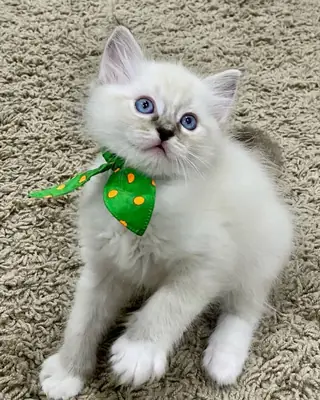
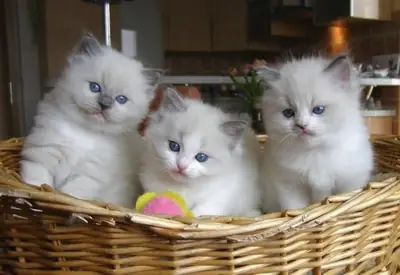
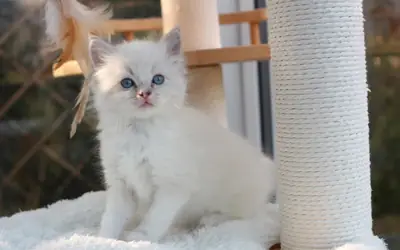
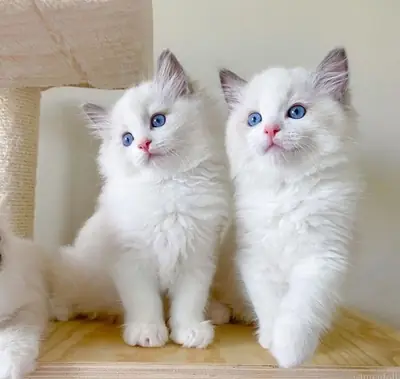
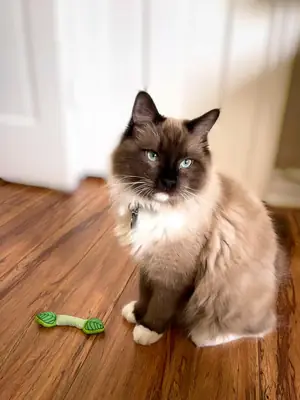
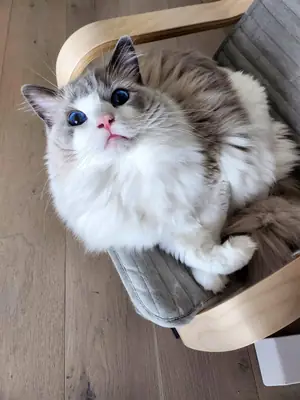
Ragdolls are large, heavy-boned cats with semi-long, silky fur that has little undercoat, so it tends to lie flat and shed less than many longhaired breeds. The eyes are always blue, and the coat follows a pointed pattern: darker colour on the face (mask), ears, legs, and tail, with a lighter body. The breed is slow to mature—full coat length and depth of colour can take until around three years of age.
Coat Patterns
- Colorpoint: Darker points (face, ears, legs, tail) on a lighter body; no white.
- Mitted: Same as colorpoint but with white paws (“mittens”) and often a white chin and belly stripe.
- Bicolor: White legs, white inverted “V” on the face, white belly; more white than mitted.
- Van: Colour mainly on the tail and ears; body mostly white.
Coat Colours
Standard colours include seal (dark brown points), blue (grey points), chocolate, and lilac (pale grey-pink). Red and cream, and tortie (tortoiseshell) and lynx (tabby stripes on the points) were added through outcrossing and are recognised in many registries.
Ragdoll Cat Personality and Temperament
Ragdolls are famous for being gentle, calm, and affectionate. Many literally go limp when picked up—the “ragdoll” effect—and are happy to be carried or cuddled. They are typically not demanding or loud; they enjoy company without being underfoot every second. They often follow their owners from room to room, greet them at the door, and many like to sleep with their people. They are sometimes compared to dogs: they can learn to fetch, come when called, and are generally sociable. They are rarely aggressive or highly strung. Because they are so relaxed, they are usually not suited to free outdoor roaming—they tend to have little “street sense” and may not defend themselves. A secure garden or catio is safer if they have outdoor access.
Are Ragdoll Cats Good with Kids and Other Pets?
Yes. Ragdolls are generally tolerant and gentle with considerate children and get on well with other cats and cat-friendly dogs when introduced properly. Their laid-back nature makes them a popular choice for families. Supervision with very young children is still wise so that the cat is not mishandled.
Ragdoll Cat Care: Grooming, Feeding, and Environment
Ragdoll care is moderate: they need regular grooming and a good diet, but they are not as high-energy or destructive as some breeds. Their semi-long coat does not mat as easily as a Persian’s, but it still benefits from combing once or twice a week (or more if the coat is dense) to remove dead hair and prevent tangles. Nail trimming and ear checks should be part of the routine. They have no special dietary requirements beyond a quality, age-appropriate cat food; portion control is important because Ragdolls love food and can become overweight. Provide scratching posts, cat trees, and toys; they enjoy interactive play but do not need the same level of intense exercise as a Bengal or Abyssinian.
Indoor vs Outdoor
Ragdolls are best kept indoors or in a secure outdoor space (catio or enclosed garden). Their trusting, non-aggressive nature makes them vulnerable to traffic, predators, and other dangers if allowed to roam freely.
Ragdoll Cat Health and Lifespan
With good care, Ragdolls typically live 12–17 years. Responsible breeders screen for known hereditary issues.
Common Health Concerns
- Hypertrophic cardiomyopathy (HCM): A hereditary heart condition that thickens the heart muscle. A DNA test exists for one common mutation; many breeders test and avoid breeding carriers. Ask your breeder about HCM screening and heart checks.
- Bladder stones (urolithiasis): More common in males; can cause straining, blood in urine, or urinating outside the litter box. Diet and increased water intake (e.g. wet food, fountains) can help; some cats need prescription food or surgery.
- Obesity: Ragdolls love to eat and can easily gain weight. Measure portions and avoid free-feeding high-calorie food; obesity leads to joint problems, diabetes, and other issues.
Routine vet visits, vaccinations, and parasite control support a long, healthy life. Dental care (diet, chews, or brushing) helps prevent dental disease.
Frequently Asked Questions About Ragdoll Cats
Why do Ragdoll cats go limp?
Ragdolls are bred for a relaxed, trusting temperament. Many go limp when held because they are so at ease and have little tendency to struggle. It is a trait that has been selected for and is part of what makes them “ragdoll” cats. Not every Ragdoll does it to the same degree, but it is very common.
How big do Ragdoll cats get?
Ragdolls are large. Adult males often weigh 6–9 kg (13–20 lb), females 4.5–6.8 kg (10–15 lb). They are slow to mature and may not reach full size until three or four years of age.
Do Ragdoll cats shed?
They have a semi-long coat with minimal undercoat, so they typically shed less than many other longhaired breeds. Regular combing helps keep shedding under control and reduces hairballs.
Are Ragdoll cats hypoallergenic?
No. No cat breed is truly hypoallergenic. Ragdolls produce the same Fel d 1 allergen as other cats. If you have allergies, spend time with a Ragdoll before committing.
Are Ragdoll cats good for first-time owners?
Yes. Their gentle, undemanding nature and moderate grooming needs make them a good fit for many first-time cat owners, provided they are kept indoors and given basic care.
Do Ragdoll cats like to be held?
Most Ragdolls enjoy being held and cuddled and often go limp in arms. They are one of the most “lap cat” oriented breeds. Always support their body and back legs when carrying.
How much does a Ragdoll cat cost?
From reputable breeders, Ragdolls often cost from several hundred to over a thousand pounds or dollars, depending on lineage, colour, pattern, and region. Rescue and adoption are also possible and usually cheaper.
Is the Ragdoll Cat Right for You?
The Ragdoll suits families, first-time owners, and anyone who wants a large, gentle, affectionate cat that enjoys company without being overly demanding. They are not ideal if you want a highly active, independent cat or if you plan to allow unsupervised outdoor access. If you are ready for a calm, people-oriented companion with moderate care needs, the Ragdoll is one of the most rewarding breeds to own.