Red Bellied Macaw: Complete Guide to Traits, Care, Nutrition and Health
The Red Bellied Macaw (Orthopsittaca manilata) is one of the magnificent macaw species of the Amazon Basin. With its smaller size compared to other macaws, gentle temperament, and specialized nutrition requirements, it is a unique choice for experienced bird owners. This comprehensive guide provides all essential information for prospective and current Red Bellied Macaw owners.
1. Breed Profile and Natural Habitat
- Origin: Northern South America - Amazon Basin of Brazil, Colombia, Venezuela, Ecuador, the Guianas, and Trinidad.
- Natural Habitat: Swampy, seasonally flooded palm forests and gallery forests. Moriche palm (Mauritia flexuosa) provides both food and nesting sites.
- Temperament: Shy, gentle, sensitive, more prone to stress than other macaw species, social and flock-living.
- Lifespan: 15-20 years in the wild, 30-40 years in captivity with excellent care.
2. Physical Characteristics and Dimensions
| Feature | Value | Description |
|---|---|---|
| Length | 46 cm (18 inches) | Total length including tail |
| Weight | 250-350 grams | Average for adult individuals |
| Wingspan | 60-70 cm | Fully extended wing length |
| Lifespan | 30-40 years | In captivity with optimal care |
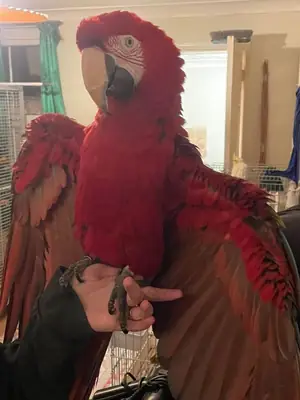
Plumage Colors: Mostly green upperparts, blue wash on forehead, large maroon patch on belly, dull olive yellow underwing and undertail, scalloped chest with grey/green pattern.
Face and Beak: Bare mustard-yellow facial skin (cere, lores, face), dark grey/black beak, grey legs and feet.
Juvenile vs Adult: Juveniles resemble adults but with duller colors, bill usually grey with pale line along upper bill midline. Sexual maturity at approximately 2-3 years.
3. Pricing and Lifetime Costs
- Chick Price (US): $800 – $1,500 from registered, health-screened breeders. Europe: €700 – €1,300; other regions vary.
- Monthly Care Costs: $170 – $280 for specialized formulated food, fresh fruits/vegetables, special supplements, cage maintenance, veterinary care.
- First Year Investments: Large cage/aviary ($1,700-2,800), starter equipment (perches, toys, feeders) ($550-800), initial veterinary checkups ($340-500).
- Annual Health Insurance: $450 – $800/year covering bird health insurance, emergencies, routine checkups.
4. Nutrition Strategy and Diet Planning
The Red Bellied Macaw has highly specialized nutrition requirements. Their natural diet is based on Moriche palm fruits, which are high in carbohydrates, high in beta-carotene, and very low in fat. Replicating this diet correctly in captivity is critical.
4.1 Daily Nutrient Distribution
| Nutrient Group | Percentage | Quality Sources | Important Notes |
|---|---|---|---|
| Formulated Pellets | 40-50% | High-quality bird pellets (low-fat) | Provides complete nutrition, transition may be difficult |
| Fresh Fruits | 25-30% | Mango, papaya, apple, pear, grapes (beta-carotene rich) | Daily fresh, variety important |
| Fresh Vegetables | 15-20% | Carrot, sweet potato, leafy greens, squash | Beta-carotene and vitamin A source |
| Special Seeds/Nuts | 5-10% | Palm nuts, unsalted peanuts, sunflower (limited) | Avoid high fat content |
| Supplements | 5% | Vitamin A, calcium, probiotics | As recommended by veterinarian |
Important Warning: Avoid large amounts of fatty seed mixes (especially sunflower). These birds are prone to obesity, liver and kidney issues.
4.2 Special Nutrition Requirements
- Beta-Carotene: Moriche palm fruit or alternative sources (carrot, sweet potato, mango) should be provided daily.
- Low-Fat Diet: Fat content should be below 10%. High-fat diets can lead to serious health problems.
- Vitamin A: Adequate vitamin A intake is critical. Deficiency can cause serious health problems.
- Transition Process: Transition from natural diet to pellets may be difficult, requires patience and gradual transition.
4.3 Feeding Schedule
- Morning: Fresh fruit and vegetable mix, clean water.
- Midday: Formulated pellets, fresh greens.
- Evening: Fresh fruits/vegetables, limited special seeds/nuts.
- Daily: Clean, fresh water should always be accessible, changed 2-3 times daily.
5. Housing and Cage Requirements
5.1 Cage/Aviary Dimensions
- Minimum Size: 90 x 90 x 180 cm (3' x 3' x 6'), sufficient space to spread wings, climb, and play.
- Recommended: Larger cage or aviary preferred, should be housed in pairs if possible.
- Bar Configuration: Horizontal and vertical bars for climbing, bar spacing should be 2-2.5 cm.
5.2 Cage Equipment
- Perches: Natural wood perches of various diameters and textures, placed at different heights.
- Safe Toys: Safe wood toys for chewing, ropes, puzzle toys for mental stimulation.
- Hide Areas: Hidden areas for stress relief, small boxes or branches.
- Feeders and Waterers: Stainless steel or ceramic, daily cleaning, heavy-based (tip-resistant).
5.3 Environmental Conditions
- Temperature: 20-25°C, draft-free area, avoid extreme temperature changes.
- Humidity: 50-70% humidity level, regular misting or bathing opportunity.
- Lighting: Natural sunlight (UV access), artificial UV lamps, 10-12 hours daily lighting.
- Ventilation: Good ventilation, keep away from toxic fumes (Teflon, aerosol, smoke).
6. Care and Grooming
6.1 Feather Care
- Bathing: Misting or light water spray 2-3 times weekly, critical for skin and feather health.
- Feather Condition: Daily feather inspection, watch for abnormal feather loss or plucking signs.
- Flight Feathers: Controlled feather trimming by veterinarian if necessary (only when needed).
6.2 Beak and Nail Care
- Beak: Appropriate perches and toys for natural wear, veterinary check for abnormal growth.
- Nails: Natural wear preferred, trimming by veterinarian if necessary.
- Chewing: Daily chewing activities important for beak health.
6.3 Cage Cleaning
- Daily: Cleaning of feeders and waterers, bottom tray cleaning, fresh water change.
- Weekly: Deep cleaning of entire cage, disinfection of perches, toy cleaning.
- Monthly: Complete disassembly and disinfection of cage parts.
7. Activity and Mental Stimulation
The Red Bellied Macaw must be kept mentally and physically active. Insufficient stimulation can lead to stress, feather plucking, and behavioral problems.
- Physical Activity: Daily flight exercises (in safe areas), climbing activities, play sessions.
- Mental Stimulation: Puzzle toys, hidden treat toys, new toy rotation, training activities.
- Social Interaction: Daily human interaction, talking and play, housing in pairs if possible.
- Natural Behaviors: Providing opportunities for chewing, climbing, exploration, social activities.
8. Health Management and Common Issues
8.1 Common Health Problems
- Stress and Feather Plucking: Common due to sensitive nature, careful with environmental changes, provide calm and consistent environment.
- Vitamin A Deficiency: Insufficient beta-carotene intake, respiratory problems, poor feather quality, immune weakness.
- Obesity and Liver Problems: High-fat diets, insufficient exercise, fatty liver disease risk.
- Kidney Disease (Gout): Improper diet, long-term rich diets, kidney failure risk.
- Respiratory Illnesses: Damp or dirty cages, poor ventilation, bacterial/viral/fungal infections.
- Toxication: Heavy metals (lead, zinc), pesticide-treated seeds/foods, aerosol toxins (Teflon, cigarette smoke).
8.2 Lifetime Health Schedule
- Annual Checkups: Comprehensive exam by avian veterinarian, weight check, droppings analysis, beak and feather examination.
- 6-Month Checkups: Interim check, weight monitoring, behavior assessment.
- Emergencies: Contact veterinarian immediately for abnormal behavior, feather plucking, loss of appetite, breathing difficulty, droppings changes.
8.3 Preventive Care Protocols
- Diet Monitoring: Daily feeding tracking, weight monitoring, body condition scoring.
- Environment Hygiene: Clean cage, disinfected perches and equipment, clean air.
- Stress Management: Consistent routine, calm environment, adequate stimulation, social interaction.
- Toxin Prevention: Safe food sources, keep away from toxic substances, air quality control.
9. Behavior and Characteristic Traits
9.1 Characteristic Traits
- Personality: Shy, gentle, sensitive, calm, less aggressive than other macaw species.
- Vocalization: Higher-pitched calls, less noisy than larger macaws, limited talking ability.
- Social Behavior: Lives in flocks in the wild, recommended to be housed in pairs in captivity.
- Adaptation: Stress-prone, sensitive to changes, prefers consistent routine.
9.2 Training and Socialization
- Early Socialization: Positive interaction with humans in chick stage, introduction to various environments and sounds.
- Basic Training: Perch training, simple commands, positive reinforcement methods.
- Trust Relationship: Patient approach, avoid forced interaction, build trust.
10. Breeding and Chick Care
- Clutch: Usually 2-4 eggs, incubation period 23-26 days.
- Chick Development: Chicks begin to fly approximately 73-78 days after hatching.
- Sexual Maturity: Reaches sexual maturity at approximately 2-3 years of age.
- Captivity Challenges: Difficult to breed in captivity, challenging chick care, low survival rates common.
- Experience Requirement: Requires experienced breeder and specialized care for breeding.
11. Frequently Asked Questions
How long do Red Bellied Macaws live?
Can live 30-40 years in captivity with excellent care. 15-20 years in the wild. Care quality significantly affects lifespan.
Is care difficult?
Yes, recommended for experienced bird owners due to specialized nutrition requirements and sensitive nature. Not suitable for beginners.
Do they talk?
Limited talking ability. Some individuals may learn a few words but do not talk as well as larger macaws.
What foods should they eat?
Low-fat, beta-carotene rich diet. Formulated pellets, fresh fruits/vegetables, special seeds (limited). Fatty seeds should be avoided.
Should they be kept in pairs?
Preferred. They live in flocks in the wild and are social creatures. Pair housing provides better welfare.
What are the most common health problems?
Stress/feather plucking, vitamin A deficiency, obesity, kidney disease, respiratory problems. Regular veterinary checkups are critical.
12. Conclusion and Recommendations
The Red Bellied Macaw is suitable for experienced bird owners due to its specialized care requirements and sensitive temperament. With proper nutrition, appropriate housing, regular veterinary care, and a loving environment, your Red Bellied Macaw will enjoy a long, healthy, and happy life. Before adopting this breed, understanding specialized nutrition requirements and choosing a health-screened chick from an experienced breeder is critical. Not recommended for beginners; however, it offers a unique and rewarding experience for owners with the necessary knowledge and experience.