Red Eared Slider: Complete Guide to Care, Feeding and Aquarium Setup
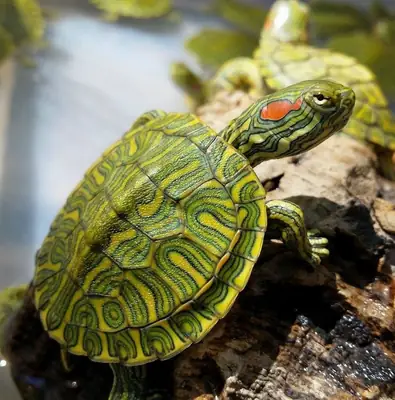
The Red Eared Slider (Trachemys scripta elegans) is one of the most popular pet turtle species worldwide. Recognized by the characteristic red stripes behind their eyes, this species can live 25-40 years with proper care and appropriate living conditions. This comprehensive guide provides all essential information for prospective and current Red Eared Slider owners.
1. Species Profile and General Characteristics
- Scientific Name: Trachemys scripta elegans
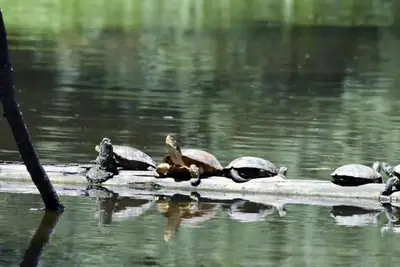
- Origin: North America (USA and Mexico), particularly the Mississippi River basin and surrounding areas.
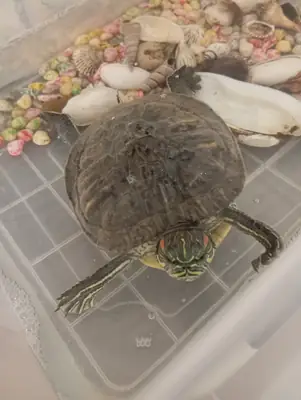
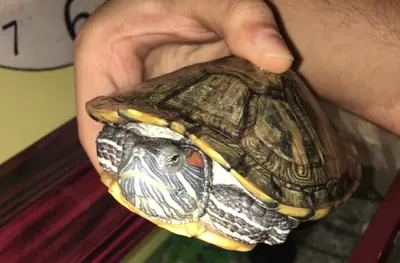
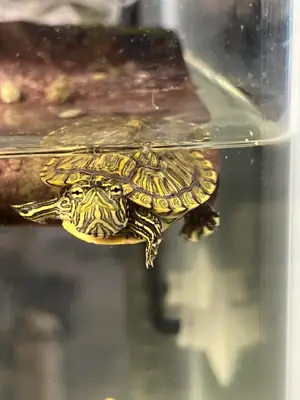
- Physical Characteristics: Distinctive red or orange stripes behind eyes, green-yellow patterned shell (carapace), yellow bottom shell (plastron) with dark spots. Hatchlings are bright green, colors darken in adults.
- Size: Adult females 9-11 inches (23-28 cm), males 8-10 inches (20-25 cm) shell length. Weight 2-4 lbs (1-2 kg).
- Lifespan: 25-40 years with proper care, some individuals can exceed 50 years.
- Sexual Dimorphism: Males have longer front claws, longer/thicker tail, flatter plastron. Females are larger with shorter tail.
2. Aquarium Setup and Habitat Requirements
2.1 Tank Size and Water Depth
| Age Group | Minimum Volume | Recommended Volume | Water Depth | Notes |
|---|---|---|---|---|
| Hatchling (<1 year) | 40 gallons (150L) | 55 gallons (200L) | 8-12 inches (20-30 cm) | Rapid growth, plan for tank upgrades |
| Juvenile (1-3 years) | 55 gallons (200L) | 75 gallons (300L) | 12-16 inches (30-40 cm) | Horizontal width important |
| Adult (3+ years) | 75 gallons (300L) | 100-125 gallons (400-500L) | 16-20 inches (40-50 cm) | 48×24×24 inch tank ideal |
| Pair (Breeding) | 100 gallons (400L) | 125-150 gallons (500-600L) | 16-20 inches (40-50 cm) | Wide swimming area and dry area required |
General Rule: At least 10 gallons of water per inch of shell length. Tank length should be at least 4-5 times shell length.
2.2 Water Parameters and Quality
| Parameter | Value Range | Optimal Value | Description |
|---|---|---|---|
| Water Temperature | 75-80°F (24-27°C) | 77-79°F (25-26°C) | Night drop should not go below 72°F, heater required |
| Basking Area Temperature | 85-95°F (29-35°C) | 88-92°F (31-33°C) | Must be provided with heat lamp, critical for thermoregulation |
| pH | 6.0-8.0 | 7.0-7.5 | Stability important, avoid sudden changes |
| Ammonia (NH3) | 0 ppm | 0 ppm | Strong filtration and regular water changes required |
| Nitrite (NO2) | 0 ppm | 0 ppm | Biological filtration critical |
| Nitrate (NO3) | <40 ppm | <20 ppm | Should be controlled with regular water changes |
2.3 Basking Area and Lighting
- Dry Area: Platform where turtle can completely exit water and dry (rocks, logs, special ramp). Must be easily accessible from water level.
- UVB Light: 10-12 hours daily UVB lamp (T5 HO UVB 10.0 or equivalent) absolutely required. Critical for D3 vitamin synthesis, calcium metabolism, and shell health. Replace every 6-12 months.
- UVA Light: Important for natural behavior and activity, UVB lamps usually include UVA.
- Heat Lamp: Must provide 88-92°F (31-33°C) temperature at basking area, thermostat control recommended.
- General Lighting: LED or fluorescent with 10-12 hour daily lighting cycle.
2.4 Filtration System
- Filter Type: Strong canister filter recommended. 3-5 times tank volume per hour water turnover ideal.
- Filter Capacity: Turtles are very messy, filter capacity should be 2-3 times tank volume.
- Maintenance: Monthly filter cleaning (without disrupting biological filtration), filter media replacement.
- Water Changes: Weekly 25% water change or bi-weekly 50% change. Use water conditioner for chlorine and heavy metals.
2.5 Decoration and Substrate
- Substrate: Large gravel stones (too large to swallow) or bare bottom. Small stones pose ingestion risk.
- Decoration: Safe hiding places (large rocks, driftwood), water-resistant plants (live or artificial), though most plants will be eaten.
- Security: Tank cover or screen must be secure (escape prevention), protection from children and other pets.
3. Pricing and Costs
- Turtle Prices (US): Hatchling: $10-30; Juvenile: $20-50; Adult: $30-80 (varies by size and quality).
- Aquarium Setup Cost: Starter 55G: $200-400; Mid-level 75G: $400-700; Professional 125G+: $800-1,400+.
- Equipment: Filter system ($80-200), UVB lamp and fixture ($60-120), heater ($20-50), basking platform ($20-80).
- Monthly Maintenance: $30-60 (food, water change supplies, electricity, filter media, UVB bulb replacement).
- First Year Investments: Aquarium setup, all equipment, decoration, food varieties, veterinary check-ups.
4. Nutrition Strategy and Diet Plan
Red Eared Sliders are omnivorous. Protein and plant matter ratios change with age. Hatchlings need more protein, adults need more plant matter.
4.1 Feeding by Age Group
| Age Group | Protein Ratio | Plant Ratio | Feeding Frequency | Examples |
|---|---|---|---|---|
| Hatchling (<1 year) | 50-60% | 40-50% | Daily or every other day | Small fish, shrimp, insects, pellets, greens |
| Juvenile (1-3 years) | 40-50% | 50-60% | Every other day | Pellets, fish, shrimp, dark greens, vegetables |
| Adult (3+ years) | 25-30% | 70-75% | Every 2-3 days | Dark greens, vegetables, aquatic plants, protein 1-2 times weekly |
4.2 Food Groups and Sources
| Food Group | Sources | Benefits | Notes |
|---|---|---|---|
| Protein Sources | Small fish, shrimp, worms, insects, turtle pellets | Growth, muscle development, energy | More frequent in hatchlings, 1-2 times weekly in adults |
| Dark Leafy Greens | Collard greens, mustard greens, dandelion, spinach (small amounts) | Vitamins, minerals, fiber | Large portion of daily diet |
| Vegetables | Zucchini, carrots, sweet potato, peas | Vitamins, antioxidants | Several times weekly |
| Aquatic Plants | Duckweed, water hyacinth, water lettuce | Natural feeding, fiber | Can be grown in aquarium |
| Fruits | Apple, strawberry, melon (small amounts) | Vitamins, sugar | Once weekly, 5-10% of diet |
| Supplements | Calcium powder, D3 vitamin, cuttlebone | Shell health, bone development | Critical with UVB light |
4.3 Feeding Tips
- Feeding Location: Feed in water if possible (aids digestion, reduces choking risk). Separate feeding container can be used.
- Portion Control: Amount consumable in 5-10 minutes. Overfeeding degrades water quality and leads to obesity.
- Food Variety: Do not feed single type, use various food sources.
- Calcium Supplement: Add calcium powder 2-3 times weekly (especially in hatchlings). Cuttlebone can be left in tank.
- Food Remains: Clean food remains after 15-20 minutes to maintain water quality.
5. Health Management and Disease Prevention
5.1 Healthy Turtle Signs
- Active and alert, regular feeding, hard shell (no lesions), clear eyes, normal skin, clear nose/vent.
- Regular basking, normal swimming behavior, good appetite.
5.2 Common Diseases and Symptoms
- Shell Softening (Metabolic Bone Disease - MBD): Inadequate UVB, calcium/D3 deficiency. Shell softens, deforms. UVB lamp and calcium supplement critical.
- Shell Rot: Poor water quality, fungal/bacterial infections. Soft, foul-smelling or discolored areas. Veterinary treatment required.
- Respiratory Infections: Nasal discharge, difficulty breathing, open-mouth breathing, swollen eyes. Temperature and water quality control, veterinary treatment.
- Ear Abscess: Swollen cheeks, loss of appetite. Caused by poor husbandry, veterinary intervention required.
- Eye Infections: Swollen or closed eyes, eye discharge. Water quality improvement and veterinary treatment.
- Parasites: Internal and external parasites. Regular observation and veterinary treatment when needed.
5.3 Preventive Care Protocols
- Regular Water Changes: Weekly 25% water change, regular water tests.
- Filter Maintenance: Monthly filter cleaning, filter media replacement.
- UVB Bulb Replacement: Replace UVB bulb every 6-12 months (effectiveness decreases).
- Daily Observation: Behavior, appetite, shell condition, eye health checks.
- Monthly Checks: Shell condition, growth, weight tracking, general health assessment.
- Veterinary Check-ups: 1-2 times yearly routine health check, immediate veterinarian for problem signs.
6. Breeding and Hatchling Care
6.1 Sexing and Sexual Maturity
- Males: Usually reach sexual maturity at 2-3 years. Long front claws, long/thick tail, cloaca far from tail base, flat plastron.
- Females: Usually reach sexual maturity at 4-5 years. Larger body, short tail, cloaca close to tail base, slightly concave plastron.
6.2 Mating and Egg Laying
- Mating: Occurs in water during spring months. Males perform courtship displays (claw fluttering), if accepted, mating occurs.
- Egg Laying: Females can lay 2-3 clutches per year, 6-24 eggs each (depending on size). Dry, moist soil or sand area required (approximately 10 inches deep).
- Nesting Area: Secure, well-drained but moist, sunny area. Egg location should not be rotated or disturbed.
6.3 Incubation and Hatchling Care
- Incubation Temperature: 79-90°F (26-32°C). Temperature affects sex: lower temperatures produce males, higher temperatures produce females.
- Incubation Period: 70-100 days depending on temperature.
- Hatchling Care: Separate rearing tank, clean warm water, appropriate UVB/heat, live food (small fish, invertebrates, pellets) and plant matter, careful attention to calcium and D3 vitamin.
7. Daily and Weekly Maintenance Routine
- Daily: Turtle observation (behavior, appetite, appearance), feeding, temperature check, equipment check, food remains cleaning.
- Weekly: Water change (25%), water tests (ammonia, nitrite, nitrate), glass cleaning, decoration check, filter check.
- Monthly: Filter maintenance, UVB bulb check, shell condition check, growth tracking, general aquarium cleaning.
- Every 6-12 Months: UVB bulb replacement, major cleaning, equipment renewal, aquarium rearrangement (if needed).
8. Frequently Asked Questions
How long do Red Eared Sliders live?
Can live 25-40 years with proper care conditions, some individuals can exceed 50 years. Lifespan depends on care quality, nutrition, and health management.
Is UVB lamp really necessary?
Yes, absolutely required. Without UVB light, D3 vitamin synthesis cannot occur, calcium metabolism is disrupted, and shell softening (MBD) occurs. This can be fatal.
How large a tank is needed?
Minimum 40 gallons (150L) for hatchlings, minimum 75 gallons (300L) for adults, ideally 100-125 gallons (400-500L). General rule: 10 gallons of water per inch of shell length.
Should turtles be kept alone?
Generally recommended to keep alone. If keeping pairs, large tank (125G+) and careful observation required. Male-male keeping can create aggression.
What foods should I feed?
Protein-heavy for hatchlings (pellets, small fish, shrimp), plant-heavy for adults (dark greens, vegetables, aquatic plants) balanced diet. Variety important.
How often should water be changed?
Weekly 25% water change or bi-weekly 50% change recommended. Can be adjusted based on filter power and tank load. Water quality tests should be done regularly.
9. Conclusion and Recommendations
Red Eared Slider can be a wonderful pet with proper care and appropriate living conditions. Large aquarium, strong filtration, UVB light, appropriate temperature, balanced feeding, and regular health checks are critical for success. This species is long-lived and requires long-term commitment. Hatchling turtles grow rapidly, so large tank planning should be done from the start. Without UVB light and calcium support, turtles can experience serious health problems. With regular water changes, quality filtration, varied feeding, and careful observation, your Red Eared Slider will enjoy a long, healthy, and happy life.