Lublin Parrot Adoption
There's 1 Parrot listing live right now, last updated 21 Apr 2026. Explore Lublin parrot adoption li... There's 1 Parrot listing live right now, last updated 21 Apr 2026. Explore Lublin parrot adoption listings on Petopic and find budgies, cockatiels, lovebirds, conures, African greys, amazons, macaws a... There's 1 Parrot listing live right now, last updated 21 Apr 2026. Explore Lublin parrot adoption listings on Petopic and find budgies, cockatiels, lovebirds, conures, African greys, amazons, macaws and other parrots looking for responsible homes; compare each bird by species, age, temperament, tameness, cage setup, diet, health background, CITES or legal-origin documents, closed ring or microchip status and rehoming conditions before adopting.
Haven't found the pet you're looking for? Let people who want to find a new home for their pet reach out to you.
Create your free pet adoption request listing now and be seen by thousands of pet owners.
Popular Searches
Lublin parrot adoption listings
Lublin parrot adoption listings should help people find birds that need responsible homes, not push emotional impulse decisions. A useful listing should show the bird’s species, age, sex if known, current area, tameness, diet, cage setup, noise level, health background, legal-origin documents and whether the bird has a closed ring, microchip or other identification.
On Petopic, users can review parrot adoption listings across Lublin and nearby areas such as Czechów, Wieniawa, Śródmieście, Kalinowszczyzna, Bronowice, Czuby, Felin, Sławinek, Tatary and the wider Lubelskie region. The right parrot is not the most colourful or the cheapest one; it is the bird whose needs match the adopter’s home, time, experience and long-term responsibility.
Adopt a parrot in Lublin
People searching to adopt a parrot in Lublin usually want a companion bird, but a parrot is not a decorative pet. The listing should explain how the bird behaves in real life: whether it steps onto a hand, screams when alone, bites when stressed, accepts other people, needs a large cage, or requires an experienced owner.
A strong adoption listing should also make the legal and welfare side visible. If the species may require CITES paperwork, legal-origin proof, ring details or microchip information, that must be clear before adoption. “Beautiful parrot looking for home” is not enough. The adopter needs facts that prevent a bad match and protect the bird.
Parrots for adoption in Lublin
Parrots for adoption in Lublin can include small birds like budgies and lovebirds, medium parrots like cockatiels and conures, or larger species like African greys, amazons and macaws. These birds do not have the same needs. Treating every parrot as the same type of pet is lazy and risky.
A good listing should identify the exact species and explain daily care: noise, diet, cage size, out-of-cage time, enrichment, handling, sleep routine and veterinary needs. The more intelligent and long-lived the species, the more serious the adoption decision becomes. A parrot can become a decades-long commitment.
Budgie adoption Lublin
Budgie adoption in Lublin is one of the strongest local bird intents because budgies are common, colourful and often seen as easy beginner birds. That assumption can be dangerous. Budgies still need space to fly, proper diet, companionship, safe perches, toys, clean water, and a home that understands their social behaviour.
A budgie listing should say whether the bird is single, bonded, hand-tame, aviary-raised, used to people, healthy and currently housed with other birds. If two budgies are bonded, separating them just because one bird looks nicer is a bad decision. Adoption should protect the bird’s existing social needs.
Cockatiel adoption Lublin
Cockatiel adoption in Lublin attracts people who want a gentle, social and manageable parrot-like bird. Cockatiels can be affectionate, but they can also be nervous, vocal, dusty and strongly attached to routine. The listing should explain whether the bird is hand-tame, whistles, accepts handling, panics outside the cage or needs a quiet home.
A serious cockatiel adoption listing should include age, sex if known, diet, cage setup, health notes, feather condition and whether the bird has lived alone or with other birds. If the bird plucks feathers, screams when alone or bites when frightened, that must be stated clearly. Hiding behaviour problems only moves the stress to the next home.
African grey parrot adoption Lublin
African grey parrot adoption is a serious search, not a casual pet enquiry. African greys are intelligent, sensitive, long-lived birds that can develop stress behaviours if kept without routine, enrichment and proper interaction. The listing should never sell the bird only through speech ability or cleverness.
An African grey adoption listing should include legal-origin documents, CITES information where required, ring or microchip details, age, diet, health background, handling level, noise, feather condition and reason for rehoming. If documents are missing or the story is vague, the listing is not trustworthy. With this species, paperwork and welfare are not optional details.
Macaw adoption Lublin
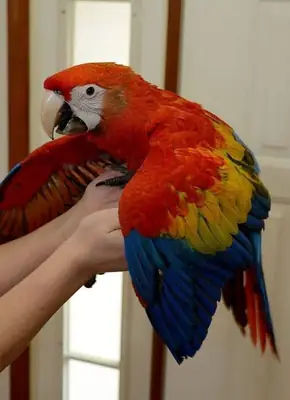
Macaw adoption in Lublin should be treated as an advanced bird-keeping decision. Macaws are large, loud, strong and highly social. They need space, durable enrichment, careful handling, a serious diet plan and someone who understands how powerful a stressed or frightened macaw can be.
A macaw listing must explain the exact species, documents, identification, age, diet, cage or aviary setup, handling level, bite history, vocal behaviour and rehoming reason. “Friendly macaw for adoption” is too thin. A proper listing helps filter out people who like the look of the bird but cannot handle the responsibility.
Amazon parrot adoption Lublin
Amazon parrots can be interactive, vocal and full of personality, but they are not quiet apartment decorations. Some amazons become territorial, loud or difficult during hormonal periods. A listing should explain the bird’s actual behaviour, not just call it “talking” or “tame”.
Before adopting an amazon parrot in Lublin, users should check documents, identification, health notes, diet, handling, noise level, time outside the cage and whether the bird tolerates multiple people. If the bird is strongly attached to one person or aggressive toward strangers, that must be visible in the listing.
Tame parrot adoption Lublin
Tame parrot adoption searches usually come from people who want a bird that steps up, accepts hands and interacts safely. But “tame” is not a magic label. A bird may be tame with one person and fearful with everyone else, or friendly inside the cage but defensive outside it.
A useful listing should explain what tame means in practice: does the parrot step onto a hand, allow head scratches, fly back, bite when startled, scream when ignored, or need slow introductions? Real behaviour details are much more valuable than a single word. If the listing cannot explain tameness clearly, it is weak.
Parrot with cage adoption Lublin
Parrot with cage adoption is a practical search because many adopters want to know whether the bird comes with its familiar setup. A cage, perches, toys and bowls can make the transition easier, but only if the cage is safe, clean and large enough for the species.
A listing should describe cage size, bar spacing, condition, accessories, diet, favourite toys and whether the bird uses the cage calmly. A cage included in the adoption does not automatically mean the setup is good. For parrots, cramped or unsafe housing creates stress, screaming, feather damage and long-term behaviour problems.
Parrot adoption with CITES documents Lublin
Parrot adoption with CITES documents is one of the most important intent areas for larger or protected species. The listing should make clear what documents exist, whether the bird has a closed ring or microchip, and whether the identification matches the paperwork. Vague claims like “everything is legal” are not enough.
Adopters should ask to see documents before agreeing to take the bird. Missing or inconsistent paperwork can create legal trouble and may indicate poor origin control. In exotic birds, a beautiful parrot without traceability is not a bargain; it is a risk.
List a parrot for adoption in Lublin
When listing a parrot for adoption in Lublin, write the species, age, sex if known, location, documents, ring or microchip details, health background, diet, cage setup, tameness, noise level, handling limits and the honest reason for rehoming. A lazy “parrot for adoption” post attracts the wrong people.
The goal is not to get the most messages. The goal is to find someone prepared for the bird’s real needs. If the parrot screams, bites, plucks, needs an experienced owner, dislikes children, cannot live with other birds or requires legal paperwork, say it clearly. Honest listings protect the bird.
Frequently Asked Questions
What should I check before adopting a parrot in Lublin?
Check the parrot’s exact species, age, sex if known, health background, diet, cage setup, tameness, noise level, feather condition, documents, legal origin and identification such as a closed ring or microchip where relevant. A listing with only a photo and “friendly parrot” is not enough.
You should also ask why the bird is being rehomed, whether it has seen an avian veterinarian, how it behaves with strangers, whether it bites or screams, and what daily routine it is used to. A transparent owner should answer these questions directly.
Do parrots in Poland need CITES documents?
Some parrot species may require CITES-related documentation or proof of legal origin. Requirements can depend on the species and its protection status, so adopters should never assume that paperwork is unnecessary just because the bird is already in a private home.
Before adopting, ask for documents, ring or microchip details and any registration or transfer information that applies. If the owner avoids document questions or says “it does not matter,” treat that as a serious red flag.
Is a parrot a good pet for beginners?
Some smaller parrots can be manageable for careful beginners, but parrots are not easy pets by default. They are intelligent, social, noisy, messy and sensitive to poor handling. Even a small budgie or cockatiel needs proper diet, space, enrichment and routine.
Large parrots such as macaws, African greys and amazons are usually not beginner-friendly unless the adopter has support, knowledge and time. Choosing a parrot because it talks or looks impressive is a weak reason. The care reality matters more than the fantasy.
What does “tame parrot” really mean?
“Tame parrot” can mean different things. It may mean the bird steps onto a hand, accepts food from people, enjoys head scratches, leaves the cage calmly or simply does not panic around humans. The listing should explain the actual behaviour instead of relying on one vague word.
A parrot that is tame with its current owner may need weeks or months to trust a new person. Adopters should expect a settling period and should not force handling. Rushing a frightened bird is how bites and trust problems start.
Should I adopt one parrot or a bonded pair?
If two parrots are bonded, separating them can cause stress, calling, feather issues or behavioural changes. A bonded pair should usually be considered together unless there is a strong welfare reason not to.
Adopting a pair means more space, more noise, more mess, more food and more veterinary planning. It can be rewarding, but only when the adopter is prepared for the full responsibility. Taking two birds because it sounds cute but planning for one is a bad move.
What cage setup does an adopted parrot need?
The cage must fit the species, wingspan, activity level and daily routine. It should have safe bar spacing, stable perches, clean bowls, toys, room to move and a location away from fumes, draughts and constant stress. A small cage is not acceptable just because the bird is small.
If the parrot comes with a cage, check whether it is actually suitable. Many birds are rehomed with cages that are too cramped or poorly equipped. A familiar cage can help transition, but it should not excuse bad housing.
How noisy are parrots in an apartment?
Parrots can be very noisy, and some species are unsuitable for noise-sensitive apartments. Even smaller birds can call loudly, especially at dawn, dusk, when bored or when seeking attention. The listing should be honest about vocal behaviour.
If you live in a flat in Lublin, ask how often the bird screams, what triggers noise and whether neighbours were an issue before. Ignoring noise before adoption is a stupid mistake. It can lead to stress for the bird and conflict for the adopter.
What should a parrot eat after adoption?
Diet depends on the species, but a parrot should not live only on random seed mixes. Many birds need a balanced diet with appropriate pellets, vegetables, safe fruit in moderation, clean water and species-specific guidance. Sudden diet changes can also stress the bird.
Before adopting, ask what the parrot currently eats, what foods it refuses, whether it has any digestive or weight issues, and whether an avian veterinarian has advised a diet plan. Feeding is not a side detail; it is central to long-term health.
How can I avoid unsafe parrot adoption listings?
Avoid listings that hide species details, lack documents for regulated birds, refuse identification questions, use stolen-looking photos, pressure fast adoption, demand money before proof, or describe the bird as perfect with no care needs. Every real parrot has needs and limits.
Ask for recent photos, video, documents, ring or microchip details, health history, diet, cage setup and behaviour notes. If the story changes or the owner avoids basic questions, walk away. A safe adoption should be transparent before any handover.
What should I write when listing a parrot for adoption?
Write the bird’s species, age, sex if known, location, documents, identification, health history, diet, cage setup, noise level, tameness, behaviour problems, reason for rehoming and what type of adopter is suitable. Do not write only “parrot for adoption”.
If the bird bites, screams, plucks feathers, needs an experienced handler, dislikes children, is bonded to another bird or requires special paperwork, say it clearly. A good listing filters out careless people and helps the parrot reach a stable home.