Lublin Red Macaw Parrot Adoption
There's 1 Parrot listing live right now, last updated 21 Apr 2026. Find Red Macaw Parrot adoption li... There's 1 Parrot listing live right now, last updated 21 Apr 2026. Find Red Macaw Parrot adoption listings in Lublin with the details that matter before taking responsibility for a large parrot: exact... There's 1 Parrot listing live right now, last updated 21 Apr 2026. Find Red Macaw Parrot adoption listings in Lublin with the details that matter before taking responsibility for a large parrot: exact species identification, legal origin, CITES or ownership documents, microchip or closed ring information, age, sex if known, health history, feather condition, beak and feet condition, diet, cage size, noise level, handling history, bite history, flight ability, reason for rehoming and safe transport plan. A Red Macaw Parrot, often searched as a Scarlet Macaw, Ara macao or ara czerwona in Poland, is not a decorative bird for a small cage; it needs experienced care, strong housing, daily enrichment, safe out-of-cage time, an avian vet plan and a home in Lublin, Śródmieście, Czechów, Wieniawa, Kalinowszczyzna, Bronowice, Felin or nearby areas that can handle a powerful, loud and long-lived companion bird responsibly.
Haven't found the pet you're looking for? Let people who want to find a new home for their pet reach out to you.
Create your free pet adoption request listing now and be seen by thousands of pet owners.
Popular Searches
Red Macaw Parrots for adoption in Lublin
Red Macaw Parrots for adoption in Lublin should never be treated like ordinary small pet birds. A red macaw is a large parrot with a powerful beak, strong social needs, loud calls, long lifespan and complex legal and care requirements.
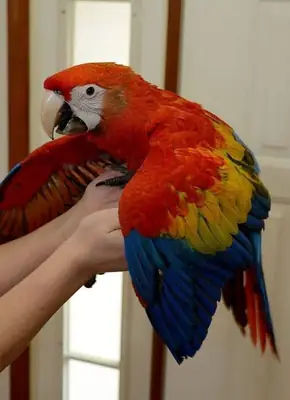
On Petopic, check every listing for exact species, legal origin, CITES or ownership documents, microchip or closed ring details, age, health history, feather condition, diet, cage size, handling level, bite history, noise level and reason for rehoming. A beautiful red bird photo is not enough for a safe adoption decision.
Adopt Red Macaw Parrot in Lublin
To adopt a Red Macaw Parrot in Lublin, start with proof and preparation, not excitement. The home must already have space for a large cage or indoor aviary, safe perches, chewing material, enrichment toys, a transport plan and access to a vet experienced with parrots.
Ask whether the bird steps up, flies, screams when left alone, bites, plucks feathers, accepts different people, sleeps properly and has lived with other birds. A red macaw can become a lifelong companion, but only if the adoption is built on real information rather than impulse.
Scarlet Macaw adoption Lublin
Scarlet Macaw adoption in Lublin usually matches the search intent behind “Red Macaw Parrot”. The bird may be listed as Scarlet Macaw, Ara macao, red macaw or ara czerwona, so the exact species must be confirmed before any handover.
A serious listing should show the bird’s identity, legal source, ring or microchip, health records, current diet, cage setup, behavior with people and transfer reason. If the owner cannot explain the species and paperwork clearly, the listing is too weak for this type of parrot.
Ara macao for adoption in Poland
Ara macao for adoption in Poland is a high-responsibility search because this is not a bird to move casually between homes. The scientific name should make the listing more precise, but it does not replace documents, identification and welfare details.
Before adoption, ask how the bird was identified, whether the documents match the individual bird, whether the ring or microchip can be checked, and whether the transfer is compliant. With macaws, vague origin is not a small problem; it is the main warning sign.
Ara czerwona adopcja Lublin
People in Lublin may also search in Polish for “ara czerwona adopcja Lublin”. That phrase should still lead to clear English content for adopters who need to understand the bird’s paperwork, care needs and rehoming risks.
If a listing uses Polish and English names together, make sure the meaning is consistent. Ara czerwona, Scarlet Macaw and Red Macaw should not be used loosely to describe any red parrot without proper species confirmation.
Red Macaw with CITES documents
A Red Macaw with CITES documents should still be checked carefully. The documents must match the specific bird, not just look official. Names, dates, identification numbers, ownership history and transfer conditions should all make sense together.
Do not accept vague phrases like “papers available” or “legal bird” without seeing what the paperwork actually proves. For a macaw, weak document information can turn a beautiful adoption into a legal and welfare problem.
Red Macaw with microchip or ring
A Red Macaw with a microchip or closed ring is easier to verify, but identification only helps if the details are readable, consistent and linked to the correct documents. A ring number in a photo is useful only when the owner can explain the bird’s history.
Ask for clear identification photos, document matches, hatch year if known and ownership trail. If the bird is expensive, rare-looking or being rehomed urgently, identity checks become even more important.
Captive-bred Red Macaw adoption
Captive-bred Red Macaw adoption should be supported by traceable history. Captive-bred does not mean “someone said so”; it should come with documents, breeder or previous owner details, identification and a care record.
Ask when the bird was hatched, whether it was hand-reared or parent-reared, whether it has moved homes before and whether it has any long-term behavior issues. A legal origin is the first step; good care history is the next one.
Macaw parrot rehoming Lublin
Macaw parrot rehoming in Lublin often happens because of noise, moving, family changes, lack of time, biting, overbonding, feather plucking or the bird becoming too difficult for the current home. The reason for rehoming is not a detail; it tells you what you may inherit.
A good rehoming listing explains what the bird is like on a normal day: morning calls, cage behavior, favorite person, fear triggers, diet, sleep routine and reaction to visitors. A listing that hides the difficult parts is not protecting the bird or the adopter.
Red Macaw rescue Lublin
A Red Macaw rescue in Lublin may involve a bird that has already been through stress, poor housing, wrong diet, neglect or multiple homes. Rescue does not mean easy; it means the next owner must be more patient and better prepared than the last one.
Ask whether the bird has plucked feathers, screamed excessively, bitten, bonded to one person, refused food changes or reacted badly to handling. A rescue macaw can improve, but only with stability, time and experienced care.
Tame Red Macaw for adoption
A tame Red Macaw for adoption still needs careful verification. “Tame” can mean many things: stepping up for one person, allowing head scratches, accepting visitors, taking treats gently or simply not attacking when left alone.
Ask for a real interaction video, not just a shoulder photo. Watch body language, eye pinning, feather posture, beak pressure, willingness to step down and reaction when the preferred person leaves. A macaw can look calm while being stressed.
Red Macaw that bites
A Red Macaw that bites is not automatically a bad bird, but the risk is serious because a macaw beak can cause real injury. Biting may come from fear, hormonal behavior, poor training, overbonding, pain, cage guarding or repeated forced handling.
The listing must explain when the bird bites, how hard it bites, who it bites, whether it gives warning signals and how the current owner handles it. If bite history is hidden, the adoption is not honest.
Red Macaw screaming problem
A Red Macaw screaming problem can break an adoption quickly, especially in an apartment or shared building. Macaws naturally vocalize, but constant screaming may come from boredom, separation stress, lack of sleep, attention-seeking or poor routine.
Ask how often the bird screams, at what times, what triggers it, whether neighbors complained and whether the bird can settle alone. Do not adopt a macaw if you need a quiet pet; this bird is not built for silence.
Red Macaw feather plucking
Feather plucking in a Red Macaw is a serious welfare signal, not a cosmetic issue. It can be linked to stress, boredom, pain, skin irritation, poor diet, lack of bathing, sleep disruption or long-term emotional problems.
Ask when plucking started, whether an avian vet has seen the bird, whether feathers regrow, what areas are affected and what the current routine looks like. A plucking macaw may need experienced care, not a curious first-time owner.
Red Macaw cage size
Red Macaw cage size must match a large, strong, active parrot. A small decorative cage is unacceptable. The bird needs space to move, climb, stretch wings, use perches, shred toys and rest without crowding.
Ask for cage dimensions, bar strength, bar spacing, perch types, toy rotation, cleaning routine and daily out-of-cage time. If the listing says “comes with cage”, inspect whether that cage is actually safe for a macaw.
Red Macaw diet after adoption
Red Macaw diet after adoption should not change suddenly. A seed-heavy or nut-heavy diet can create long-term health problems if it is not balanced with suitable pellets, vegetables, safe fruits and controlled treats.
Ask exactly what the bird eats now, what it refuses, whether it accepts pellets, whether it is overweight, whether droppings are normal and whether any foods caused problems. Food transition must be slow because stress and diet change together can backfire.
Red Macaw for experienced owners
A Red Macaw is best suited to experienced owners or very well-prepared adopters. This bird is loud, intelligent, strong, social and demanding. It can outlive many life plans, so adoption must be treated as a long-term commitment.
Before applying, be honest about your schedule, housing, noise tolerance, budget, bird-handling skills and access to avian veterinary care. Wanting a spectacular parrot is not the same as being ready for one.
Red Macaw in an apartment
A Red Macaw in an apartment is usually a difficult match. Noise, space, neighbors, safe flight time, cage size, chewing damage and air quality all become major issues. The bird may be physically present in an apartment, but that does not mean the setup is fair.
In Lublin apartments, think about walls, neighbors, balcony safety, kitchen fumes, windows, heating, ventilation and daily routine. If the home cannot handle loud calls and a large enclosure, the adoption should stop before the bird suffers another rehome.
Red Macaw with other parrots
A Red Macaw should not be placed directly with other parrots after adoption. Size difference, disease risk, territorial behavior, jealousy, bonded behavior and beak strength can create dangerous conflicts.
Ask whether the macaw has lived with other birds, whether it attacked, chased, screamed at or bonded with them. A quarantine period and slow introduction are not optional if there are already birds in the home.
Transporting a Red Macaw in Lublin
Transporting a Red Macaw in Lublin must be planned with a strong, secure, ventilated carrier. A cardboard box, open cage or loose car ride is not acceptable for a large parrot with a strong beak and high stress response.
Plan the route, temperature, handover time and arrival cage before pickup. After transport, let the bird settle quietly instead of forcing handling, photos, talking practice or immediate contact with strangers.
Red Macaw adoption Lublin and nearby areas
Red Macaw adoption in Lublin and nearby areas may include listings from Świdnik, Lubartów, Kraśnik, Puławy, Łęczna, Chełm or other towns in the region. Distance matters for transport, but it should never outrank documents and care quality.
A nearby listing with unclear papers, poor diet and a stressed bird is worse than a farther listing with transparent records and careful handover. Choose the adoption that protects the macaw, not the one that is easiest to collect.
Frequently Asked Questions
What kind of animal is a Red Macaw Parrot?
A Red Macaw Parrot is a large parrot, not a small cage bird. The phrase may refer to a Scarlet Macaw, Red-and-green Macaw or another red-dominant macaw, so exact species identification is essential.
Macaws are intelligent, loud, strong and long-lived birds. They need space, daily interaction, enrichment, safe chewing materials, proper diet, legal documents and experienced handling.
What should I check before adopting a Red Macaw in Lublin?
Check the exact species, legal-origin documents, CITES paperwork where required, ring or microchip details, age, sex if known, health records, cage setup, diet, temperament, bite history, noise level and reason for rehoming.
Ask for recent photos and videos showing the bird standing, moving, eating, vocalizing and interacting naturally. A single colorful photo is not enough for a responsible adoption decision.
Is a Red Macaw suitable for beginners?
Usually no. A Red Macaw is too loud, strong, demanding and long-lived for most unprepared beginners. It requires large-parrot experience or a very serious preparation plan.
If you have only kept small birds, do not assume the same skills are enough. A macaw needs stronger housing, safer handling, more enrichment, better noise tolerance and access to an avian vet.
Does a Red Macaw need legal documents in Poland?
For a large exotic parrot, legal-origin documents should be treated as essential. Depending on the species and status, CITES-related paperwork and individual identification may be required or expected during transfer.
Do not adopt a macaw if the current keeper cannot explain where the bird came from, what documents exist and how the paperwork matches the individual bird.
Is a Scarlet Macaw the same as a Red Macaw?
Not always. Many people use “Red Macaw” loosely, but it may mean Scarlet Macaw, Red-and-green Macaw or another macaw with strong red coloring.
Before adoption, ask for the exact species name and supporting documents. The species affects legal status, adult size, behavior expectations, care needs and paperwork.
How much space does a Red Macaw need?
A Red Macaw needs a large, strong cage with heavy-duty locks, safe bar spacing, varied perches, chewable enrichment, room to move and a safe play area outside the cage.
The cage should not be the bird’s whole life. A macaw also needs supervised out-of-cage time, climbing space, toy rotation and daily interaction.
Is a Red Macaw too loud for an apartment?
It can be. Macaws are naturally loud birds, and their calls may be difficult in apartments, shared buildings or homes with noise-sensitive neighbors.
Before adoption, ask when the bird screams, how often it vocalizes, whether noise complaints happened and whether the current owner is rehoming it partly because of sound.
What should a Red Macaw eat?
A Red Macaw should not live only on sunflower seeds, nuts or human snacks. A healthier routine usually includes appropriate formulated parrot food, safe vegetables, fruits, controlled treats and clean water.
Ask what the bird currently eats before changing the diet. Sudden changes can cause refusal and stress, so any diet improvement should be gradual.
Can a Red Macaw bite badly?
Yes. A Red Macaw has a powerful beak and can cause serious injury if frightened, territorial, overstimulated, hormonal, in pain or mishandled.
Ask for the bird’s bite history, triggers, handling limits and whether it is safe with strangers. A bite history does not automatically make the bird unadoptable, but hiding it is a major warning sign.
Can a Red Macaw bond to only one person?
Yes, many macaws can form strong preferences and may become defensive around other people if not socialized carefully.
Before adoption, ask who handles the bird now, whether it attacks certain family members, whether it guards one person and how it reacts to strangers. One-person bonding can shape the entire adoption plan.
What are warning signs of poor health in a Red Macaw?
Warning signs include fluffed posture, weakness, weight loss, poor appetite, abnormal droppings, heavy breathing, tail bobbing, nasal discharge, dull eyes, feather plucking, wounds, foot problems or overgrown beak.
Ask for vet records and a recent video. If the bird looks quiet, withdrawn or unstable, do not assume it is simply calm.
How should a Red Macaw be transported in Lublin?
Use a strong, secure, ventilated carrier suitable for a large parrot. Avoid weak boxes, unsafe travel cages, exposure to cold, heat, wind, loud stress or unnecessary handling during transport.
The new cage and quiet arrival area should be ready before pickup. After arrival, let the bird settle and observe eating, droppings, breathing and behavior before pushing interaction.