Free Rhodesian Ridgeback for Adoption
There are 3 Rhodesian Ridgeback listings live right now, last updated 5 Apr 2026. Browse free Rhodes... There are 3 Rhodesian Ridgeback listings live right now, last updated 5 Apr 2026. Browse free Rhodesian Ridgeback adoption and rehoming adverts from around the UK. One profile may describe an older do... There are 3 Rhodesian Ridgeback listings live right now, last updated 5 Apr 2026. Browse free Rhodesian Ridgeback adoption and rehoming adverts from around the UK. One profile may describe an older dog that prefers a quiet household, while another may feature a younger Ridgeback still learning recall or a cross with a very different routine. Open the individual advert before deciding whether to make contact, as the history of that dog matters more than the breed label. Availability and the next steps come directly from the owner or rescue responsible for the dog.

not suitable for my current setup
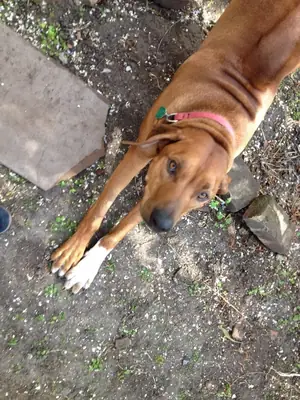
requires a more structured and active environment

Athletic Rhodesian Ridgeback
Haven't found the pet you're looking for? Let people who want to find a new home for their pet reach out to you.
Create your free pet adoption request listing now and be seen by thousands of pet owners.
While waiting for answers from pet friends, would you like to support homeless street animals?
At petopic, every pet friend who completes daily tasks means 1 bowl of food donated to a street animal. You can view your daily tasks from your profile.
Rhodesian Ridgeback in 2026: Temperament, Costs, and Health Insights for New Owners
Explore Rhodesian Ridgeback traits, costs, and health. Get detailed breed facts, price insights, and a comprehensive FAQ for informed adoption.
Popular Searches
Rhodesian Ridgeback adoption
A strong Rhodesian Ridgeback adoption section should move past appearance and deal with the real work of living with this breed. The most useful listings show how much daily exercise the dog gets, whether it has safe structured outdoor time, how it behaves indoors after activity, and whether it already lives as a true house dog instead of a dog being managed at a distance.
The best content here should also screen the home fit early. A Ridgeback needs a family that can handle size, independence, prey drive, and regular training. Good listings explain routine, household rules, visitor management, and how the dog behaves when the day becomes quiet.
Rhodesian Ridgeback rescue near me
A useful local rescue section should make location, meeting expectations, and transport limits clear from the start. The visitor should be able to tell whether the dog is actually nearby, whether the rescue places regionally first, and whether travel will become part of the process before they invest time in a specific dog.
The strongest version of this section also explains how the first steps work. Rescue enquiries, application review, screening calls, and home checks matter more than impulse clicks. If the rescue expects adopters to stay within a service area or help with transport, the page should say that plainly.
adopt a Rhodesian Ridgeback
This section should help the adopter move from curiosity to a serious shortlist. The right content here is not generic breed praise. It is current availability, training expectations, family fit, lead manners, and the home setup that will actually keep the dog safe and stable.
When this section is done properly, it filters bad matches early. It should make clear whether the Ridgeback needs an experienced home, a fenced yard, older children, calmer dog introductions, and closer family involvement than the average adopter first assumes from a short-coated large dog.
free Rhodesian Ridgeback rehoming
A strong rehoming section should explain why the dog is leaving its current home and what that means for the next one. With a Ridgeback, the useful questions are practical: Was the dog under-exercised, poorly socialized, left alone too much, expected to tolerate constant visitors, or matched to a home with the wrong children or other pets?
The best listings here give the next adopter the full handover picture. They should say what the dog is used to, whether it sleeps indoors, how it handles visitors, what kind of yard or exercise routine it has known, and what routines must stay consistent so the same mismatch does not happen again.
Rhodesian Ridgeback dogs and puppies near me
This section works best when it helps the visitor compare age groups honestly instead of blending them together. Ridgeback puppies, adolescents, and adults do not ask for the same kind of home, and the page should make that obvious immediately.
Puppies need early socialization, body-handling work, fence-safe routines, and intense consistency around boundaries. Adults give a much clearer picture of stranger reserve, dog tolerance, recall, and house settling. The section should make those tradeoffs visible instead of flattening everything into one message.
adult Rhodesian Ridgeback adoption
An adult Ridgeback section should focus on known behaviour instead of potential. By adulthood, the adopter should be able to see how the dog handles visitors, how solid its recall is, whether it can live with other pets, and whether it settles well in the house after exercise.
The strongest listings here also explain what part of training is already done. An adult Ridgeback can be a much cleaner match when the page says clearly whether the dog walks well on lead, can be left briefly, accepts handling, and understands how to live indoors with a family.
Rhodesian Ridgeback fenced yard
A fenced-yard section should make safety practical. For a Ridgeback, this is not decorative. The yard is part of the daily management plan because the breed is fast, powerful, and highly willing to chase movement beyond the property line.
The strongest listings here should explain what kind of fencing the dog has known, whether the rescue requires physical fencing, and whether safe outdoor time requires a fully enclosed structure. Weak wording here creates bad placements, so the page should be direct.
Rhodesian Ridgeback recall and off leash
This section should deal with reality, not optimism. A Ridgeback may be trainable, but prey drive and speed make off-leash freedom a safety issue, not a casual lifestyle choice.
The best content here explains whether the dog is only safe off leash in fenced areas, whether long-line work is still needed, and whether a newly adopted rescue Ridgeback should be kept on lead for a serious adjustment period while routine and trust are rebuilt properly.
Rhodesian Ridgeback experienced owner
This section should explain what experience actually means in practice. It is not just about having owned a large dog before. It is about handling strong prey drive, controlled introductions, calm leadership, consistent boundaries, and a dog that may test weak structure very quickly.
The strongest content here should say whether the rescue truly requires prior large-breed or guardian-type experience, or whether a first-time Ridgeback owner could still succeed with the right home, fence, training plan, and realistic expectations.
Rhodesian Ridgeback with older children
This section should stay practical about household fit. A Ridgeback may be devoted to family, but that does not mean every home with very young children is automatically suitable.
The best listings should explain whether the dog has lived with children before, how physically exuberant or boundary-sensitive it is, and whether the home needs older children who can respect space, avoid rough chaos, and follow clear supervision rules around a large powerful dog.
Rhodesian Ridgeback with other dogs and cats
This section should be built around observed behaviour, not lazy assumptions. A Ridgeback may do well with known dogs and can sometimes live with cats if socialized well, but the page should say what has actually been seen in foster care or prior homes.
The strongest listings explain whether the dog has lived with other pets, how it handles unknown dogs, whether same-sex tension has ever been an issue, and what kind of introductions are needed. That kind of detail prevents sloppy matching.
Rhodesian Ridgeback can be left alone
This section should explain the conditions, not give fantasy reassurance. A Ridgeback may cope with some alone time if training, exercise, and household routine are already solid, but too much isolation can create boredom, roaming behaviour, destructive habits, or escalating protectiveness.
The most useful listings tell the truth about what the dog already manages. They should say whether the Ridgeback can rest calmly for short periods, whether it needs a structured schedule first, and whether the next home needs a more present daily rhythm than the adopter first planned.
Rhodesian Ridgeback rescue application
A strong rescue-application section should explain the actual screening path. With specialist Ridgeback rescue, that often means a written application first, coordinator review, reference checks including a veterinarian, and a home check before the dog is approved for placement.
The best content here also explains what happens after approval. The adopter should know whether the rescue places dogs based on fit rather than speed, whether all family members and pets must be present for the home check, and whether approval leads to matching rather than an immediate dog hold. That makes the page useful instead of vague.
Frequently Asked Questions
What kind of home usually suits a Rhodesian Ridgeback best?
A Rhodesian Ridgeback usually suits a home that can offer serious daily exercise, close family involvement, secure outdoor management, and calm consistent structure. This is not a breed that stays balanced on a short walk, weak boundaries, and vague household rules.
A strong listing should explain whether the home suits a dog that wants to live inside with the family, move with purpose every day, and be handled by people who understand size, prey drive, and independence. The right match is about safety, routine, and maturity in the humans as much as in the dog.
Why do Rhodesian Ridgebacks need secure fences and careful lead use?
Because this breed has real speed, strength, and prey drive. Once a Ridgeback decides to chase something, weak fencing and wishful recall can fail very quickly.
The best adoption pages make this practical. They explain whether the dog has safe fenced running, whether the rescue requires physical fencing, and whether off-leash freedom is limited to secure enclosed spaces instead of open public areas.
Why are Rhodesian Ridgebacks often described as reserved or protective with strangers?
Because reserve is part of the breed picture. A Ridgeback is often devoted to its own people but more measured around visitors, unfamiliar dogs, and sudden new situations.
A useful listing should explain what that looks like in practice. It should say whether the dog is simply calm and aloof, whether it alerts and becomes suspicious around visitors, and whether the next home needs a slower, more controlled introduction style instead of assuming instant social ease.
Are Rhodesian Ridgebacks really better suited to experienced owners?
Often yes, because the challenge is not just size. It is managing independence, prey drive, stranger handling, and consistent structure without getting into a constant battle of wills.
The best pages should be honest about that. A Ridgeback can work well for the right home, but a strong listing should say clearly whether the rescue expects prior large-dog experience or whether a very prepared new owner could still be considered with the right setup.
Are Rhodesian Ridgebacks good with children?
Sometimes yes, but the useful answer is always about the individual dog and the individual household. Many Ridgebacks do better with older children who can respect boundaries, follow rules, and avoid chaotic rough handling.
A strong listing should explain what is already known. If the dog has lived with children before, say that. If the rescue prefers older children only, say that too. Honest household fit is far more useful than generic family-dog language.
Can a Rhodesian Ridgeback live with other dogs or cats?
Possibly, but only when the page explains what has actually been observed. A Ridgeback may do well with known dogs and can sometimes live with cats if socialized well, but unknown dogs, same-sex tension, and chase behaviour need to be assessed honestly.
The best listings should say whether the dog has lived with other pets, whether supervised introductions are still required, and whether any combinations are clearly unsuitable. That is much more valuable than broad promises about compatibility.
Can Rhodesian Ridgebacks be left alone for long hours?
Often not comfortably without structure, and sometimes not without real problems developing. A Ridgeback that gets too little exercise and too little guided routine can turn boredom into roaming, destruction, or difficult behaviour.
A useful listing should explain what the dog already manages. Serious adopters need to know whether the Ridgeback can rest calmly for short periods, whether training is still needed, and whether the next home requires a more present daily pattern than the adopter first planned.
Do Rhodesian Ridgebacks need as much exercise as people say?
Yes, and the useful question is what kind. A Ridgeback usually needs vigorous daily exercise and more than just yard access. The best routine combines structured walks, controlled running, and consistent interaction instead of assuming the dog will tire itself out alone.
A strong adoption page should explain what the dog currently does each day. That gives the adopter something real to compare against their own schedule instead of guessing from breed reputation alone.
Why are adult Rhodesian Ridgebacks often easier to match than puppies?
An adult Ridgeback usually gives a much clearer picture of prey drive, visitor handling, dog tolerance, recall, and indoor settling. That makes matching much more honest.
A puppy may look simpler than it really is, but a mature Ridgeback tells you far more clearly whether the home and routine are actually right. For many adopters, that clarity is worth more than starting from scratch with a very strong-willed young dog.
What should a strong Rhodesian Ridgeback adoption listing include?
A strong listing should do much more than say the dog is loyal and needs a loving home. It should clearly show age, sex, location, exercise routine, recall reality, time left alone, fenced-yard needs, visitor handling, and whether the dog has lived in rescue, foster care, or a settled home before.
For this breed, the best listings also explain child and other-pet history if known, training style, house-dog routine, and whether the rescue or owner is looking for an experienced home, older children, or a calmer environment with stronger daily structure. That is what separates serious enquiries from wasted time.