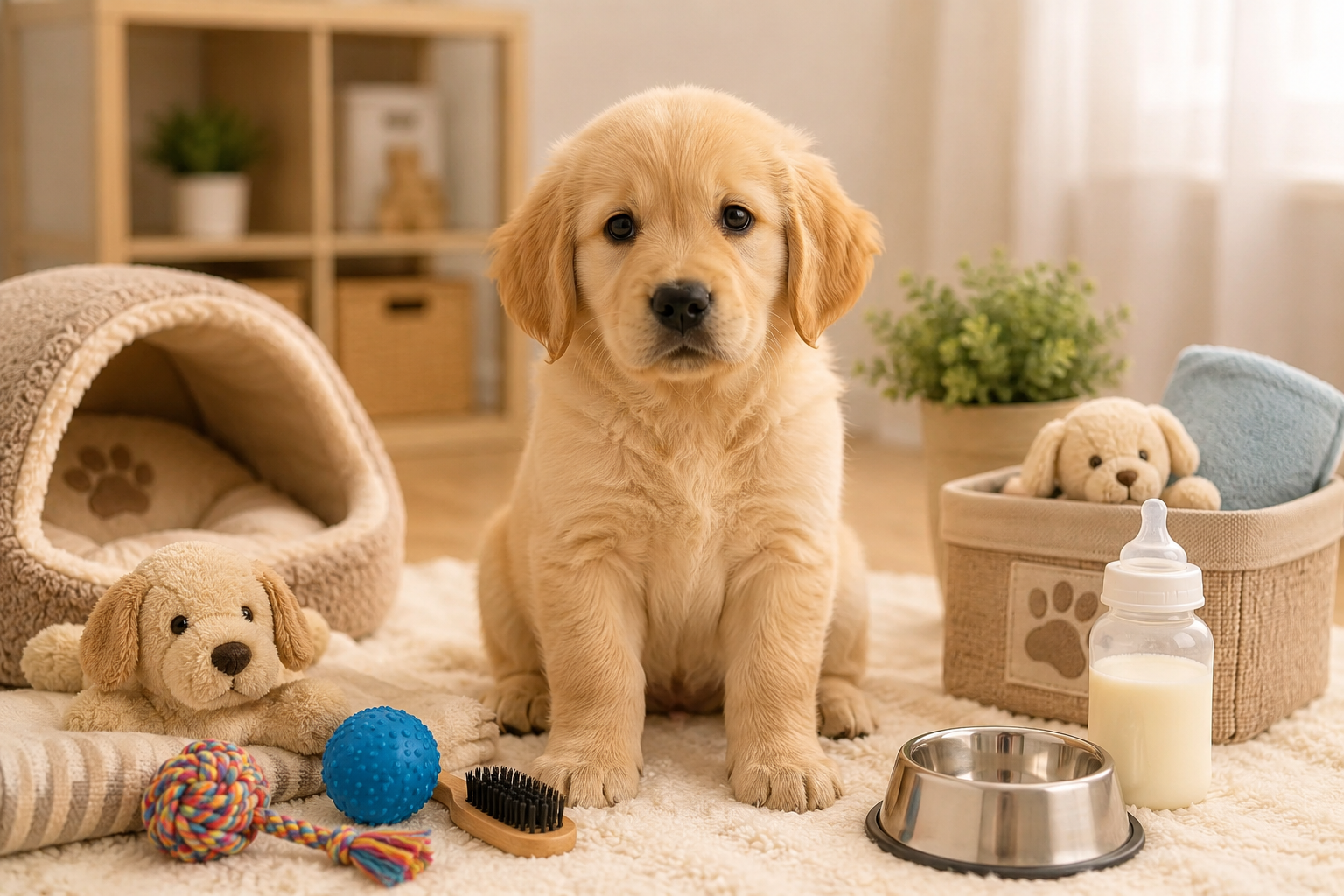
Puppy care is not just buying a cute bed, putting food in a bowl and waiting for your puppy to magically become well behaved. That is a weak plan. A puppy arrives with no understanding of your home, your routine, your floors, your shoes, your sleep schedule, your neighbours or your expectations. If you do not build structure early, the puppy will build habits for you, and you may not like the result.
This puppy care guide is written for the first year, from the first day your puppy comes home to the stage where they are moving towards adulthood. It covers the first night, safe setup, feeding, water, toilet training, first vet visit, vaccinations, flea and worming care, microchipping, puppy socialisation, biting, chewing, barking, lead training, being left alone, sleep, play, home safety, rescue puppies and warning signs such as diarrhoea, vomiting and weakness.
Let’s be blunt: a puppy is not a toy, not a decoration and not a short-term excitement project. Puppies need affection, but affection alone is not care. Real care means routine, boundaries, health checks, training, safe exposure, proper rest and consistent decisions. If you wing it, the puppy pays for your laziness.
Why Puppy Care Is Different From Adult Dog Care
A puppy is not just a smaller adult dog. Puppies are still developing physically, mentally and socially. Their immune system is still maturing, their digestion can be sensitive, their bladder control is poor, their sleep needs are high, their confidence is fragile and they explore the world with their mouths. That is why the first months need more planning than many new owners expect.
An adult dog may already understand basic routines, toileting habits, handling, walks and settling. A puppy does not. They need to learn where to sleep, where to toilet, what to chew, how to meet people, how to be alone, how to respond to their name and how to relax in a busy human home.
Good puppy care includes:
- A safe starting area: do not open the whole house immediately.
- Proper puppy food: puppies need food designed for growth.
- Toilet training: this takes timing, repetition, patience and rewards.
- Vet planning: vaccinations, flea and worming care, weight and general health need a plan.
- Microchipping: in the UK, this is not optional for dogs.
- Socialisation: safe, positive exposure matters early.
- Training and play: biting, chewing, barking and lead skills need guidance.
- Home safety: puppies chew, swallow, climb and get into trouble fast.
What to Prepare Before Bringing a Puppy Home
Do not bring a puppy home and then start panic-buying food, bowls, puppy pads, leads and toys. That is poor preparation. Your puppy’s first day will already be stressful. Your job is to reduce chaos, not create more of it.
Before your puppy arrives, prepare:
- Complete puppy food
- Clean water bowl
- Washable bed or sleeping area
- Puppy pads or a clear outdoor toilet plan
- Non-slip food and water bowls
- Collar or harness
- Lead
- Carrier or car safety setup
- Safe chew toys
- Reward treats
- Grooming brush
- Enzyme cleaner for accidents
- Vet appointment plan
- A puppy-proofed area with wires, cleaning products and small objects removed
The first area should be easy to clean, calm and not too large. A kitchen corner, utility area or puppy pen can work if it is safe, warm and supervised. The point is not to trap the puppy. The point is to help them learn the first routine without giving them the whole house to toilet in, chew and get lost in.
First Day With a New Puppy
When your puppy first arrives, your priority is not showing them to every visitor, putting them in everyone’s arms or starting obedience training immediately. Your first priority is calm adjustment. The puppy has likely left their mother, littermates, familiar smells and previous routine. That is a huge change.
On the first day:
- Take your puppy to the prepared safe area.
- Show food, water, bed and toilet area.
- Keep the house calm.
- Do not overwhelm the puppy with visitors.
- Supervise children carefully.
- Do not bathe the puppy unless there is a real need.
- Keep play short and gentle.
- Watch appetite, stool, urination, vomiting and energy.
A puppy may be quiet, sleepy, clingy or slightly unsure on day one. That can be normal. Repeated vomiting, bloody diarrhoea, severe weakness, breathing difficulty, collapse, constant crying with pain or refusal to drink should not be dismissed as “settling in”.
First Night With a Puppy
“First night with a puppy” is one of the most searched puppy topics in the UK because the first night can be rough. Your puppy may cry because they are separated from their litter, confused by the new home, cold, lonely, needing the toilet or simply frightened.
The answer is not shouting, punishment or pretending the puppy is manipulating you. The answer is good setup:
- Give a final toilet opportunity before bedtime.
- Use a warm, safe sleeping area.
- Keep water available unless your vet advises otherwise.
- Do not use the bed or crate as punishment.
- Keep the room calm and dim.
- Do not turn crying into a big dramatic event.
- Stay consistent with where the puppy sleeps.
Some crying is normal. But crying with diarrhoea, vomiting, trembling, a swollen belly, severe weakness or breathing difficulty is not just “missing mum”. That needs proper attention.
Where Should a Puppy Sleep?
A puppy should sleep somewhere warm, dry, quiet and safe. The bed should not be in a draught, next to a loud washing machine, in a busy hallway or somewhere children will keep waking the puppy. Rest is part of care, not an optional extra.
A good puppy sleeping area should be:
- Warm but not overheated
- Easy to clean
- Away from heavy foot traffic
- Close enough that the puppy does not panic
- Separate from the toilet area
- Safe from chewing hazards
Letting a puppy sleep in your bed is a long-term decision. If you allow it from night one, do not be surprised when the puppy expects it later. If you do not want an adult dog in your bed, start with a separate sleeping routine from the beginning.
Puppy Feeding: What Should a Puppy Eat?
Puppy feeding is one of the foundations of healthy growth. Puppies need complete food made for growth, not random leftovers, cow’s milk, adult dog food, bones, biscuits, toast, cheese or whatever the household happens to be eating.
Good puppy food should be:
- Designed for puppies or growth
- Suitable for the puppy’s expected adult size
- Complete and balanced
- Clear about feeding amounts
- Introduced gradually if changing from the previous food
- Monitored through stool, weight, coat, energy and appetite
Breed size matters. A small breed puppy and a large breed puppy do not grow in the same way. Large breed puppies especially need controlled growth rather than uncontrolled weight gain. If you want a deeper food decision system, read how to choose the best dog food.
How Many Meals Should a Puppy Have?
Puppies usually do better with several smaller meals rather than one large meal. Exact meal frequency depends on age, breed size, body condition, food type and veterinary advice. Very young puppies should not be left too long without food.
Do not blindly copy feeding grams from a random chart online. The feeding guide on the food packet is only a starting point. You still need to monitor weight, body shape, stool quality, hunger, energy and growth. If your puppy is constantly hungry, gaining too fast, losing weight, vomiting or having diarrhoea, the feeding plan needs review.
Can Puppies Drink Cow’s Milk?
No, cow’s milk is not a sensible default for puppies. Many puppies cannot digest it well and may develop diarrhoea. A puppy with diarrhoea can deteriorate faster than you think, especially if they are small or newly arrived.
If a puppy is orphaned or too young for solid food, do not improvise with cow’s milk. They may need proper puppy milk replacer and correct feeding technique under veterinary guidance. Incorrect bottle feeding can cause aspiration, digestive upset and serious harm.
Puppy Care by Age
Puppy care changes quickly with age. A four-week-old puppy and a four-month-old puppy are completely different responsibilities. Advice that ignores age is usually shallow.
0–4 Weeks
This stage should ideally be spent with the mother and littermates. Very young puppies need warmth, milk, toileting support and close monitoring. If a puppy is orphaned, weak or unable to feed properly, this is not a DIY project for internet guesswork.
A puppy at this age should not be treated like an older puppy. Crying constantly, being cold, failing to suckle, diarrhoea, weight loss or weakness need urgent veterinary advice.
4–8 Weeks
This is the weaning and early learning stage. Puppies begin moving towards puppy food, but they still benefit from the mother and littermates where possible. Littermate interaction helps with bite inhibition and social behaviour.
Separating puppies too early can make future behaviour harder. If a puppy is already in your care at this age, feeding, warmth, gentle handling and veterinary planning are especially important.
8–12 Weeks
Many puppies go to new homes during this stage. This is where the owner’s real work begins: safe area, feeding, toilet training, first vet visit, vaccines, flea and worming care, early socialisation, sleep routine and gentle training.
If your puppy has just come home, plan the vet visit early. Use what should be done at the first vet visit to prepare the right questions before you go.
3–6 Months
This is the bite, chew, run, jump, test-everything stage. Your puppy may attack sleeves, chew shoes, steal socks, pull on the lead and forget everything they seemed to know yesterday. Some of that is normal. Letting it become a permanent habit is not.
This stage needs safe chew toys, short training sessions, toilet routine, controlled socialisation, calm handling and early lead practice. Do not try to exhaust the puppy into good behaviour. Over-tired puppies often become worse.
6–12 Months
This is adolescence. Your puppy may become more independent, more confident, more distracted and sometimes more stubborn. Behaviours that looked settled can wobble. That does not mean training has failed. It means you need consistency.
Feeding amounts, weight control, neutering discussions, lead manners, recall, alone-time skills, grooming and socialisation should all be reviewed during this period. “They are older now, so they will sort themselves out” is lazy thinking.
Puppy Toilet Training
Puppy toilet training is not about shouting, rubbing noses in accidents or expecting overnight perfection. That approach is outdated and stupid. Toilet training is about timing, supervision, repetition and rewarding the right behaviour.
Puppies often need to toilet after waking, eating, drinking, playing and excitement. If you learn those patterns, training becomes much easier.
Basic toilet training rules:
- Take your puppy to the toilet area frequently.
- Take them out after sleep, meals and play.
- Reward immediately when they toilet in the right place.
- Do not punish accidents.
- Clean accidents with an enzyme cleaner.
- Keep the toilet area consistent.
- Do not move puppy pads around randomly.
- Plan night-time toilet breaks for young puppies.
If you are using puppy pads, be clear. If you are moving towards outdoor toileting, be clear. Confusing the system slows everything down. For a more detailed step-by-step plan, use dog toilet training at home and in apartments.
Puppy Vaccinations in the UK
Puppy vaccinations should be planned with your vet, not guessed from a forum. Your vet will consider age, health, previous records, parasite risk, local disease risk and when your puppy can safely start exploring outside.
In general, puppy vaccination planning includes core protection, booster timing and safe socialisation advice. A puppy that is vomiting, has diarrhoea, is very weak, feverish or heavily parasitised may need health treatment before vaccination goes ahead.
Ask your vet:
- Which vaccines does my puppy need?
- When is the second vaccination due?
- When can my puppy safely go for walks?
- Can my puppy explore my garden now?
- When can my puppy meet other dogs?
- What flea and worming plan is safe for this age and weight?
- When is the booster due?
For a separate vaccine-focused page, use dog vaccination schedule 2026. This puppy care guide focuses on the whole first-year routine.
Flea, Worm and Tick Care
Flea and worming care is not something to freestyle with supermarket products, old tablets or advice from a random comment. Puppies need products suitable for their age, weight and health. The wrong product or dose can be dangerous.
Watch for:
- Pot belly
- Diarrhoea
- Vomiting
- Poor weight gain
- Worms in stool
- Scratching
- Flea dirt in the coat
- Skin irritation
- Weakness
If your puppy came from a rescue, farm, unknown home, poor conditions or has no clear parasite record, discuss flea and worming care at the first vet visit. Do not guess.
Microchipping Puppies in the UK
In the UK, dogs must be microchipped and registered by the time they are 8 weeks old. This is not a “maybe later” admin task. It belongs in the core puppy care plan.
When your puppy comes home, check:
- Is the puppy already microchipped?
- Which database is the chip registered with?
- Have the keeper details been transferred correctly?
- Is your phone number correct?
- Is your address up to date?
- Has your vet scanned and confirmed the chip?
A microchip with outdated details is half-useless. If your puppy gets lost, the database information must actually lead back to you. For a deeper explanation, read what a dog microchip is and how it works.
Puppy Socialisation
Puppy socialisation does not mean throwing your puppy into a crowded park and hoping for the best. That is not socialisation; that is bad risk management. Good socialisation means safe, positive exposure to people, sounds, surfaces, vehicles, handling, grooming, vet environments, household objects and carefully chosen dogs.
The balance is important. Keeping a puppy completely isolated until they are older can create fear. Taking an unprotected puppy to high-risk dog areas can create health risk. You need controlled exposure.
Good socialisation includes:
- Meeting calm people of different ages and appearances
- Hearing household sounds at low intensity
- Experiencing different safe surfaces
- Getting used to the collar, harness and lead
- Calm handling of paws, ears and mouth
- Seeing traffic from a safe distance
- Meeting healthy, vaccinated dogs in controlled settings
- Short positive visits near the vet clinic when possible
Do not force a frightened puppy towards something scary “so they get used to it”. That is a crude shortcut and can backfire. Distance, rewards and gradual exposure work better.
Puppy Biting: How to Reduce It
Puppy biting is common. Puppies bite because they are teething, playing, exploring, tired, overexcited or trying to interact. Common does not mean acceptable without boundaries.
To reduce puppy biting:
- Do not use your hands as toys.
- Give safe chew toys.
- Redirect biting onto appropriate items.
- End the game calmly when biting gets too hard.
- Do not chase, shout or slap.
- Make sure the puppy is getting enough sleep.
- Use short training and play sessions.
- Reward calm behaviour, not chaos.
If the biting is intense, fearful, linked to handling or seems aggressive, look deeper. Pain, fear, poor sleep, over-arousal and rough play can all make biting worse. Punishment is usually a lazy answer.
Puppy Chewing
Puppies chew. That is normal. What is not normal is giving them access to shoes, cables, socks, skirting boards and then acting shocked. Puppies do not know your furniture is expensive. They just know chewing feels good.
Manage chewing by:
- Puppy-proofing the environment
- Keeping shoes and socks away
- Protecting cables
- Providing safe chew toys
- Rotating toys to keep interest
- Supervising free time
- Using barriers or pens when needed
If your puppy chews inappropriate items, ask what access you gave them. Most chewing problems are owner management problems before they are dog behaviour problems.
Puppy Barking
Puppy barking can mean many things: fear, excitement, frustration, needing the toilet, wanting attention, hearing noise, seeing movement or being left alone. Treating all barking the same is lazy.
Before reacting, ask:
- Does the puppy need the toilet?
- Are they hungry or thirsty?
- Are they tired?
- Are they frightened?
- Did they hear a noise?
- Have you taught them that barking brings attention?
- Are they bored or under-stimulated?
Shouting often makes barking worse. Some puppies think you joined in. Rewarding quiet moments, meeting real needs, using calm routines and teaching settle skills is stronger than yelling.
Teaching a Puppy to Be Left Alone
Puppies are not born knowing how to be alone. If you leave a young puppy for hours in the first week and they panic, that is not “naughtiness”. That is poor preparation.
Build alone-time gradually:
- Start with short separation while you are still nearby.
- Leave the room for a few seconds and return calmly.
- Do not make departures and returns dramatic.
- Increase time slowly.
- Leave water, bed and safe toys.
- Meet toilet and exercise needs first.
- Do not use isolation as punishment.
If your work routine means the puppy must be alone for long periods immediately, your plan is flawed. You need help: family support, trusted pet sitter, dog walker when age-appropriate, flexible work or a different setup.
Lead and Harness Training
Do not wait until the first outdoor walk to introduce a harness and lead. Many puppies freeze, bite the lead, roll around or panic because the equipment feels strange.
Start at home:
- Let the puppy sniff the harness.
- Put it on briefly and reward calm behaviour.
- Increase duration gradually.
- Attach the lead indoors for a few short steps.
- Reward walking with you.
- Do not drag the puppy.
- Keep early walks short and positive.
Outdoor walks should be planned around vaccination status and local vet advice. Avoid busy dog areas, dirty ground and uncontrolled dog interactions before your puppy is ready.
Exercise, Play and Mental Stimulation
Puppies need play, but they do not need to be run into the ground. Over-exercise is not good care. It can make puppies overtired, bitey, frantic and harder to settle. Large breed puppies especially need sensible, age-appropriate activity.
Good puppy activities include:
- Short play sessions
- Gentle tug with rules
- Safe chew time
- Simple scent games
- Food puzzle toys
- Short recall games
- Basic reward-based training
- Calm settling practice
Mental stimulation can tire a puppy more effectively than chaotic running. A few minutes of name response, recall, sit, touch or scent work can be more useful than letting them tear around the house until they lose control.
How Much Sleep Does a Puppy Need?
Puppies need a lot of sleep. Growth, learning, emotional regulation and recovery all depend on rest. New owners often create problems by constantly waking the puppy, playing too long, letting children disturb them and giving no chance to settle.
Good sleep habits:
- Give the puppy a quiet sleep area.
- Teach children not to disturb a sleeping puppy.
- Use short play and training sessions.
- Build a routine around meals, toilet breaks and naps.
- Watch for over-tired biting and zoomies.
A puppy that becomes wild, bitey and impossible to redirect may not need more exercise. They may need sleep. This is where many owners get it backwards.
Puppy Care in Flats and Apartments
Puppy care in a flat is possible, but you need a better plan. Stairs, lifts, neighbours, doorbells, hallway sounds, shared gardens and toilet routines all matter. If you live in a flat and have no plan, the puppy, your neighbours and your floors will all suffer.
In flats, focus on:
- Clear toilet routine
- Controlled hallway and lift exposure
- Managing doorbell and corridor sounds
- Non-slip flooring where possible
- Short training sessions indoors
- Noise management
- Alone-time practice
- Safe carrying if vaccination status limits ground contact
Do not assume a small breed automatically suits a flat and a larger breed does not. Energy level, barking tendency, training needs, owner routine and daily enrichment matter more than size alone.
Introducing a Puppy to Other Pets
Do not bring a puppy home and immediately put them face to face with your existing dog or cat. That is reckless. Introductions should be slow, controlled and based on health safety first.
A better process:
- Use separate areas at first.
- Swap scent with blankets or toys.
- Allow hearing and smelling through a door or barrier.
- Keep first visual contact short.
- Use a lead for control.
- Do not let the puppy harass the resident pet.
- Do not punish growling, hissing or avoidance.
If you have a cat at home, read dog and cat living together guide before assuming they will “sort it out”. They might not.
Grooming, Nails, Ears and Teeth
Puppy grooming is not just about looking tidy. It teaches your puppy that being touched, brushed, checked and handled is normal. If you ignore this until adulthood, grooming and vet checks can become a battle.
Coat Care
Short-coated puppies may only need light brushing. Long-coated, curly-coated or double-coated puppies often need more frequent care. Start gently and keep sessions short.
Nail Care
Puppy nails can become sharp quickly. Nail trimming should be shallow and calm. If you do not know where to cut, ask your vet or groomer to show you. Cutting too far can cause pain, bleeding and future fear.
Ears and Teeth
Bad smell, head shaking, scratching ears or dark discharge should not be ignored. Mouth handling should also start early so tooth brushing and dental checks are easier later.
Diarrhoea, Vomiting and Weakness in Puppies
Diarrhoea and vomiting in puppies should be taken seriously. Puppies can become dehydrated and weak faster than adult dogs. This is especially important in unvaccinated puppies, rescue puppies, puppies from unknown backgrounds and puppies with unclear parasite history.
Do not wait too long if you see:
- Bloody diarrhoea
- Repeated vomiting
- Refusal to eat
- Severe weakness
- Swollen belly
- Rapid weight loss
- Breathing difficulty
- Unable to keep water down
- Possible poisoning
- Severe diarrhoea in an unvaccinated puppy
If your puppy may have eaten medication, cleaning products, chocolate, grapes, raisins, onion, garlic, xylitol, rat poison, string, socks or another dangerous item, use pet poisoning symptoms and first aid as a quick reference, but contact a vet urgently if symptoms are serious.
Rescue Puppy Care
Taking in a rescue puppy or a puppy from an unknown background can be a good thing, but sentiment is not enough. You may not know vaccination history, parasite status, early feeding, socialisation, trauma history or exposure to infectious disease.
First steps with a rescue puppy:
- Keep them separate from resident pets at first.
- Book a vet check early.
- Clarify flea and worming care.
- Check vaccination records if available.
- Avoid sudden food changes.
- Watch for diarrhoea, vomiting, coughing, nasal discharge and weakness.
- Provide a calm, secure starting area.
If you are still deciding whether to adopt, read 10 things to know before adopting a pet. A puppy is not just a cute weekend decision. It is years of responsibility.
Puppy-Proofing Your Home
Puppies explore with their mouths. That makes ordinary household items dangerous. Socks, cables, chargers, small toys, cleaning products, medication, plants, bins, stairs, balconies and slippery floors can all become problems.
Puppy-proofing should include:
- Hiding or protecting electrical cables
- Locking away cleaning products
- Keeping medication out of reach
- Removing socks, underwear and small plastic items
- Securing bins
- Checking balcony and stair safety
- Reducing slipping on smooth floors
- Removing toxic plants
- Checking escape points at doors and gardens
“They will probably be fine” is an expensive sentence in puppy care. A sock, toy piece or chewed cable can become a real emergency.
First Week Puppy Care Plan
The first week should not be a performance for visitors. It should build stability: food, water, toilet routine, sleep, safety, health observation and gentle bonding.
- Day 1: safe area, food, water, bed and quiet settling.
- Day 2: observe toilet timing, appetite, stool and energy.
- Day 3: add short play, name response and calm rewards.
- First few days: plan or attend the vet check.
- First week: clarify vaccinations, flea and worming, microchip details and feeding.
- End of week: gradually expand access if the puppy is calm and healthy.
Do not try to teach everything in week one. Overloading a puppy creates stress. Short, clear, positive repetitions beat long chaotic sessions.
Why the First 6 Months Matter
The first 6 months shape the adult dog’s foundation. Toilet habits, confidence, bite control, sleep routine, lead skills, vet handling, socialisation, alone-time skills and household manners all begin here.
Do not hide behind “they will grow out of it”. Some behaviours reduce naturally. Others become stronger if you keep rehearsing them. Biting, barking, pulling, chewing, toileting accidents and separation stress all need early management.
For a broader early care structure, use puppy pet care first 6 months guide alongside this page.
Common Puppy Care Mistakes
- Opening the whole house on day one: too much freedom creates stress and accidents.
- Feeding adult dog food: puppies need growth-appropriate nutrition.
- Giving cow’s milk: it can cause diarrhoea.
- Punishing toilet accidents: it damages trust and does not teach the right place.
- Delaying the vet check: vaccines, parasite care and health planning get missed.
- Using random flea or worm products: wrong products can be dangerous.
- Playing rough with hands: this teaches biting.
- Expecting instant alone-time skills: puppies need gradual practice.
- Taking an unprotected puppy to busy dog areas: disease risk matters.
- Ignoring vomiting and diarrhoea: puppies can deteriorate quickly.
Be Honest Before Getting a Puppy
Puppies are hard work. They need time, supervision, toilet breaks, training, sleep management, socialisation, vet care and money. Wanting a puppy because they are cute is not enough.
If you work long hours, travel often, have no time for training, live in a difficult setup or cannot afford vet care, a puppy may not be the right choice right now. An adult dog may sometimes be a better fit. That is not negative. It is realistic.
When looking at Petopic listings, do not judge by photos alone. Ask about age, health, vaccination records, worming, microchip, temperament, reason for rehoming, feeding, mother and litter history where relevant. Cuteness is not due diligence.
Final Puppy Care Checklist
Before you decide your setup is ready, answer these questions:
- Have I prepared a safe starting area?
- Do I have proper puppy food?
- Is clean water always available?
- Is my toilet training plan clear?
- Have I planned the first vet visit?
- Do I know the vaccine and parasite plan?
- Have I checked microchip details?
- Have I removed wires, medication, cleaning products and small objects?
- Do I have safe chew toys?
- Am I building alone-time gradually?
- Do I understand outdoor risks before vaccines are complete?
- Do I know which symptoms need urgent vet care?
If you cannot answer these questions, your puppy care plan is incomplete. A puppy should not be raised on guesswork.
Conclusion: Puppy Care Needs Structure, Patience and Consistency
Puppy care starts with affection, but it only works with structure. A puppy needs proper food, clean water, a safe area, toilet routine, first vet visit, vaccinations, flea and worming care, microchipping, play, sleep, socialisation, lead practice, home safety and calm behaviour guidance.
Do not panic over every small noise, but do not ignore real warning signs. Do not confuse spoiling with building trust. Boundaries are not cruelty. Consistency is what helps a puppy become a stable adult dog.
The blunt truth is simple: a puppy is a long-term responsibility, not a cute impulse. Manage the first year properly and you give your dog a much better chance of becoming healthy, confident, safe and enjoyable to live with.
Frequently Asked Questions
What should I do when my puppy first comes home?
When your puppy first comes home, take them to a calm safe area with food, water, bed and toilet space. Keep the house quiet, avoid too many visitors and do not open the whole home immediately. The first goal is calm adjustment, not excitement or intense training.
What should a puppy eat?
A puppy should eat complete food made for puppies or growth, ideally suitable for their expected adult size. Adult dog food, cow’s milk, leftovers, bones, chocolate, onion, garlic and random human food are not proper puppy nutrition. Food changes should be gradual.
Can puppies drink cow’s milk?
Puppies should not be given cow’s milk as a normal drink. Many puppies do not digest it well and it can cause diarrhoea. Orphaned or very young puppies may need proper puppy milk replacer and veterinary guidance rather than cow’s milk.
How do I toilet train a puppy?
Take your puppy to the toilet area frequently, especially after waking, eating, drinking and playing. Reward immediately when they toilet in the right place. Do not punish accidents. Clean mistakes with an enzyme cleaner and keep the toilet routine consistent.
Why does my puppy cry on the first night?
A puppy may cry on the first night because they are in a new place, separated from littermates, lonely, cold, confused or needing the toilet. Provide a warm safe sleeping area and a final toilet break before bed. If crying comes with vomiting, diarrhoea, trembling, weakness or breathing problems, contact a vet.
When should puppies have vaccinations?
Puppy vaccination timing should be planned with your vet. Age, health, previous records, parasite risk and local disease risk all matter. A sick, weak, vomiting or diarrhoeic puppy may need treatment before vaccination. Ask your vet when walks and dog meetings are safe.
When must a puppy be microchipped in the UK?
In the UK, dogs must be microchipped and registered by the time they are 8 weeks old. When you bring a puppy home, check the chip number, database and keeper details. The contact information must be kept up to date so the puppy can be returned if lost.
When can my puppy go outside?
Your puppy’s outdoor plan should be based on vaccination status and veterinary advice. A safe private garden may be possible earlier if it is enclosed and not used by unvaccinated dogs, but busy dog areas and dirty ground can be risky before protection is complete.
How do I stop puppy biting?
Do not use your hands as toys. Redirect biting to safe chew toys and end the game calmly if biting becomes too hard. Make sure the puppy gets enough sleep, short play sessions and appropriate chewing outlets. Shouting, hitting or chasing usually makes biting worse.
Can a puppy be left alone at home?
A puppy can learn to be alone, but it should be taught gradually. Start with very short separations, return calmly and slowly increase time. Do not leave a young puppy alone for long periods without preparation, toilet planning, water and a safe area.
When is puppy diarrhoea dangerous?
Puppy diarrhoea is dangerous if it is bloody, repeated, linked with vomiting, weakness, refusal to eat, swollen belly, rapid weight loss or dehydration. Unvaccinated puppies and rescue puppies are higher risk. Contact a vet quickly if symptoms are severe or persistent.