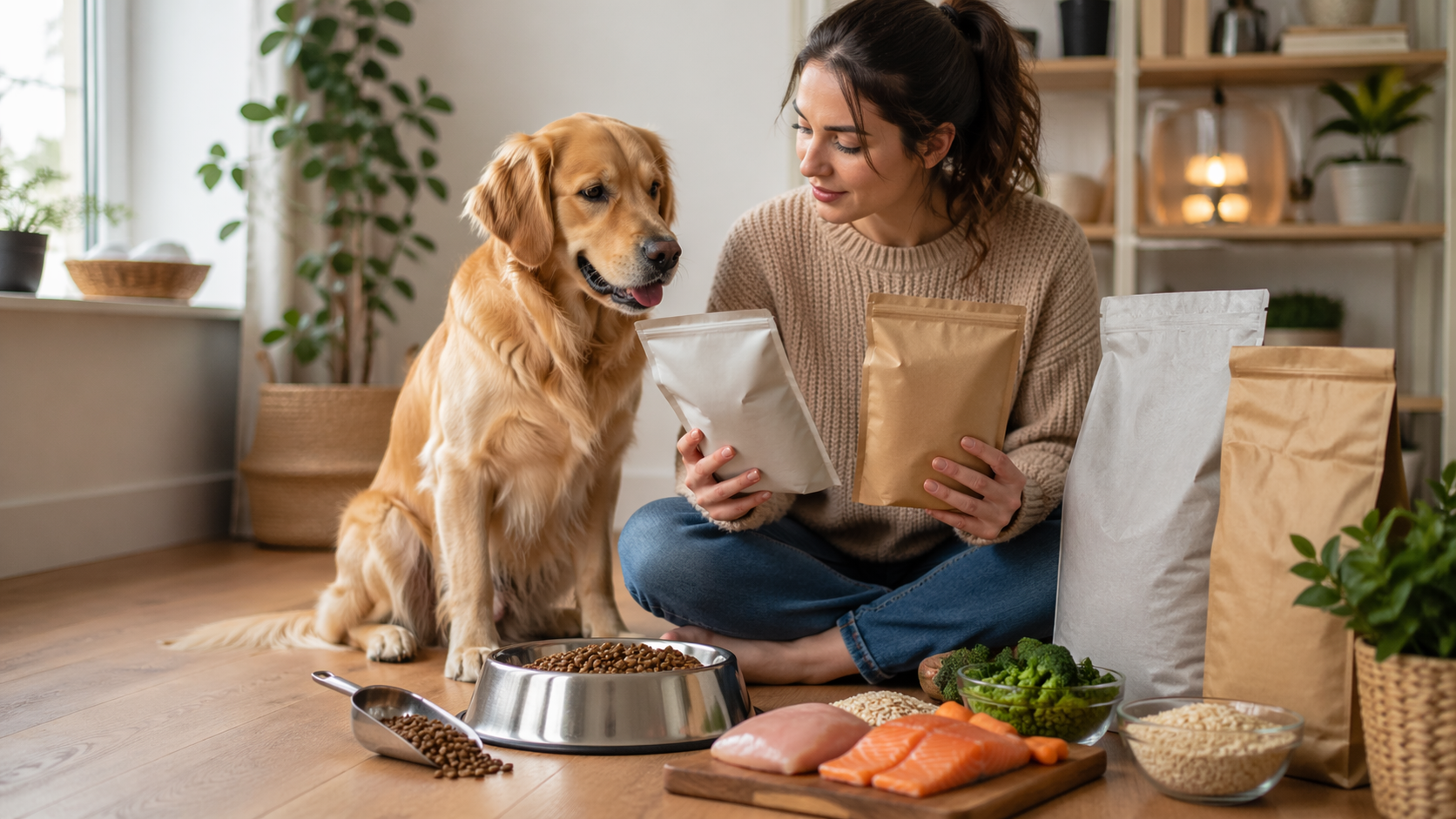
Choosing dog food should not start with a brand name. That is where many owners go wrong. They search for “best dog food UK”, “best puppy food”, “cheap but good dog food”, “high meat content dog food”, “grain-free dog food” or “dog food for sensitive stomachs”, then trust the first list they find. That is a weak way to make a serious feeding decision. The best dog food is not automatically the most expensive one, the highest-protein one or the one with the most impressive packaging. It is the food that actually suits your dog.
A growing puppy, a neutered adult dog, a senior dog with lower activity, a toy breed, a large breed and a dog with a sensitive stomach can all need different things from their food. A Labrador puppy and an elderly Pomeranian should not be judged by the same feeding logic. A very active Border Collie and a sofa-loving French Bulldog do not burn energy in the same way. So before asking “which dog food is best?”, the better question is: what does my dog actually need?
This guide is not a lazy brand ranking. It is a practical decision system. You will learn how to read a dog food label, what “complete dog food” means, when high meat content matters, why cheap food is not always bad, why expensive food is not always good, how wet and dry food compare, how to choose food for puppies, adults, senior dogs, neutered dogs and dogs with sensitive digestion, and how to tell whether a food is working for your dog.
What Does “Best Dog Food” Really Mean?
“Best dog food” is a dangerous phrase when it is used without context. A food can be excellent for one dog and completely wrong for another. One dog may thrive on a recipe while another develops loose stools, wind, itchiness, weight gain or poor appetite. That does not always mean the food is bad. It may simply mean the food is not right for that dog.
A good dog food should do more than fill the bowl. It should support healthy body condition, steady energy, good digestion, healthy skin and coat, and a feeding routine you can actually maintain. It should also be suitable for your dog’s life stage. Puppies, adult dogs and senior dogs do not all have the same nutritional needs.
When judging a dog food, ask these questions:
- Is it suitable for my dog’s life stage? Puppy, adult, senior, pregnancy and lactation needs are different.
- Does it match my dog’s breed size? Small, medium, large and giant breeds can need different kibble sizes, calories and growth control.
- Is the protein source clear? Named sources such as chicken, lamb, salmon, turkey or beef are easier to understand than vague wording.
- Is it complete food or complementary food? A complete food is designed to provide the full daily diet; complementary food is not.
- Does the calorie level make sense? A low-activity dog can gain weight quickly on calorie-dense food.
- Does your dog digest it well? Regular loose stools, excessive wind, vomiting or very smelly stools are not good signs.
- Can you buy it consistently? A food is less useful if you cannot afford it or find it regularly.
Start With Your Dog, Not the Brand
Dog owners often start by asking whether a specific brand is good. That is understandable, but it is not enough. Reviews can be useful, but they are not a feeding plan. The person writing the review may have a different breed, a different budget, a different health situation and a completely different dog.
A food that works beautifully for a young, active Spaniel may not suit an overweight, neutered Beagle. A recipe that helps one dog’s coat may upset another dog’s stomach. A food that one dog refuses may still be a high-quality food; appetite can be affected by stress, habit, illness, dental pain or poor transition between foods.
The correct order is simple:
- Identify your dog’s life stage.
- Consider breed size and adult weight.
- Check activity level and body condition.
- Think about neutering status and weight gain risk.
- Note any digestive, skin, coat or veterinary issues.
- Read the food label properly.
- Only then compare brands, prices and reviews.
If your dog has kidney disease, liver disease, pancreatitis, diabetes, obesity, chronic vomiting, chronic diarrhoea, allergies or another diagnosed condition, do not choose food from a generic online list. In those cases, your vet’s advice matters more than marketing language.
Complete Dog Food vs Complementary Dog Food
One of the most important label checks is whether the product is a complete dog food or a complementary dog food. This is especially important in the UK, where pet food labels commonly use these terms.
A complete dog food is designed to provide the nutrients your dog needs when fed correctly as the main diet. A complementary food is only part of the diet. Treats, mixers and some toppers can be complementary. If you feed a complementary product as the main meal, your dog may not receive a balanced diet.
This is where many owners make a quiet but serious mistake. They buy something that looks healthy, natural or premium, but they do not check whether it is complete. If the food is not complete, it should not be used as the only daily food unless a qualified professional has designed the rest of the diet around it.
How to Choose Puppy Food
Puppy food is not just smaller adult food. Puppies need food designed to support growth, development, muscle formation, bone structure, immune function and digestion. Feeding adult food to a puppy is not a smart shortcut. It can miss the balance puppies need during a critical growth stage.
When choosing puppy food, do not focus only on protein percentage. Protein matters, but so do calorie density, fat level, calcium and phosphorus balance, digestibility, breed size and feeding amount. A puppy can be overfed even on a good food, and overfeeding is especially risky in large-breed puppies.
Small-Breed Puppy Food
Small-breed puppies often need smaller kibble because their jaws are smaller. They may also need energy-dense food because they can have high energy needs relative to their size. The food should be easy to chew, digestible and suitable for growth.
Large-Breed Puppy Food
Large-breed puppies need careful growth control. “Growing fast” is not automatically a good thing. Large breeds such as Labrador Retrievers, Golden Retrievers, German Shepherds, Rottweilers, Dobermans and similar dogs can be more sensitive to poor growth management. The wrong balance of calories and minerals can contribute to avoidable problems.
If your puppy is newly adopted, food is only one part of the first weeks. You also need a vet check, parasite plan, vaccination history, weight monitoring and a safe home routine. If you are still preparing, read 10 things to know before adopting a pet before building the feeding plan.
How to Choose Adult Dog Food
Adult dog food should help maintain a healthy body condition. The goal is not rapid growth anymore. The goal is steady energy, good digestion, healthy skin and coat, strong muscle condition and a stable weight.
Activity level matters a lot. A working dog, agility dog or very active breed may need more calories than a calm indoor dog that only has short walks. Feeding a calorie-dense food to a low-activity dog can lead to weight gain. Feeding a low-energy food to a highly active dog can lead to poor condition, hunger and reduced stamina.
When choosing adult dog food, watch your dog’s real-world results:
- Are stools firm and regular?
- Is your dog maintaining a healthy weight?
- Is the coat shiny and the skin comfortable?
- Is there excessive wind, vomiting or diarrhoea?
- Does your dog seem satisfied after meals?
- Is your dog’s energy appropriate for age and breed?
These signs are more useful than a slogan on the front of a bag.
When Should You Consider Senior Dog Food?
Senior dog food can be useful, but age alone is not enough to choose it blindly. Small dogs may show signs of ageing later than large dogs. A healthy, active older dog may need a different plan from a less active senior dog that is gaining weight or losing muscle.
Senior feeding should consider:
- Weight control: Older dogs may move less and need fewer calories.
- Muscle maintenance: Ageing dogs can lose muscle if feeding is poor.
- Joint comfort: Large breeds and overweight dogs may need extra attention.
- Digestibility: Some senior dogs become more sensitive to rich or heavy foods.
- Health conditions: Kidney, liver, heart or metabolic disease may require veterinary diets.
Do not assume every older dog needs low-protein food. That is an oversimplification. If your dog has a medical condition, your vet should guide the diet.
Choosing Food for Neutered Dogs
Some dogs gain weight after neutering. The operation is not the only reason. Lower activity, overfeeding, too many treats and poor portion control often do more damage than owners admit. For neutered dogs, calorie control is often the main issue.
When choosing food for a neutered dog, ask:
- Is the calorie density suitable for current activity?
- Does the food help your dog feel satisfied?
- Is the protein quality good enough to support muscle?
- Are you measuring portions or guessing?
- Are treats included in the daily calorie total?
A food labelled for neutered dogs is not magic. If portions are too large, your dog can still gain weight. If your dog has recently been neutered or you are planning it, the wider process is explained in dog spay and neuter: age, cost, risks and recovery.
Is High-Meat Dog Food Always Better?
High-meat dog food is a popular search because owners naturally associate meat with quality. But high meat content does not automatically mean a food is the best choice. You need to understand what kind of meat is used, how it is listed and how the whole recipe is balanced.
Fresh meat contains water, so its position on the ingredient list can be misleading after processing. Dried meat or dehydrated animal protein can sometimes provide a more concentrated protein source. This does not mean one is always better than the other. It means you should not judge a food by one headline number.
When checking high-meat dog food, ask:
- Is the animal protein source clearly named?
- Is the meat fresh, dried, dehydrated or meal?
- How much fat does the recipe contain?
- Is the calorie level suitable for your dog?
- Does your dog’s digestion stay stable on it?
- Does the food match your dog’s life stage?
High-meat food can be a good option for some dogs, especially active dogs that tolerate it well. But for low-activity dogs, overweight dogs or dogs with certain medical issues, a rich, calorie-dense food can create problems.
Cheap but Good Dog Food: Is It Possible?
Yes, it is possible to find affordable dog food that works well. But choosing cheap food badly is one of the easiest ways to create problems. The real cost of dog food is not just the price of the bag. It is the daily feeding cost, how well your dog digests it, how much you need to feed, and whether it supports good health.
A cheap food can become expensive if your dog needs large portions, produces huge stools, develops digestive problems or constantly needs food changes. A more expensive food can sometimes be better value if your dog needs less of it and does well on it. But expensive does not automatically mean superior.
Judge value using these points:
- Daily cost: How much does your dog actually eat per day?
- Digestibility: Are stools firm, regular and not excessive?
- Body condition: Is your dog maintaining a healthy weight?
- Consistency: Can you buy the food regularly without constant switching?
- Label clarity: Are ingredients, feeding instructions and life stage clear?
Food is only one part of dog ownership costs. Vet care, parasite control, grooming, equipment, insurance, training and unexpected problems all affect the real budget. If you want a wider view, read how much a dog really costs.
Wet Dog Food vs Dry Dog Food
Wet and dry food can both work. Dry food is usually convenient, easier to store and often more economical per day. Wet food can be more appealing to picky dogs and contains more moisture. Some owners use both, which can be fine if the total daily amount is calculated correctly.
The mistake is adding wet food on top of the normal dry food portion without reducing anything. That quietly increases calories and can lead to weight gain. If you mix wet and dry food, check the feeding guidance for both products and adjust the amounts.
Wet food also needs more careful handling after opening. It should not be left out for long periods, especially in warm conditions. Dry food also needs proper storage, but wet food spoils faster once opened.
Is Grain-Free Dog Food Better?
Grain-free dog food is popular, but it is not automatically healthier. Some dogs may react badly to certain ingredients, but that does not mean all grains are bad for all dogs. Many dogs digest grain-inclusive foods perfectly well.
If your dog has itching, ear problems, diarrhoea, wind or skin redness, do not immediately blame grain. Food sensitivity and food allergy need careful evaluation. Randomly switching foods, cutting ingredients without a plan or trying a new protein every week can make the situation more confusing.
The better rule is this: choose food that is complete, balanced, digestible and suitable for your dog. Grain-free can be right for some dogs, but it is not a universal upgrade.
Dog Food for Sensitive Stomachs
Dogs with sensitive stomachs need careful feeding. Sudden food changes, rich recipes, high fat levels, too many treats, table scraps and poorly tolerated ingredients can all trigger loose stools, wind or vomiting. But do not label every digestive issue as “sensitive stomach” without thinking.
Digestive signs can come from many causes, including parasites, infections, scavenging, spoiled food, stress, foreign objects or medical conditions. Puppies with diarrhoea should be taken especially seriously because they can deteriorate faster than adult dogs.
For dogs with sensitive digestion, look for:
- A clear protein source
- A recipe suited to the dog’s life stage
- Moderate fat if rich food causes problems
- Good digestibility
- Controlled treats and table scraps
- Slow transitions between foods
If your dog may have eaten something toxic, the issue is no longer normal food selection. Read pet poisoning symptoms and first aid, dog ate chocolate: what to do, dog ate grapes: what to do and dog ate onion: what to do for emergency warning signs.
How to Read a Dog Food Label
Reading the label is not optional. Buying dog food without reading the label is like buying medicine without checking what it is for. The front of the pack is marketing. The back of the pack is where the useful information usually is.
1. Life Stage
Check whether the food is for puppies, adults, seniors, large-breed puppies, small breeds or all life stages. “All life stages” may sound convenient, but it is not automatically ideal for every dog. Large-breed puppies and dogs needing weight control may need a more specific formula.
2. Complete or Complementary
This is a major label point. A complete food is designed as the main daily diet. A complementary food is only part of the diet. Treats, toppers and mixers should not replace a complete diet unless the rest of the feeding plan is properly balanced.
3. Ingredient List
Ingredients are usually listed by weight before cooking or processing. That means the first ingredient is not the whole story. Fresh meat contains water, so you need to look at the entire recipe rather than judging only the first line.
4. Analytical Constituents
Protein, fat, fibre, ash and moisture values give clues about the food. But numbers alone do not prove quality. A high-protein food may be suitable for one dog and too rich for another. A low-fat food may help one dog and be wrong for a very active dog.
5. Calories
Calories matter. If your dog is gaining weight, the problem may be total calories rather than the brand itself. Treats, chews, leftovers and wet food toppers all count.
6. Feeding Guide
The feeding guide is a starting point, not a law. Your dog’s metabolism, activity, neutering status and body condition may require adjustment. Guessing portions by eye is one of the fastest ways to overfeed.
Can Homemade Food Replace Dog Food?
Homemade dog food sounds healthy, but it can be risky if it is not properly formulated. Rice, pasta, bread, fatty leftovers, random meat scraps and seasoned human food are not a balanced dog diet. A homemade diet can work only when it is carefully planned to meet the dog’s nutritional needs.
Some human foods are dangerous for dogs. Chocolate, grapes, raisins, onions, garlic, xylitol and some bones can cause serious problems. Before sharing food from your plate, read what dogs can eat: safe and toxic foods.
The phrase “natural feeding” does not make a diet balanced. If you want to feed homemade food long term, get professional guidance rather than copying random social media recipes.
How to Change Dog Food Safely
Dog food should not usually be changed overnight. Sudden changes can cause diarrhoea, wind, vomiting or refusal to eat. A gradual transition gives the digestive system time to adapt.
A simple transition can look like this:
- First stage: Mostly old food with a small amount of new food
- Middle stage: A more even mix of old and new food
- Final stage: Mostly new food
- Full switch: New food only if your dog is tolerating it well
During the change, watch stool quality, appetite, wind, vomiting and energy. If your dog has bloody diarrhoea, repeated vomiting, severe weakness or rapid deterioration, do not treat it as a normal food transition problem. Contact a vet.
How to Tell If a Dog Food Suits Your Dog
The best test of a food is not the packaging. It is your dog’s response over time. A food that suits your dog should support stable digestion, healthy body condition and normal energy.
- Stools are regular and formed: Ongoing diarrhoea, very hard stools or very smelly stools need attention.
- Weight is stable: Your dog should not gain or lose weight unexpectedly.
- Coat looks healthy: Dull coat, heavy shedding or itchiness may need investigation.
- Energy is appropriate: Constant tiredness is not normal.
- Appetite is reasonable: Extreme fussiness or constant hunger may suggest a feeding issue.
- Digestion is comfortable: Constant wind, stomach noise, vomiting or loose stools are not good signs.
Dog Food Storage Mistakes
Buying good food and storing it badly is still a mistake. Dry food can be damaged by air, heat, moisture and sunlight. Once opened, the bag should be closed properly and kept in a cool, dry place.
If you use a storage container, make sure it is clean and dry. Do not keep pouring new food over old crumbs and oily residue. That can create stale smells and quality problems. One sensible option is to keep the food inside its original bag and place the bag inside a sealed container.
Why “Best Dog Food” Lists Can Mislead You
Searching for a quick “best dog foods” list is understandable. But many lists are too shallow. Some are influenced by affiliate commissions, some are based on availability, some rely heavily on owner reviews, and some ignore life stage, breed size, calorie needs and health conditions.
Before trusting a list, ask:
- Does it separate puppy, adult and senior foods?
- Does it consider small and large breeds?
- Does it explain complete food vs complementary food?
- Does it discuss calories and portion control?
- Does it warn against random food switching?
- Does it explain when veterinary advice is needed?
If a page only throws brand names at you without teaching you how to choose, it is not strong guidance. It is just a shopping list.
Common Dog Food Mistakes
- Choosing only by brand reputation
- Assuming high protein always means better food
- Ignoring calories and feeding amounts
- Feeding adult food to puppies
- Overfeeding neutered dogs
- Changing food every time there is a discount
- Switching food overnight
- Forgetting that treats count as calories
- Confusing complementary food with complete food
- Blaming every symptom on food and delaying veterinary care
These mistakes all come from the same problem: focusing on the product instead of the dog. Dog food selection should start with the dog’s needs, not the packaging.
Final Checklist Before Buying Dog Food
Before choosing a food, ask yourself:
- Is this food suitable for my dog’s age?
- Does it match my dog’s breed size?
- Is it complete food?
- Is the protein source clear?
- Is the calorie level suitable for my dog’s activity?
- Does the feeding guide make sense?
- Can I afford this food long term?
- Can I buy it consistently?
- Does my dog have medical needs that require vet advice?
- Can I transition to it gradually?
If you cannot answer these questions, you are not choosing food properly yet. You are guessing.
Conclusion: The Best Dog Food Is the One That Fits Your Dog
The best dog food is not the one with the loudest marketing, the highest price or the longest list of online praise. It is the food that fits your dog’s life stage, breed size, body condition, activity level, digestion and health needs. Good feeding is not about chasing trends. It is about making consistent, evidence-aware decisions for the dog in front of you.
Affordable food can be good. High-meat food can be useful. Wet food can work. Dry food can work. Grain-free can suit some dogs. But none of these labels is a shortcut to the right answer. Read the label, measure portions, watch your dog’s body condition and get veterinary advice when symptoms are persistent or serious.
Frequently Asked Questions
What is the best dog food?
The best dog food is the one that suits your dog’s age, breed size, activity level, body condition, digestion, neutering status and health needs. There is no single best food for every dog. A good choice should be complete, appropriate for the life stage, clearly labelled and well tolerated by your dog.
Is cheap dog food always bad?
Cheap dog food is not always bad, and expensive dog food is not always better. The real value depends on daily feeding cost, digestibility, label clarity, stool quality, body condition and whether the food suits your dog. Very cheap food with vague ingredients and poor results may cost more in the long run.
Is high-meat dog food better?
High-meat dog food can be a good option for some dogs, but it is not automatically better. You should check the type of meat, protein source, fat level, calories, digestibility and suitability for your dog’s life stage. A rich high-meat food may not suit low-activity or overweight dogs.
Is wet or dry dog food better?
Wet and dry dog food can both be suitable if they are complete and appropriate for your dog. Dry food is usually convenient and economical. Wet food can be more palatable and contains more moisture. If you feed both, you must adjust portions so your dog does not receive too many calories.
Is grain-free dog food healthier?
Grain-free dog food is not automatically healthier. Some dogs may need specific ingredient changes, but many dogs do well on grain-inclusive food. The overall balance, digestibility, protein source, calories and your dog’s individual response matter more than whether the food is grain-free.
Can puppies eat adult dog food?
Puppies should usually eat food designed for puppies and appropriate for their breed size. Adult dog food may not provide the right balance for growth and development. Large-breed puppies especially need careful feeding to support steady growth.
How should I change my dog’s food?
Dog food should usually be changed gradually over several days. Start with mostly old food and a small amount of new food, then slowly increase the new food if your dog tolerates it. Sudden changes can cause diarrhoea, wind, vomiting or refusal to eat.
How do I know if a dog food suits my dog?
A food is more likely to suit your dog if stools are regular and formed, weight is stable, energy is appropriate, the coat looks healthy and digestion is comfortable. Ongoing vomiting, diarrhoea, severe itching, unexplained weight loss or major appetite changes should be discussed with a vet.