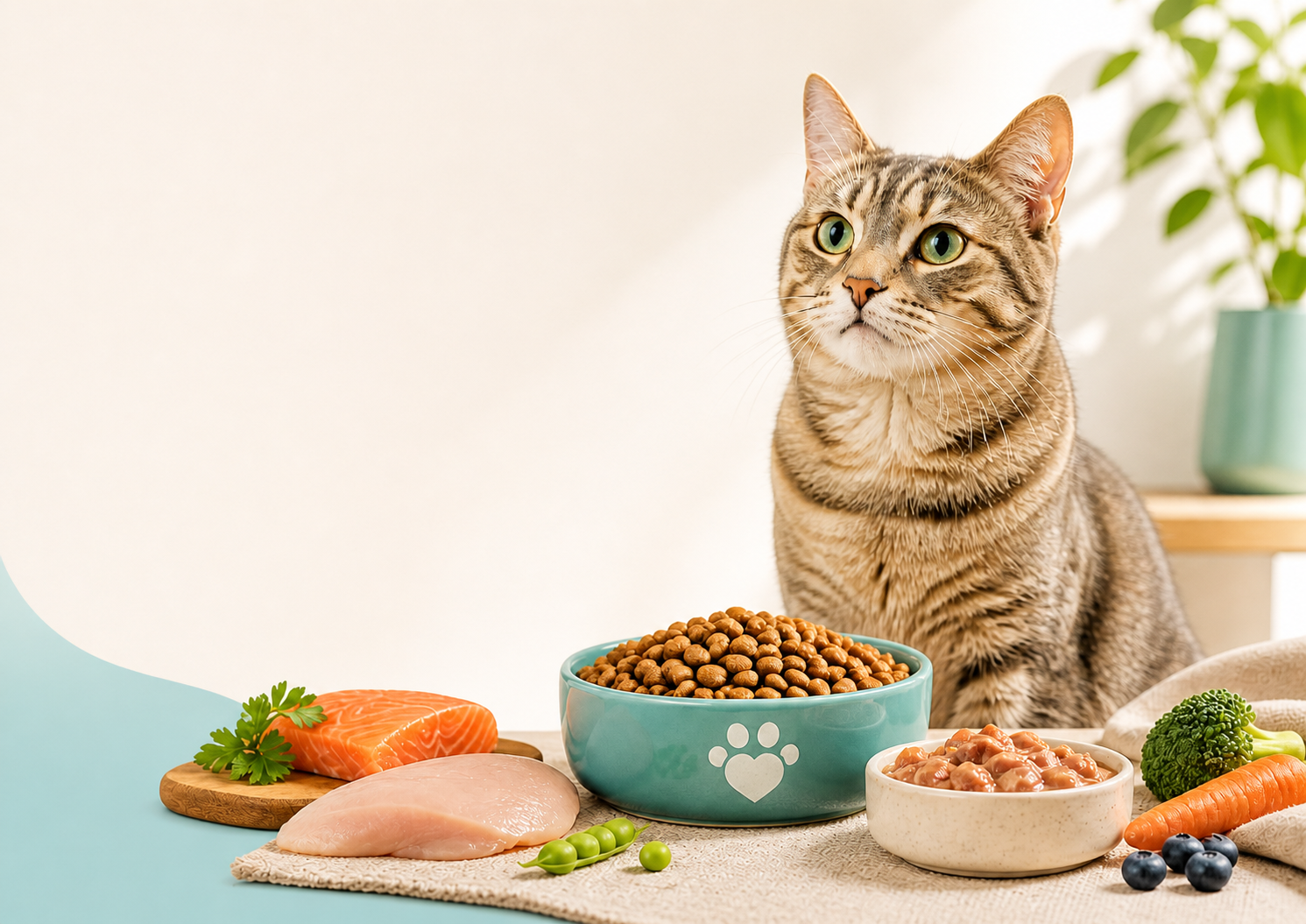
Choosing cat food should not start with a brand name. That is where many owners go wrong. They search for “best cat food UK”, “best dry cat food”, “best wet cat food”, “best kitten food”, “cat food for neutered cats”, “grain-free cat food”, “urinary cat food” or “cat food for sensitive stomachs”, then trust the first ranking they find. That is a weak way to make a serious feeding decision. The best cat food is not automatically the most expensive pouch, the highest-protein dry food or the brand with the most online praise. It is the food that actually suits your cat.
Cats are not small dogs. They are obligate carnivores, they have specific nutritional needs, many of them do not drink much water, and they can be picky about texture, smell and routine. A growing kitten, a neutered indoor cat, a senior cat losing muscle, a long-haired cat with hairball problems and a cat with urinary issues should not be fed with the same logic. So before asking “what is the best cat food?”, the stronger question is: what does my cat actually need?
This guide is not a lazy brand list. It is a decision system. You will learn what complete cat food means, how to compare wet and dry cat food, how to choose food for kittens, adult cats, senior cats and neutered cats, when urinary or sensitive stomach food needs veterinary guidance, why high meat content and grain-free claims can be misleading, how to read a cat food label, and how to tell whether a food is genuinely working for your cat.
What Does “Best Cat Food” Really Mean?
“Best cat food” is an incomplete phrase when it is used without context. A food can be excellent for one cat and unsuitable for another. One cat may have stable digestion, a shiny coat and a healthy weight on a certain food, while another cat may vomit, refuse it, gain weight, develop loose stools or show coat problems. That does not always mean the food is bad. It may simply mean the food does not match that cat’s needs.
A good cat food should support healthy body condition, stable digestion, normal energy, good coat condition, appropriate hydration and a feeding routine you can maintain. It should also match the cat’s life stage. Kittens, adults and senior cats do not need the same feeding plan.
Before choosing cat food, ask these questions:
- Is it suitable for my cat’s age? Kittens, adults and senior cats have different nutritional needs.
- Is it complete cat food? Complete food can be used as the main diet; complementary food cannot replace it on its own.
- Does it suit my cat’s neutering status? Neutered cats can be more prone to weight gain if portions are not controlled.
- Is the animal protein source clear? Chicken, turkey, salmon, duck or lamb are easier to judge than vague meat terms.
- Does it support water intake? Cats that eat only dry food may need closer hydration monitoring.
- Does it fit my cat’s body condition? A cat gaining weight needs a different approach from one losing muscle.
- Does my cat digest it well? Frequent vomiting, diarrhoea, constipation or appetite changes should not be ignored.
Start With Your Cat, Not the Brand
Many cat owners start by asking whether a specific brand is good. Reviews can be useful, but they are not a feeding plan. The person leaving the review may have a kitten, a senior cat, a neutered indoor cat, a highly active outdoor cat or a cat with a completely different medical history.
A food that works well for one British Shorthair may not suit another. A recipe that improves one cat’s coat may cause vomiting in another. A wet food that one cat loves may be too rich or too calorie-dense for a different cat. Appetite alone is not proof of quality either. Cats can enjoy foods that are not ideal for them, and they can initially reject foods that are perfectly reasonable.
The correct order is simple:
- Identify your cat’s life stage.
- Check whether your cat is neutered.
- Assess body condition, not just body weight.
- Think about indoor or outdoor lifestyle.
- Watch water intake and litter tray habits.
- Note vomiting, hairballs, constipation, diarrhoea or appetite changes.
- Read the label before comparing brands and prices.
If your cat has kidney disease, diabetes, obesity, urinary problems, chronic vomiting, chronic diarrhoea, allergies or another diagnosed condition, do not choose food from a generic online list. In those cases, veterinary advice matters more than marketing claims.
Complete Cat Food vs Complementary Cat Food
One of the most important label checks in the UK is whether the product is complete cat food or complementary cat food. A complete cat food is designed to provide the nutrients your cat needs when fed correctly as the main diet. A complementary food is only part of the diet.
This distinction matters more than many owners realise. Some pouches, tins, toppers, treats and broths look healthy and appetising, but they may not be complete. If you feed a complementary product as the main daily food, your cat may not receive a balanced diet.
Do not judge by the front of the packaging alone. Words like “natural”, “premium”, “high meat”, “gourmet” or “delicious” are not enough. Check whether the product is complete, which life stage it is for, how much to feed and whether it is suitable for daily feeding.
How to Choose Kitten Food
Kitten food is not just adult cat food in smaller pieces. Kittens are growing fast and need food designed for growth, muscle development, bone development, immune support and healthy digestion. Feeding adult cat food to a kitten long term is not a smart shortcut.
When choosing kitten food, do not look only at protein percentage. Protein matters, but so do calorie density, fat level, minerals, digestibility, texture and whether the food is complete for growth. Kittens have small stomachs and high needs, so the food must provide enough nutrition in appropriate portions.
Wet or Dry Food for Kittens?
Complete kitten food can be wet or dry. Wet kitten food can be very appealing and provides moisture, which can be helpful because cats are not always strong drinkers. Dry kitten food can be convenient and easy to portion. Many owners use a controlled mix of both.
The mistake is using treats, toppers or complementary pouches as if they were the main diet. If the product is not complete for kittens, it should not be the core of the feeding plan. The first months are too important for guesswork.
If your kitten has just arrived home, food is only one part of the plan. You also need a vet check, parasite control, vaccination planning, weight tracking and a calm home routine. Read what should be done at the first vet visit and cat vaccination schedule 2026 to connect feeding with the wider health plan.
How to Choose Food for Adult Cats
For adult cats, the goal is not growth. The goal is maintaining healthy body condition, stable digestion, normal energy, good coat condition and healthy litter tray habits. This is where many indoor cat owners make a mistake: they assume a cat that looks “normal” is automatically eating the right amount.
Indoor cats, especially neutered cats, can gain weight quietly. A cat may look fluffy rather than overweight, and the problem is missed for months. If dry food is left out all day, plus wet food, treats and pastes are added, calories can build up quickly.
When choosing adult cat food, monitor:
- Is your cat maintaining a healthy weight?
- Are stools regular and well formed?
- Is the coat healthy and not excessively dull?
- Is your cat vomiting frequently?
- Are hairballs becoming a repeated problem?
- Are litter tray habits normal?
- Is your cat drinking enough water?
These real-life signs are more useful than the biggest claim on the bag. If your cat has eye discharge, nasal signs or repeated upper respiratory symptoms, do not assume food is the only issue; why cats have eye discharge can help you separate feeding questions from health warning signs.
Food for Neutered Cats
Food for neutered cats is one of the biggest search intents in the UK because neutered indoor cats can gain weight easily. But a bag labelled “neutered” is not magic. If the portions are too large, if treats are not counted, or if wet food is added on top of full dry food portions, your cat can still gain weight.
When choosing food for a neutered cat, consider:
- Calorie density
- Protein quality for muscle maintenance
- Fibre level for satiety
- Mineral balance
- Clear feeding guidance
- Whether wet food and treats are included in the daily total
The real issue is total daily intake. A good food fed in the wrong amount becomes a bad plan. If your cat is gaining weight, start by measuring portions and reducing extras before blaming the brand.
Senior Cat Food: When Does It Matter?
Senior cats need closer attention because ageing can bring changes in muscle, appetite, digestion, dental comfort, kidney function, thyroid function and activity. But not every older cat needs the same senior food. A healthy active senior cat and a thin older cat losing muscle are not the same case.
Senior cat feeding should consider:
- Body weight: Some senior cats gain weight, others lose it unexpectedly.
- Muscle condition: Muscle loss should not be dismissed as “just old age”.
- Dental comfort: Some cats struggle with hard dry food.
- Water intake: Hydration becomes especially important in older cats.
- Medical history: Kidney, thyroid, diabetes and other conditions may require specific diets.
If an older cat is losing weight, drinking much more, urinating more, vomiting often or refusing food, do not just switch brands. Those signs need veterinary attention.
Wet Cat Food vs Dry Cat Food
Wet and dry cat food can both be useful when chosen properly. Dry cat food is convenient, often more economical, easy to store and simple to portion. Wet cat food contains more moisture and can help support water intake, which is important because many cats do not naturally drink large amounts.
There is no single answer for every cat. Some cats do well on dry food, some benefit from wet food, and some do best with a controlled mix. The key word is controlled. If you feed dry food freely and then add wet food, treats and pastes without reducing anything, weight gain becomes very likely.
Wet food should also be handled properly. Once opened, it should not sit out for long periods. It needs suitable storage and should be treated as fresh food, not as something that can remain in the bowl all day.
Is Grain-Free Cat Food Better?
Grain-free cat food is a powerful marketing phrase. Because cats are carnivores, many owners assume grain-free is automatically better. That is too simple. The presence or absence of grain does not prove that a food is balanced, digestible or suitable for your cat.
Some cats may have sensitivities to certain ingredients, but that does not mean every cat needs grain-free food. If grain is removed, something else usually replaces it. Potatoes, peas, lentils or other starches may still be part of the formula. So the better question is not “grain-free or not?” but “is this complete food suitable for my cat?”
If your cat has vomiting, diarrhoea, itchiness, coat problems or ear issues, do not automatically blame grain. Food allergy and intolerance need careful evaluation. Randomly switching foods every week can make the problem harder to understand.
Is High-Meat Cat Food Always Better?
High-meat cat food sounds attractive because cats need animal-based nutrients. But high meat content is not the only quality marker. You need to understand the type of meat, how it is listed, whether the food is complete, how much fat it contains, how many calories it provides and whether your cat tolerates it.
Fresh meat contains water, so its position in the ingredient list can be misleading after processing. Dried meat or named animal protein sources can sometimes be more concentrated. This does not mean one is always better than the other. It means the whole recipe matters.
When checking high-meat cat food, ask:
- Is the animal protein source clearly named?
- Is the food complete or complementary?
- How much fat does it contain?
- Is the calorie level suitable for my cat?
- Does my cat digest it well?
- Does it match my cat’s life stage?
High-meat food can be a strong choice for some cats. But if it is too rich, too calorie-dense or not complete, it can still be the wrong choice.
Cheap but Good Cat Food: Is It Possible?
Yes, affordable cat food can be good. But choosing only by price per kilogram is a mistake. The real cost depends on how much your cat eats, whether the food is complete, how well your cat digests it, whether body weight stays stable and whether the product can be bought consistently.
A cheap food can become expensive if your cat eats large amounts, vomits frequently, develops loose stools, refuses it often or needs constant switching. A more expensive food can sometimes be better value if your cat needs less of it and does well on it. But expensive does not automatically mean superior.
Judge value using these points:
- Daily feeding cost: How much does your cat actually eat per day?
- Completeness: Is it a complete main diet?
- Digestibility: Are stools stable and vomiting uncommon?
- Body condition: Is your cat maintaining a healthy weight?
- Consistency: Can you buy it regularly without constant changes?
Urinary Cat Food: Do Not Guess
Urinary health is one of the most important cat food topics. Cats, especially indoor and neutered cats, can develop urinary issues that owners may first notice in the litter tray. But this is not an area for guessing.
If your cat is straining to urinate, visiting the litter tray repeatedly, passing only small amounts, crying, showing blood in urine or not passing urine, this is not a normal food choice question. It can be urgent, especially in male cats.
Urinary diets may be useful when recommended by a vet, but they should not be used randomly for every cat. Urinary health depends on water intake, mineral balance, urine concentration, body weight, stress and medical history. If there are symptoms, get veterinary advice first.
Hairball Cat Food and Coat Support
Many owners search for cat food for hairballs or shedding. A realistic answer is needed: no food can completely stop shedding or remove hairballs from every cat. Cats naturally shed, and long-haired cats need grooming. Food can support coat quality, but it is not a magic fix.
Hairball formulas often focus on fibre balance to help hair move through the digestive tract. That may help some cats, but grooming, water intake, overall digestion and activity also matter. If your cat is vomiting frequently, do not assume every episode is “just a hairball”.
If your cat has bald patches, wounds, excessive scratching, dandruff, redness or sudden coat changes, the cause may be parasites, allergy, stress, infection or another health issue. Food is only one part of the investigation.
Cat Food for Sensitive Stomachs
Cats with sensitive digestion need careful feeding. Sudden food changes, rich recipes, too many treats, unsuitable human food, poorly tolerated ingredients or underlying illness can all cause vomiting, diarrhoea, constipation or appetite changes.
For sensitive cats, look for:
- A clear animal protein source
- A complete formula suited to the life stage
- Moderate richness if fatty foods cause problems
- Careful treat control
- Slow transitions between foods
- Veterinary advice if symptoms are repeated
Be blunt with yourself here: not every vomiting cat has a “sensitive stomach”. Repeated vomiting, weight loss, refusal to eat, diarrhoea, constipation or major behaviour changes need a vet, not just another bag of food.
If your cat is newly adopted, feeding should be part of a wider care plan. Read 10 things to know before adopting a pet and easiest cat breeds to care for if you are still planning the right home routine.
How to Read a Cat Food Label
Buying cat food without reading the label is guessing. The front of the pack is mostly marketing. The useful information is usually in the product type, ingredient list, analytical constituents, feeding guide, life stage, calorie information and storage instructions.
1. Life Stage
Check whether the food is for kittens, adults, seniors or neutered cats. Kitten food should support growth. Adult food should support maintenance. Senior food may need to consider muscle, appetite, hydration and medical history.
2. Complete or Complementary
If the food is the main daily diet, it should be complete. Complementary foods, treats, toppers and some broths or pouches should not replace the main diet unless the whole plan is properly balanced.
3. Protein Source
Cats need animal-based nutrients, so the protein source matters. Named sources like chicken, turkey, salmon, duck or lamb are easier to judge than vague meat terms. But do not stop at the first ingredient. Read the whole formula.
4. Analytical Constituents
Protein, fat, fibre, ash and moisture values help you understand the food. But numbers alone do not prove quality. High protein may look impressive, but the food still needs to match your cat’s age, health, body condition and calorie needs.
5. Calories
Calories matter. Many indoor cats gain weight because owners measure the dry food poorly and then add wet food, treats, pastes and extras. If your cat is gaining weight, start by calculating total daily intake.
6. Feeding Guide
The feeding guide is a starting point, not a law. Your cat’s body condition, neutering status, age, activity and other foods all change the real amount needed. Free-feeding dry food does not suit every cat.
Do Treats, Pastes and Wet Food Count as Calories?
Yes. Treats, lickable treats, malt pastes, wet food, toppers and small scraps all count. This is one of the most common mistakes in cat feeding. Owners carefully choose a dry food, then unknowingly add too many extras.
For neutered or indoor cats, these extras can matter a lot. A small amount every day becomes a habit, and the cat slowly gains weight. If weight is increasing, do not only blame the dry food. Look at the whole feeding routine.
Can Homemade Food Replace Cat Food?
Homemade cat food sounds natural, but it can be risky if it is not properly formulated. Cats need specific nutrients such as taurine, and a random diet of cooked chicken, tuna, rice, yoghurt or leftovers is not automatically balanced.
A long-term homemade diet should not be copied from social media. It needs proper formulation. Feeding only meat or fish may sound natural, but it can still be nutritionally incomplete.
Some human foods are unsafe for cats. Onion, garlic, chocolate, alcohol, caffeine, very fatty foods and some sweeteners can be dangerous. If you suspect poisoning, read pet poisoning symptoms and first aid, but do not delay contacting a vet if symptoms are serious.
How to Change Cat Food Safely
Cat food should not usually be changed overnight. Cats can react strongly to sudden changes in smell, texture, flavour and digestion. A sudden switch can cause vomiting, diarrhoea, refusal to eat or stress around feeding.
A safer transition can look like this:
- First stage: Mostly old food with a small amount of new food
- Middle stage: A more balanced mix of old and new food
- Final stage: Mostly new food
- Full switch: Only if your cat is tolerating it well
During the transition, watch appetite, stools, vomiting, water intake, litter tray use and energy. Do not let a cat go without food for too long. If your cat refuses food, becomes lethargic or vomits repeatedly, get veterinary advice.
How to Tell If a Cat Food Suits Your Cat
The best test is not whether the packaging looks premium. It is your cat’s response over time. A suitable food should help your cat maintain stable weight, comfortable digestion, normal energy and a healthy coat.
- Weight is stable: Your cat should not gain or lose weight unexpectedly.
- Stools are normal: Ongoing diarrhoea, constipation or blood should not be ignored.
- Coat looks healthy: Dull coat, excessive shedding or itchy skin may need investigation.
- Vomiting is not frequent: Regular vomiting should not be dismissed as normal.
- Appetite is steady: Refusing food or constant hunger both need attention.
- Litter tray habits are normal: Straining, frequent visits or reduced urine output can be serious.
Cat Food Storage Mistakes
Good food can be ruined by poor storage. Dry cat food can be damaged by air, moisture, heat and sunlight. Once opened, the bag should be sealed properly and stored in a cool, dry place.
If you use a storage container, keep it clean and dry. Do not keep pouring new food over old crumbs and oily residue. A sensible method is to keep the food in its original bag and place that bag inside a sealed container.
Wet food needs even more care. Once opened, it should be covered, stored correctly and used promptly. Do not leave wet food sitting out for long periods, especially in warm weather.
Why “Best Cat Food” Lists Can Mislead You
Searching for “best cat food UK” or “best dry cat food” is understandable. People want a quick answer. But many lists are shallow. Some are influenced by affiliate deals, some by stock availability, some by user reviews, and many do not separate kittens, adults, seniors, neutered cats, urinary needs, wet food, dry food and sensitive digestion.
Before trusting a list, ask:
- Does it separate kitten, adult and senior cat food?
- Does it explain complete vs complementary food?
- Does it discuss wet and dry food properly?
- Does it consider neutered indoor cats?
- Does it warn about urinary symptoms?
- Does it explain calories and feeding amounts?
- Does it say when veterinary advice is needed?
If a page only lists brands without teaching you how to choose, it is not a strong guide. It is a shopping list.
Common Cat Food Mistakes
- Choosing only by brand reputation
- Assuming high protein always means better food
- Feeding adult food to kittens
- Ignoring calories in neutered cats
- Adding wet food without reducing dry food
- Using complementary food as the main diet
- Changing food suddenly
- Ignoring water intake and litter tray changes
- Calling every vomiting episode a hairball
- Trying urinary food without veterinary advice when symptoms are present
These mistakes all come from the same problem: focusing on the product instead of the cat. Cat food selection should begin with the animal in front of you, not the packaging.
Final Checklist Before Buying Cat Food
Before choosing cat food, ask yourself:
- Is this food suitable for my cat’s age?
- Is it complete cat food?
- Does it suit a neutered or indoor cat if needed?
- Is the animal protein source clear?
- Does my cat need wet food for extra moisture?
- Is my cat gaining or losing weight?
- Are there urinary, kidney, digestive or hairball concerns?
- Are calories and feeding amounts clear?
- Can I buy this food consistently?
- Can I transition to it gradually?
If you cannot answer these questions, you are not choosing cat food properly yet. You are guessing.
Conclusion: The Best Cat Food Is the One That Fits Your Cat
The best cat food is not the most expensive, the trendiest or the one with the biggest online following. It is the food that matches your cat’s age, body condition, neutering status, water intake, digestion, coat condition, lifestyle and health needs. A good feeding decision comes from reading labels, measuring portions, observing your cat and knowing when to ask a vet.
Affordable food can be good. Wet food can be useful. Dry food can be practical. Grain-free food can suit some cats. High-meat food can be a strong option. But none of these labels is a shortcut to the right answer. Your cat’s real response matters more than the marketing.
Frequently Asked Questions
What is the best cat food?
The best cat food is the food that suits your cat’s age, body condition, neutering status, activity level, water intake, digestion and health needs. There is no single best cat food for every cat. It should be complete, appropriate for the life stage, clearly labelled and well tolerated by your cat.
Is wet or dry cat food better?
Wet and dry cat food can both be suitable if they are complete and appropriate. Dry food is convenient and easy to store. Wet food provides more moisture and can support cats that drink little. Many cats do well with a controlled mix, but portions must be adjusted to avoid too many calories.
Do neutered cats need special food?
Not every neutered cat needs the same food, but neutered cats often need closer calorie control. Food for neutered cats may help manage weight and satiety, but portion control, treats, wet food and activity level are just as important. If your cat is gaining weight, review the total daily intake.
Is grain-free cat food healthier?
Grain-free cat food is not automatically healthier. Cats are carnivores, but the quality of a food depends on the whole formula, not just whether it contains grain. The food should be complete, digestible, suitable for your cat’s life stage and well tolerated.
Can kittens eat adult cat food?
Kittens should usually eat complete kitten food because they need nutrition designed for growth and development. Adult cat food may not provide the right balance for a growing kitten. Kitten feeding should also be linked with vet checks, vaccination planning and weight monitoring.
Is cheap cat food always bad?
Cheap cat food is not always bad, and expensive cat food is not automatically better. The real value depends on whether it is complete, how much your cat needs per day, digestibility, body condition, stool quality, appetite and whether you can buy it consistently.
How should I change my cat’s food?
Cat food should usually be changed gradually. Start with mostly old food and a small amount of new food, then increase the new food slowly if your cat tolerates it. Sudden changes can cause vomiting, diarrhoea or food refusal. If your cat stops eating or becomes unwell, contact a vet.
How do I know if a cat food suits my cat?
A cat food is more likely to suit your cat if weight is stable, stools are normal, vomiting is uncommon, the coat looks healthy, appetite is steady and litter tray habits are normal. Weight loss, repeated vomiting, diarrhoea, urinary straining or food refusal should be discussed with a vet.