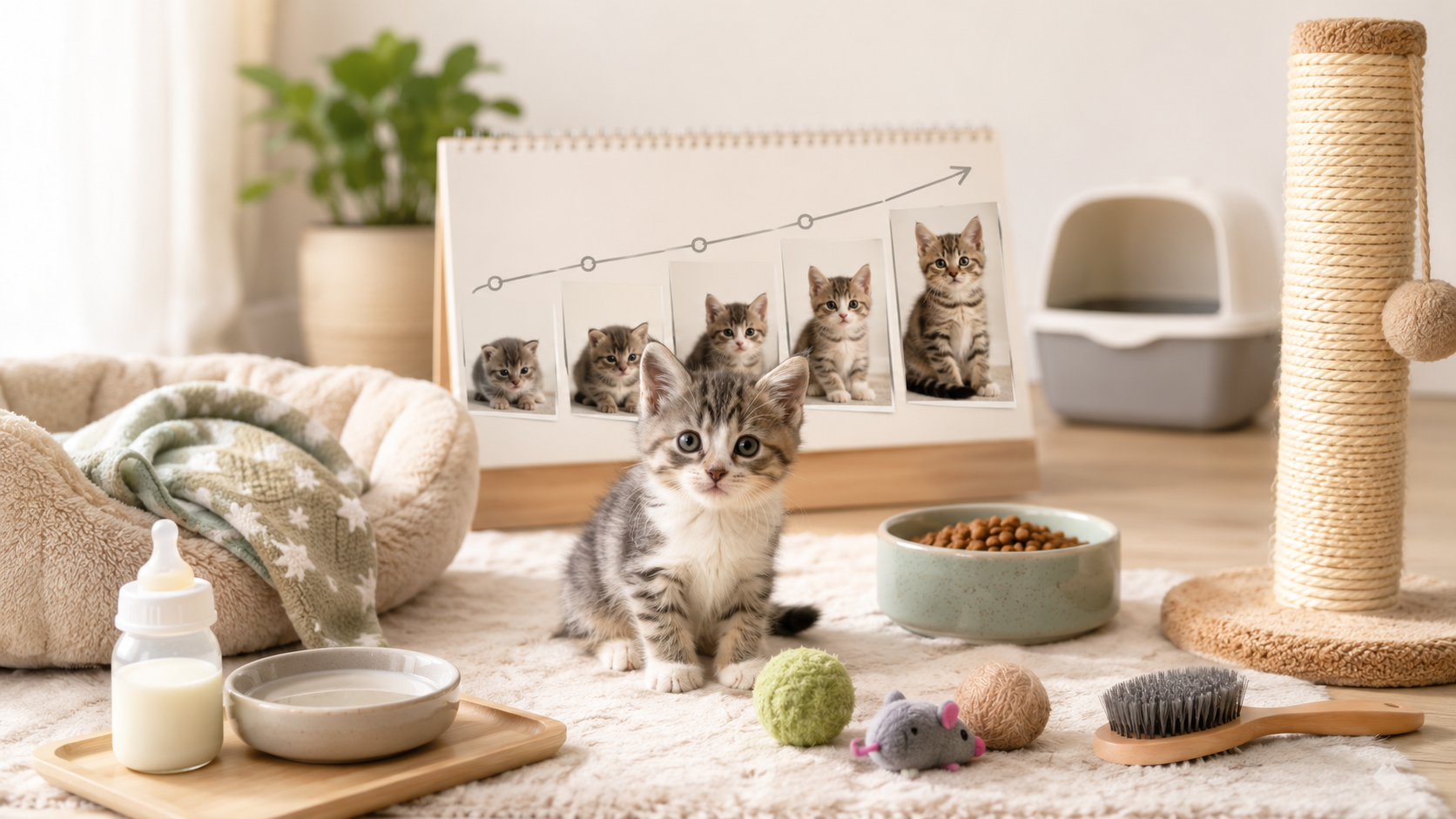
Kitten care is not just buying kitten food, putting down a litter tray and giving the kitten a few cuddles. That lazy approach is exactly how new owners create avoidable problems: stress, poor feeding habits, litter tray accidents, biting, fear of handling, unsafe exploring and missed health warning signs. A kitten is small and cute, but it is also fragile, fast, curious and still developing. The first weeks in your home matter more than most people realise.
This kitten care guide explains what to do from the first day your kitten arrives through the first year. It covers the first night, safe room setup, feeding, water, litter training, first vet visit, vaccinations, flea and worming care, microchipping, home safety, play, socialisation, grooming, nail care, biting, diarrhoea, vomiting, eye discharge, rescue kittens and introductions to other pets. The aim is not to overwhelm you. The aim is to stop you from guessing.
A healthy kitten needs more than love. Love is the easy part. The harder part is building a routine that protects your kitten’s body, confidence and behaviour. If you get the early system right, your kitten is more likely to grow into a calm, healthy, confident adult cat. If you treat the first months like a cute experiment, you are asking for trouble.
Why Kitten Care Is Different From Adult Cat Care
Kittens are not just smaller adult cats. Their immune system is still developing, their digestion can be sensitive, their energy needs are high, their body temperature can be harder to maintain, and their early experiences shape future behaviour. A mistake that an adult cat might tolerate can affect a kitten much faster.
An adult cat may hide for a few days in a new home and then settle. A kitten that refuses food, has diarrhoea, vomits repeatedly, becomes cold, loses weight or seems weak is a different situation. Kittens can go downhill quickly. That is why the first days need structure, not panic and not chaos.
Good kitten care includes:
- A safe starting room: Do not open the whole house immediately.
- Proper kitten food: Kittens need food designed for growth.
- Clean water: Water intake matters, especially as diet changes.
- Litter training: The tray must be easy to reach, clean and in the right location.
- Vet planning: Health checks, vaccines, flea and worming care should not be guessed.
- Gentle socialisation: Confidence is built slowly, not forced.
- Home safety: Windows, balconies, wires, plants and small objects can be dangerous.
What to Prepare Before Bringing a Kitten Home
Do not bring a kitten home and then start shopping in a panic. That is weak planning. Your kitten’s first day should feel controlled, not improvised. Before your kitten arrives, prepare one quiet room with everything they need.
Your basic kitten checklist should include:
- Complete kitten food
- Clean water bowl or cat water fountain
- Low-sided litter tray
- Kitten-safe litter
- Carrier
- Warm, washable bed
- Scratching post or scratching cardboard
- Simple toys
- Grooming brush
- Cat nail clippers
- Food and water bowls placed away from the litter tray
- A booked or planned vet appointment
The safe room should be quiet, warm and easy to clean. It should not be a busy hallway, loud utility room or place where children keep rushing in and out. The kitten should have a hiding place, but not somewhere impossible to reach in an emergency.
The biggest beginner mistake is giving a kitten full access to the whole house on day one. Too much space does not feel like freedom to a nervous kitten. It can feel like danger. A smaller starting area helps the kitten learn where food, water, bed and litter tray are before exploring more of the home.
How to Welcome a Kitten on the First Day
When your kitten arrives, your first job is not to cuddle them, take photos or invite everyone to meet them. Your first job is to make the kitten feel safe. New smells, new voices, new floors, new routines and new people are a lot for a small animal.
On the first day:
- Take the carrier directly to the prepared safe room.
- Open the carrier door and let the kitten come out in their own time.
- Show where food, water and the litter tray are.
- Keep the room calm and quiet.
- Do not force handling.
- Let the kitten hide if they need to.
- Keep children calm and supervised.
- Do not introduce other pets immediately.
Hiding, cautious sniffing and quiet observation are normal. Complete limpness, repeated vomiting, severe diarrhoea, heavy breathing, collapse, very sticky eyes, strong nasal discharge or total refusal to respond are not normal settling-in behaviours.
First Night With a Kitten
Many new owners search for “first night with a kitten” because the first evening can be noisy. A kitten may cry because they are separated from their mother, siblings or previous environment. They may be cold, lonely, confused, hungry or simply unsure where they are.
Your job is not to silence the kitten through pressure. Your job is to set up the night properly:
- Keep the kitten in the safe room.
- Make sure food, water and litter tray are accessible.
- Provide a warm bed or soft blanket.
- Keep the room quiet and dim.
- A small night light can help some kittens.
- Do not shout, punish or spray water.
- Do not keep checking every two minutes unless there is a real concern.
Some crying is normal during adjustment. But constant crying with weakness, trembling, refusal to eat, diarrhoea, vomiting or signs of pain is not something to ignore. Do not hide behind “it is just the first night” when the kitten is clearly unwell.
Where Should a Kitten Sleep?
A kitten should sleep somewhere warm, quiet, dry and safe. The bed should not be right beside the litter tray. It should also not be in a cold draught, near loud appliances or in a place where people keep stepping over the kitten.
A good sleeping area should be:
- Warm but not overheated
- Easy to clean
- Quiet
- Near enough to food, water and litter tray
- Protected from other pets
- Comfortable but not impossible to access if needed
Letting a kitten sleep in your bed is a choice, not a rule. If you start it on night one, your kitten may expect it every night. That is fine if you want that routine. If you do not, set a separate sleeping area from the beginning rather than changing the rules later.
Kitten Feeding: What Should a Kitten Eat?
Kitten feeding is one of the most important parts of early care. Kittens need complete food designed for growth. Adult cat food, cow’s milk, leftovers, random tuna, plain cooked chicken or human food are not a proper long-term plan.
A good kitten food should be:
- Made for kittens or growth
- Complete, not just complementary
- Easy for the kitten to chew and digest
- Clear about feeding amounts
- Appropriate for the kitten’s age and weight
- Introduced gradually if changing from a previous food
For a deeper food decision system, use how to choose the best cat food. This guide focuses on the whole kitten care routine, but feeding is one of the foundations.
How Many Meals Should a Kitten Have?
Kittens have small stomachs and high energy needs. Many young kittens do better with several smaller meals rather than one or two large meals. The exact amount depends on age, body weight, food type, growth rate and veterinary advice.
Do not blindly copy a feeding amount from the internet. Use the food’s guide as a starting point, then monitor body condition, appetite, stool quality and growth. A kitten that is constantly hungry, losing weight, vomiting, having diarrhoea or gaining weight too quickly needs reassessment.
Can Kittens Drink Cow’s Milk?
No. Cow’s milk is a bad default choice for kittens. Many cats do not digest lactose well, and milk can cause diarrhoea. The old image of a kitten drinking a saucer of milk is cute, but it is not a feeding plan.
If a kitten is orphaned or too young to eat solid food, do not improvise with cow’s milk. Very young kittens need proper kitten milk replacer and correct feeding technique, ideally with veterinary guidance. Incorrect bottle feeding can cause aspiration, diarrhoea and serious harm.
Kitten Care by Age
Kitten care changes quickly with age. A three-week-old kitten and a three-month-old kitten are completely different care situations. Advice that ignores age is usually shallow advice.
0–4 Weeks
This is the most fragile stage. If the kitten is with their mother and the mother is caring for them well, that is usually the best situation. If the kitten is orphaned, the job becomes much harder: warmth, feeding, toileting stimulation and weight monitoring become critical.
Do not offer dry food to a newborn and hope for the best. Very young kittens cannot be managed like older kittens. If they are not feeding properly, crying constantly, cold, weak or not gaining weight, veterinary help is needed.
4–8 Weeks
This is the weaning stage. Kittens begin moving from milk to kitten food. Wet kitten food or softened dry kitten food can help the transition. Litter tray habits also begin becoming more established.
Gentle handling and positive socialisation matter during this period. Kittens should be introduced to human touch carefully, not grabbed or overwhelmed. Rough hand play at this age can also build bad habits for later.
8–12 Weeks
Many kittens move to new homes during this stage. This is where your practical routine starts: safe room, feeding, litter tray, vet check, vaccination planning, flea and worming care, play, carrier training and careful introductions.
If your kitten has just come home, plan the vet visit early. A kitten’s vaccination, parasite and weight plan should not be guessed from social media. Read what should be done at the first vet visit to prepare properly.
3–6 Months
This is the chaos stage. Kittens run, jump, climb, bite, chase, pounce and test boundaries. Much of this is normal. The problem is not the kitten’s energy. The problem is owners teaching the wrong outlets.
Use wand toys, balls, tunnels, scratching posts and food puzzle toys. Do not teach your kitten that your hands are prey. If you wrestle with your hands now, do not act shocked when the cat bites harder later.
6–12 Months
By this stage, your kitten is moving toward adolescence. You may see more independence, more climbing, more confidence, more food interest and behaviour linked to sexual maturity if neutering has not been planned.
This is also when you should be tightening the adult routine: feeding amounts, weight control, microchip details, neutering plan, litter tray habits, play schedule, grooming and safe access to the home. “They are bigger now, so they will be fine” is lazy thinking.
Litter Training a Kitten
Litter training is usually easier with kittens than toilet training a puppy, but it still needs the right setup. A kitten cannot use a tray that is too high, too dirty, too far away or placed in a stressful location.
Good litter tray rules:
- Use a low-sided tray for small kittens.
- Keep the tray away from food and water.
- Choose a quiet, easy-to-access location.
- Clean it regularly.
- Do not punish accidents.
- Avoid sudden litter changes.
- Add more than one tray if the home is large or has multiple floors.
If your kitten toilets outside the tray, do not immediately call them naughty. That is amateur thinking. Check the tray location, cleanliness, litter type, stress level and health. Diarrhoea, constipation and urinary problems can all affect litter tray behaviour.
First Vet Visit, Vaccinations and Parasite Care
The first vet visit is not just a formality. It is where your kitten’s weight, general health, teeth, eyes, ears, skin, abdomen, heart, vaccination status and parasite risk can be assessed. This is especially important for rescue kittens, kittens from unknown backgrounds and kittens that seem small, weak or unwell.
At the first vet visit, ask about:
- Vaccination schedule
- Flea treatment
- Worming plan
- Microchipping
- Neutering timing
- Weight and growth
- Feeding amount
- Signs that need urgent care
Vaccination timing should be planned with your vet. Do not treat it as a random online calendar. A kitten that is weak, feverish, vomiting, having diarrhoea or showing heavy eye and nose discharge may need health treatment before vaccines are given.
You can use cat vaccination schedule 2026 as a supporting guide, but your vet should make the final plan for your kitten.
Microchipping Your Kitten in England
In England, owned cats must be microchipped before they reach 20 weeks of age. This includes indoor-only cats. The microchip details also need to be kept up to date, because an outdated phone number or address makes the chip far less useful.
For kitten care, this means microchipping should not be treated as an optional “maybe later” task. It belongs in the first-year care plan alongside vaccinations, parasite prevention and neutering. If your kitten came from a rescue or breeder, check whether the microchip already exists and whether the details have been transferred properly.
When Can a Kitten Go Outside?
Letting a kitten outside too early is a bad gamble. Before outdoor access is even considered, the kitten should be vaccinated, microchipped, neutered and confident in the home. They should also reliably return when called and have a safe environment.
Outdoor access brings risks: traffic, other cats, dogs, disease, parasites, theft, getting lost and injuries. Some owners choose indoor-only living with cat trees, window perches, play sessions and enrichment. Others allow controlled outdoor access later. Either way, the decision should be planned, not accidental.
Do not let a young kitten roam outside because they are “curious”. Curiosity is not survival skill.
Rescue Kitten Care: What to Do First
Taking in a rescue kitten or a kitten found outside can be a good thing, but sentiment is not enough. A kitten from an unknown background may have fleas, worms, ear mites, respiratory infection, diarrhoea, eye problems, ringworm, malnutrition or injuries.
For a rescue kitten:
- Keep them separate from other pets at first.
- Use a quiet safe room.
- Offer water and appropriate kitten food.
- Check eyes, nose, coat, skin, stool and energy.
- Do not apply random flea or worm products without advice.
- Book a vet check quickly.
- Wash bedding and keep the area clean.
The worst move is bringing a rescue kitten straight into contact with your existing cat. You do not know the kitten’s health status yet. Separate first. Vet check next. Introductions later.
Kitten-Proofing Your Home
Kittens are fast, curious and bad at risk assessment. They climb, chew, squeeze into gaps, hide in appliances, chase string and investigate anything new. A home that feels safe to you can be full of hazards for a kitten.
Kitten-proofing should include:
- Securing windows and balconies
- Hiding or protecting electrical cables
- Removing toxic plants
- Keeping cleaning products locked away
- Removing string, elastic bands, needles and small objects
- Checking washing machines, dryers and cupboards before closing them
- Keeping toilet lids closed
- Moving fragile objects from edges and shelves
Do not trust “cats always land on their feet”. That phrase is dangerous nonsense when used to justify open windows or unsafe balconies. Kittens can fall, panic, misjudge distances and chase movement without thinking.
Kitten Socialisation
Socialisation does not mean passing your kitten around like a toy. Good socialisation means gentle, positive exposure to people, handling, normal household sounds, grooming, the carrier, short car journeys and calm visitors.
Good socialisation rules:
- Do not force cuddles.
- Let the kitten approach when possible.
- Keep handling short and positive.
- Teach children not to chase or grab.
- Introduce new sounds gradually.
- Leave the carrier out sometimes so it is not only linked to vet visits.
- Reward calm behaviour with play or food.
A confident kitten is not created by flooding them with stress. Dragging a hiding kitten out “so they get used to it” is not socialisation. It is a trust-breaking shortcut.
Kitten Biting: Is It Normal?
Kitten biting during play is common. It comes from hunting behaviour, teething, excitement and poor impulse control. But “normal” does not mean you should encourage it. If you let your kitten attack your hands every day, you are training the behaviour you will later complain about.
To reduce kitten biting:
- Do not use your hands as toys.
- Use wand toys and chase toys.
- End play calmly when biting gets too hard.
- Do not hit, shout or punish.
- Schedule several short play sessions daily.
- Provide scratching surfaces.
- Let the kitten rest; overtired kittens can become rough.
If biting is intense, fearful or aggressive, look at the wider context: pain, fear, overstimulation, lack of play, rough handling or poor socialisation. Punishment usually makes it worse.
Play and Mental Stimulation
Kittens learn through play. Play builds coordination, confidence, hunting skills, muscle strength and trust. A bored kitten will invent entertainment, and you may not like their choices.
Useful kitten toys include:
- Wand toys
- Small balls
- Cat tunnels
- Scratching boards
- Soft toys
- Food puzzle toys
- Climbing spaces
Short, regular play sessions work better than one long chaotic session. Evening play can also help reduce night-time zoomies. If you use laser toys, finish with a physical toy the kitten can actually catch. Constantly chasing something impossible to catch can frustrate some cats.
Grooming, Nail Care, Eyes and Ears
Grooming should start gently in kittenhood. The goal is not to force a full grooming session. The goal is to teach the kitten that being touched, brushed and checked is normal.
Coat Care
Short-haired kittens may only need light brushing. Long-haired kittens need more regular grooming to prevent knots and mats. A matted coat is not just ugly; it can pull on the skin and become painful.
Nail Care
Kittens have sharp claws. Nail trimming should be careful and shallow. Do not cut too far. If you do not know how to do it, ask your vet or a professional to show you first.
Eye and Nose Checks
A little sleep in the corner of the eye is not always a crisis. Heavy discharge, swollen eyes, squinting, nasal discharge, sneezing, lethargy or poor appetite is different. For more detail, read why cats have eye discharge.
Diarrhoea, Vomiting and Weakness in Kittens
Diarrhoea and vomiting in kittens should be taken seriously. A small kitten can become dehydrated and weak faster than an adult cat. This is especially important in rescue kittens, very young kittens and kittens with unknown parasite or vaccination history.
Do not wait around if you see:
- Bloody diarrhoea
- Repeated vomiting
- Refusal to eat
- Severe weakness
- Rapid weight loss
- Swollen belly
- Heavy eye or nose discharge with poor appetite
- Signs of dehydration
- Possible poisoning
If you suspect your kitten has eaten medication, a toxic plant, cleaning product, string, chocolate, onion, garlic or another dangerous item, use pet poisoning symptoms and first aid as a quick reference, but do not delay contacting a vet if symptoms are serious.
Introducing a Kitten to Another Cat or Dog
Do not bring a new kitten home and immediately place them in front of your existing cat or dog. That is reckless. Introductions should be slow, controlled and based on health safety first.
A better introduction process:
- Keep the kitten in a separate room at first.
- Allow scent swapping with blankets or toys.
- Let pets hear and smell each other through a door.
- Keep first visual contact short.
- Do not force face-to-face interaction.
- Use a lead and control if a dog is involved.
- Do not punish hissing, growling or hiding.
Introductions can take days or weeks. Rushing can create stress, aggression, litter tray problems and food refusal. Your existing pet’s feelings matter too.
Kitten Neutering: When to Plan It
Neutering should be part of the first-year plan, not an afterthought. It helps prevent unwanted litters and can reduce roaming, fighting and some behaviour linked to sexual maturity. The timing should be discussed with your vet, taking into account your kitten’s age, weight, health and local practice guidance.
Do not wait for “one litter first” or assume an indoor kitten can never escape. That is how accidental litters happen. If your kitten is approaching adolescence, ask your vet directly when neutering should be booked.
Common Kitten Care Mistakes
- Opening the whole house on day one: Too much space can increase stress.
- Feeding adult cat food: Kittens need food designed for growth.
- Giving cow’s milk: It can cause digestive upset.
- Delaying the vet check: Especially risky for rescue kittens.
- Guessing flea and worm treatments: Wrong products can be dangerous.
- Using hands as toys: This trains biting.
- Putting the litter tray in the wrong place: Stress and accidents can follow.
- Ignoring window and balcony safety: Falls can happen fast.
- Introducing pets too quickly: This risks both health and behaviour problems.
- Dismissing vomiting and diarrhoea: Kittens can deteriorate quickly.
First Week Kitten Care Plan
The first week is about stability. Do not make it a social event. Your goals are safety, food, water, litter tray habits, sleep, observation and the vet plan.
- Day 1: Safe room, food, water, litter tray and quiet settling.
- Day 2: Monitor appetite, stool, urine, hiding and energy.
- Day 3: Add short, gentle play if the kitten seems ready.
- First few days: Plan or attend the vet visit.
- First week: Discuss vaccines, flea and worming, microchipping and feeding.
- End of week: Slowly expand access if the kitten is confident and healthy.
Move more slowly with nervous, rescue or unwell kittens. Confidence is not built by forcing progress.
Kitten Care in the First 6 Months
The first 6 months shape much of your kitten’s future. Feeding routine, litter tray confidence, handling, play, grooming, socialisation, scratching behaviour and vet experiences all build habits.
This is not a period to “just let them grow out of it”. Some kittens do grow out of certain behaviours. Others grow into bigger, stronger cats with the same bad habits you taught them. Rough hand play, chaotic feeding, dirty litter trays, poor socialisation and ignored health signs can all become long-term problems.
Before Getting a Kitten, Be Honest
Kittens are demanding. They need more supervision, more feeding structure, more play, more safety planning and more early veterinary care than many people expect. Wanting a kitten because it is cute is not enough.
If you work long hours, travel often, have very young children, already have anxious pets or have a tight budget, an adult cat may sometimes be a better fit. That is not pessimism. It is reality. A kitten is adorable, but cuteness does not reduce responsibility.
If you are still deciding, read 10 things to know before adopting a pet. If you want a cat that fits a lower-maintenance home routine, easiest cat breeds to care for can help you set more realistic expectations.
Final Kitten Care Checklist
Before you decide your setup is ready, answer these questions:
- Have I prepared a quiet safe room?
- Do I have complete kitten food?
- Is clean water always available?
- Is the litter tray low, clean and easy to reach?
- Have I planned the first vet visit?
- Do I know the vaccination, flea and worming plan?
- Have I checked window and balcony safety?
- Have I removed toxic plants and small dangerous objects?
- Am I using toys instead of my hands for play?
- Do I know which symptoms need urgent help?
- Have I planned microchipping and neutering?
If you cannot answer these questions, your kitten care plan is not ready. That is not a small gap. It is the foundation.
Conclusion: Good Kitten Care Needs a System
Kitten care starts with affection, but affection alone is not enough. A kitten needs proper food, clean water, a safe room, a suitable litter tray, a first vet visit, vaccinations, flea and worming care, microchipping, play, gentle socialisation, grooming, rest and a home that has been made safe.
Do not panic over every small noise, but do not ignore real warning signs. Do not force affection, but do build trust every day. Do not let bad habits become cute routines. The first year is where the adult cat’s health, confidence and behaviour begin.
The blunt truth is simple: a kitten is not a decoration and not a toy. If you give them structure, patience and proper care, you get a healthier, calmer and more confident cat. If you wing it, the kitten pays the price.
Frequently Asked Questions
What should I do when my kitten first comes home?
When your kitten first comes home, place them in a quiet safe room with food, water, a litter tray, bed and hiding place. Let them come out of the carrier in their own time. Do not force handling, introduce other pets or open the whole house immediately. The first goal is safety and calm adjustment.
What should a kitten eat?
A kitten should eat complete food made for kittens or growth. Adult cat food, cow’s milk, leftovers, plain tuna or random cooked chicken are not proper long-term diets. Very young orphaned kittens may need kitten milk replacer and veterinary guidance rather than ordinary food.
Can kittens drink cow’s milk?
Kittens should not be given cow’s milk as a normal feeding choice. Many cats do not digest lactose well, and milk can cause diarrhoea. If a kitten is too young to eat solid food or has no mother, use proper kitten milk replacer with veterinary advice.
How do I litter train a kitten?
Use a low-sided litter tray in a quiet, easy-to-reach place away from food and water. Keep it clean and avoid punishing accidents. If the kitten avoids the tray, check the location, litter type, cleanliness, stress level and possible health issues such as diarrhoea, constipation or urinary discomfort.
Why does my kitten cry on the first night?
A kitten may cry on the first night because they are in a new place, separated from familiar smells, lonely, cold, hungry or unsure. Provide a warm, quiet room with food, water, litter tray and bed. If crying comes with weakness, vomiting, diarrhoea, trembling or refusal to eat, contact a vet.
When should kittens have their vaccinations?
Kitten vaccination timing should be planned with your vet after a health check. Your vet will consider age, weight, health, parasite risk and previous history. A weak, vomiting, feverish or diarrhoeic kitten may need health treatment before vaccines are given.
When should a kitten be microchipped in England?
In England, owned cats must be microchipped before they reach 20 weeks of age, including indoor-only cats. The contact details on the microchip database should also be kept up to date. Ask your vet to check or arrange this during early kitten care.
How do I stop my kitten biting?
Do not use your hands as toys. Use wand toys, balls and chase toys instead. If the kitten bites too hard, end the game calmly rather than shouting or punishing. Several short play sessions, scratching surfaces and enough rest usually help reduce rough biting.
What should I do if I find or rescue a kitten?
Keep the kitten separate from other pets, provide a warm quiet space, offer appropriate kitten food and water if age-appropriate, and arrange a vet check quickly. Do not use random flea or worm treatments without advice. Watch for eye discharge, diarrhoea, weakness, fleas, breathing problems and poor appetite.
When is kitten diarrhoea dangerous?
Kitten diarrhoea is more worrying if it is bloody, repeated, linked with vomiting, weakness, refusal to eat, weight loss, dehydration or a swollen belly. Kittens can become dehydrated quickly, so persistent diarrhoea should not be ignored. Contact a vet if symptoms are serious or do not settle.