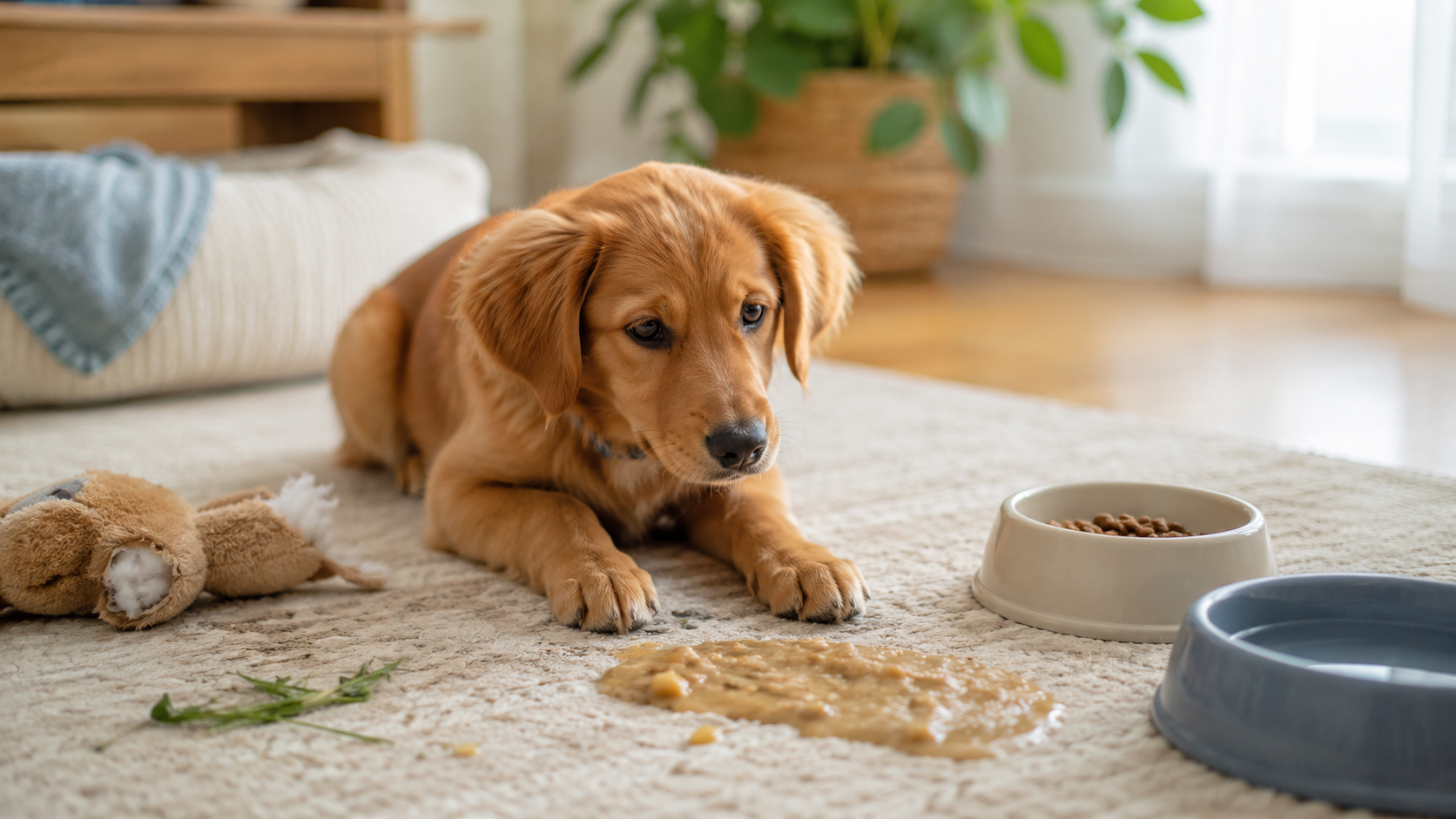
Dogs can be sick for simple reasons such as eating too fast, changing food suddenly, scavenging, eating grass or having a mild stomach upset. But repeated vomiting, yellow bile, white foam, blood, diarrhoea, lethargy, loss of appetite, a swollen tummy, dry heaving, vomiting after drinking water, puppy vomiting, suspected poisoning or a swallowed object should never be ignored. This guide explains why dogs vomit, what different types of sick may suggest, when careful monitoring may be reasonable and when you should contact a vet quickly.
There are two bad reactions when a dog is sick. One is panic over a single mild episode when the dog is still bright, drinking, interested in food and acting normally. The other is worse: saying “dogs are sick sometimes” while ignoring repeated vomiting, weakness, diarrhoea, blood, bloating or a dog that cannot even keep water down. That second reaction is lazy and dangerous.
Vomiting is not a diagnosis. It is a sign. Sometimes it comes from eating too quickly or picking up something disgusting on a walk. Sometimes it points to gastroenteritis, parasites, pancreatitis, kidney disease, liver disease, poisoning, a swallowed object, bloat or another serious condition. The right approach is not guessing. The right approach is reading the whole picture: frequency, colour, timing, contents, behaviour, appetite, water intake, stool, age, breed and possible access to toxins or foreign objects.
What Does It Mean When a Dog Is Being Sick?
Vomiting is the active, forceful emptying of stomach or upper intestinal contents through the mouth. Dogs often show nausea first: lip licking, drooling, repeated swallowing, restlessness, pacing, eating grass, retching, abdominal contractions or looking generally uncomfortable.
But not every episode of food coming out is true vomiting. Some dogs regurgitate. Regurgitation is usually more passive and may bring up undigested food shortly after eating. The difference matters because the likely causes can be different.
Vomiting vs Regurgitation
- Vomiting: usually involves nausea, retching, abdominal effort and partly digested material.
- Regurgitation: is usually more passive, often with undigested food coming back up soon after eating.
- Vomiting may include: yellow fluid, white foam, digested food, blood, mucus, grass or foreign material.
- Regurgitation may suggest: fast eating, oesophageal issues or food not moving properly into the stomach.
If your dog eats and then immediately brings up whole kibble without much retching, say that clearly when you contact your vet. “My dog vomited” is less useful than “he brought up undigested food five minutes after eating”. A photo or short video can also help if the issue repeats.
Why Is My Dog Being Sick?
There is no single cause of vomiting in dogs. One dog may be sick because he ate too quickly. Another may have eaten a sock, toy, bone fragment, chocolate, grapes, onion, medication or something from the bin. Some cases are mild. Others need urgent treatment.
Common causes include:
- Eating too quickly
- Eating too much at once
- Sudden food changes
- Going too long without food
- Scavenging or eating spoiled food
- Eating grass
- Food intolerance or sensitivity
- Parasites
- Gastroenteritis
- Bacterial or viral infections
- Pancreatitis
- Kidney or liver disease
- Poisoning
- Swallowed foreign objects
- Medication side effects
- Travel sickness
- Stress or excitement
- Puppy illness, parasites or feeding mistakes
A single mild episode in an otherwise normal dog may be monitored carefully. Repeated vomiting, vomiting with diarrhoea, vomiting with lethargy, vomiting after drinking water, dry heaving, blood, a swollen tummy or suspected poisoning is different. That needs a much lower threshold for veterinary advice.
My Dog Is Throwing Up Food
“My dog is throwing up food” is one of the most common searches because owners often see a clear pattern: the dog eats, then food comes back up. Sometimes the explanation is simple: the dog eats too fast. Sometimes it is regurgitation. Sometimes it is a sign of a more serious digestive or medical issue.
Possible reasons include:
- Eating too fast: the stomach is overloaded quickly and reacts by emptying.
- Large meals: one big portion may be harder to tolerate than smaller meals.
- Sudden diet change: switching food abruptly can upset the digestive system.
- Food sensitivity: some ingredients can trigger vomiting, diarrhoea or itchiness.
- Regurgitation: undigested food may come back up passively soon after eating.
- Underlying disease: repeated food vomiting should not be blamed only on fast eating.
If your dog is otherwise well and clearly bolts food, try smaller meals, a slow feeder, puzzle feeders or spreading food across a larger surface. But if your dog is lethargic, losing weight, refusing food, vomiting repeatedly or has diarrhoea, changing the bowl is not the solution. The solution is a proper veterinary check.
If food choice may be part of the issue, read how to choose the best dog food. But be honest: if your dog keeps being sick, spending months randomly switching brands is not a strong plan. Rule out health problems first.
Dog Vomiting Yellow Bile
Yellow vomit often suggests bile or bile-stained fluid. This can happen when the stomach is empty, when meal gaps are too long or when the stomach lining is irritated. But “yellow bile” should not automatically be dismissed as hunger.
Possible causes of yellow vomiting include:
- Long gaps between meals
- Empty stomach irritation
- Bile-stained vomiting
- Gastritis
- Digestive sensitivity
- Parasites
- Infections
- Pancreatic, liver or gallbladder problems
- Swallowed foreign objects
- Poisoning
If your dog vomits yellow fluid once, then eats, drinks, passes normal stool and behaves normally, careful monitoring may be reasonable. If yellow vomiting repeats, your dog refuses food, becomes weak, has diarrhoea, seems painful or cannot keep water down, waiting is a weak decision.
Dog Throwing Up White Foam
White foam can appear when a dog brings up foamy stomach fluid, saliva or mucus. It may be linked to an empty stomach, nausea, gastritis, reflux, coughing, throat irritation or digestive upset. But white foam can also appear in more serious situations, especially when it comes with dry heaving, bloating, restlessness, drooling or collapse.
Possible causes include:
- Nausea on an empty stomach
- Gastritis
- Drinking water too quickly
- Foamy saliva and stomach fluid
- Reflux or stomach irritation
- Coughing that looks like gagging
- Poison exposure
- Foreign object ingestion
- Bloat or gastric dilatation-volvulus risk
This distinction matters: a dog that brings up a little white foam once and then acts normal is one thing. A dog that keeps retching but cannot bring anything up, has a swollen tummy, drools, paces, struggles to settle or weakens is another thing entirely. The second situation can be an emergency, especially in large, deep-chested breeds.
Dog Vomiting Blood
Blood in vomit is a red flag. It may look bright red, pink, streaked, dark brown or like coffee grounds. The source may be the mouth, throat, oesophagus, stomach or intestines, but you cannot reliably work that out at home.
Possible causes include:
- Severe stomach or intestinal irritation
- Ulcers
- Foreign object injury
- Bone fragments or sharp material
- Poisoning
- Clotting problems
- Trauma
- Bleeding from the mouth, teeth or throat
- Severe infections
If you see blood in your dog’s vomit, do not use “if it happens again” as your plan. Blood with lethargy, pale gums, black stool, diarrhoea, abdominal pain, collapse or suspected poisoning needs urgent veterinary advice.
Dog Vomiting and Diarrhoea
Vomiting and diarrhoea together raise the risk level because fluid loss can develop faster. This matters especially in puppies, toy breeds, elderly dogs and dogs with existing health conditions.
Possible causes include:
- Gastroenteritis
- Scavenging or eating spoiled food
- Sudden food change
- Parasites
- Bacterial or viral infections
- Pancreatitis
- Poisoning
- Foreign object ingestion
- Inflammatory bowel disease
One vomit and a slightly soft stool in a bright dog is one situation. Repeated vomiting, watery diarrhoea, blood, weakness and refusal to eat is another. Treating those two situations as the same is poor judgement.
Dog Vomiting and Lethargic
Lethargy changes the seriousness of vomiting. If a dog vomits once and then runs around as usual, the situation may be mild. If a dog vomits and then becomes weak, dull, wobbly, withdrawn or difficult to engage, the whole risk level goes up.
Act faster if lethargy comes with:
- Repeated vomiting
- Vomiting after drinking water
- Loss of appetite
- Diarrhoea
- Blood in vomit or stool
- Swollen abdomen
- Constant lying down
- Pale gums
- Fast breathing
- Collapse or inability to stand
Vomiting plus lethargy should not be treated as a casual stomach upset. It may indicate dehydration, pain, infection, toxin exposure, organ disease or obstruction.
Dog Dry Heaving but Not Vomiting
This is one of the most important sections. If your dog keeps trying to vomit but brings nothing up, especially with a swollen tummy, restlessness, excessive drooling, pale gums, breathing difficulty or collapse, this may be an emergency. Bloat and gastric dilatation-volvulus can progress quickly and need urgent veterinary care.
Risk is higher in:
- Large and deep-chested breeds
- Dogs that eat very quickly
- Dogs that exercise hard around mealtimes
- Dogs fed one large meal a day
- Dogs with previous bloat history
If your dog is dry heaving, bloated and distressed, stop searching for “dog vomiting white foam” and call a vet. This is not a situation for home remedies.
Puppy Vomiting: Why It Is More Risky
Puppy vomiting is more concerning than vomiting in many healthy adult dogs. Puppies can become dehydrated faster, lose energy faster and be hit harder by parasites, infections and feeding mistakes. If vaccinations are incomplete, vomiting should be taken especially seriously.
Possible causes in puppies include:
- Sudden diet changes
- Incorrect feeding
- Eating too quickly
- Parasites
- Viral or bacterial infections
- Swallowed objects
- Poisoning
- Mild post-vaccination reactions
- Stress after moving to a new home
If a puppy vomits more than once, has diarrhoea, refuses food, seems weak, has a swollen belly, seems feverish or has an unclear vaccine history, do not sit on it. Puppies can deteriorate quickly.
If you have recently brought a puppy home, read the puppy care guide, the 2026 dog vaccination schedule and what should be done at the first vet visit. Those three pages fit naturally with puppy vomiting because vaccination status, parasites, diet and first health checks all affect risk.
Vomiting in Older Dogs
Vomiting in older dogs should not be dismissed as “just age”. That is lazy thinking. Senior dogs are more likely to have kidney disease, liver disease, pancreatitis, gastrointestinal disease, hormonal problems, tumours or chronic inflammation.
Take vomiting in an older dog more seriously if you notice:
- Weight loss
- Reduced appetite
- Drinking more than usual
- Changes in urination
- Lethargy
- Repeated diarrhoea or constipation
- Poor coat condition
- Swollen abdomen
- Frequent vomiting
An older dog with repeated vomiting may need blood tests, urine tests, X-rays, ultrasound or other diagnostics. That cannot be solved by staring at a vomit colour chart.
Poisoning and Dog Vomiting
Vomiting can be an early sign of poisoning. Dogs are curious and often eat first, think never. Chocolate, grapes, raisins, onions, garlic, human medicines, cleaning products, rodent bait, spoiled food, antifreeze, some plants and incorrectly used parasite products can all be dangerous.
Possible poisoning signs include:
- Repeated vomiting
- Excessive drooling
- Tremors
- Seizures
- Weakness or collapse
- Breathing difficulty
- Bloody vomit or bloody diarrhoea
- Wobbliness
- Abnormal pupil changes
- Sudden behaviour change
If poisoning is possible, do not try to make your dog vomit at home unless a vet specifically tells you to. Some substances cause more damage if brought back up, and some methods are dangerous. Use pet poisoning symptoms and first aid as a fast reference, but contact a vet immediately if exposure is likely.
For common food risks, continue with dog ate chocolate: what to do, dog ate grapes: what to do and dog ate onion: what to do. These are not random links; they match real emergency-style searches where owners need a faster, more specific next step.
Can a Swallowed Object Make a Dog Vomit?
Yes. Dogs can vomit after swallowing objects such as socks, cloth, plastic, toys, bones, stones, string, rubber, corn cobs, bottle caps or pieces of chew. Some objects may pass. Others can cause obstruction, damage or a life-threatening emergency.
Warning signs include:
- Repeated vomiting
- Refusing food
- Vomiting after drinking water
- Abdominal pain
- Lethargy
- Not passing stool
- Diarrhoea or bloody stool
- Restlessness
- A missing toy, sock, string, bone or plastic item
If you suspect a swallowed object, do not wait for days to “see if it passes” if your dog is vomiting or unwell. Do not pull visible string from the mouth or bottom either. That can damage the intestines. Call a vet and follow professional advice.
What Does Dog Vomit Colour Mean?
Vomit colour can give clues, but it does not diagnose the problem by itself. Note the colour, smell, texture and contents if vomiting repeats.
- Yellow vomit: may suggest bile, an empty stomach, gastritis or digestive irritation.
- White foam: may be linked to stomach fluid, saliva, nausea, an empty stomach or more serious conditions if paired with dry heaving and bloat.
- Food: may suggest fast eating, regurgitation, food sensitivity or digestive disease.
- Green vomit: may be linked to grass, bile or gut irritation.
- Brown foul-smelling vomit: can be more concerning, especially if repeated or paired with illness.
- Red or coffee-ground vomit: may suggest blood and should be taken seriously.
- Clear fluid: may occur with nausea, water intake, stomach irritation or repeated empty-stomach vomiting.
Colour helps, but the bigger picture matters more: how many times has your dog vomited, are they weak, is there diarrhoea, can they keep water down, is the abdomen swollen, and could poisoning or a swallowed object be involved?
When Is Dog Vomiting Serious?
This is the part owners actually need. The real question is not only “why is my dog being sick?” It is “do I need to call the vet now?”
Contact a vet quickly if:
- Your dog vomits more than once in the same day
- Vomiting continues or repeats over 24 hours
- There is blood in the vomit
- Your dog is lethargic, dull or collapsed
- Your dog refuses food
- Your dog vomits after drinking water
- Vomiting comes with diarrhoea
- There is abdominal swelling or pain
- Your dog is dry heaving but cannot vomit
- You suspect a swallowed object
- You suspect poisoning
- Your dog is a puppy, elderly or has a chronic illness
- There is weight loss
- Stool or urination habits change
- The vomiting becomes frequent or weekly
A single mild episode in a dog that is completely normal may be monitored. Repeated vomiting or vomiting with red flags is not a “wait and hope” problem.
What Can I Give My Dog for Vomiting at Home?
This question is searched constantly, but the answer needs to be clear: do not give random things to a vomiting dog. Do not give human stomach medicine, painkillers, antibiotics, milk, yoghurt, bicarbonate, olive oil, herbal mixtures or anything from a comment section. Some human medicines are dangerous for dogs.
If your dog vomited once, is bright, drinking, interested in food, has no diarrhoea, has no swollen tummy and there is no poisoning or foreign object concern, careful monitoring may be reasonable. If vomiting repeats or your dog seems unwell, home remedies are a waste of time.
Before calling your vet, note:
- When the vomiting started
- How many times it happened
- Whether it happened before or after food
- Whether the vomit contained food, yellow fluid, white foam, blood, grass or foreign material
- Whether your dog is eating
- Whether your dog is drinking and keeping water down
- Whether there is diarrhoea
- Whether there is abdominal swelling or pain
- Whether there was new food, treats, medication or table scraps
- Whether chocolate, grapes, onion, medicine, cleaning products or bin waste could be involved
- Whether a toy, sock, bone, string or plastic item could be missing
- Your dog’s age, breed and known medical conditions
This information is far more useful than “my dog was sick, what do I do?” It helps the vet judge urgency properly.
How to Reduce the Risk of Dog Vomiting
Not every vomiting episode can be prevented. But many common triggers can be reduced with better feeding, safer routines and more control at home.
- Slow down fast eaters: use slow feeders, smaller portions or puzzle feeders.
- Avoid sudden food changes: transition gradually where possible.
- Stop bin raiding and scavenging: spoiled food and fatty leftovers can trigger serious stomach problems.
- Keep toxic foods out of reach: chocolate, grapes, raisins, onions and garlic are not casual risks.
- Check toys regularly: broken pieces, string and plastic can be swallowed.
- Keep parasite care up to date: follow a veterinary plan for worms, fleas and ticks.
- Maintain vaccinations: especially for puppies and dogs with unclear records.
- Avoid hard exercise straight after meals: be especially careful with large and deep-chested breeds.
- Do not normalise chronic vomiting: frequent vomiting should be investigated.
For prevention, pair this page with the flea, tick and parasite schedule for dogs and what dogs can eat: safe and toxic foods. Those pages support the same owner intent without stuffing links into every paragraph.
What Will a Vet Do for a Vomiting Dog?
A good vet does not simply “stop the sick” and ignore the cause. Vomiting is a symptom. The real work is deciding whether the issue is mild stomach upset, fast eating, infection, parasites, pancreatitis, poisoning, foreign object, kidney disease, liver disease or an emergency such as bloat.
Depending on the case, a vet may consider:
- Physical examination
- Temperature, pulse, breathing and hydration check
- Abdominal examination
- Blood tests
- Urine testing
- Faecal or parasite testing
- X-rays or ultrasound
- Foreign object investigation
- Toxin assessment if poisoning is suspected
- Fluid therapy if dehydrated
- Anti-nausea treatment where appropriate
Fast eating, poisoning, pancreatitis and an intestinal blockage are not the same problem. Treating them as the same is how owners lose time.
Keep a Dog Vomiting Diary
If your dog is sick now and then, “sometimes” is not good enough. Sometimes may mean once every six months or every Monday morning. Those are completely different patterns.
Record:
- Date and time
- Before or after food
- Vomit colour
- Food, foam, yellow fluid, blood, grass or foreign material
- Number of episodes in the day
- Appetite
- Water intake
- Stool quality
- Energy level
- New food, treats, medication or stress
This is especially useful for chronic vomiting, food sensitivity, morning yellow bile, older dogs and intermittent digestive problems. Data beats vague memory.
Common Mistakes Owners Make With Dog Vomiting
- Calling every vomit normal: frequent vomiting is not normal.
- Giving human medicine: some human medicines are dangerous for dogs.
- Trying to induce vomiting after suspected poisoning: this can cause more harm in the wrong situation.
- Ignoring blood: blood in vomit is a warning sign.
- Ignoring dry heaving: especially with a swollen tummy, this can be urgent.
- Underestimating puppy vomiting: puppies can deteriorate quickly.
- Changing food again and again: this may make digestion worse.
- Forgetting foreign objects: dogs swallow socks, toys, bones, string and plastic more often than owners want to admit.
- Ignoring lethargy and appetite loss: these change the risk level.
- Giving poor information to the vet: colour, frequency, timing and other symptoms matter.
Final Word: Dog Vomiting Is a Sign, Not Something to Guess Around
Why is my dog being sick? There is no single answer. It may be fast eating, sudden food change, hunger, grass eating or mild stomach irritation. It may also be poisoning, a swallowed object, infection, parasites, pancreatitis, kidney disease, liver disease, bloat or another serious condition.
The strongest approach is simple: do not panic over one mild episode in a completely normal dog, but do not minimise repeated vomiting. Watch the colour, contents, timing, number of episodes and your dog’s overall behaviour. If red flags appear, contact a vet quickly.
Vomiting can be a small warning or the first sign of something serious. The difference depends on the pattern, the dog’s condition and how quickly you act.
Frequently Asked Questions
Why is my dog being sick?
Dogs can be sick because of eating too fast, sudden food changes, scavenging, spoiled food, eating grass, food sensitivity, parasites, infection, gastroenteritis, pancreatitis, swallowed objects, poisoning, kidney disease or liver disease. A single mild episode may be monitored if the dog is otherwise normal, but repeated vomiting needs veterinary advice.
When is dog vomiting serious?
Dog vomiting is serious if it happens more than once, continues over 24 hours, contains blood, comes with lethargy, diarrhoea, loss of appetite, vomiting after drinking water, abdominal swelling, dry heaving, pain, suspected poisoning or a swallowed object. Puppies, elderly dogs and dogs with existing illness should be treated more urgently.
Why is my dog vomiting yellow bile?
Yellow vomit often suggests bile or bile-stained fluid. It may happen with an empty stomach, long gaps between meals, gastritis or digestive irritation. It can also be linked to parasites, infection, pancreatic, liver or gallbladder problems, poisoning or a swallowed object. Repeated yellow vomiting should be discussed with a vet.
Why is my dog throwing up white foam?
White foam can be linked to stomach fluid, saliva, nausea, an empty stomach, gastritis or throat irritation. But if your dog is dry heaving, has a swollen tummy, is restless, drooling, weak or struggling to settle, it could be urgent. This is especially important in large, deep-chested breeds.
What should I do if my dog vomits after eating?
Vomiting after eating may be caused by fast eating, large portions, sudden food change, food sensitivity or regurgitation. If your dog is otherwise well, smaller meals and a slow feeder may help. If vomiting repeats, or there is lethargy, diarrhoea, weight loss or loss of appetite, book a veterinary check.
What if my dog has vomiting and diarrhoea?
Vomiting and diarrhoea together increase the risk of dehydration. This is more serious in puppies, elderly dogs, toy breeds and dogs with existing health problems. If vomiting repeats, diarrhoea is watery or bloody, your dog is weak, refuses food or cannot keep water down, contact a vet quickly.
What can I give my dog for vomiting?
Do not give human medicines, painkillers, antibiotics, milk, yoghurt, bicarbonate, oils or herbal remedies unless a vet tells you to. If your dog vomits once and is bright, drinking and otherwise normal, careful monitoring may be enough. Repeated vomiting or vomiting with red flags needs veterinary advice.
What should I do if my puppy is vomiting?
Puppy vomiting should be taken seriously because puppies can dehydrate and weaken quickly. If a puppy vomits more than once, has diarrhoea, refuses food, seems weak, has a swollen belly, seems feverish or has an unclear vaccination history, contact a vet promptly.
Can poisoning make a dog vomit?
Yes. Poisoning can cause vomiting in dogs. Chocolate, grapes, raisins, onions, garlic, human medicines, cleaning products, rodent bait, spoiled food, some plants and incorrect parasite products can be dangerous. If poisoning is possible, do not try to make your dog vomit at home unless a vet specifically instructs you to.
What if my dog is dry heaving but not vomiting?
Dry heaving without bringing anything up can be serious, especially if your dog has a swollen tummy, restlessness, drooling, pale gums, weakness or collapse. This can be linked to bloat or gastric dilatation-volvulus, which can be life-threatening. Contact a vet immediately.