Mating Barbs in Amsterdam
There's 1 Barbs listing live right now, last updated 16 Oct 2025. Find Barbs mating and breeding opt... There's 1 Barbs listing live right now, last updated 16 Oct 2025. Find Barbs mating and breeding options in Amsterdam with clear details on species, adult group condition, male and female selection, s... There's 1 Barbs listing live right now, last updated 16 Oct 2025. Find Barbs mating and breeding options in Amsterdam with clear details on species, adult group condition, male and female selection, spawning tank setup, water quality, egg protection, plants, spawning mops, breeding grids, fry food and responsible aquarium planning. Compare Tiger Barbs, Cherry Barbs, Rosy Barbs, Gold Barbs, Odessa Barbs and other freshwater barb breeding listings before arranging a controlled setup that protects the eggs, separates the adults at the right time and gives the tiny fry a real chance to survive.
Popular Searches
Barbs mating in Amsterdam
Barbs mating in Amsterdam should be understood as controlled aquarium breeding, not random fish pairing in a community tank. Most barb fish are egg scatterers, which means they release eggs among plants, moss, mops or a prepared substrate and then provide no parental care.
A serious listing or breeding arrangement should mention the exact barb species, adult health, male and female ratio, water conditions, spawning tank size, egg protection method, fry feeding plan and what happens after spawning. If the setup does not protect the eggs from the adults, the breeding attempt is weak from the start.
Barb fish breeding Amsterdam
Barb fish breeding in Amsterdam works best when the adults are conditioned first, the spawning tank is ready before the fish are moved and the eggs have somewhere safe to fall. Food, water quality and timing all matter because adults may spawn quickly once conditions feel right.
The best breeding pages should not talk vaguely about “mating pairs” only. They should explain whether the fish are Tiger Barbs, Cherry Barbs, Rosy Barbs, Gold Barbs, Odessa Barbs or another barb species, because each one needs slightly different group behaviour, temperature range, plant cover and fry care.
Barbeel kweken Amsterdam
Barbeel kweken Amsterdam is the local Dutch-style search behind many English breeding queries. People may search in English for “barbs mating” but still compare Dutch aquarium listings, local hobbyists and Amsterdam-area breeding groups.
The intent is practical: healthy adult fish, separate breeding tank, fine plants or spawning mop, clean water, egg protection and food small enough for the fry. A Dutch or English listing that does not explain these details is not strong enough for a serious breeding attempt.
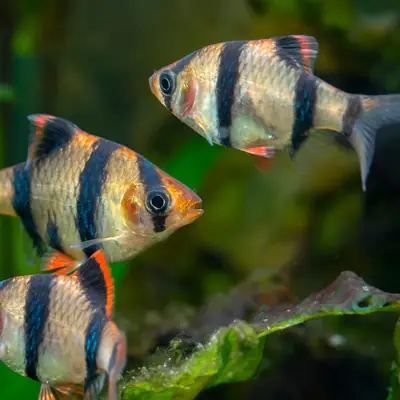
Tiger Barb breeding Amsterdam
Tiger Barb breeding in Amsterdam needs a separate spawning setup because Tiger Barbs are active egg scatterers and adults may eat the eggs. A community aquarium is usually the wrong place if the goal is to raise fry, because eggs disappear quickly among other fish and hungry adults.
Choose strong adults, condition them with varied food, use plants, moss, marbles, mesh or a breeding grid and remove the adults after spawning. The fry will be tiny, so the food plan must start with microscopic first foods before moving to newly hatched brine shrimp or finely prepared fry food.
Tijgerbarbeel kweken Amsterdam
Tijgerbarbeel kweken Amsterdam targets the same fish as Tiger Barb breeding, but in the wording many local aquarium keepers use. The key is not only getting the fish to spawn; it is keeping the eggs alive after they are scattered.
A proper setup uses soft plant cover, a spawning mop or an egg-safe bottom where eggs can fall away from the adults. Without that protection, even a successful morning spawn can look like failure because the adults eat the evidence before the owner notices.
Cherry Barb breeding Amsterdam
Cherry Barb breeding in Amsterdam is popular because Cherry Barbs are smaller, calmer and easier to manage than some more aggressive barb species. They still scatter eggs and do not raise their fry, so a planted or mop-filled breeding tank is important.
Look for healthy adults with active colour, rounded females and slim, stronger-coloured males. Once spawning happens, adults should be removed or eggs should be protected. The first fry food must be tiny enough for newly free-swimming fry, otherwise the breeding setup fails after the eggs hatch.
Rosy Barb breeding Amsterdam
Rosy Barb breeding in Amsterdam needs more swimming space than smaller barb species because adult Rosy Barbs are active and energetic. The breeding group should be healthy, well-fed and moved into a prepared tank rather than forced to spawn in a crowded display aquarium.
Use plants, moss, mops or a protected bottom so eggs can fall away from the adults. After spawning, remove the adults quickly. Rosy Barb fry need stable water and small foods at the beginning, not crushed adult flakes thrown in too early.
Gold Barb breeding Amsterdam
Gold Barb breeding in Amsterdam should focus on mature, well-conditioned fish and a clean spawning tank with enough cover for eggs. Gold Barbs may look hardy, but breeding still needs planning if the aim is to raise fry rather than simply observe spawning behaviour.
Ask whether the adults have been separated or conditioned, what water temperature is used, whether plants or mops are provided and how fry will be fed. The bright colour is attractive, but the real success comes from egg safety and early fry care.
Odessa Barb breeding Amsterdam
Odessa Barb breeding in Amsterdam attracts aquarists who want strong red-striped fry from active adult groups. Males can show better colour when conditioned well, while females become rounder when full of eggs.
A separate tank with plants, moss or an egg barrier gives better results than a community tank. Odessa Barbs are fast, hungry and active, so eggs need immediate protection and fry need stable water once they hatch.
Barb breeding pair Amsterdam
Barb breeding pair Amsterdam sounds simple, but many barbs breed better from a selected group rather than a random pair. Males may chase, spar and compete, while females need to be healthy and full-bodied enough to carry eggs.
Ask whether the fish are proven adults, how the male and female were selected, whether the species breeds in pairs or groups and whether the seller has raised fry before. A “pair” with no species detail is too vague.
Barb spawning tank Amsterdam
Barb spawning tank Amsterdam searches come from users who already know the main tank is not enough. The breeding tank should be clean, mature, stable and set up before adults are introduced.
Useful elements include fine-leaved plants, moss, spawning mops, marbles, mesh, gentle filtration and dimmer lighting for sensitive eggs. The goal is simple: adults spawn above, eggs fall somewhere adults cannot easily reach, and fry hatch into clean water.
Barb spawning mop Amsterdam
Barb spawning mop Amsterdam is a practical search because mops give egg-scattering fish a safe surface and make eggs easier to move or protect. A mop can imitate plant cover without needing a heavily planted breeding tank.
The mop should be clean, aquarium-safe and placed where adults naturally chase and scatter eggs. After spawning, the mop can be moved or the adults can be removed. Leaving everything together usually means fewer eggs survive.
Barb breeding grid Amsterdam
Barb breeding grid Amsterdam searches show a higher-level breeding intent. A grid, mesh or false bottom lets eggs fall below the adults, reducing egg loss without needing to watch the tank every minute.
The grid holes must allow eggs to pass through while preventing adults from reaching them. It should be stable, clean and safe for fish movement. A badly built grid can trap fish, collect waste or fail to protect eggs.
Barb egg scatterer breeding Amsterdam
Barb egg scatterer breeding in Amsterdam should explain the actual behaviour: adults chase, release eggs and sperm, then move on without guarding the eggs. In an aquarium, that means the adults and tank mates may eat eggs quickly.
A strong breeding setup protects eggs from the first minute. Plants, mops, marbles, mesh and fast adult removal all serve the same purpose: keeping the eggs alive long enough to hatch.
Barb eggs eaten by adults
Barb eggs eaten by adults is one of the most common reasons breeding attempts fail. Many aquarists think the fish did not spawn, when in reality the adults scattered eggs and ate most of them before the owner saw anything.
The answer is not more adult food after spawning. The answer is egg protection: separate breeding tank, dense cover, spawning mop, marbles, grid, false bottom or quick adult removal after spawning behaviour ends.
Barb fry care Amsterdam
Barb fry care in Amsterdam starts before the eggs hatch. The fry are tiny and cannot eat normal flakes immediately, so the first food plan must be ready before the adults even spawn.
Use infusoria, very fine liquid or powdered fry food at the earliest stage, then move to newly hatched brine shrimp or other suitable small foods as the fry grow. Clean water matters because overfeeding tiny fry can ruin the tank quickly.
Infusoria for barb fry Amsterdam
Infusoria for barb fry Amsterdam is a high-intent search because newly free-swimming fry are often too small for common foods. Without the right microscopic food, fry can hatch successfully and still starve.
Prepare infusoria or another tiny first food before spawning. Do not wait until fry are visible and then start searching. Good breeding is not the moment eggs appear; it is the preparation before that moment.
Baby brine shrimp for barb fry
Baby brine shrimp for barb fry becomes useful after the fry are large enough to take moving food. It is not always the very first food for the smallest fry, but it is often a strong next step once they can handle it.
The fry should be observed closely. If food is too large, they ignore it and weaken. If feeding is too heavy, water quality drops. Small, frequent feeding with careful cleaning is better than dumping food into the tank.
Barb breeding water temperature Amsterdam
Barb breeding water temperature in Amsterdam depends on the species. Tiger Barbs, Cherry Barbs, Rosy Barbs, Gold Barbs and Odessa Barbs do not all need the exact same setup, so copying one number for every barb is lazy and risky.
The practical approach is to research the exact species, keep stable mature water, avoid sudden shock and use small changes only when they match the fish’s natural spawning triggers. Stability matters more than chasing a magic temperature.
Barb breeding water quality Amsterdam
Barb breeding water quality in Amsterdam should be clean, stable and suitable for the species. Eggs and fry are less forgiving than adult fish, so a tank that looks “fine” for adults may still fail at the breeding stage.
Use mature filtration, avoid ammonia and nitrite, keep gentle flow, remove uneaten food and avoid aggressive cleaning that crashes stability. If the fry tank smells bad, clouds heavily or swings wildly, the setup is not ready.
Barb breeding tank plants Amsterdam
Barb breeding tank plants in Amsterdam setups are useful because fine plants and moss give eggs cover and make adults less able to eat everything immediately. Plants also help fry feel safer once they become free-swimming.
Fine-leaved plants, moss clumps and floating cover can all help, but they must be clean and free of pests or chemical residue. The plant setup should protect eggs without trapping adult fish.
Barb fish male female difference
Barb fish male female difference depends on the species, but males are often slimmer, more colourful or more active during courtship, while females are usually fuller-bodied when carrying eggs.
Do not rely on one photo or one colour clue. Ask for side-view photos, age, group behaviour and whether the fish have shown breeding condition before. Wrong sexing wastes time and creates fake breeding listings.
Conditioning barbs for breeding
Conditioning barbs for breeding means feeding healthy adults properly before the spawning attempt. A varied diet helps females develop eggs and males show stronger courtship behaviour.
Use quality dry foods plus suitable frozen or live foods where appropriate, but do not pollute the tank. Overfeeding dirty water is not conditioning; it is sabotage.
Community tank barb breeding Amsterdam
Community tank barb breeding in Amsterdam may produce occasional eggs, but it rarely produces good fry survival. Other fish, shrimp, snails and the adult barbs themselves may eat eggs or newly hatched fry.
If the goal is real breeding, use a separate spawning tank or protect eggs with a deliberate setup. Hoping fry survive in a busy display tank is not a plan.
Barb breeding setup for beginners Amsterdam
Barb breeding setup for beginners in Amsterdam should start with easier species and clear expectations. Cherry Barbs are usually more forgiving than aggressive or very active species, while Tiger Barbs need careful group handling and egg protection.
The beginner setup should include a mature small tank, gentle filter, heater if needed, spawning mop or plants, egg protection, first fry food and a way to remove adults. Without those basics, the attempt is mostly luck.
Barb breeding near Amsterdam
Barb breeding near Amsterdam may include local aquarists in Amsterdam, Haarlem, Zaandam, Amstelveen, Almere, Utrecht and wider North Holland. Nearby matters because fish transport should be short, stable and low-stress.
Still, distance is not the first filter. Choose the listing with correct species identification, healthy adult fish, responsible transport, clear breeding setup and honest fry-care expectations over the closest vague advert.
Aquarium fish breeding Amsterdam barbs
Aquarium fish breeding Amsterdam barbs searches come from hobbyists who want local, practical information rather than generic fish profiles. For barbs, the main challenge is not usually getting adults into condition; it is protecting eggs and feeding very small fry.
A strong Amsterdam barb breeding listing should explain fish species, water setup, spawning trigger, adult removal, egg safety, hatch expectations and fry food. Anything less is thin and not useful for someone actually trying to raise fish.
Frequently Asked Questions
What are Barbs in aquarium breeding?
Barbs are freshwater aquarium fish that include species such as Tiger Barbs, Cherry Barbs, Rosy Barbs, Gold Barbs and Odessa Barbs.
Most are egg-scattering fish, which means they release eggs and do not care for the fry after spawning.
How do Barbs mate in an aquarium?
Barbs usually spawn by chasing, courtship and scattering eggs among plants, mops or the tank bottom.
The male fertilises the eggs as they are released, but the adults do not guard them afterwards.
Do Barbs protect their eggs?
No, Barbs generally do not protect their eggs.
Adults may eat the eggs after spawning, so eggs need protection through plants, mops, marbles, mesh, a breeding grid or quick adult removal.
Should Barbs be bred in a separate tank?
Yes, a separate spawning tank gives much better control and improves fry survival.
Community tanks usually contain adults, tank mates and filter flow that can remove or eat eggs and fry quickly.
What should a Barb breeding tank include?
A breeding tank should include mature clean water, gentle filtration, stable temperature, fine plants or moss, spawning mops or an egg-safe bottom.
The setup should let eggs fall away from the adults and keep the water stable for hatching and fry growth.
What is a spawning mop for Barbs?
A spawning mop is an aquarium-safe artificial mop used to give egg-scattering fish a place to release eggs.
It can make eggs easier to protect, move or separate from the adult fish after spawning.
What is a breeding grid for Barbs?
A breeding grid is a mesh or false-bottom barrier that lets eggs fall through while keeping adults above them.
It helps reduce egg loss because adult Barbs cannot easily reach the eggs after spawning.
When should adult Barbs be removed after spawning?
Adults should usually be removed soon after spawning behaviour ends.
If they stay in the tank, they may eat the eggs or newly hatched fry.
How do I know if Barbs are ready to breed?
Ready adults are active, healthy, well-conditioned and often show stronger colour, chasing or courtship behaviour.
Females may look fuller when carrying eggs, while males may appear slimmer and more colourful depending on the species.
How do you tell male and female Barbs apart?
The difference depends on the species, but males are often slimmer, brighter or more active during courtship.
Females are often fuller-bodied, especially when carrying eggs. Side-view photos and behaviour are more useful than one colour clue.
Can Barbs breed in a community tank?
They may spawn in a community tank, but egg and fry survival is usually poor.
Adults and other tank mates often eat eggs before the owner notices spawning happened.
Why do Barb breeding attempts fail?
Common failures include no separate tank, adults eating eggs, poor water quality, wrong species setup, weak adult conditioning and no first fry food ready.
Many attempts fail after hatching because fry are too small for normal fish food.
What do newly hatched Barb fry eat?
Newly free-swimming Barb fry often need very tiny foods such as infusoria, liquid fry food or fine powdered fry food at the beginning.
As they grow, many can move on to newly hatched brine shrimp and other small foods.
Is baby brine shrimp good for Barb fry?
Baby brine shrimp can be useful once fry are large enough to eat it.
Very tiny fry may need smaller first foods before they can handle baby brine shrimp.
How long do Barb eggs take to hatch?
Hatching time depends on species and water temperature, but many aquarium Barb eggs hatch within a few days.
The fry may still need time after hatching before they become free-swimming and ready to feed.
Do Barb eggs need light or darkness?
Many breeders use dimmer conditions for egg-scattering fish because eggs and fry can be sensitive.
Avoid harsh light, unstable water and constant disturbance during the egg stage.
What water temperature is best for Barb breeding?
The best temperature depends on the exact Barb species.
Tiger Barbs, Cherry Barbs, Rosy Barbs, Gold Barbs and Odessa Barbs should not all be treated as one identical fish. Research the species before setting the breeding tank.
What water quality do Barb fry need?
Barb fry need clean, stable water with no ammonia or nitrite and gentle filtration that will not suck them in.
Small feeding amounts and careful cleaning are important because overfeeding can pollute the tank quickly.
Should I use plants in a Barb breeding tank?
Fine plants, moss and floating cover can help protect eggs and give fry safer areas after hatching.
The plants should be clean, aquarium-safe and not treated with harmful chemicals.
Are Tiger Barbs easy to breed?
Tiger Barbs can spawn readily when healthy and conditioned, but raising fry is harder than getting eggs.
The adults may eat the eggs, so a separate tank and egg protection are important.
Are Cherry Barbs good for beginner breeding?
Cherry Barbs can be a better beginner option than some more aggressive or highly active Barbs.
They still need a proper spawning setup, adult removal and tiny first foods for fry.
Can Rosy Barbs breed in small tanks?
Rosy Barbs are active fish and need enough space to move safely, even during breeding.
A cramped setup can stress the adults and make water quality harder to control.
Should Barb breeders sell fry immediately?
No, fry should be grown until they are stable, feeding well, healthy and large enough for safe transfer.
Very young fry are delicate and should not be moved casually.
What should I ask before using someone’s Barb breeding setup in Amsterdam?
Ask the exact species, water parameters, adult condition, egg protection method, fry food plan, disease history and how transport will be handled.
If the person cannot explain how eggs and fry are protected, the setup is not reliable.
Can different Barb species be bred together?
Different Barb species should not be mixed casually for breeding.
Responsible breeding keeps species identity clear and avoids confusing or unwanted crosses unless the breeder fully understands the consequences.
What are red flags in a Barb mating listing?
Red flags include no species name, no water setup details, no adult health information, no egg protection plan and no fry feeding plan.
Also avoid vague listings that promise “easy babies” without explaining how the eggs and fry will survive.
How do I avoid poor Barb breeding arrangements in Amsterdam?
Choose clear listings that identify the species, show healthy adults, explain spawning conditions and describe fry care honestly.
Avoid arrangements based only on quick fish exchange, colour claims or community tank spawning hopes.
What should I prepare before breeding Barbs?
Prepare a mature breeding tank, egg protection, gentle filtration, correct temperature, first fry food, grow-out space and a plan for adult removal.
If those basics are missing, do not start the breeding attempt yet.