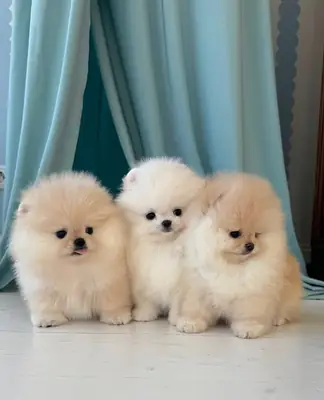
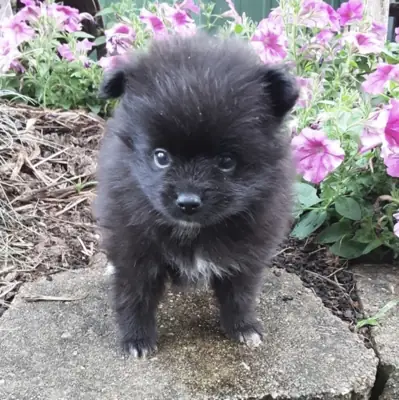
Pomeranian quick summary
The Pomeranian is a small, lively and eye-catching companion dog known for its fluffy coat, alert expression and confident personality. In the UK, it is often searched by people looking for a small dog that can live in a flat, but treating the Pomeranian as simply “small and cute” is a mistake. This breed needs attention, grooming, training, sensible boundaries and daily mental stimulation.
A well-raised Pomeranian can be a wonderful companion. It is usually affectionate, bright, playful and closely bonded to its family. However, when left without structure, it can become demanding, noisy, over-attached or reactive to everyday sounds. Its small size makes it easy to manage physically, but its personality is anything but passive.
If you are considering a Pomeranian, you should understand its real needs before focusing on its appearance. This breed requires regular brushing, careful handling, dental care, weight control, early socialisation, reward-based training and a calm home routine. This guide explains Pomeranian characteristics, temperament, grooming, feeding, training, health and suitability for flat living.
- Breed group: Toy dog / small companion dog
- Also known as: Pom, Pomeranian Spitz
- General temperament: Lively, alert, affectionate, curious and confident
- Care level: Medium to high
- Coat type: Dense double coat
- Flat living: Suitable if barking, exercise and routine are managed properly
- Best for: Owners who can provide grooming, companionship and consistent training
Pomeranian general characteristics

The Pomeranian is the smallest of the spitz-type breeds and has the typical spitz look: upright ears, a plumed tail carried over the back, a bright expression and a thick coat. Although it is now widely kept as a companion dog, it still has the alert and energetic nature associated with spitz breeds.
One of the most important Pomeranian characteristics is confidence. This dog often behaves as though it is much larger than it really is. It notices sounds, visitors, movement outside the window and small changes in the home. This makes it engaging and expressive, but it also means barking can become a problem if the dog is not guided properly.
Pomeranians are usually very attached to their people. Many form a particularly strong bond with one person in the household while still being friendly with others when well socialised. They enjoy attention and companionship, but they should not be allowed to become completely dependent. A balanced Pomeranian should learn to rest alone, wait calmly and cope with ordinary household activity.
For UK owners, the Pomeranian’s small size makes it attractive for flats, terraced homes and city living. That does not mean it is a low-effort breed. It needs brushing, short walks, indoor play, calm training, dental care and sensible handling. A Pomeranian that is treated like a toy rather than a real dog can quickly develop behaviour problems.
Pomeranian physical features

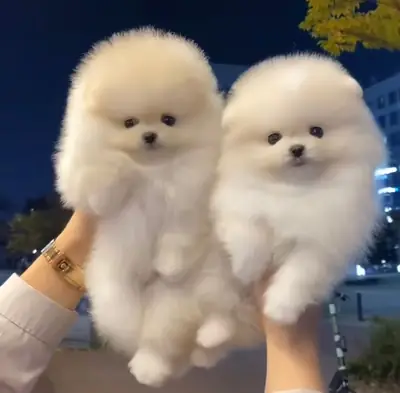
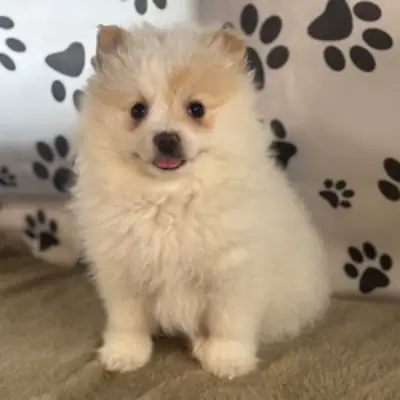
The Pomeranian has a compact body, a bright face and a thick, fluffy coat that makes it look larger and rounder than it really is. Its ears are usually small and upright, its eyes are dark and expressive, and its tail is carried over the back with plenty of feathering. A healthy Pomeranian should look alert, balanced and able to move freely.
The coat is one of the breed’s strongest visual features. It has a dense undercoat and a longer outer coat. This creates the famous fluffy outline, but it also means regular grooming is essential. Without brushing, the coat can mat close to the skin, especially behind the ears, around the neck, under the legs and near the tail.
Pomeranian size and weight
The Pomeranian is a small dog, but healthy structure matters more than extreme smallness. A tiny dog that struggles to move, breathe or maintain body condition is not a good example of the breed. Owners should look for balance, sound movement, clear eyes, good appetite, clean skin and a stable temperament.
Weight should be judged alongside body condition. A thick coat can hide excess weight, so owners should not rely only on appearance. You should be able to feel the ribs gently without them being buried under fat, and the dog should move comfortably without tiring too quickly.
Coat colours and coat type
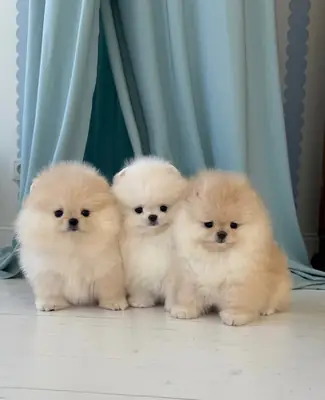
Pomeranians can appear in a range of colours, including orange, cream, black, white, sable, brown and other shades. Colour alone does not prove health, quality or temperament. Choosing a Pomeranian only because of coat colour is a weak decision. Health, temperament, movement, coat condition and responsible breeding background matter far more.
Face, ears and tail
The Pomeranian often has a fox-like expression, with alert eyes and upright ears. Some dogs have a rounder look, often associated with the “Boo” or teddy bear style. However, overly short muzzles, breathing noise, exaggerated features or poor movement should never be ignored for the sake of a cute appearance.
Pomeranian Boo and teddy bear appearance

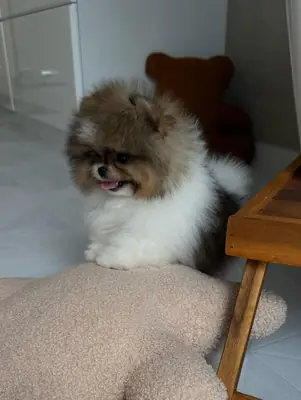
“Pomeranian Boo” is a popular search term, especially among people looking for a round-faced, teddy bear-style Pomeranian. In most cases, Boo refers to a look rather than a separate breed. The appearance is usually created by natural face shape, coat density and grooming style.
The teddy bear look can be charming, but it needs careful maintenance. A Pomeranian does not stay round and plush by accident. It needs brushing, bathing when necessary, proper drying and sometimes professional grooming. Cutting a double coat too short can affect coat quality and expose the skin, so style should never come before coat health.
If you want a Pomeranian Boo, do not choose only from a photo. Look at the dog’s movement, breathing, teeth, coat, skin and temperament. A beautiful image is not enough. A healthy, confident and well-socialised Pomeranian is much more important than a fashionable haircut.
Pomeranian
- The standard name commonly used for the breed.
- Known for its spitz-like shape and fluffy double coat.
- Can come in different colours and face types.
- Needs regular brushing and coat care.
Pomeranian Boo
- Usually refers to a teddy bear-style appearance.
- Often linked to a round face and rounded grooming.
- Not always a separate breed type.
- Should not be prioritised over health and soundness.
Pomeranian temperament and personality

The Pomeranian temperament is usually lively, alert, affectionate and confident. This is a dog that wants to be involved in household life. It notices small details, follows people around, reacts to sounds and often enjoys being the centre of attention. A well-raised Pom can be cheerful, funny and deeply loyal.
The difficult side of this personality appears when the dog has no boundaries. Because Pomeranians are small, owners sometimes excuse behaviours they would never allow in a larger dog. Jumping, barking for attention, guarding laps, demanding food or reacting to visitors may look harmless at first, but these habits can become serious behaviour problems.
Is a Pomeranian affectionate?
Yes, many Pomeranians are very affectionate with their families. They often enjoy closeness and may bond strongly with one person. This bond is one of the breed’s most appealing traits, but it needs balance. A Pomeranian should feel secure with its owner without becoming unable to relax alone.
Do Pomeranians bark a lot?
Pomeranians can be vocal. They are alert dogs and may bark at the doorbell, neighbours, hallway noise, visitors, other dogs or movement outside the window. In a UK flat or terraced house, this can become a real issue if it is not managed early.
The goal is not to stop all barking. Barking is communication. The goal is to teach the dog when to stop, how to settle and how to respond to the owner instead of reacting to every sound. If every bark results in attention, being picked up or getting what the dog wants, the barking will be reinforced.
Is the Pomeranian brave?
Yes, many Pomeranians are surprisingly bold. They may approach larger dogs with more confidence than is safe. This makes early socialisation and careful supervision important. A Pomeranian should not be allowed to rush towards bigger dogs or join rough play simply because it seems fearless.
Can Pomeranians become jealous?
Some Pomeranians can become possessive of attention, toys, beds or laps if not guided properly. They may push between people, bark at guests or react when another pet receives attention. This should be handled with calm training, predictable routines and rewarding relaxed behaviour.
Can a Pomeranian live in a flat?

Yes, a Pomeranian can live happily in a flat if its needs are met. It does not need a large garden, but it does need regular interaction, short walks, indoor play, mental enrichment and a calm routine. Small size makes flat living easier, but it does not remove the need for training.
For UK homes, the biggest challenges are usually noise and routine. Doorbells, post, neighbours, shared hallways, lifts, street noise and other dogs can all trigger barking. A Pomeranian should be gradually introduced to common household and building sounds so it learns that not every noise needs a reaction.
Why Pomeranians suit smaller homes
Their compact size makes them physically easy to accommodate. They do not take up much space, can play indoors and often enjoy staying close to their owners. They can be a good fit for city living when exercise, barking and grooming are properly managed.
Home safety for a Pomeranian
Because they are small, Pomeranians can be vulnerable to falls and rough handling. Jumping repeatedly from sofas or beds, slipping on smooth floors, open balconies and stairs can all be risky. A home should be arranged with the dog’s size and joints in mind.
Can a Pomeranian be left alone?
A Pomeranian can learn to spend short periods alone, but it should be trained gradually. Leaving a highly attached dog alone for long hours without preparation can lead to barking, anxiety, toileting accidents or destructive behaviour. Start with short absences, keep departures calm and provide a safe resting area.
Pomeranian care
Pomeranian care includes much more than keeping the coat fluffy. A good routine should include brushing, dental care, eye checks, ear checks, nail care, weight control, exercise, training and veterinary check-ups. The breed can look glamorous while still hiding skin irritation, matting, dental pain or weight gain beneath the coat.
Consistency matters. Grooming once in a while is not enough. Bathing too frequently without proper drying can also create problems. A Pomeranian needs a routine that is realistic, repeatable and gentle enough for the dog to accept without stress.
Basic Pomeranian care routine
- Several times a week: brushing, checking for mats and inspecting the skin.
- Weekly: eye, ear, paw, nail and body condition checks.
- Regularly: dental care using dog-safe products.
- As needed: bathing with suitable dog shampoo and thorough drying.
- Every day: fresh water, measured food, movement, calm interaction and behaviour observation.
Bathing a Pomeranian
A Pomeranian should not be bathed excessively. Bathing should be based on the dog’s lifestyle, skin condition and veterinary advice. When bathing is needed, dog-safe products should be used and the coat must be dried properly. Moisture trapped in a dense coat can lead to irritation, odour or skin problems.
Eyes, ears and teeth
The eyes should be kept clean, and persistent discharge, redness or squinting should not be ignored. Ears should be checked for smell, redness or heavy wax. Teeth need particular attention because small breeds can be prone to dental issues. Bad breath should not simply be accepted as normal.
Pomeranian grooming and coat care

Pomeranian grooming is one of the most important parts of owning this breed. The double coat can become tangled if it is not brushed properly. Problem areas include behind the ears, under the front legs, around the chest, near the tail and anywhere the coat rubs against harnesses or bedding.
How often should you brush a Pomeranian?
A Pomeranian should be brushed several times a week, and more often during seasonal shedding. Brushing should not only smooth the top layer. It needs to reach the undercoat so dead hair can be removed and mats can be prevented before they become painful.
Grooming should be introduced gently. Short, positive sessions work better than forcing the dog through a long and stressful brushing session. Treats, calm handling and patience help the dog accept grooming as a normal part of life.
Should a Pomeranian be shaved?
Shaving a Pomeranian very short is usually a bad idea unless there is a clear welfare or veterinary reason. The double coat helps protect the dog from both cold and heat. Cutting it too short can expose the skin and may affect the way the coat grows back.
Pomeranian feeding and nutrition

Pomeranian feeding should be based on age, body condition, activity level, neuter status, dental health and veterinary advice. Because this is a small dog, portion mistakes matter. A few extra treats each day can quickly lead to weight gain.
A balanced diet should support energy, skin, coat, digestion and dental comfort. If a Pomeranian develops dull coat, itching, soft stools, bad breath, weight gain or reduced appetite, the diet and health status should be reviewed.
| Life stage | Main feeding focus | What to watch |
|---|---|---|
| Puppy | Growth, energy and digestive adaptation | Regular meals, careful food transition and veterinary guidance |
| Adult | Stable weight, coat quality and daily energy | Measured portions, limited treats and regular activity |
| Neutered adult | Calorie control | Adjust food if activity decreases |
| Senior | Digestive comfort, dental care and joint support | Diet should be reviewed with a vet as needs change |
Foods a Pomeranian should not eat
A Pomeranian should not be given chocolate, onions, garlic, grapes, raisins, alcohol, caffeine, very fatty leftovers, cooked bones or heavily seasoned foods. Because the dog is small, even a small amount of an unsafe food can be more serious than people expect.
Weight control
The fluffy coat can hide extra weight. Owners should monitor body condition, not just appearance. Excess weight can put more strain on joints, breathing and movement. Food should be measured, and treats should be included in the daily calorie allowance.
Pomeranian training

Pomeranians are intelligent and can learn quickly, but they also need consistency. If a Pomeranian learns that barking, jumping or demanding attention works, it will repeat those behaviours. Training should begin early and should be followed by everyone in the household.
Harsh training is not suitable. Reward-based training, short sessions, calm repetition and clear routines work much better. The aim is not to dominate the dog, but to teach confidence, self-control and reliable responses.
Barking training
Barking management is essential for many Pomeranians, especially in flats. Teach the dog to respond to cues, move away from the window, settle on a bed and relax after a sound. Do not reward every bark with attention or being picked up.
Toilet training
Pomeranian puppies need patience with toilet training. They may need frequent opportunities after sleep, meals, play and excitement. Accidents should not be punished. Instead, use routine, supervision and rewards for going in the correct place.
Being left alone
Alone-time training should be gradual. Start with very short absences and build slowly. Calm departures, a safe resting area and predictable routines can reduce stress. A Pomeranian that is never taught to be alone may become anxious when the owner leaves.
Socialisation
Socialisation means carefully introducing the dog to people, dogs, sounds, surfaces and everyday situations. It does not mean overwhelming the dog. Good socialisation helps a Pomeranian become calmer, safer and more confident.
Pomeranian exercise needs

The Pomeranian does not need extreme exercise, but it does need daily movement and mental activity. Short walks, indoor games, scent games and basic training can help keep it balanced. A bored Pomeranian is more likely to bark, demand attention or become restless indoors.
Example daily routine
- Morning: short walk or toilet break with a calm start to the day.
- Daytime: brief play, safe chewing or a scent game.
- Evening: relaxed walk and simple training practice.
- Night: calm routine and rest in its own space.
Exercise to avoid
Repeated jumping from sofas or beds, rough play with large dogs, long walks in hot weather and running on slippery floors can be risky. The Pomeranian is energetic, but it is still a small dog that should be protected from avoidable injury.
Pomeranian health concerns
Pomeranians can be long-lived and healthy with good care, but there are areas owners should watch closely. This section is not a diagnosis guide. It is a practical overview of signs that should not be ignored.
Knee and joint issues
Small dogs can be prone to kneecap problems. Skipping, intermittent limping or avoiding movement should be taken seriously. Weight control, avoiding repeated high jumps and using non-slip surfaces can help reduce strain.
Trachea and breathing sensitivity
Some Pomeranians may have a sensitive airway. Dry coughing, noise when pulling on a collar or breathing discomfort should not be dismissed. A well-fitted harness may be more comfortable than pressure on the neck.
Dental problems
Dental care is extremely important in small breeds. Bad breath, tartar, red gums or difficulty eating can signal pain or disease. Regular tooth care and veterinary checks are part of responsible ownership.
Skin and coat problems
The thick coat can hide skin problems. During brushing, check for redness, flakes, soreness, bald patches, parasites or unusual odour. Coat changes can also be linked to diet, allergies or underlying health issues.
Home health checklist
- Is the dog limping or skipping when walking?
- Is there coughing or breathing difficulty?
- Has bad breath become stronger?
- Is the dog scratching more than usual?
- Are there bald patches, redness or sore skin?
- Has appetite, weight or energy changed?
- Is there discharge from the eyes or ears?
Pomeranians with children and other pets
Pomeranians can live with children, but supervision is essential. The risk is often not aggression, but size. A small dog can be injured if a child squeezes it, drops it, chases it or treats it like a toy. Children must be taught how to interact gently and respectfully.
With children
Children should not pull the coat, disturb the dog while it is sleeping, touch its food or pick it up without help. The Pomeranian should also learn not to jump, guard toys or demand attention with barking. Good manners must go both ways.
With other dogs
A Pomeranian can get along with other dogs if introductions are controlled. With larger dogs, extra care is needed because rough play can cause injury even when no dog means harm.
With cats
Pomeranians can live with cats, especially if introduced calmly and early. The cat should have escape spaces, and the dog should not be allowed to chase. Slow introductions are much better than forced contact.
Who is a Pomeranian suitable for?
The Pomeranian is suitable for owners who want a small dog with a big personality. It suits people who enjoy interaction, grooming, training and companionship. It is not suitable for someone who wants a quiet, independent dog that needs little attention.
May be suitable for
- People living in flats who are ready to manage barking.
- Owners who can brush the coat several times a week.
- Families who understand that small dogs still need training.
- People wanting a lively and affectionate companion.
- First-time owners willing to learn properly.
May not be suitable for
- People away from home for long hours every day.
- Anyone unwilling to maintain the coat.
- Homes where barking would be a serious issue and no one wants to train it.
- Families with very young children and no supervision.
- People choosing a dog only because of fashion or appearance.
Is a Pomeranian good for first-time owners?
It can be, but only if the owner is realistic. The mistake is assuming that a small dog needs no rules. A well-guided Pomeranian can be a brilliant first dog. A spoiled Pomeranian with no boundaries can become difficult quickly.
Is a Pomeranian suitable for older people?
It can suit older owners who can manage grooming, short walks and regular care. However, care should be taken with stairs, jumping and the dog moving around underfoot, as small dogs can be a trip risk.
Before adopting a Pomeranian

Before adopting a Pomeranian, look beyond the photo. This breed can win people over instantly, but the decision should be based on health, temperament, care needs and lifestyle fit. A Pomeranian is not a good choice if you want a dog only because it looks like a toy.
If you are considering a puppy, check age, vaccination status, parasite treatment, eyes, coat, skin, movement, breathing, appetite and behaviour. A puppy that is extremely quiet, coughing, limping, underweight or showing heavy eye discharge should be assessed by a vet.
Questions to ask before choosing a Pomeranian
- Can I brush the coat several times a week?
- Can I train barking from the beginning?
- Will the dog be left alone for long hours?
- Can I afford food, grooming products, vet care and dental care?
- Is my home safe for a small dog?
- Does everyone in the household know how to handle a small dog?
- Am I choosing for health and temperament, not only appearance?
Cost and maintenance
A Pomeranian may be small, but maintenance is not always cheap. Food, grooming tools, professional grooming, dental care, veterinary checks, insurance and unexpected health costs should all be considered. Neglecting grooming or dental care to save money often creates bigger problems later.
Common mistakes when choosing a Pomeranian
- Choosing only from photos: health and temperament matter more than a perfect image.
- Looking for the tiniest dog possible: extreme smallness is not always healthy.
- Ignoring barking: in a flat, barking can become a major problem.
- Underestimating grooming: the coat needs routine, not occasional attention.
- Skipping training because the dog is small: small dogs can develop serious bad habits too.
- Overprotecting the dog: carrying it everywhere can increase dependence and insecurity.
Final thoughts
The Pomeranian is small, beautiful and full of character, but it is not a low-effort accessory. It can live happily in a flat, bond closely with its family and become a joyful companion when its needs are understood. That means grooming, training, socialisation, safe handling, dental care and a predictable routine.
If you want a small dog that is bright, affectionate, expressive and lively, the Pomeranian can be an excellent choice. If you want a silent, independent, low-maintenance dog that can spend long hours alone, this breed is probably the wrong fit. The right decision starts when you stop looking only at the fluff and start understanding the dog underneath it.