Pomeranian Mating Listings in Madrid
There are 2 Pomeranian listings live right now, last updated 30 Dec 2025. Pomeranian mating in Madri... There are 2 Pomeranian listings live right now, last updated 30 Dec 2025. Pomeranian mating in Madrid is for people looking to match a healthy male or female Pomeranian dog for responsible breeding, b... There are 2 Pomeranian listings live right now, last updated 30 Dec 2025. Pomeranian mating in Madrid is for people looking to match a healthy male or female Pomeranian dog for responsible breeding, but the right pairing should be judged by legal readiness, veterinary records, size compatibility, temperament and breed-specific health risks before coat colour, tiny size or cute photos. Browse Pomeranian stud dogs and female Pomeranians for mating around Madrid Centro, Salamanca, Chamberí, Chamartín, Retiro, Moncloa, Arganzuela, Carabanchel, Usera, Vallecas, Alcobendas, Pozuelo de Alarcón, Majadahonda, Las Rozas, Getafe, Leganés, Móstoles and Alcalá de Henares with care for registered breeder status where required, microchip, EU pet passport, vaccination record, pedigree documents, mating agreement, progesterone timing, reproductive vet support, patella checks, tracheal cough history, dental condition, eye health, alopecia or coat loss, weight, previous litters, C-section history, temperament, barking, stress tolerance and whether both Pomeranians are genuinely healthy and suitable before any mating is planned.
Quick Information
Popular Searches
Pomeranian mating Madrid
Pomeranian mating in Madrid should be handled as a health, document and suitability decision, not as a quick meeting between two small dogs. A Pomeranian is a toy companion dog with breed-specific risks that can affect pregnancy, puppies and long-term welfare.
A strong mating listing should explain sex, age, microchip, EU pet passport, vaccination record, pedigree documents where available, breeder status where required, size, weight, temperament, patella history, tracheal cough, dental condition, coat health, previous mating results and whether a reproductive vet is involved.
Pomeranian stud dog Madrid
A Pomeranian stud dog in Madrid should be selected for health, temperament and proven records, not just coat colour, tiny size or social media-style photos. A good male should be confident, clean, documented and suitable for the female’s size and condition.
Ask for microchip details, EU pet passport, vaccination record, pedigree papers where available, patella information, dental condition, tracheal cough history, fertility history, previous litter information and a clear mating agreement before any arrangement.
Pomeranian stud service Madrid
Pomeranian stud service in Madrid should include more than access to a male dog. The serious parts are timing, documents, health screening, mating terms and what happens if the female does not conceive.
Ask whether the service includes one or more mating attempts, whether progesterone testing is expected, whether artificial insemination is available through a vet, what proof of identity is provided and whether the agreement is written before the dogs meet.
Pomeranian breeding Madrid
Pomeranian breeding in Madrid should be approached with legal, veterinary and welfare checks from the start. Breeding toy dogs carelessly can create pregnancy complications, fragile puppies and expensive emergency decisions.
Ask about registered breeder status where required, ownership records, microchip, passport, vaccination, pedigree, vet clearance, reproductive history, size match and whether both dogs are mature enough and healthy enough for breeding.
Pomeranian mate near me Madrid
Pomeranian mate near me searches in Madrid often include Centro, Salamanca, Chamberí, Chamartín, Retiro, Moncloa, Arganzuela, Carabanchel, Vallecas, Alcobendas, Pozuelo, Majadahonda, Las Rozas, Getafe, Leganés and Móstoles.
Local distance helps with timing and vet visits, but “near me” should never replace health proof. Check identity, documents, temperament, size, reproductive history and written mating terms before choosing a nearby match.
Male Pomeranian for mating Madrid
A male Pomeranian for mating in Madrid should be steady, healthy and suitable for the female, not simply small and fluffy. The male’s temperament, teeth, knees, airway, coat and fertility history matter.
Ask whether the male has mated before, whether he is confident without being aggressive, whether he has any cough, limping, dental disease, alopecia or hereditary concerns and whether his owner provides clear records.
Female Pomeranian mating Madrid
Female Pomeranian mating in Madrid needs extra caution because pregnancy and birth can be harder for toy breeds. The female’s age, weight, pelvis, health history and previous pregnancy record matter more than wanting puppies.
Ask whether a vet has cleared the female, whether she has had previous litters, C-section history, heat cycle notes, progesterone timing, patella checks, dental condition, tracheal cough and whether she is too small for a safe breeding plan.
Pomeranian female in heat Madrid
Pomeranian female in heat searches should not lead to rushed mating. Heat signs alone do not prove the best fertile window or whether the female is healthy enough for pregnancy.
Ask for veterinary guidance, progesterone testing where appropriate, health checks, correct age, weight and a clear plan for pregnancy, birth and puppies. Rushing because the female is in heat is amateur breeding.
Pomeranian progesterone test Madrid
Pomeranian progesterone test Madrid searches come from owners who want better timing instead of guessing. For a toy breed, timing matters because repeated failed matings or stressful attempts can harm both dogs.
Ask whether progesterone testing is being managed by a vet, whether mating dates are planned around results and whether both dog owners agree on the process before travel or meeting arrangements.
Pomeranian artificial insemination Madrid
Pomeranian artificial insemination in Madrid should be discussed only with a qualified reproductive vet. It may be considered when natural mating is unsafe, stressful, impractical or poorly timed.
Ask about veterinary involvement, semen quality, timing, legal records, ownership agreement, health checks and what happens if pregnancy does not occur. This is not a casual DIY arrangement.
Pomeranian natural mating Madrid
Pomeranian natural mating in Madrid should be calm, supervised and planned around health and timing. Two dogs should not be forced together because owners want a quick result.
Ask whether both dogs are comfortable, whether the male is experienced, whether the female is receptive, whether a vet has cleared them and whether the owners have agreed written terms before the meeting.
Toy Pomeranian mating Madrid
Toy Pomeranian mating in Madrid is a risky search when people chase tiny puppies or very small parents. Extremely small females may face higher pregnancy and birth concerns, so size should be handled with caution.
Ask current weight, adult size, vet clearance, patella status, breathing comfort, dental health, previous birth history and whether the female is physically suitable. Tiny is not a breeding advantage if it harms welfare.
Mini Pomeranian mating Madrid
Mini Pomeranian mating Madrid searches often use loose size wording. Pomeranians are already small dogs, so “mini” can be marketing language rather than a useful health category.
Ask for exact weight, body condition, parent size, health history, vet notes and whether the dog is being promoted as mini while ignoring breeding safety. Size claims without health proof are worthless.
Teacup Pomeranian mating Madrid
Teacup Pomeranian mating in Madrid is a red-flag query if the goal is to produce extremely tiny puppies. “Teacup” is usually sales language, and breeding for extreme smallness can create fragile dogs.
Ask whether a vet has cleared the dog, whether the female is large enough, whether there is a history of hypoglycaemia, weak puppies, C-sections or puppy loss. Do not build a mating plan around a marketing word.
Pomeranian size match for mating Madrid
Pomeranian size match for mating in Madrid matters because the male should not create unnecessary risk for the female. A poor size match can make pregnancy and delivery more dangerous.
Ask both dogs’ weight, adult size, body condition, previous litter size, C-section history and vet opinion. Responsible mating starts with whether the female can safely carry and deliver puppies.
Pomeranian first heat mating Madrid
Pomeranian first heat mating in Madrid should be avoided as a casual plan. A first heat does not mean the female is mature enough physically or mentally for pregnancy and motherhood.
Ask a vet about age, growth, weight, body condition and reproductive readiness before considering any mating. Breeding too early is not responsible, especially in a toy breed.
Pomeranian pregnancy Madrid
Pomeranian pregnancy in Madrid should be planned before mating, not after. Owners need a vet, emergency budget, nutrition plan, safe whelping setup and realistic understanding of toy-breed risks.
Ask about ultrasound timing, weight monitoring, appetite, calcium guidance, puppy count estimates, C-section risk and emergency clinic access. If the pregnancy plan is vague, the mating plan is weak.
Pomeranian whelping Madrid
Pomeranian whelping in Madrid can require close veterinary support because small females may have difficult deliveries. Waiting until an emergency happens is poor planning.
Ask whether the female has delivered naturally before, whether she had a C-section, whether puppy size is a concern and which veterinary clinic can handle an urgent birth complication.
Pomeranian C-section risk Madrid
Pomeranian C-section risk should be discussed before mating. Toy breed females can face delivery problems, especially when they are very small, have a poor size match or carry large puppies.
Ask for previous birth history, vet opinion, emergency clinic access, estimated puppy size and whether the owner can afford urgent surgery. Breeding without an emergency plan is reckless.
Pomeranian litter size Madrid
Pomeranian litter size is often small, but small litters can still create risk if puppies are large for the female. Do not assume fewer puppies means an easy birth.
Ask about previous litter size, ultrasound results, vet monitoring, female weight and whether large single puppies or delivery difficulty have happened before.
Pedigree Pomeranian mating Madrid
Pedigree Pomeranian mating in Madrid should mean traceable identity, lineage and health context. Pedigree papers are useful only when they match the dog and are supported by real health checks.
Ask for pedigree documents, microchip, passport, parent information, colour genetics where relevant, health history and whether the mating avoids doubling up on visible or known problems.
Registered breeder Pomeranian Madrid
Registered breeder Pomeranian Madrid searches come from people who understand that breeding is not just pairing dogs. A serious breeder should be clear about records, legal readiness, welfare and puppy responsibility.
Ask for breeder registration where required, microchip records, passport, vaccination proof, mating contract, health checks and what happens to puppies after birth. If the plan ends at “let them mate”, it is not serious breeding.
Pomeranian mating contract Madrid
Pomeranian mating contract in Madrid should clarify the stud fee, number of attempts, timing, proof of pregnancy, repeat mating terms, ownership of puppies, document exchange and responsibilities if something goes wrong.
A verbal promise is too weak for breeding. Put identity details, microchip numbers, health records, payment terms and expectations in writing before the dogs meet.
Pomeranian stud fee Madrid
Pomeranian stud fee in Madrid can vary by pedigree, colour, size, previous litters, documents, health checks and whether veterinary support is included. A higher fee is not automatically better, and a cheap stud is not automatically a bargain.
Compare records, temperament, health screening, agreement terms, repeat mating policy and fertility history. Paying for a cute photo without proof is how bad breeding decisions happen.
Pomeranian health tests Madrid
Pomeranian health tests in Madrid should focus on breed-relevant risks before mating. Knees, teeth, airway comfort, eyes, coat health, weight and reproductive history all matter.
Ask for veterinary checks, patella notes, dental assessment, cough history, eye condition, alopecia signs, previous pregnancy results and whether any hereditary problem has appeared in relatives or past puppies.
Pomeranian patella check before mating Madrid
Pomeranian patella check before mating matters because small dogs can have kneecap issues that cause skipping, limping or pain. Breeding dogs with obvious movement problems is poor practice.
Ask whether either dog skips on a back leg, avoids stairs, limps after play or has a vet note about patellar luxation. Movement should be checked before coat colour or size is discussed.
Pomeranian tracheal cough before mating Madrid
Pomeranian tracheal cough before mating should not be ignored. A dry honking cough, breathing difficulty or cough during excitement can point to airway problems that should be discussed with a vet.
Ask whether the dog coughs when pulling, drinking, playing, wearing a collar or getting excited. A dog with repeated cough should not be treated as a clean breeding prospect without veterinary review.
Pomeranian dental health before mating Madrid
Pomeranian dental health before mating is not cosmetic. Small mouths can mean crowded teeth, plaque, gum disease and pain, and pregnancy can add stress to a female’s body.
Ask about bad breath, missing teeth, dental cleaning, gum condition, eating difficulty and whether a vet has checked the mouth recently. A breeding dog should not be carrying untreated pain.
Pomeranian alopecia mating Madrid
Pomeranian alopecia mating in Madrid should be handled carefully because coat loss, darkened skin or patchy hair can signal underlying issues. A thick puppy coat does not guarantee healthy adult coat genetics.
Ask whether either dog has hair loss, black skin disease, itching, hormone checks, clipping damage or relatives with coat problems. Coat health should be part of the mating decision.
Merle Pomeranian mating Madrid
Merle Pomeranian mating in Madrid needs serious genetic caution. Unusual colour should never be used as a shortcut to attention, especially when colour pairings can create health concerns if handled badly.
Ask for colour genetics, pedigree context, veterinary guidance and whether the other dog carries merle. If the owner cannot explain the genetics clearly, the mating should not happen.
Orange Pomeranian mating Madrid
Orange Pomeranian mating in Madrid is colour-specific, but colour should come after health, documents and temperament. Orange coats are popular, which makes irresponsible matching more tempting.
Ask for patella checks, dental health, airway history, coat condition, pedigree documents where available and temperament around handling. A popular colour does not excuse weak breeding standards.
Cream Pomeranian mating Madrid
Cream Pomeranian mating in Madrid should be planned around compatible dogs, not just matching coat shades. Cream coats can be attractive, but breeding quality depends on structure, health and temperament.
Ask whether either dog has tear staining, skin irritation, coat thinning, eye issues or dental problems. Light coat appeal should not hide real health checks.
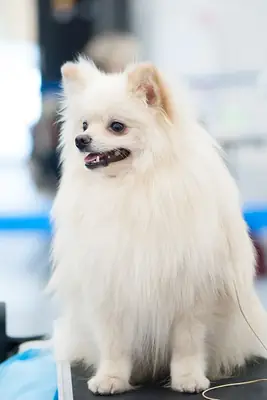
White Pomeranian mating Madrid
White Pomeranian mating in Madrid can attract people chasing a clean, rare-looking puppy result. That is a bad basis for mating if health and genetic background are not clear.
Ask about eye health, tear staining, skin condition, coat density, parent colours, pedigree records and whether the pairing has been considered beyond appearance.
Black Pomeranian mating Madrid
Black Pomeranian mating in Madrid should still be judged by movement, teeth, airway, coat and temperament. Dark coats can hide skin irritation, dandruff or thinning in weak photos.
Ask for clear natural-light photos, grooming history, skin checks, patella notes, cough history and document proof before agreeing to a colour-led pairing.
Pomeranian temperament for breeding Madrid
Pomeranian temperament for breeding matters because puppies can inherit more than looks. Fear, snapping, extreme barking, handling issues and separation anxiety should not be ignored.
Ask whether both dogs are stable with people, grooming, vet handling, visitors, other dogs and normal city noise. Breeding nervous or aggressive dogs because they look cute is a bad decision.
Pomeranian mating with papers Madrid
Pomeranian mating with papers in Madrid should mean documents that match the individual dog. Papers are not decoration; they help confirm identity, lineage and ownership.
Ask for microchip details, EU pet passport, vaccination record, pedigree papers where available, registration information and a written agreement. If documents do not match, the mating should stop.
Microchipped Pomeranian mating Madrid
Microchipped Pomeranian mating in Madrid should be basic, not optional. Identity matters when puppies, pedigree, contracts and future ownership records are involved.
Ask whether both dogs are microchipped, whether the chip details match the passport and whether ownership details are current. Breeding dogs with unclear identity creates problems later.
EU pet passport Pomeranian mating Madrid
EU pet passport Pomeranian mating in Madrid matters for identity, vaccination history and movement between areas or countries. It also helps both owners verify the dog before mating.
Ask whether the passport is original, whether rabies vaccination and other records are current, whether the microchip number matches and whether vet notes show any condition relevant to breeding.
Pomeranian mating scam Madrid
Pomeranian mating scams in Madrid can use copied photos, fake pedigree claims, unavailable stud dogs, urgent deposits, hidden health problems or vague owner details.
Ask for current videos, proof of identity, microchip, passport, health records, clear meeting terms and a written agreement. If the owner avoids documents but pushes payment, walk away.
Frequently Asked Questions
Can I arrange Pomeranian mating in Madrid?
Yes, Pomeranian mating arrangements may be listed in Madrid, but the match should be checked for legality, health, documents and welfare before the dogs meet.
Ask about registered breeder status where required, microchip, EU pet passport, vaccination record, pedigree documents, veterinary checks, mating agreement and breed-specific health risks.
Is a Pomeranian a dog?
Yes, a Pomeranian is a dog breed. It is a small Spitz-type companion dog known for its thick coat, fox-like face, alert personality and compact size.
Because it is a toy breed, mating decisions should be made carefully with veterinary and welfare checks.
What should I check before mating Pomeranians?
Check age, weight, size compatibility, microchip, EU pet passport, vaccination record, pedigree papers where available, temperament, patella health, dental condition, airway history, eye health and coat condition.
Also ask whether a vet has cleared both dogs and whether a written mating agreement is in place.
Should Pomeranian breeding be done only by registered breeders?
Breeding should be handled within the legal framework that applies in Spain and Madrid.
Ask whether the person arranging the mating is registered or authorised where required, and whether the puppies will be documented, identified and cared for responsibly.
Does a Pomeranian need a microchip before mating?
Microchip identification should be clear before any responsible mating arrangement.
The microchip helps confirm identity, ownership, passport details, pedigree records and later puppy documentation.
Does a Pomeranian need an EU pet passport before mating?
An EU pet passport is useful because it connects identification, vaccination and travel-related records to the dog.
Ask whether the passport is original, whether the microchip number matches and whether vaccine records are current.
Should both Pomeranians be vaccinated before mating?
Both dogs should have current vaccination and parasite treatment records before contact.
Ask for vaccination dates, recent illness history and whether either dog has had coughing, diarrhoea, fever, skin problems or parasites.
What documents should be exchanged before Pomeranian mating?
Useful documents include microchip details, EU pet passport, vaccination record, pedigree papers where available, health checks, ownership details and a written mating agreement.
The agreement should cover stud fee, timing, repeat mating terms, pregnancy proof and responsibilities.
What should a Pomeranian mating agreement include?
A mating agreement should include dog identities, microchip numbers, owner details, stud fee, dates, number of attempts, repeat mating terms and what happens if pregnancy does not occur.
It should also mention health records, document exchange and any puppy-related terms agreed by both owners.
How do I choose a Pomeranian stud dog?
Choose a stud dog by health, temperament, size compatibility, records and previous results rather than colour or tiny size alone.
Ask for microchip, passport, vaccination record, pedigree documents, patella history, dental condition, tracheal cough history and fertility information.
How do I know if a female Pomeranian is ready for mating?
Heat signs alone are not enough to confirm the best timing or breeding readiness.
Ask a vet about age, health, body condition and progesterone testing where appropriate before planning mating.
Should a Pomeranian mate on her first heat?
Mating a Pomeranian on her first heat is not a responsible casual plan.
A female should be physically mature, healthy and cleared by a vet before pregnancy is considered.
Why does size matching matter in Pomeranian mating?
Size matching matters because Pomeranians are toy dogs and pregnancy can be risky for very small females.
Ask both dogs’ weight, adult size, body condition, previous litter history and vet opinion before agreeing to a match.
Is teacup Pomeranian mating safe?
“Teacup” is usually a marketing term, not a health standard.
Very small dogs may face higher breeding and pregnancy risks, so a vet should assess suitability before any mating is planned.
Is artificial insemination an option for Pomeranians?
Artificial insemination should only be discussed with a qualified reproductive vet.
It may be considered when natural mating is unsafe, stressful or poorly timed, but it still requires health checks, timing and proper records.
Is natural mating safe for Pomeranians?
Natural mating can be possible when both dogs are healthy, calm, compatible in size and properly supervised.
It should not be forced, rushed or attempted without checking the female’s timing and both dogs’ condition.
Why is progesterone testing useful for Pomeranian mating?
Progesterone testing can help a vet estimate the best mating window more accurately than guessing from visible heat signs.
This can reduce failed attempts, stress and unnecessary travel between dog owners.
What health problems matter before Pomeranian mating?
Important concerns include patellar luxation, tracheal cough, dental disease, eye problems, alopecia, skin issues, obesity, poor temperament and previous pregnancy complications.
Both dogs should be checked for visible and recorded health issues before mating.
Why are patella checks important before Pomeranian mating?
Pomeranians can have kneecap problems that cause skipping, limping or pain.
Ask whether either dog has had a vet check, skips on a back leg, avoids stairs or limps after exercise.
Why does tracheal cough matter before breeding Pomeranians?
A repeated dry or honking cough can point to airway problems in toy dogs.
Ask whether the dog coughs during excitement, pulling, drinking, exercise or collar pressure, and seek veterinary review before breeding.
Why does dental health matter before Pomeranian mating?
Dental disease can cause pain, infection risk and poor condition, especially in small dogs.
Ask about bad breath, missing teeth, gum disease, dental cleaning and whether a vet has checked the mouth recently.
Should a Pomeranian with alopecia be bred?
A Pomeranian with alopecia, patchy coat loss or darkened skin should be assessed carefully before breeding.
Ask a vet about possible causes and avoid ignoring coat problems because the dog otherwise looks attractive.
Is merle Pomeranian mating risky?
Merle mating needs genetic caution and should not be planned casually.
Ask for colour genetics, pedigree context and veterinary or breeder guidance, especially to avoid risky colour pairings.
Does coat colour matter in Pomeranian mating?
Coat colour can be a preference, but it should never be the main breeding reason.
Health, temperament, size compatibility, documents and genetic responsibility matter more than orange, cream, white, black, sable or merle colouring.
Does temperament matter before Pomeranian mating?
Yes, temperament matters. Nervousness, aggression, snapping, extreme barking and poor handling tolerance should not be ignored before breeding.
Ask how both dogs behave with people, grooming, vets, visitors, other dogs and normal city noise.
Can Pomeranian pregnancy be risky?
Yes, Pomeranian pregnancy can be risky because toy breed females may have difficult pregnancies or deliveries.
Before mating, plan vet monitoring, emergency clinic access, nutrition, whelping setup and budget for possible complications.
Do Pomeranians often need C-sections?
Some Pomeranians may need veterinary help or a C-section if delivery becomes difficult.
Ask about previous birth history, female size, puppy size estimates and emergency clinic access before planning a litter.
How many puppies can a Pomeranian have?
Pomeranian litters are often small, but litter size can vary.
A small litter does not guarantee an easy birth, so veterinary monitoring and pregnancy planning still matter.
Should I breed my Pomeranian just once?
Breeding “just once” is still breeding and still carries legal, veterinary, financial and welfare responsibilities.
Do not mate a Pomeranian without health checks, a puppy care plan, emergency budget and proper records.
How can I avoid Pomeranian mating scams in Madrid?
Be cautious with copied photos, fake pedigree claims, urgent deposits, unavailable dogs, unclear owner details and missing health records.
Ask for current videos, microchip proof, EU pet passport, vaccination record, health checks, identity details and a written agreement before paying or arranging mating.