New York Scottish Fold Lost Listings
There's 1 Scottish Fold listing live right now, last updated 25 Nov 2025. Search New York lost Scott... There's 1 Scottish Fold listing live right now, last updated 25 Nov 2025. Search New York lost Scottish Fold cat listings and report a missing or found folded-ear cat with clear details: last seen loc... There's 1 Scottish Fold listing live right now, last updated 25 Nov 2025. Search New York lost Scottish Fold cat listings and report a missing or found folded-ear cat with clear details: last seen location, neighborhood, date, photos, coat color, eye color, microchip status, collar, indoor-only habits, medical needs, temperament, and the cat’s round face or folded ears; fast, accurate information helps neighbors, vets, shelters, building staff and local finders recognize the right cat before it moves farther from home.
Quick Information
Other listings in your area
Popular Searches
Lost Scottish Fold cat in New York
A lost Scottish Fold in New York needs a listing that is specific enough for a stranger to recognise the cat quickly. Include the exact neighborhood, cross streets, last seen time, recent photos, coat pattern, eye color, collar details, microchip status and whether the cat is shy, vocal, friendly or likely to hide.
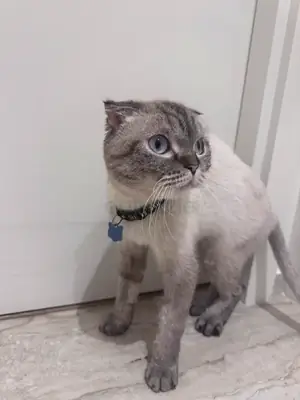
The folded ears and round face can help, but do not rely on breed alone. Many people may not know the breed name, so describe visible features in plain language too: small folded ears, rounded head, short or long coat, compact body and any unique markings.
Find a missing cat in NYC
Most missing indoor cats stay close at first, especially in dense city blocks. Check under cars, basement entrances, courtyards, trash areas, stairwells, construction gaps, fire escapes, alleys and quiet corners around the building before expanding the search.
Ask doormen, supers, porters, delivery workers, nearby shops and neighbors with cameras. In New York, one person may see a cat for only a few seconds, so your listing should make the animal easy to identify from a quick glance.
Found folded-ear cat in New York
If you found a folded-ear cat, do not assume it is abandoned. Many lost cats look stressed, quiet or dirty after a short time outdoors. Keep the cat safe if you can, avoid handing it to an unknown person without proof, and ask a vet or shelter to scan for a microchip.
A good found listing should include the general area, date found, photos that do not reveal every identifying detail, and a request for ownership proof such as additional photos, vet records or microchip confirmation.
Scottish Fold missing near apartment building
If the cat disappeared from an apartment, search vertically and quietly. Cats can slip into stairwells, laundry rooms, basement corridors, roof access areas, mechanical rooms, neighboring units or behind stored items.
Give building staff a photo and your phone number. Ask them not to chase the cat if seen. A scared cat may run deeper into hiding, while calm containment or a quick call gives you a better chance of recovery.
Indoor cat escaped in New York
An indoor cat that escapes in New York may freeze, hide and stay silent. Do not expect it to walk back confidently when called. Search at night or early morning with a flashlight, because eyeshine can reveal a cat under cars, bushes or steps.
Put familiar scent near the exit point, keep the route back accessible if safe, and avoid loud crowds during the first search. The goal is to reduce fear, not create more movement.
Lost cat with microchip in NYC
If your cat has a microchip, contact the microchip company immediately and make sure your phone number, email and address are current. A chip only helps if the registration details lead back to you.
In the listing, mention that the cat is microchipped, but do not publish the chip number. Ask finders to take the cat to a vet or shelter for scanning and to contact you with the location where the cat was found.
Round-faced cat with folded ears
Not every finder will search by breed name. Some will type what they saw: a round-faced cat, small folded ears, owl-like face, grey cat, white cat, tabby cat or unusual ears. Your listing should include these visual clues naturally.
Use clear photos from the front and side. Add markings that cannot be confused easily: white paws, tail pattern, nose color, eye color, scars, clipped ear, collar, bell or any unusual walking pattern.
Lost cat poster details
A strong poster should be readable from a few feet away: large photo, “LOST CAT”, neighborhood, cross streets, date missing, phone number and a short description. Do not bury the important details in long paragraphs.
For a Scottish Fold, mention folded ears only if it helps recognition, but keep the poster simple. People walking past a bodega, lobby board or vet office window will not stop to read a full story.
Report a found cat in New York
If you find a cat, report it with enough detail to help the owner act quickly: borough, neighborhood, nearby streets, date, condition, whether the cat is contained and whether a microchip scan has been attempted.
Do not give the cat to the first person who replies. Ask for proof such as photos from different angles, vet documents, microchip confirmation or a detailed description that was not visible in your public post.
Missing cat in Manhattan, Brooklyn, Queens or Bronx
New York searches should be hyperlocal. Borough names help, but cross streets, building type and nearby landmarks matter more. A cat missing near a park, subway entrance, restaurant row or apartment courtyard needs different search coverage than a cat lost from a townhouse block.
Update the listing if there are sightings. Add “seen near”, “possibly moved toward”, and the time of each report. A stale lost listing loses value fast.
Shy Scottish Fold hiding outside
A shy cat may not come out even for its owner, especially with traffic, sirens, dogs and strangers nearby. Search quietly, use familiar sounds, and avoid sending groups of people to chase it.
In the listing, write “do not chase” if the cat is nervous. Ask people to call or text with the exact location, direction of movement and a photo if possible.
Lost senior cat with medical needs
If the missing cat is older or has a health condition, say so clearly. Mention medication needs, mobility issues, hearing or vision problems, special diet, arthritis concerns or any reason the cat should be handled gently.
Medical urgency can motivate faster action, but keep the description practical. Finders need to know what to do: contain safely, avoid feeding unknown food if risky, contact the owner and arrange a microchip scan.
Lost kitten in New York
A lost kitten needs faster neighborhood action because it may be less street-aware, more vulnerable to weather and more likely to hide in tight spaces. Check under stoops, behind trash bins, inside basement gaps and near the exit point first.
Use a recent photo that shows size accurately. People often misjudge kitten age from pictures, so add weight, age estimate, coat length and whether the kitten is friendly or frightened.
Found cat proof of ownership
Proof matters because expensive or distinctive cats can attract false claims. A real owner should be able to provide older photos, vet records, microchip details, unique markings or behavior information that matches the cat.
Keep one or two identifying details out of the public listing. That makes it easier to verify the right person without exposing everything to strangers.
Post a lost Scottish Fold listing
When posting, include the cat’s name, borough, neighborhood, cross streets, last seen time, clear photos, coat color, folded-ear description, microchip status, collar, temperament and whether the cat should be approached or simply reported.
Do not write a vague listing like “missing cat, please help”. A precise post helps neighbors act immediately and gives shelters, vets and finders enough information to connect the sighting to the right owner.
Frequently Asked Questions
What should I include in a lost Scottish Fold cat listing in New York?
Include the cat’s name, borough, neighborhood, cross streets, last seen date and time, recent photos, coat color, eye color, folded-ear description, collar, microchip status, temperament and any medical needs.
Make the listing useful for someone who only saw the cat briefly. Clear location and visual details matter more than a long emotional message.
Where should I search first if my indoor cat escaped?
Start very close to the escape point. Check hallways, stairwells, basements, courtyards, under cars, behind trash areas, under stoops, near fire escapes and quiet spaces around the building.
Indoor cats often hide silently rather than travel far right away. Searching calmly and close by is usually better than spreading out too fast.
How can someone identify a Scottish Fold cat?
Many Scottish Fold cats have small ears that fold forward and downward, a rounded head, large round eyes and a soft, compact look. Coat color and length can vary.
Because not everyone knows the breed name, describe the visible traits in simple words like “folded ears” and “round face” in the listing.
What should I do if I find a folded-ear cat in New York?
Keep the cat safe if you can, avoid handing it to an unknown person without proof, and take it to a vet or shelter for a microchip scan. Post a found listing with the general area and date found.
Ask anyone claiming the cat to provide proof such as older photos, vet records, microchip confirmation or unique identifying details.
Should I publish my cat’s microchip number online?
No. You can say the cat is microchipped, but do not publish the chip number publicly. Ask finders to have the cat scanned by a vet or shelter.
Also contact the microchip company and confirm that your phone number, email and address are up to date.
How should I make a lost cat poster for NYC?
Use a large clear photo, the words “LOST CAT”, neighborhood, cross streets, date missing, phone number and a short description. Keep it readable from a distance.
For a Scottish Fold, mention folded ears, round face and any unique markings, but do not overload the poster with too much text.
Should people chase my missing cat if they see it?
Usually no, especially if the cat is shy or indoor-only. Chasing can push the cat farther away or deeper into hiding.
In your listing, ask people to call or text immediately with the exact location, direction of travel and a photo if they can take one safely.
How often should I update a lost cat listing?
Update it whenever there is a sighting, possible movement, new photo, shelter check or change in contact information. Add dates and locations so people can follow the latest search area.
A listing with fresh, specific updates is more useful than one that stays unchanged for days.
What proof should I ask for before returning a found cat?
Ask for older photos, vet records, microchip confirmation, adoption records or a description of markings and behavior that was not fully shown in your public post.
This is especially important with distinctive or valuable-looking cats, because false claims can happen.
What if my Scottish Fold has health or mobility issues?
Mention urgent medical needs clearly in the listing, including medication, mobility limits, pain concerns, special diet or handling instructions. Ask finders to keep the cat safe and contact you quickly.
Do not include private medical documents publicly, but give enough information for someone to understand that the cat may need gentle handling or fast veterinary help.