Bengal Cats for Free Adoption in Oxford
There's 1 Bengal listing live right now, last updated 10 Apr 2026. Bengal cats for free adoption in ... There's 1 Bengal listing live right now, last updated 10 Apr 2026. Bengal cats for free adoption in Oxford are for people who want an intelligent, athletic and striking domestic cat, but this breed ne... There's 1 Bengal listing live right now, last updated 10 Apr 2026. Bengal cats for free adoption in Oxford are for people who want an intelligent, athletic and striking domestic cat, but this breed needs more than admiration for spots, rosettes or a wild-looking coat. Check Bengal cats and kittens around Oxford, Cowley, Headington, Summertown, Jericho, Botley, Kidlington, Abingdon, Witney, Bicester, Didcot, Wallingford, Banbury and nearby Oxfordshire areas with care for microchip details, vaccination history, neutering status, age, generation or pedigree background where known, indoor routine, escape risk, catio or secure garden needs, climbing space, vocal behaviour, litter training, scratching habits, water interest, children, dogs, other cats, prey drive, stress signs, HCM notes, PRA history, PK deficiency information, patella movement, appetite, weight and whether the cat’s high-energy personality genuinely fits your home before any adoption handover.
Haven't found the pet you're looking for? Let people who want to find a new home for their pet reach out to you.
Create your free pet adoption request listing now and be seen by thousands of pet owners.
Other listings in your area
Munchkin kittens
quiet cat, just not the right setup here
not urgent, but thinking ahead
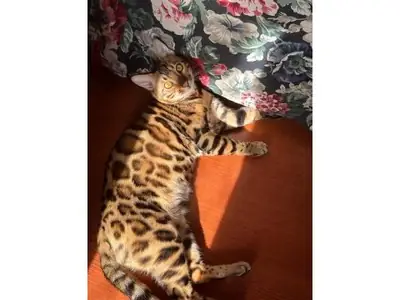
Energetic Bengal cat that enjoys exploring every corner of the house
Popular Searches
Free Bengal cat adoption Oxford
Free Bengal cat adoption in Oxford should be checked with more care than a typical cat advert because Bengals are active, intelligent and often demanding. A Bengal may look beautiful in photos, but the real question is whether your home can handle climbing, curiosity, noise, play drive and escape prevention.
A serious listing should explain the cat’s age, microchip status, vaccination record, neutering, indoor or outdoor history, litter routine, scratching habits, energy level, behaviour with children and pets, health notes and exact reason for rehoming. Free adoption only works when the daily reality is clear.
Bengal cats for adoption Oxford
Bengal cats for adoption in Oxford attract people who want a spotted, athletic and people-focused cat. That interest is understandable, but this breed is not for homes expecting a quiet decorative pet.
Ask whether the Bengal climbs high furniture, opens doors, demands play, vocalises, scratches heavily, escapes, bullies other cats or becomes stressed when bored. A good Bengal adoption listing should describe behaviour in detail, not just coat pattern.
Bengal cat rescue Oxford
Bengal cat rescue in Oxford often involves cats rehomed because the previous home underestimated energy, vocal behaviour, territorial conflict, spraying, escape attempts or the need for constant enrichment.
Ask what became difficult, what kind of home the cat needs, whether behaviour support was tried, whether the cat has lived indoors and whether other pets were part of the problem. Bengal rescue should be handled through honesty, not impulse.
Bengal cat rehoming Oxford
Bengal cat rehoming in Oxford needs direct questions because phrases like “needs more space”, “too active”, “doesn’t get on with our cat” or “needs experienced home” can hide serious mismatch.
Ask whether the cat sprays, scratches doors, escapes, yowls at night, attacks other pets, dislikes being confined or becomes destructive when bored. Rehoming a Bengal properly means understanding the reason, not softening it.
Bengal kitten adoption Oxford
Bengal kitten adoption in Oxford should not be rushed because a playful spotted kitten can grow into a demanding, fast-moving and loud adult cat. Early handling, litter training, scratching setup and socialisation matter from the start.
Ask for age, microchip details or timing, vaccination history, flea and worm treatment, diet, parent background where known, litter routine and current videos of the kitten climbing, playing, eating and interacting normally.
Adult Bengal cat adoption Oxford
Adult Bengal cat adoption in Oxford can be a smart choice because personality, energy level, vocal behaviour, escape habits, pet tolerance and litter reliability are already visible.
Ask whether the adult Bengal is neutered, microchipped, vaccinated, indoor-only, harness-trained, litter trained, good with other cats and calm when left. Adult adoption works best when the normal day is described honestly.
Senior Bengal cat adoption Oxford
Senior Bengal cat adoption in Oxford can suit a home that wants a cat with a clearer personality and possibly lower intensity than a young Bengal. Older Bengals can still be vocal, bright and active, so assumptions are dangerous.
Ask about appetite, weight, arthritis, dental care, heart checks, eye history, litter habits, night-time noise and whether the cat still climbs or jumps comfortably. A senior Bengal needs comfort, stimulation and honest health records.
Bengal cat adoption Oxfordshire
Bengal cat adoption across Oxfordshire may include Oxford, Abingdon, Witney, Bicester, Didcot, Kidlington, Wallingford, Banbury and nearby villages. Because Bengals are specific and high-demand, widening the search can help.
Use the wider search to compare proof, not to rush. A further cat with microchip details, vet notes and honest behaviour history is stronger than a nearby Bengal advert with only attractive coat photos.
Bengal cat adoption near me Oxford
Bengal cat adoption near me searches in Oxford usually come from people looking for a local cat they can meet safely before adoption. Local distance helps, but it does not replace proper checks.
Ask for current videos, microchip details, vaccination record, neutering status, generation background where known, indoor routine, escape history, litter habits and behaviour around people and pets.
Private Bengal cat rehoming Oxford
Private Bengal cat rehoming in Oxford can be genuine, but the current keeper should be clear about behaviour, health, identity and why the cat needs a new home.
Ask for microchip transfer details, vaccination record, neutering status, vet notes, litter routine, escape history, scratching behaviour, vocal level and whether the cat has lived with children, dogs or other cats.
Bengal cat free to good home Oxford
Bengal cat free to good home Oxford searches should not stop at the word free. A no-fee Bengal can still need climbing furniture, enrichment, secure windows, vet checks, behaviour management and a home that understands high-energy cats.
Ask why the cat is free, whether behaviour issues exist, whether the cat is microchipped and whether the keeper is choosing the right home rather than the fastest reply. Free does not mean easy.
Spotted cat adoption Oxford
Spotted cat adoption in Oxford often leads people to Bengal cats because of their leopard-like markings. The coat may be the first attraction, but behaviour and suitability should decide the adoption.
Ask whether the cat is active, vocal, escape-prone, confident with handling, reliable with litter and safe with other pets. A spotted coat is not a temperament guarantee.
Rosetted Bengal cat adoption Oxford
Rosetted Bengal cat adoption in Oxford is a coat-pattern search, but rosettes do not tell you whether the cat will suit your home. A rosetted Bengal can still be loud, restless, territorial or demanding if under-stimulated.
Ask for natural-light photos, current videos, microchip proof, vaccination history, behaviour notes, litter training and whether the cat has lived peacefully with other animals.
Marble Bengal cat adoption Oxford
Marble Bengal cat adoption in Oxford appeals to people who like swirling coat patterns rather than spots. The pattern may be unusual, but the care questions stay the same.
Ask about energy level, climbing, vocalisation, escape attempts, microchip details, vet notes and whether the cat handles indoor life calmly. Pattern should never outrank behaviour and health proof.
Snow Bengal cat adoption Oxford
Snow Bengal cat adoption in Oxford is a colour-led search for pale coated Bengals. Snow colouring can attract fast interest, so proof needs to be stronger, not weaker.
Ask for natural-light photos, current videos, microchip details, vaccination record, eye history, hearing or vision concerns, temperament and indoor safety. Colour is interest; suitability is the decision.
Silver Bengal cat adoption Oxford
Silver Bengal cat adoption in Oxford can look striking in photos, but rare-looking coat wording can make weak adverts feel urgent. Do not adopt by colour pressure.
Ask for current videos, microchip proof, vaccination records, behaviour notes, generation background where known and whether the cat is suitable for indoor or secure outdoor living.
Brown Bengal cat adoption Oxford
Brown Bengal cat adoption in Oxford is one of the classic Bengal searches because many people picture a warm coat with bold spots or rosettes. The classic look should still be checked against real behaviour.
Ask whether the cat climbs, vocalises, sprays, scratches, escapes or needs constant play. A beautiful brown Bengal can still be the wrong cat for an unprepared home.
Bengal cross cat adoption Oxford
Bengal cross cat adoption in Oxford can be a good option, but Bengal traits may still be strong. A cross may still be highly active, vocal, territorial, intelligent and escape-prone.
Ask what the cat is crossed with if known, whether Bengal background is proven, how active the cat is, whether it lives with other cats and whether it handles confinement or indoor life calmly.
Early generation Bengal adoption Oxford
Early generation Bengal adoption in Oxford needs serious caution because cats closer to wild ancestry can involve legal, welfare and handling concerns. A normal family home is not the right place for uncertainty around generation background.
Ask whether the cat is a standard domestic Bengal, whether generation is known, whether paperwork exists and whether any licence issue applies. If the keeper cannot explain generation clearly, do not treat the advert as simple pet adoption.
F5 Bengal cat adoption Oxford
F5 Bengal cat adoption in Oxford is searched by people trying to avoid early-generation uncertainty. The further removed a Bengal is from wild ancestry, the more it is generally treated as a domestic pet, but behaviour still matters.
Ask for generation proof where claimed, microchip details, vaccination record, neutering status and behaviour history. Do not rely on an F-number unless the record is clear.
Indoor Bengal cat adoption Oxford
Indoor Bengal cat adoption in Oxford can work, but only if the home offers climbing, play, puzzle feeding, scratching posts, window safety and enough daily interaction. A bored indoor Bengal can become loud, destructive or stressed.
Ask whether the cat is already indoor-only, whether it tries to escape, whether it scratches doors, whether it has a cat tree or catio and whether it copes when left alone.
Bengal cat for flat Oxford
A Bengal cat can live in an Oxford flat only when the space is enriched and escape-proof. Size is less important than vertical space, noise tolerance, window safety, play routine and whether the cat can settle indoors.
Ask whether the Bengal yowls at doors, climbs curtains, scratches furniture, demands night play or tries to exit through windows. A flat can work for the right Bengal, not for an under-stimulated one.
Bengal catio adoption Oxford
Bengal catio adoption in Oxford is a strong fit for people who want to give a Bengal safe outdoor stimulation without free-roaming risk. Bengals often enjoy watching, climbing and exploring, so a secure catio can help.
Ask whether the cat has used a catio, balcony enclosure, garden run or secure window setup before. A catio is useful only when it is genuinely escape-proof and part of a wider enrichment routine.
Bengal secure garden Oxford
Bengal secure garden adoption in Oxford matters because this breed can be fast, curious and difficult to contain. A normal fence may not be enough for a determined Bengal.
Ask whether the cat has escaped, climbed fencing, slipped through windows or pushed through doors. Secure outdoor access should mean controlled access, not wishful thinking.
Bengal escape artist cat Oxford
Bengal escape artist searches are not a joke. Many Bengals are clever, fast and persistent around doors, windows, balconies and garden exits.
Ask whether the cat bolts through doors, opens handles, pushes screens, climbs fences or panics when confined. Escape history should be discussed before adoption, not discovered after the cat disappears.
Bengal harness trained cat Oxford
Bengal harness trained cat adoption in Oxford can appeal to people who want controlled outdoor activity. Some Bengals enjoy harness walks, but not every cat accepts equipment or outside noise.
Ask whether the cat is truly harness-trained, whether it panics, pulls, escapes the harness, freezes outside or reacts to dogs. Harness walking should be safe and calm, not forced for novelty.
High energy Bengal cat adoption
High energy Bengal cat adoption is for homes that can provide daily play, climbing, problem solving and interaction. A Bengal that does not get enough stimulation can become noisy, destructive or difficult with other pets.
Ask how many play sessions the cat needs, whether it plays fetch, climbs, opens cupboards, demands attention and what happens when it is bored. Energy level is the core adoption question for this breed.
Vocal Bengal cat adoption Oxford
Vocal Bengal cat adoption in Oxford should be checked carefully because some Bengals chirp, yowl, complain, call at doors or demand attention loudly.
Ask when the cat vocalises, whether it is worse at night, whether neighbours have complained and whether noise is linked to hunger, boredom, stress or wanting outdoor access. A vocal Bengal in a quiet flat can become a problem fast.
Bengal cat destructive behaviour adoption
Bengal destructive behaviour before adoption should be discussed directly. Scratching sofas, climbing curtains, opening cupboards, knocking items down or chewing can be signs of boredom, stress or poor setup.
Ask what the cat damages, when it happens, what enrichment is already used and whether behaviour improves with play. A Bengal needs outlets, not punishment for acting like a high-drive cat.
Bengal cat scratching furniture Oxford
Bengal cat scratching furniture should be clarified before adoption because a strong, active cat can damage sofas, carpets, doors and woodwork if scratching needs are not met.
Ask whether the cat uses scratching posts, cardboard, tall posts, wall scratchers or carpets. Also ask whether scratching gets worse when bored or stressed. A Bengal needs serious scratching options, not one tiny post.
Bengal water loving cat adoption
Bengal water loving cat adoption searches are common because many Bengals show unusual interest in sinks, bowls, showers or running taps. This can be fun, but it can also create mess and safety issues.
Ask whether the cat tips bowls, plays in sinks, jumps into baths or opens taps. A water-curious Bengal needs safe outlets and protected areas, not surprise floods.
Bengal cat with children Oxford
A Bengal cat with children can work when the cat is confident and the children understand boundaries. The risk is overhandling, chasing, loud play, rough grabbing or the cat becoming overstimulated.
Ask whether the Bengal has lived with children, what ages, whether it bites during play, guards toys, scratches when excited or hides from noise. Family suitability should be proven by behaviour, not assumed from breed popularity.
Bengal cat with dogs Oxford
A Bengal cat with dogs may work if the dog is calm and the Bengal has safe escape spaces. Some Bengals are bold enough to challenge dogs, while others become stressed by chasing or barking.
Ask whether the cat has lived with dogs, whether it hides, swats, chases, refuses food or becomes territorial. A dog-safe home should protect the cat’s confidence and routine.
Bengal cat with other cats Oxford
A Bengal cat with other cats can work, but it depends heavily on the individual Bengal’s confidence, territory needs, play style and whether it bullies or overwhelms quieter cats.
Ask whether the Bengal has lived with cats, whether it chases, blocks food, guards litter trays, rough plays or sprays. Do not assume another cat will entertain a Bengal safely.
Single cat Bengal adoption Oxford
Single cat Bengal adoption in Oxford may be the right route when the cat is territorial, intense with other cats or happier owning its space. Some Bengals do best without feline competition.
Ask whether the cat has attacked, chased, bullied or been stressed by other cats. A single-cat home can be better than forcing a social setup that repeatedly fails.
Bengal cat temperament Oxford
Bengal cat temperament searches usually come from people wanting an intelligent, playful and interactive cat. That is realistic, but many Bengals are also demanding, vocal, intense and easily bored.
Ask whether the cat follows people, demands play, dislikes being picked up, becomes overstimulated, uses claws in play or needs constant activity. Temperament should be described through real behaviour, not pretty labels.
Bengal lap cat adoption Oxford
Bengal lap cat adoption in Oxford should be approached carefully because not every Bengal wants to sit quietly for long periods. Many prefer interactive contact, following people, playing or perching nearby.
Ask whether the cat chooses laps, tolerates lifting, bites when overstimulated or prefers play over cuddles. A Bengal can be affectionate without being a still, silent lap cat.
Bengal cat litter training Oxford
Bengal cat litter training should be clear before adoption because stress, territory conflict, dirty trays, medical issues or a poor setup can cause accidents or spraying.
Ask what litter the cat uses, whether it prefers open or covered trays, whether accidents have happened, whether spraying occurs and whether litter issues began after other pets or home changes.
Bengal cat spraying adoption Oxford
Bengal cat spraying before adoption must be discussed honestly because spraying can be linked with stress, territory, intact status, other cats or environmental frustration.
Ask whether the cat is neutered, where spraying happens, how often, whether urine checks were done and whether other cats trigger it. Spraying is not a small detail in a rental or shared home.
Microchipped Bengal cat adoption Oxford
A microchipped Bengal cat adoption listing should explain keeper transfer clearly. The chip should match the cat, and the new keeper details should be updated correctly after adoption.
Ask for the chip process, current keeper details and whether vet records match the cat. A high-demand Bengal with unclear identity is not a strong adoption lead.
Vaccinated Bengal cat rehoming Oxford
Vaccinated Bengal cat rehoming should state what has been given, what is due next and whether a vet record is available. “Healthy” is not the same as documented care.
Ask about boosters, flea and worm treatment, previous illness, heart checks, eye history, weight, appetite, litter habits and recent vet notes. A lively Bengal can still have hidden health questions.
Neutered Bengal cat adoption Oxford
Neutered Bengal cat adoption in Oxford can reduce roaming, spraying, mating behaviour and accidental breeding risk, but it does not automatically solve energy, vocal behaviour or territory issues.
Ask whether the cat is neutered, when it was done, whether recovery was normal and whether behaviour changed afterwards. If not neutered, ask whether a vet has advised timing.
Bengal cat HCM adoption
Bengal cat HCM adoption searches focus on hypertrophic cardiomyopathy, a heart condition that should be taken seriously before rehoming. Heart history matters even if the cat looks fit and athletic.
Ask whether the cat has had heart checks, murmurs, scans, fainting, breathing difficulty, tiredness or medication. A Bengal with heart concerns may still be adoptable, but the care commitment must be clear.
Bengal cat PRA adoption
Bengal cat PRA adoption searches focus on progressive retinal atrophy, an inherited eye concern that can affect vision. A Bengal may still look normal in photos while early vision changes are missed.
Ask whether the cat struggles in dim light, bumps into objects, hesitates on stairs, has eye test history or shows reduced confidence in new spaces. Vision history should be part of the adoption conversation.
Bengal cat PK deficiency adoption
Bengal cat PK deficiency adoption searches focus on an inherited blood condition that can be linked with anaemia, weakness and poor stamina. It should not be ignored in pedigree or Bengal-background cats.
Ask whether any genetic testing exists, whether the cat has pale gums, tiredness, weakness, blood test history or unexplained poor condition. A bright coat does not replace health records.
Bengal cat patella problem adoption
Bengal cat patella problem adoption should be checked because an athletic cat that jumps and climbs heavily needs sound movement. Kneecap issues can show as skipping, limping, reluctance to jump or sudden back-leg changes.
Ask whether the cat has limped, avoided high places, had vet notes, needed pain relief or shown movement changes after play. Athletic behaviour should not hide joint discomfort.
Bengal cat adoption scam Oxford
Bengal cat adoption scams in Oxford can use copied kitten photos, rare-colour claims, fake urgent rehoming stories, delivery-only offers, deposit pressure and missing microchip details.
Ask for current videos, proof the cat is in or near Oxford, microchip information, vet records, safe meeting or collection and a clear reason for rehoming. If proof disappears but payment pressure appears, walk away.
Frequently Asked Questions
Can I adopt a Bengal cat for free in Oxford?
Yes, Bengal cats may be offered for free adoption in Oxford, but every listing should be checked carefully before contact or collection.
Ask about microchip details, vaccination record, neutering status, age, indoor routine, escape history, litter training, scratching habits, behaviour with children and pets, health notes and the reason for rehoming.
Is a Bengal a cat?
Yes, a Bengal is a domestic cat breed known for a spotted or marbled coat, athletic build, high intelligence and strong play drive.
It is not a low-effort cat. A Bengal needs climbing space, enrichment, secure windows, regular play and a home that can handle energy and noise.
Are Bengal cats good adoption pets?
Bengal cats can be excellent adoption pets for homes that want an interactive, active and intelligent cat.
They are not ideal for people who want a quiet, low-maintenance cat. Their energy, vocal behaviour, escape risk, climbing needs and pet compatibility should be checked first.
What should I check before adopting a Bengal cat?
Check microchip details, vaccination history, neutering status, vet notes, litter habits, escape attempts, spraying, scratching, vocal behaviour, energy level and behaviour with children, dogs and other cats.
Also ask about generation background where known, indoor or outdoor routine, heart history, eye history, PK deficiency information and any movement problems.
Should a Bengal cat be microchipped before adoption?
Yes, microchip details should be clear before adoption, and keeper information should be updated correctly after the cat changes home.
Ask for the chip process, current keeper details and whether vet records match the Bengal cat in the listing.
Should a Bengal cat be vaccinated and neutered?
Vaccination and neutering status should be clear before adoption. Ask what vaccinations have been given, what is due next and whether the cat is neutered.
If the Bengal is not neutered, ask why and whether a vet has advised timing, especially if there is spraying, roaming or mating behaviour.
Are Bengal cats legal to own in Oxford?
Standard domestic Bengal cats are commonly kept as pets, but early-generation hybrid wording should be checked carefully.
Ask whether the cat is a normal domestic Bengal, what generation it is where known and whether any paperwork or licence issue applies. Do not accept vague answers around early-generation cats.
What does F1 Bengal mean?
F1 Bengal usually refers to a first-generation hybrid, meaning one parent is much closer to wild ancestry than a standard domestic Bengal.
F1 wording should be treated seriously because it can involve legal, welfare and handling concerns. Ask for clear proof and do not treat it like ordinary pet adoption.
Are Bengal cats good indoor cats?
Bengal cats can live indoors if the home provides enough climbing, play, scratching, window safety and mental stimulation.
An under-stimulated indoor Bengal may become loud, destructive, stressed or escape-focused, so the setup matters more than the label “indoor cat”.
Can a Bengal cat live in a flat in Oxford?
A Bengal can live in a flat only if the space is enriched and escape-proof.
Check window safety, balcony safety, climbing furniture, scratching options, hallway noise, night-time vocal behaviour and whether the cat can settle indoors without constant frustration.
Do Bengal cats need a catio?
A catio is not always required, but it can be very useful for Bengals because they often enjoy climbing, watching, exploring and outdoor stimulation.
Ask whether the cat has used a catio, garden enclosure, balcony enclosure or harness before, and make sure any outdoor access is genuinely escape-proof.
Do Bengal cats escape easily?
Some Bengals are persistent escape artists because they are clever, fast and curious around doors, windows and garden exits.
Ask whether the cat bolts through doors, opens handles, pushes screens, climbs fences or has gone missing before.
Can Bengal cats be harness trained?
Some Bengal cats can be harness trained, but not every cat accepts outdoor walking or equipment calmly.
Ask whether the cat is already harness-trained, whether it panics, pulls, freezes, escapes the harness or reacts badly to dogs and traffic.
Are Bengal cats high energy?
Yes, Bengals are usually high-energy cats that need play, climbing, problem solving and daily interaction.
Ask how much play the cat needs, whether it becomes destructive when bored and what enrichment already works for that individual cat.
Are Bengal cats vocal?
Many Bengals are vocal and may chirp, yowl, call at doors or demand attention loudly.
Ask when the cat vocalises, whether it is worse at night, whether neighbours have complained and whether the noise is linked to boredom, hunger, stress or wanting outdoor access.
Are Bengal cats destructive?
Bengals are not automatically destructive, but bored or under-stimulated Bengals can scratch, climb, knock things down, open cupboards or damage furniture.
Ask what the cat damages, when it happens, what scratching options are used and whether behaviour improves with more play and enrichment.
Do Bengal cats like water?
Some Bengals are unusually interested in water, taps, sinks, bowls, showers or baths.
Ask whether the cat tips bowls, jumps into sinks, opens taps or creates mess around water. This behaviour can be fun, but it needs safe management.
Are Bengal cats good with children?
Some Bengal cats can live with children, but the children must understand boundaries and the cat must be comfortable with noise, movement and handling.
Ask whether the Bengal has lived with children, what ages, whether it bites in play, scratches when excited or hides from loud activity.
Can Bengal cats live with dogs?
Some Bengal cats can live with calm, cat-safe dogs, but introductions should be slow and controlled.
Ask whether the Bengal has lived with dogs, whether it hides, swats, chases, refuses food or becomes territorial around dogs.
Can Bengal cats live with other cats?
Bengal cats can live with other cats, but the match depends on temperament, territory, energy level and introduction style.
Ask whether the Bengal chases, blocks food, guards litter trays, rough plays, sprays or overwhelms quieter cats.
Are Bengal cats better as single cats?
Some Bengals do better as single cats, especially if they are territorial, intense, jealous or rough with other cats.
Ask whether the cat has lived peacefully with other cats or whether previous conflict is part of the rehoming reason.
Are Bengal cats lap cats?
Some Bengals are affectionate, but many prefer interactive play, following people or sitting nearby rather than staying still on a lap.
Ask whether the cat chooses laps, tolerates lifting, bites when overstimulated or prefers play over cuddling.
Do Bengal cats have litter tray problems?
Bengal cats can have litter issues if stressed, territorial, unwell, unhappy with the tray setup or competing with other cats.
Ask what litter the cat uses, whether it prefers open or covered trays, whether accidents have happened and whether spraying has occurred.
Do Bengal cats spray?
Some Bengal cats may spray, especially if unneutered, stressed, territorial or living with pet conflict.
Ask whether the cat is neutered, where spraying happens, how often, whether urine checks were done and whether other cats trigger it.
Do Bengal cats need much grooming?
Bengals usually have short coats that are easier to maintain than long-haired breeds, but they still need brushing, nail care, ear checks and body checks.
Ask whether the cat accepts grooming, claw trimming and handling, especially if it is very active or easily overstimulated.
Are Bengal cats hypoallergenic?
No cat should be treated as guaranteed hypoallergenic, and Bengal cats are not a safe assumption for allergy-sensitive homes.
Spend time around the cat where possible and remember that dander, saliva and shedding can all trigger reactions.
What health issues should I ask about in a Bengal cat?
Ask about heart history, eye history, PK deficiency information, patella movement, limping, appetite, weight, blood tests, vision changes and any ongoing medication.
A Bengal does not need perfect records to be adoptable, but breed-related health history should be honest and clear.
Do Bengal cats get HCM?
Bengal cats can be associated with hypertrophic cardiomyopathy, often shortened to HCM.
Ask whether the cat has had heart checks, murmurs, scans, fainting, breathing difficulty, tiredness or medication.
Do Bengal cats get PRA?
Bengal cats can be associated with progressive retinal atrophy, often shortened to PRA, which can affect vision.
Ask whether the cat struggles in dim light, bumps into objects, hesitates on stairs or has eye test history.
What is PK deficiency in Bengal cats?
PK deficiency is an inherited blood condition that can be linked with anaemia, weakness and poor stamina.
Ask whether any genetic testing exists, whether the cat has pale gums, tiredness, weakness, blood test history or unexplained poor condition.
Do Bengal cats get patella problems?
Some Bengal cats may have kneecap or movement problems that show as skipping, limping, reluctance to jump or sudden back-leg changes.
Ask whether the cat has limped, avoided high places, had vet notes, needed pain relief or shown changes after play.
Why do Bengal cats get rehomed?
Bengal cats may be rehomed because of owner illness, moving home, cost, allergies, spraying, pet conflict, escape attempts, noise, high energy or lack of time.
The reason for rehoming should be explained clearly because it affects whether the cat will suit your home.
How can I avoid Bengal cat adoption scams?
Be cautious with copied kitten photos, urgent deposits, delivery-only offers, vague Oxford locations, rare-colour claims, missing microchip details and no vet records.
Ask for current videos, proof the cat is local, safe meeting or collection, microchip details, vet history and a clear reason for rehoming before trusting any advert.