vs
Click on the breeds above to change the breed you want to compare.
Compare Boxer and Bloodhound side by side: temperament, energy, trainability, apartment fit, shedding, lifespan, weight and free adoption listings.
Breed traits
Character & behavior
Energy level
Playfulness
Intelligence
Trainability
Protectiveness
Sociability
Can stay alone
Lifestyle fit
Apartment-friendly
No
No
Good with kids
Yes
Yes
Good for first-time owners
Yes
No
Shedding
Noise level
Exercise needs
Physical & general
Life span
10–12 years
10–12 years
Weight
25–32 kg
36–50 kg
Height
53–63 cm
58–69 cm
Origin
Germany
Belgium
Grooming effort
Nutrition sensitivity
Health risk
Heat tolerance
Cold tolerance
The Boxer and Bloodhound are two distinct breeds with unique characteristics that may appeal to different types of pet owners. Both breeds have a lifespan of 10 to 12 years and are known for their sociable nature, making them good companions for families. However, their energy levels, trainability, and suitability for first-time owners differ significantly. Boxers are generally more energetic and playful, requiring more exercise and engagement, while Bloodhounds have a moderate energy level and are less trainable. This comparison highlights the strengths and weaknesses of each breed, helping potential owners make an informed decision based on their lifestyle and preferences.
Boxer — Advantages
- Higher energy level (4) suitable for active families.
- Excellent playfulness (5) making them fun companions.
- Better trainability (4) than Bloodhound, easier to teach commands.
- Good protectiveness (4) providing a sense of security.
- Suitable for first-time owners, easier to manage.
- Excellent playfulness (5) making them fun companions.
- Better trainability (4) than Bloodhound, easier to teach commands.
- Good protectiveness (4) providing a sense of security.
- Suitable for first-time owners, easier to manage.
Disadvantages
- Requires more exercise (5), may not suit less active owners.
- Can be noisy (3), which may be a concern in quiet neighborhoods.
- Moderate shedding (3) requiring regular grooming.
- Can be noisy (3), which may be a concern in quiet neighborhoods.
- Moderate shedding (3) requiring regular grooming.
Bloodhound — Advantages
- Moderate energy level (3) suitable for less active households.
- Good with kids, making them family-friendly.
- Lower exercise need (4) compared to Boxer, easier to manage.
- Good sociability (4) allowing for friendly interactions with other pets.
- Good with kids, making them family-friendly.
- Lower exercise need (4) compared to Boxer, easier to manage.
- Good sociability (4) allowing for friendly interactions with other pets.
Disadvantages
- Less trainable (2), may require more patience and consistency.
- Not ideal for first-time owners due to training challenges.
- Lower energy and playfulness (3), may be less engaging for active families.
- Not ideal for first-time owners due to training challenges.
- Lower energy and playfulness (3), may be less engaging for active families.
Frequently Asked Questions
Which breed is better for families with young children?
Both breeds are good with kids, but Boxers may be more playful and energetic.
How much exercise do these breeds need?
Boxers require more exercise (5) compared to Bloodhounds (4).
Are these breeds suitable for first-time dog owners?
Boxers are generally better for first-time owners, while Bloodhounds may be challenging.
How do they handle being left alone?
Boxers can stay alone (3) better than Bloodhounds (2), who may struggle with separation.
What is the grooming requirement for each breed?
Both breeds have a grooming difficulty of 2, indicating moderate grooming needs.
free Boxer adoption listings
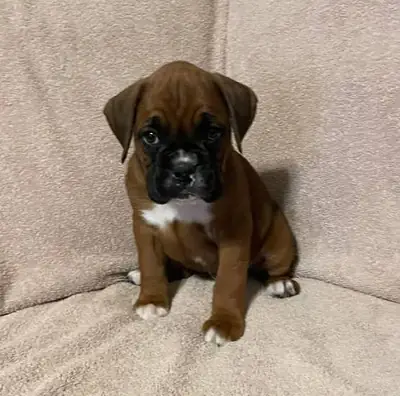
Adorables cachorros de bóxer criados en casa disponibles para adopción
Male
Educated
Free Adoption
3 views

Registered Deep Red Boxer Puppies Ready Now
Male
Educated
Free Adoption
86 views

Registered Deep Red Boxer Puppies Ready Now
Male
Educated
Free Adoption
121 views

Cachorros de bóxer de pura raza masculino y femenino.
Male
Not Educated
Free Adoption
105 views

Cachorros de bóxer de pura raza.
Male
Not Educated
Free Adoption
130 views

Registered Deep Red Boxer Puppies Ready Now
Male
Educated
Free Adoption
138 views