vs
Click on the breeds above to change the breed you want to compare.
Compare Budgerigar and Dutch Budgie side by side: temperament, energy, trainability, apartment fit, shedding, lifespan, weight and free adoption listings.
Breed traits
Character & behavior
Energy level
Playfulness
Intelligence
Trainability
Protectiveness
Sociability
Can stay alone
Lifestyle fit
Apartment-friendly
Yes
Yes
Good with kids
Yes
Yes
Good for first-time owners
Yes
Yes
Shedding
Noise level
Exercise needs
Physical & general
Life span
5–10 years
5–10 years
Weight
0.03–0.04 kg
0.05–0.1 kg
Height
18–20 cm
20–25 cm
Origin
Australia
Netherlands
Grooming effort
Nutrition sensitivity
Health risk
Heat tolerance
Cold tolerance
The Budgerigar and Dutch Budgie are both popular pet birds known for their sociable nature and playful demeanor. While they share many similarities, such as lifespan, energy level, and trainability, there are notable differences that potential owners should consider. The Budgerigar, originating from Australia, is slightly smaller and lighter than the Dutch Budgie, which has its roots in the Netherlands. Both breeds are apartment-friendly and suitable for first-time owners, making them excellent choices for families and individuals alike. However, the Dutch Budgie has a higher weight range and a slightly taller stature, which may influence the space requirements in a home. Understanding these traits can help prospective owners make an informed decision based on their lifestyle and preferences.
Budgerigar — Advantages
Smaller size (18-20 cm) for easier handling and space efficiency.
Lower weight (0.03-0.04 kg) makes them lighter to care for.
Higher tolerance for hot climates (4 out of 5).
Good for first-time owners with a friendly disposition.
Lower grooming difficulty (1 out of 5) simplifies care.
Lower weight (0.03-0.04 kg) makes them lighter to care for.
Higher tolerance for hot climates (4 out of 5).
Good for first-time owners with a friendly disposition.
Lower grooming difficulty (1 out of 5) simplifies care.
Disadvantages
Can stay alone for only 3 out of 5, requiring more companionship.
Moderate noise level (3 out of 5) may be a concern in quiet households.
Less tolerant of cold climates (2 out of 5) compared to Dutch Budgie.
Moderate noise level (3 out of 5) may be a concern in quiet households.
Less tolerant of cold climates (2 out of 5) compared to Dutch Budgie.
Dutch Budgie — Advantages
Larger size (20-25 cm) may appeal to those wanting a more substantial bird.
Higher weight (0.05-0.10 kg) can indicate a sturdier build.
Balanced climate tolerance for both hot (3) and cold (3) environments.
Similar sociability and playfulness, making them equally engaging pets.
Can be good for first-time owners with a friendly nature.
Higher weight (0.05-0.10 kg) can indicate a sturdier build.
Balanced climate tolerance for both hot (3) and cold (3) environments.
Similar sociability and playfulness, making them equally engaging pets.
Can be good for first-time owners with a friendly nature.
Disadvantages
Higher weight may require more space and resources.
Slightly less ability to stay alone (2 out of 5) may demand more attention.
Moderate noise level (3 out of 5) could be a consideration for noise-sensitive owners.
Slightly less ability to stay alone (2 out of 5) may demand more attention.
Moderate noise level (3 out of 5) could be a consideration for noise-sensitive owners.
Frequently Asked Questions
What is the average lifespan of a Budgerigar?
The average lifespan of a Budgerigar is between 5 to 10 years.
Are Budgerigars and Dutch Budgies good with kids?
Yes, both breeds are known to be good with kids.
How much space do I need for a Dutch Budgie?
A Dutch Budgie requires a suitable cage size, ideally large enough to allow for flight and play.
Do Budgerigars shed a lot?
Budgerigars have a low shedding level (1 out of 5), making them relatively low-maintenance in this regard.
Can both breeds be trained easily?
Yes, both Budgerigars and Dutch Budgies have a trainability rating of 4 out of 5, indicating they can be trained effectively.
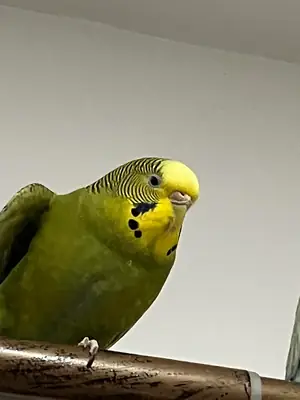
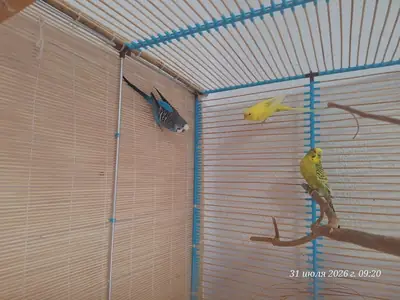
free Dutch Budgie adoption listings
No listings for this breed at the moment.