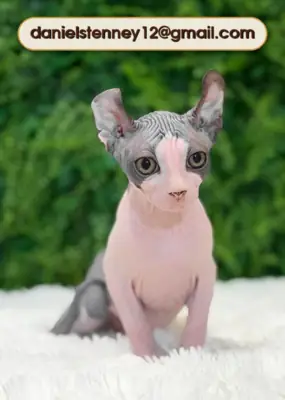
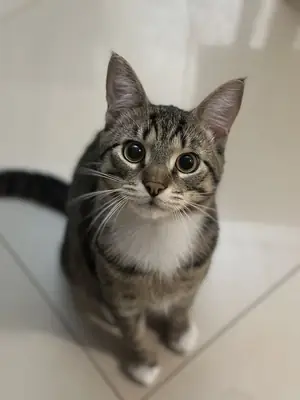
vs
Click on the breeds above to change the breed you want to compare.
Compare Elf and Celtic Shorthair side by side: temperament, energy, trainability, apartment fit, shedding, lifespan, weight and free adoption listings.
Breed traits
Character & behavior
Energy level
Playfulness
Intelligence
Trainability
Protectiveness
Sociability
Can stay alone
Lifestyle fit
Apartment-friendly
Yes
Yes
Good with kids
Yes
Yes
Good for first-time owners
Yes
Yes
Shedding
Noise level
Exercise needs
Physical & general
Life span
12–16 years
12–15 years
Weight
3.5–6.5 kg
3.5–5.5 kg
Height
25–30 cm
30–40 cm
Origin
United States
United Kingdom
Grooming effort
Nutrition sensitivity
Health risk
Heat tolerance
Cold tolerance
The Elf and Celtic Shorthair are both charming cat breeds that share some similarities while also having distinct differences. The Elf, originating from the United States, has a lifespan of 12 to 16 years and is known for its playful and sociable nature. With a height ranging from 25 to 30 cm and a weight between 3.5 to 6.5 kg, the Elf is well-suited for apartment living and is friendly with children and first-time owners. On the other hand, the Celtic Shorthair, hailing from the United Kingdom, has a slightly shorter lifespan of 12 to 15 years and stands taller at 30 to 40 cm, weighing between 3.5 to 5.5 kg. While both breeds exhibit similar energy levels and sociability, the Celtic Shorthair has a slightly lower grooming difficulty and health risk, making it an appealing option for pet owners seeking a low-maintenance companion.
Elf — Advantages
Playfulness level of 5, ensuring high engagement and fun.
Good with kids, making it a family-friendly choice.
Is apartment-friendly, ideal for small living spaces.
Sociable nature with a score of 5, promoting friendly interactions.
Originates from the United States, appealing to those looking for a native breed.
Good with kids, making it a family-friendly choice.
Is apartment-friendly, ideal for small living spaces.
Sociable nature with a score of 5, promoting friendly interactions.
Originates from the United States, appealing to those looking for a native breed.
Disadvantages
Can stay alone for only 2, indicating a need for companionship.
Moderate grooming difficulty with a score of 3, requiring regular maintenance.
Health risk is moderate at 3, suggesting potential health concerns.
Moderate grooming difficulty with a score of 3, requiring regular maintenance.
Health risk is moderate at 3, suggesting potential health concerns.
Celtic Shorthair — Advantages
Lower grooming difficulty at 2, making it easier to maintain.
Slightly lower health risk at 2, indicating a potentially healthier breed.
Can stay alone for 3, allowing for more independence.
Good with kids, ensuring compatibility with families.
Is apartment-friendly, suitable for various living situations.
Slightly lower health risk at 2, indicating a potentially healthier breed.
Can stay alone for 3, allowing for more independence.
Good with kids, ensuring compatibility with families.
Is apartment-friendly, suitable for various living situations.
Disadvantages
Slightly shorter lifespan of 12 to 15 years compared to Elf.
Energy level of 3, which may be less engaging for active families.
Playfulness level of 4, slightly lower than Elf, possibly affecting playtime interactions.
Energy level of 3, which may be less engaging for active families.
Playfulness level of 4, slightly lower than Elf, possibly affecting playtime interactions.
Frequently Asked Questions
How long do Elf cats typically live?
Elf cats have a lifespan ranging from 12 to 16 years.
Are Celtic Shorthairs good for families with children?
Yes, Celtic Shorthairs are known to be good with kids.
Which breed is easier to groom, Elf or Celtic Shorthair?
Celtic Shorthairs have a lower grooming difficulty, making them easier to maintain.
Can Elf cats be left alone for long periods?
No, Elf cats can only stay alone for a maximum of 2, indicating they prefer companionship.
Are both breeds suitable for apartment living?
Yes, both Elf and Celtic Shorthairs are apartment-friendly.