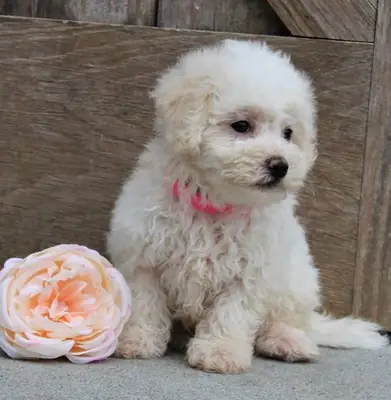
vs
Click on the breeds above to change the breed you want to compare.
Compare Jindo and Bichon Frise side by side: temperament, energy, trainability, apartment fit, shedding, lifespan, weight and free adoption listings.
Breed traits
Character & behavior
Lifestyle fit
Physical & general
Jindo — Advantages
Higher energy level for active owners.
Less grooming required compared to Bichon Frise.
Good with kids, but needs supervision due to size.
Disadvantages
May not be the best choice for first-time owners.
Can be less sociable with strangers.
Requires more exercise and mental stimulation.
Bichon Frise — Advantages
Highly sociable and good with kids.
Easier for first-time dog owners to manage.
Playful and affectionate nature.
Moderate exercise needs.
Disadvantages
Can be noisy at times.
Less protective compared to Jindo.
Moderate energy level may not satisfy active owners.
Frequently Asked Questions
Which breed is better for families with young children?
Both breeds are good with kids, but the Bichon Frise's sociable nature may make it a better fit for families.
How much exercise do these breeds need?
The Bichon Frise requires moderate exercise, while the Jindo needs more physical activity due to its higher energy level.
Are these breeds good for first-time dog owners?
The Bichon Frise is more suitable for first-time owners, while the Jindo may be better for experienced dog owners.
What are the grooming needs for each breed?
The Bichon Frise requires regular grooming due to its coat, while the Jindo has lower grooming needs.
Can these breeds adapt to different climates?
Both breeds have similar climate tolerance for hot weather, but the Jindo has a higher tolerance for cold.
free Jindo adoption listings
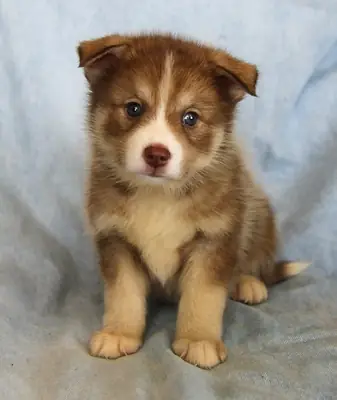

free Bichon Frise adoption listings

Bichon Frisé Welpen
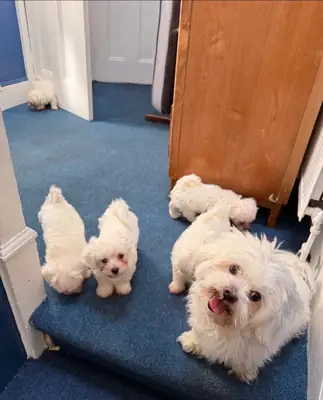
Bichon Frise Cute Puppies .. Text on WhatsApp ..Contact... +34 642 12 80 93

Bichone Frise Puppies
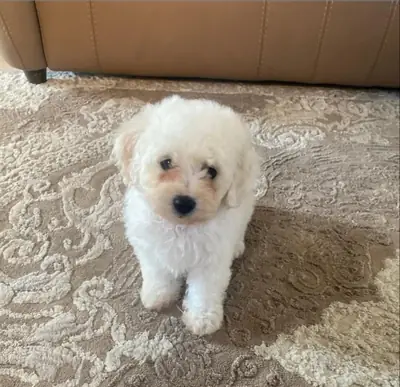
Bichon frise
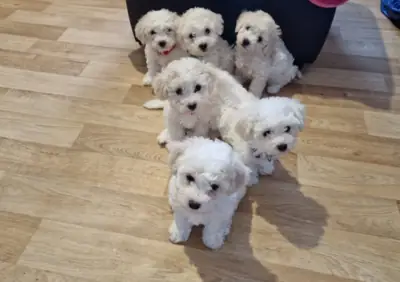
Bichon Frise puppies for sale.