vs
Click on the breeds above to change the breed you want to compare.
Compare Labrador Retriever and Dachshund side by side: temperament, energy, trainability, apartment fit, shedding, lifespan, weight and free adoption listings.
Breed traits
Character & behavior
Energy level
Playfulness
Intelligence
Trainability
Protectiveness
Sociability
Can stay alone
Lifestyle fit
Apartment-friendly
No
Yes
Good with kids
Yes
Yes
Good for first-time owners
Yes
Yes
Shedding
Noise level
Exercise needs
Physical & general
Life span
10–12 years
12–16 years
Weight
25–36 kg
7–14 kg
Height
55–62 cm
20–25 cm
Origin
Canada
Germany
Grooming effort
Nutrition sensitivity
Health risk
Heat tolerance
Cold tolerance
When comparing the Labrador Retriever and the Dachshund, potential pet owners will find distinct differences in size, energy levels, and living requirements. The Labrador Retriever, originating from Canada, is a larger breed with a height range of 55-62 cm and a weight of 25-36 kg. In contrast, the Dachshund, hailing from Germany, is much smaller, standing at 20-25 cm tall and weighing between 7-14 kg. Labradors are known for their high energy and playfulness, making them ideal for active families. On the other hand, Dachshunds have lower energy levels, which can make them suitable for apartment living. Both breeds are friendly and good with children, but their exercise needs and living conditions can greatly influence a potential owner's decision.
Labrador Retriever — Advantages
High energy level is great for active families.
Excellent trainability makes them easy to teach commands.
Very sociable, making them great companions.
Good with kids, ensuring a family-friendly environment.
Adaptable to various climates, particularly cold weather.
Excellent trainability makes them easy to teach commands.
Very sociable, making them great companions.
Good with kids, ensuring a family-friendly environment.
Adaptable to various climates, particularly cold weather.
Disadvantages
Requires more exercise compared to Dachshunds.
Not apartment-friendly due to size and energy needs.
Moderate shedding may require regular grooming.
Can stay alone for shorter periods, which may be challenging for busy owners.
Not apartment-friendly due to size and energy needs.
Moderate shedding may require regular grooming.
Can stay alone for shorter periods, which may be challenging for busy owners.
Dachshund — Advantages
Smaller size makes them suitable for apartment living.
Lower exercise needs, ideal for less active households.
Good with kids, making them a family-friendly option.
Easier to leave alone for longer periods compared to Labradors.
Lower shedding level, which may appeal to those with allergies.
Lower exercise needs, ideal for less active households.
Good with kids, making them a family-friendly option.
Easier to leave alone for longer periods compared to Labradors.
Lower shedding level, which may appeal to those with allergies.
Disadvantages
Lower energy levels may not suit active families.
Less trainable than Labradors, requiring more patience.
Moderate noise level may be a concern for some owners.
Health risks can be higher, particularly related to their back.
Less trainable than Labradors, requiring more patience.
Moderate noise level may be a concern for some owners.
Health risks can be higher, particularly related to their back.
Frequently Asked Questions
Which breed is better for families with young children?
Both breeds are good with kids, but Labradors are often more energetic and playful.
Can I keep a Labrador Retriever in an apartment?
Labradors are not typically apartment-friendly due to their size and energy levels.
How much exercise do these breeds need?
Labradors require more exercise compared to Dachshunds, who have lower exercise needs.
Which breed is easier to train?
Labrador Retrievers are generally easier to train due to their higher trainability.
Do either breed have special grooming needs?
Both breeds have moderate grooming difficulty, but Labradors may shed more.
free Labrador Retriever adoption listings

Beautiful male and female Labrador puppies to go now
Male
Educated
Free Adoption
54 views

Adorable AKC Labrador Retriever Puppies Ready
Male
Educated
Free Adoption
137 views

Amazingly Beautiful Labrador Retriever puppy looking for a good home for adoption
Male
Educated
Free Adoption
101 views

Awesome show quality Labrador Retriever puppies
Male
Educated
Free Adoption
107 views

Outstandingly Beatiful Labrador Retriever Puppies for Re-homing!
Male
Educated
Free Adoption
82 views

Labrador Retriever Puppies House Train Available
Male
Educated
Free Adoption
75 views
free Dachshund adoption listings
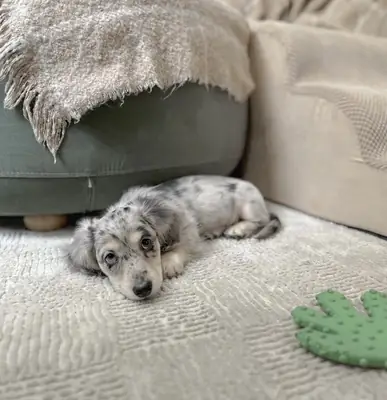
Cute dachshund puppy
Male
Educated
Free Adoption
43 views

Amazing Dachshund
Male
Not Educated
Free Adoption
58 views

¡Adorables Cachorros Teckel / Dachshund Buscando Hogar
Male
Not Educated
Free Adoption
42 views

¡Adorables Cachorros Teckel / Dachshund Buscando Hogar!
Male
Not Educated
Free Adoption
30 views

¡Adorables Cachorros Teckel / Dachshund Buscando Hogar! 🐾
Male
Not Educated
Free Adoption
28 views

¡Adorables Cachorros Teckel / Dachshund Buscando Hogar! 🐾🌭
Male
Not Educated
Free Adoption
50 views