vs
Click on the breeds above to change the breed you want to compare.
Compare Ocicat and Dwelf side by side: temperament, energy, trainability, apartment fit, shedding, lifespan, weight and free adoption listings.
Breed traits
Character & behavior
Energy level
Playfulness
Intelligence
Trainability
Protectiveness
Sociability
Can stay alone
Lifestyle fit
Apartment-friendly
Yes
Yes
Good with kids
Yes
Yes
Good for first-time owners
Yes
Yes
Shedding
Noise level
Exercise needs
Physical & general
Life span
12–15 years
12–15 years
Weight
3.5–6.5 kg
2.5–4.5 kg
Height
23–30 cm
20–25 cm
Origin
United States
United States
Grooming effort
Nutrition sensitivity
Health risk
Heat tolerance
Cold tolerance
The Ocicat and Dwelf are both unique breeds originating from the United States, each with distinct characteristics that cater to different pet owners. The Ocicat, known for its energetic and sociable nature, typically weighs between 3.5 to 6.5 kg and stands 23 to 30 cm tall. It has a higher energy level and exercise need compared to the Dwelf, making it a playful companion. On the other hand, the Dwelf is smaller, weighing 2.5 to 4.5 kg and measuring 20 to 25 cm in height. It shares similar sociability traits with the Ocicat but has a slightly lower energy level and exercise requirement. Both breeds are apartment-friendly and suitable for first-time owners, making them excellent choices for families, especially those with children.
Ocicat — Advantages
- Higher intelligence level (5)
- Greater exercise need (4), ideal for active families
- Slightly larger size may appeal to some owners
- Good trainability (4) for various activities
- Greater exercise need (4), ideal for active families
- Slightly larger size may appeal to some owners
- Good trainability (4) for various activities
Disadvantages
- Higher energy level (4) may require more engagement
- Potentially more noise (3) than the Dwelf
- Slightly higher weight range may not suit all living situations
- Potentially more noise (3) than the Dwelf
- Slightly higher weight range may not suit all living situations
Dwelf — Advantages
- Smaller size (20-25 cm) is ideal for compact living spaces
- Lower energy level (3) makes it easier to manage
- Good for first-time owners with similar sociability (5)
- Lower exercise need (3) suits less active households
- Lower energy level (3) makes it easier to manage
- Good for first-time owners with similar sociability (5)
- Lower exercise need (3) suits less active households
Disadvantages
- Lower intelligence level (4) compared to Ocicat
- May have slightly higher health risks (3)
- Smaller size may not appeal to those looking for a larger breed
- May have slightly higher health risks (3)
- Smaller size may not appeal to those looking for a larger breed
Frequently Asked Questions
What is the average lifespan of an Ocicat?
The average lifespan of an Ocicat is between 12 to 15 years.
Are both breeds good with children?
Yes, both Ocicats and Dwelfs are good with kids.
Which breed is more suitable for apartments?
Both breeds are apartment-friendly.
How much exercise do these breeds need?
Ocicats require more exercise (4) compared to Dwelfs (3).
Is trainability an issue with either breed?
Both breeds have good trainability (4), making them manageable for owners.
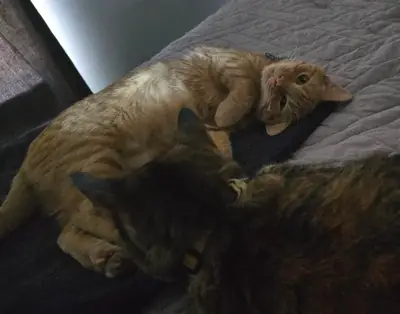
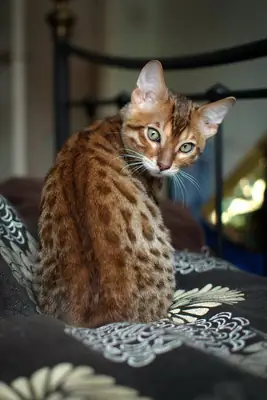
free Dwelf adoption listings
No listings for this breed at the moment.