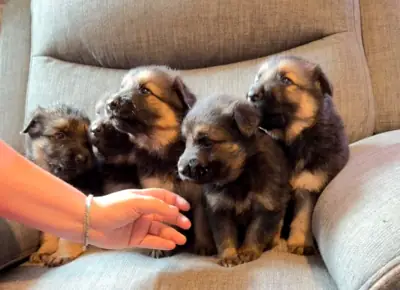
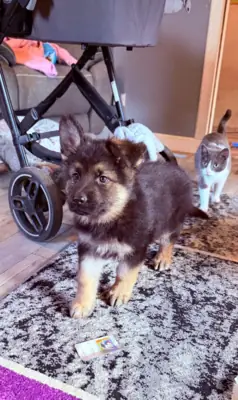
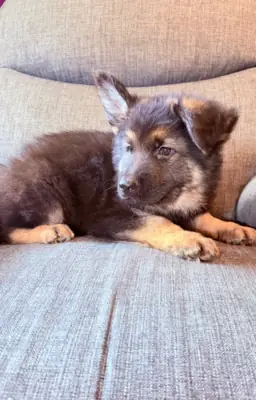
German Shepherd quick summary
The German Shepherd Dog is one of the most recognisable working dog breeds in the UK. It is admired for intelligence, loyalty, courage, athletic ability and strong connection with its owner. But describing this breed as “clever, loyal and protective” is not enough. That is exactly the shallow version everyone writes. A German Shepherd can be an outstanding family dog, training partner and protection-minded companion, but only in the hands of someone who understands exercise, socialisation, training, grooming and impulse control.
This is not a low-maintenance breed. A German Shepherd is strong, alert, active and highly responsive to its environment. It notices movement, sounds, visitors, dogs, children, strangers and changes in routine. That awareness can become a strength when the dog is well trained. Without structure, the same awareness can become barking, lead pulling, reactivity, over-guarding, restlessness, chewing, separation-related behaviour or poor behaviour around guests.
People searching for German Shepherd information usually want practical answers: What are German Shepherd characteristics? Are German Shepherds good family dogs? Can a German Shepherd live in a flat? Do German Shepherds shed a lot? Are they good with children? Are German Shepherds aggressive? Can they be left alone? Are they good guard dogs? What is the difference between a German Shepherd and a Belgian Malinois? This guide answers those questions directly, without pretending the breed is easy.
- Breed name: German Shepherd Dog
- Common name: German Shepherd
- Older UK name: Alsatian
- Breed type: Pastoral, working, guarding-capable and highly trainable active breed
- General temperament: Intelligent, loyal, alert, confident, trainable, protective and energetic
- Coat type: Dense double coat; short and long-haired types may be seen
- Shedding: Yes, German Shepherds shed noticeably
- Flat living: Possible, but only with serious daily exercise and training
- Children: Can be good with children when trained, socialised and supervised
- Care level: Moderate to high
- Main ownership risks: Under-exercise, poor socialisation, over-guarding, shedding, reactivity and joint health
German Shepherd general characteristics

The German Shepherd is a medium-to-large working dog with a strong body, alert expression, upright ears and a very recognisable silhouette. In the UK, the breed is usually searched as “German Shepherd” or “German Shepherd Dog”; some people still use the older name “Alsatian”. Whatever the name, the core point is the same: this is a serious dog that needs serious ownership.
The breed is famous for intelligence, loyalty and trainability. But intelligence does not make a dog easy. A clever German Shepherd learns good behaviour quickly when the owner is consistent. It also learns bad behaviour quickly when the owner is weak, unclear or inconsistent. If pulling on the lead works, it will pull. If barking at the door gets attention, it will bark again. If guarding behaviour is praised too early, it can become a problem.
A German Shepherd needs daily physical and mental work. Walks, lead manners, recall, obedience, scent games, calm settling, socialisation and controlled exposure to everyday life are not optional extras. They are the foundation of living with this breed. A bored German Shepherd is not just bored. It can become noisy, pushy, anxious, destructive or reactive.
In the right home, a German Shepherd can be outstanding: focused, loyal, responsive, brave, affectionate with family and impressive to train. In the wrong home, the same traits become difficult. Loyalty can turn into over-attachment. Alertness can become constant barking. Protection can become suspicion. Energy can become chaos. Strength can become a control problem.
German Shepherd origin and breed purpose
The German Shepherd was developed as a working and herding dog with a strong ability to cooperate with people. Over time, the breed became valued for many roles: herding, guarding, police work, military work, search and rescue, service work, sport, obedience and active family companionship. This versatility is impressive, but it also explains why the breed needs a job.
A German Shepherd is not designed to be ignored all day. It wants to use its nose, body and brain. It notices patterns, watches movement, learns routines and often looks to its owner for direction. When direction is missing, the dog may create its own role: guarding the window, barking at the hallway, patrolling the garden, reacting to dogs on walks or following family members around the house.
This working background is exactly why German Shepherd training can be so rewarding. The breed often responds well to calm, consistent and structured work. But the same background means poor training creates bigger problems. A badly managed German Shepherd is not a small inconvenience. It is a strong, intelligent dog making bad decisions at full power.
German Shepherd physical features

The German Shepherd is a strong, muscular, slightly longer-bodied dog with a confident outline. Upright ears, a long muzzle, athletic frame, deep chest and alert expression are all part of the breed’s typical appearance. A healthy German Shepherd should look capable and balanced, not heavy, clumsy or weak behind.
Movement matters in this breed. Because German Shepherds are active dogs, joint comfort, muscle tone and body condition are important. Limping, reluctance to climb stairs, weakness in the back legs, stiffness after exercise or an awkward gait should not be dismissed as normal.
Body and structure
A German Shepherd should be strong rather than bulky. The idea that a heavier German Shepherd is automatically better is nonsense. Extra weight places unnecessary stress on joints and reduces mobility. A good German Shepherd should be athletic, responsive and able to move comfortably.
Head, ears and expression
The upright ears and alert look are part of the German Shepherd’s identity. This expression can look intense, but a well-balanced German Shepherd should not appear frantic, nervous or needlessly aggressive. The ideal dog watches, thinks and waits for direction.
Long-haired German Shepherd

A long-haired German Shepherd has a more dramatic, fuller coat and often looks especially impressive. But longer hair is not just a style choice. It usually means more grooming, more visible shedding and more checking behind the ears, around the neck, tail, chest and back of the legs. If the coat is beautiful, the care burden is real.
German Shepherd colours and coat type

German Shepherd colours can include black and tan, black and red, sable, darker saddle patterns and solid black appearances. In the UK, the classic black and tan or black and gold look is the one most people recognise, but coat colour should not drive the decision.
Colour does not guarantee temperament, health, trainability or guarding ability. A black German Shepherd is not automatically sharper. A black and tan German Shepherd is not automatically more family-friendly. A long-haired German Shepherd is not automatically calmer. These are lazy assumptions.
| Colour / appearance | General description | What to remember |
|---|---|---|
| Black and tan German Shepherd | The classic look most people associate with the breed. | Colour does not prove temperament, health or training quality. |
| Black and red German Shepherd | A richer, warmer colour pattern often seen in show-type lines. | Appearance should never outrank movement, confidence and behaviour. |
| Sable German Shepherd | A wolf-grey or mixed shade appearance with darker hair tips. | Sable does not automatically mean better working ability. |
| Long-haired German Shepherd | A more dramatic coat with extra feathering and volume. | Grooming needs are usually more visible and demanding. |
Does colour affect temperament?
No. A German Shepherd’s temperament is shaped by genetics, early development, health, training, socialisation and daily management. Choosing by colour alone is weak decision-making. Choose by suitability, not just looks.
German Shepherd temperament

The German Shepherd temperament is usually described as intelligent, loyal, alert, confident, courageous and trainable. These are strong traits, but strong traits need strong handling. A German Shepherd is not a dog to drift through life with no rules and no routine.
A well-raised German Shepherd can be calm, controlled, responsive and deeply attached to its family. A badly managed one can be suspicious, noisy, reactive, pushy or overprotective. The difference is not luck. It is breeding, socialisation, training, exercise and owner consistency.
Are German Shepherds loyal?
Yes, German Shepherds are often very loyal to their family. But loyalty does not mean the dog will automatically make good choices. A loyal but untrained German Shepherd may overreact to normal people, normal noises and normal visitors because it thinks it must handle everything itself.
Are German Shepherds aggressive?
A well-bred, well-socialised and well-trained German Shepherd should not be needlessly aggressive. Alertness and confidence are not the same as aggression. Fear, poor socialisation, harsh handling, genetic weakness and uncontrolled guarding behaviour are much more likely to create problems.
Are German Shepherds good for first-time owners?
They can be, but only for serious first-time owners who are ready to learn, train daily and seek professional help if needed. If your plan is “it is clever, so it will train itself”, that plan is rubbish. This breed needs guidance.
Is a German Shepherd a guard dog?

Yes, German Shepherds can have strong guarding instincts. But this must be understood properly. A good guard dog is not a dog that barks at everyone, lunges at strangers, scares visitors or cannot settle in a normal home. Uncontrolled aggression is not protection. It is a liability.
A German Shepherd’s protective nature can be useful when it is balanced by obedience, confidence and socialisation. Without that balance, guarding becomes a problem. Barking at every hallway sound, refusing visitors, reacting to strangers on walks or guarding children from normal people are not signs of a well-trained dog.
How should guarding instinct be managed?
- Start early socialisation with people, places, sounds and normal household events.
- Teach calm behaviour around visitors, doorbells and outside noises.
- Build strong obedience: wait, leave it, come, settle and go to bed.
- Do not praise suspicion in puppies as “good guarding”.
- Do not encourage aggression without professional guidance.
- Teach the dog that the owner makes decisions, not the dog.
Can a German Shepherd live in a flat?

A German Shepherd can live in a flat, but this is a conditional yes. Flat living only works if the dog receives proper daily exercise, training, mental stimulation, grooming and alone-time management. A German Shepherd in a flat with short toilet breaks and no training is a bad setup.
In flats, this breed may be more aware of hallway noise, neighbours, lifts, doorbells, visitors and passing dogs. If the dog is alert and under-stimulated, these triggers can turn into barking, rushing to the door, pacing or becoming too watchful. The owner must manage the environment and teach calm responses.
Flat-living essentials for a German Shepherd
- Daily exercise must be real exercise, not just toilet breaks.
- Lead manners and calm walking should be taught early.
- Doorbells, neighbours, lifts and visitors must be managed calmly.
- Mental work such as scent games and training should be part of the routine.
- Grooming and home cleaning must be realistic because this breed sheds.
- Alone-time should be introduced gradually.
Does a German Shepherd need a garden?
A garden can help, but it does not replace walks, training or socialisation. A German Shepherd left in a garden with no guidance can bark, patrol the boundary, dig or become more reactive. The garden is a tool, not a solution.
Are German Shepherds good with children?

German Shepherds can be good with children when they are well socialised, trained and supervised. They can be loyal, patient and protective family dogs. But “good with children” must never mean “leave the dog and child to manage themselves”. That is lazy and unsafe.
This is a strong, fast and alert breed. A German Shepherd can accidentally knock a child over, become too excited during play, guard toys or food, or become protective around unfamiliar children. Children also need rules: do not climb on the dog, pull ears, disturb the dog while eating or sleeping, or treat the dog like a toy.
Rules for homes with children
- Dog and child interactions should be supervised.
- Children should respect the dog’s bed, food and rest time.
- The dog should learn calm greetings and no jumping.
- Resource guarding around toys, food and sleeping areas must be prevented.
- The dog should not be allowed to “guard” children from normal people.
- Play should be structured rather than chaotic.
Can a German Shepherd be a good family dog?
Yes, a properly trained German Shepherd can be a strong family dog. But this breed’s family suitability depends on adult responsibility. The adults must manage walks, training, grooming, feeding, vet care, visitors and child-dog rules. The dog will not manage those things by itself.
Do German Shepherds shed?

Yes, German Shepherds shed. This must be accepted before choosing the breed. The German Shepherd has a dense double coat that protects it from the elements, but that same coat means regular shedding around the home.
Shedding can become heavier during seasonal moulting periods. Regular brushing will not stop shedding completely, but it helps remove dead hair, keep the coat healthier and reduce the amount of loose hair around the house. If dog hair on floors, clothing, furniture and car seats is unacceptable to you, do not choose this breed.
How to manage German Shepherd shedding
- Brush several times a week.
- Increase brushing during heavier moulting periods.
- Use tools suitable for a dense double coat.
- Check for dandruff, redness, itching or patchy hair loss.
- Support skin and coat condition with appropriate feeding and vet care.
- Accept that hoovering will be part of normal life.
Are German Shepherds hypoallergenic?
No. German Shepherds are not hypoallergenic or low-shedding dogs. If someone in the home has allergies, spend time around the breed before committing and seek medical advice where needed.
German Shepherd care
German Shepherd care includes brushing, ear checks, dental care, nail care, paw checks, skin monitoring, weight control, exercise and training. Care is not just about appearance. With this breed, grooming and routine also support comfort, health and behaviour balance.
A German Shepherd may enjoy running on grass, walking in woodland, playing in mud, sniffing outdoor areas and working through training exercises. After outdoor activity, paws, coat, ears and skin should be checked. Dense coat can trap loose hair, dirt and moisture.
Basic German Shepherd care routine
- Several times a week: brushing and removal of loose undercoat
- Weekly: ear, eye, paw and nail checks
- Regularly: dental care and breath monitoring
- Daily: walking, training, play and mental stimulation
- Always: watch weight, appetite, mobility and behaviour changes
How often should a German Shepherd be bathed?
A German Shepherd should not be shampooed too frequently unless advised by a vet. Bathing depends on dirt, odour, skin condition and lifestyle. After bathing or wet walks, the coat should be dried properly, especially where the undercoat holds moisture.
Why paw, ear and skin checks matter
Because German Shepherds are active dogs, paw injuries, nail problems, ear irritation, skin redness and parasite signs should be checked regularly. Do not ignore small health signals just because the dog looks strong.
German Shepherd feeding

German Shepherd feeding should be based on age, weight, activity level, neuter status, health and veterinary advice. This breed’s growth, muscle condition, joint comfort, coat quality and energy levels can all be affected by feeding habits.
A German Shepherd is an active breed, so quality nutrition matters. But “active dog” does not mean unlimited food. Excess weight places stress on the hips, elbows, back and general movement. The goal is a fit, muscular and comfortable dog, not a heavy one.
| Life stage | Feeding focus | What to watch |
|---|---|---|
| German Shepherd puppy | Controlled growth, bones, muscles and joint development | Avoid rapid weight gain and uncontrolled portions |
| Adult German Shepherd | Muscle, energy, coat condition and stable weight | Adjust portions to real activity level |
| Neutered German Shepherd | Calorie control and healthy body condition | Review food amount if activity drops |
| Senior German Shepherd | Joint support, digestion, muscle maintenance and comfort | Review the diet with a vet as needs change |
What should a German Shepherd not eat?
A German Shepherd should not be given chocolate, onions, garlic, grapes, raisins, alcohol, caffeine, cooked bones, very fatty leftovers, heavily salted food or spicy meals. Training treats can be useful, but they should be counted as part of the daily intake.
German Shepherd puppy feeding
A German Shepherd puppy grows quickly, but “feed more so it gets bigger” is a bad mindset. The aim is controlled, healthy growth, not rapid bulking. Too much weight too early can place unnecessary stress on developing joints.
Do German Shepherds gain weight?
German Shepherds can gain weight if food is poorly managed and exercise is too low. Extra weight is not just a cosmetic issue in this breed. It can put pressure on hips, elbows, the back and general mobility.
A healthy German Shepherd should look fit, muscular and able to move freely. A dog that becomes heavy, tires quickly, struggles with stairs or loses interest in activity should have its weight and joint comfort reviewed.
How to manage weight
- Measure food rather than filling the bowl by guesswork.
- Count training treats in the daily intake.
- Avoid table scraps.
- Provide daily exercise and mental work.
- Monitor body condition, not just weight on a scale.
- Speak to a vet if weight gain becomes noticeable.
German Shepherd training

German Shepherd training should start early and remain calm, consistent and structured. This breed can learn quickly, but that is not a reason to relax. It is a reason to be more precise. Training should include more than tricks and basic commands. Lead control, calm behaviour, social confidence, visitor manners, impulse control and owner focus all matter.
Harshness is not leadership. Shouting, intimidation and physical pressure are not good training. A German Shepherd needs clarity, consistency and trust. Fear-based handling can create insecurity, defensive behaviour and reactivity, especially in a breed already sensitive to its environment.
Essential German Shepherd commands
- Sit
- Wait
- Come
- Drop
- Leave it
- Settle
- Walk nicely on the lead
- Stay calm around visitors and strangers
- Stay controlled around doorbells and hallway sounds
The biggest German Shepherd training mistake
The biggest mistake is encouraging guarding behaviour too early. A puppy barking at strangers, rushing to the door or acting suspicious should not be praised as “good protection”. First teach calmness, confidence and control. The guarding instinct does not need amateur fuel poured on it.
Does a German Shepherd need professional training?
Professional support can be very useful, especially for inexperienced owners. If there is lead reactivity, excessive barking, stranger sensitivity, poor recall, separation-related behaviour or uncontrolled guarding, waiting is a mistake. Fixing the issue early is easier than trying to undo a rehearsed behaviour later.
German Shepherd exercise and mental stimulation
German Shepherds need significant daily exercise and mental stimulation. A short walk around the block is not enough for most healthy adults. They need walking, training, scent work, play, calm settling, controlled social exposure and regular tasks that use their brain.
Under-exercise often shows up as barking, chewing, pacing, pulling on the lead, poor focus, over-alertness or reactivity. These behaviours are not always “stubbornness”. Often, they are unmanaged energy and an under-used working brain.
Example daily activity routine
- Morning: structured walk, toilet break and short obedience session
- Daytime: scent game, chew item or calm settling practice
- Evening: longer walk, controlled play and lead-focus work
- Night: low-stimulation wind-down and rest in its own space
Exercise mistakes to avoid
Only trying to exhaust a German Shepherd physically is a poor strategy. A dog that is constantly pushed into high-intensity play may become fitter and more aroused, not calmer. The better approach combines movement, thinking, impulse control and rest.
Can German Shepherds be left alone?

German Shepherds can learn to be left alone for reasonable periods, but they should be introduced to alone-time gradually. This is a family-attached, alert breed. If left alone for long hours without training, exercise and enrichment, a German Shepherd may become bored, anxious or overly reactive to household and outside sounds.
Problems may include barking, door scratching, chewing, pacing, over-attachment, toilet accidents or intense excitement when the owner returns. These signs should not be dismissed as drama. They usually mean the dog has not been prepared properly.
How to teach a German Shepherd to be alone
- Start with short absences and build gradually.
- Keep departures and returns calm.
- Create a safe resting area.
- Meet toilet and exercise needs before leaving.
- Use appropriate chew items or enrichment.
- Arrange help if long absences happen regularly.
Do German Shepherds smell?

A healthy, well-groomed German Shepherd should not have a strong bad smell. However, smell can develop if the coat stays damp, grooming is poor, the skin is irritated, the ears are infected, the teeth are neglected or diet and digestion are not right.
The solution is not perfume or constant bathing. First, find the cause. Check the coat near the skin, ears, mouth, paws, undercoat and feeding routine. Persistent bad odour should be discussed with a vet.
Common causes of smell
- Damp undercoat after rain or bathing
- Skin irritation or allergies
- Ear infection or wax build-up
- Dental disease and bad breath
- Dirty paws or trapped coat debris
- Diet or digestion issues
German Shepherd health concerns
German Shepherds may look strong and resilient, but they are not free from health risks. Joint health, weight management, digestion, skin and coat condition, ears and mobility should be monitored carefully. This section is not a diagnosis guide, but it highlights signs owners should take seriously.
Hip and elbow concerns
Hip and elbow health are important in German Shepherds. Genetics, excess weight, inappropriate exercise, rapid puppy growth and slippery or unsuitable surfaces can all increase strain. Controlled growth and sensible activity during puppyhood matter.
Skin and coat problems
The dense coat can hide skin problems. During brushing, check for redness, dandruff, sores, patchy hair loss, parasites and bad smell. Constant itching should not be dismissed as normal shedding.
Ear and dental health
Bad ear smell, redness, scratching and head shaking should be taken seriously. Dental care also matters. A strong dog can still suffer from small problems that become bigger if ignored.
Home health checklist
- Is the dog limping or moving unevenly?
- Does it struggle with stairs or getting up?
- Is there weakness or reluctance in the back legs?
- Is weight increasing quickly?
- Do the ears smell bad or look red?
- Is shedding patchy or abnormal?
- Is there redness, itching or soreness on the skin?
- Has energy, appetite or behaviour changed suddenly?
German Shepherd puppy care

A German Shepherd puppy is clever, curious and fast-learning. Puppyhood is not just the cute stage. It is the stage where confidence, social balance, bite control, toilet training, lead manners, recall, calm greetings and basic obedience are built. Mistakes made at this stage become much more expensive when the dog is adult and powerful.
German Shepherd puppies should be introduced carefully to different people, sounds, surfaces, environments, vehicles, vets, children and calm dogs. Socialisation does not mean throwing the puppy into chaos. It means teaching the puppy that normal life is safe and manageable.
German Shepherd puppy priorities
- Set up a veterinary plan for vaccinations, parasite control and checks.
- Build toilet training through routine and supervision.
- Redirect mouthing into appropriate toys.
- Introduce lead walking and calm focus early.
- Teach calm behaviour around visitors and strangers.
- Introduce alone-time gradually.
- Avoid rapid weight gain and harsh exercise.
- Do not encourage guarding behaviour in a puppy.
What to check before choosing a German Shepherd puppy
Look for bright eyes, balanced movement, curiosity, clean coat, normal body condition and a responsible source. Extreme fearfulness, limping, bad smell, heavy discharge, unclear health information or poor early handling should be treated as warning signs.
German Shepherd vs Belgian Malinois

German Shepherds and Belgian Malinois are often compared because both are intelligent, energetic, task-focused and commonly associated with working roles. But they are not the same dog, and treating them as interchangeable is a bad mistake.
The German Shepherd often appears larger, more substantial and heavier-coated. The Belgian Malinois is usually lighter, sharper, faster and extremely work-driven. Both breeds need experienced handling, but the Malinois is often even less forgiving of lazy ownership, poor routine and weak training.
| Factor | German Shepherd | Belgian Malinois |
|---|---|---|
| General build | Usually stronger, more substantial and fuller-coated | Usually lighter, faster and more athletic |
| Coat | Dense double coat; short and long-haired types may be seen | Usually shorter and more practical coat |
| Energy | High energy and strong need for work | Very high energy and intense work drive |
| Owner experience | Needs an experienced or very committed owner | Usually needs a highly experienced and active owner |
| Family life | Can adapt well with training and structure | Can adapt in the right hands, but management is often harder |
Which is better for a family?
For many family homes, a German Shepherd may be more realistic than a Belgian Malinois, but that does not make the German Shepherd easy. A Malinois in the wrong home can become a problem extremely fast. Before choosing either breed, be honest about time, training skill, exercise capacity and daily structure.
Who is a German Shepherd suitable for?
A German Shepherd is suitable for active, disciplined owners who want to train, exercise and engage with their dog daily. This is not a dog to buy simply because it looks impressive, guards the home or seems loyal. That thinking is weak and usually creates problems.
May be suitable for
- Active people and families
- Owners who can build a daily training and walking routine
- People who understand mental stimulation
- Homes that accept regular shedding and grooming
- Owners who can manage guarding instinct responsibly
- Families who can supervise child-dog interactions
- People willing to use professional training support if needed
May not be suitable for
- People who are out all day with no plan for the dog
- Homes that cannot tolerate shedding
- Owners who will not provide daily exercise
- People who confuse protection with aggression
- Owners who will skip socialisation and training
- First-time owners wanting an easy, low-maintenance dog
- Anyone who thinks a garden replaces walks and training
Is a German Shepherd good for beginners?
It can be possible for a serious beginner, but it is not the safest easy option. A new owner must be ready to learn, train consistently, socialise carefully and get help early. If you want a dog that trains itself because it is clever, do not get a German Shepherd.
Before getting a German Shepherd
Before getting a German Shepherd, be brutally honest about your lifestyle. This breed is intelligent, loyal, strong and impressive, but it also needs time, rules, training, exercise, grooming and calm leadership. Choosing one just because it looks powerful or might guard the home is poor decision-making.
Questions to ask before choosing a German Shepherd
- Can I provide real daily walks and exercise?
- Can I train basic obedience and social behaviour consistently?
- Can I handle shedding and regular brushing?
- Can I avoid encouraging uncontrolled guarding?
- Can I manage the dog safely around children and visitors?
- Can I teach alone-time patiently?
- Can I afford food, vet care, grooming tools and training support?
- Do I actually understand this breed, or do I just like the image?
Common mistakes with German Shepherds
- Misunderstanding guarding: barking at everyone is not good protection.
- Delaying training: cute puppy behaviour can become dangerous adult behaviour.
- Underestimating exercise: short toilet walks are not enough.
- Ignoring shedding: this breed sheds and needs regular brushing.
- Thinking a garden solves everything: a garden does not replace walks or training.
- Assuming children make it safe: strong dogs and children need supervision.
- Confusing it with a Malinois: similar working-dog image, different intensity and management.
Final thoughts
The German Shepherd is intelligent, loyal, alert, powerful and outstanding in the right hands. But this breed is not for everyone. Without training, intelligence becomes a problem. Without socialisation, guarding can turn into reactivity. Without exercise, energy becomes chaos. Without grooming, shedding and skin issues become frustrating. Without control, strength becomes risk.
If you are active, consistent, willing to train, able to manage shedding and ready to guide a strong working breed, the German Shepherd can be an exceptional dog. If you only want one because it is clever, loyal and protective, that idea is weak. In the right home, a German Shepherd is brilliant. In the wrong home, it becomes a large, powerful, shedding and difficult responsibility.