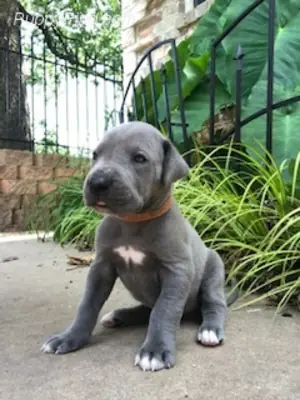
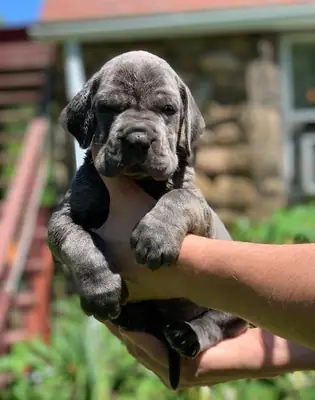
Great Dane quick summary

The Great Dane is one of the most recognisable giant dog breeds in the UK. It is tall, powerful, elegant and often surprisingly gentle with the right upbringing. Many people call it a “gentle giant”, and that description can be true, but it should never make the breed sound easy. A Great Dane is not a small family dog in a larger body. It needs space, training, careful feeding, sensible exercise, strong handling and a home that understands giant-breed responsibility.
A well-raised Great Dane can be calm, affectionate, loyal and deeply attached to its family. It can enjoy children, visitors and other dogs when socialised properly. But its size changes everything. A jump, a tail wag, a pull on the lead or an excited greeting can become a real problem when the dog is taller than many children and strong enough to move an adult off balance.
The biggest mistake is choosing a Great Dane only because it looks impressive. This breed comes with real practical issues: drool, food costs, a large bed, a large car space, joint care, a shorter lifespan than many smaller breeds, and a serious risk of bloat. The right owner sees the beauty of the breed and the work behind it.
- Breed name: Great Dane
- Breed group in the UK: Working
- Breed size: Giant
- General temperament: Friendly, affectionate, dignified, sensitive and people-focused
- Coat type: Short, smooth and relatively easy to groom
- Shedding: Moderate to low, but short hairs still shed
- Drooling: Common and should be expected
- Flat suitability: Usually difficult; large homes with secure outdoor space are more realistic
- Best for: Experienced or very prepared owners with space, budget, time and training commitment
- Main concerns: Bloat, joint strain, heart health, puppy growth, food costs and alone-time stress
Great Dane general characteristics

The Great Dane is a giant breed with a powerful frame, deep chest, long legs, broad head and elegant outline. It should look strong without looking clumsy. A healthy Great Dane is not simply “as big as possible”; it should be balanced, sound, confident and able to move freely.
Although the breed looks imposing, a good Great Dane should not be nervous, sharp or uncontrolled. The ideal character is friendly, dignified and steady. This is why the breed can work well in the right family home. But the phrase “gentle giant” must be handled carefully. Gentle does not mean self-training. Giant does not mean harmless. This breed needs structure from the start.
Great Danes are often calm indoors once mature, but they still need daily exercise, time with their family and a home big enough for their body. They can knock things over without trying. Their tail can clear a coffee table. Their head may reach kitchen worktops. Their bed takes space. Their food bills rise quickly. These details matter more than the romantic idea of owning a huge elegant dog.
Great Dane name and breed background
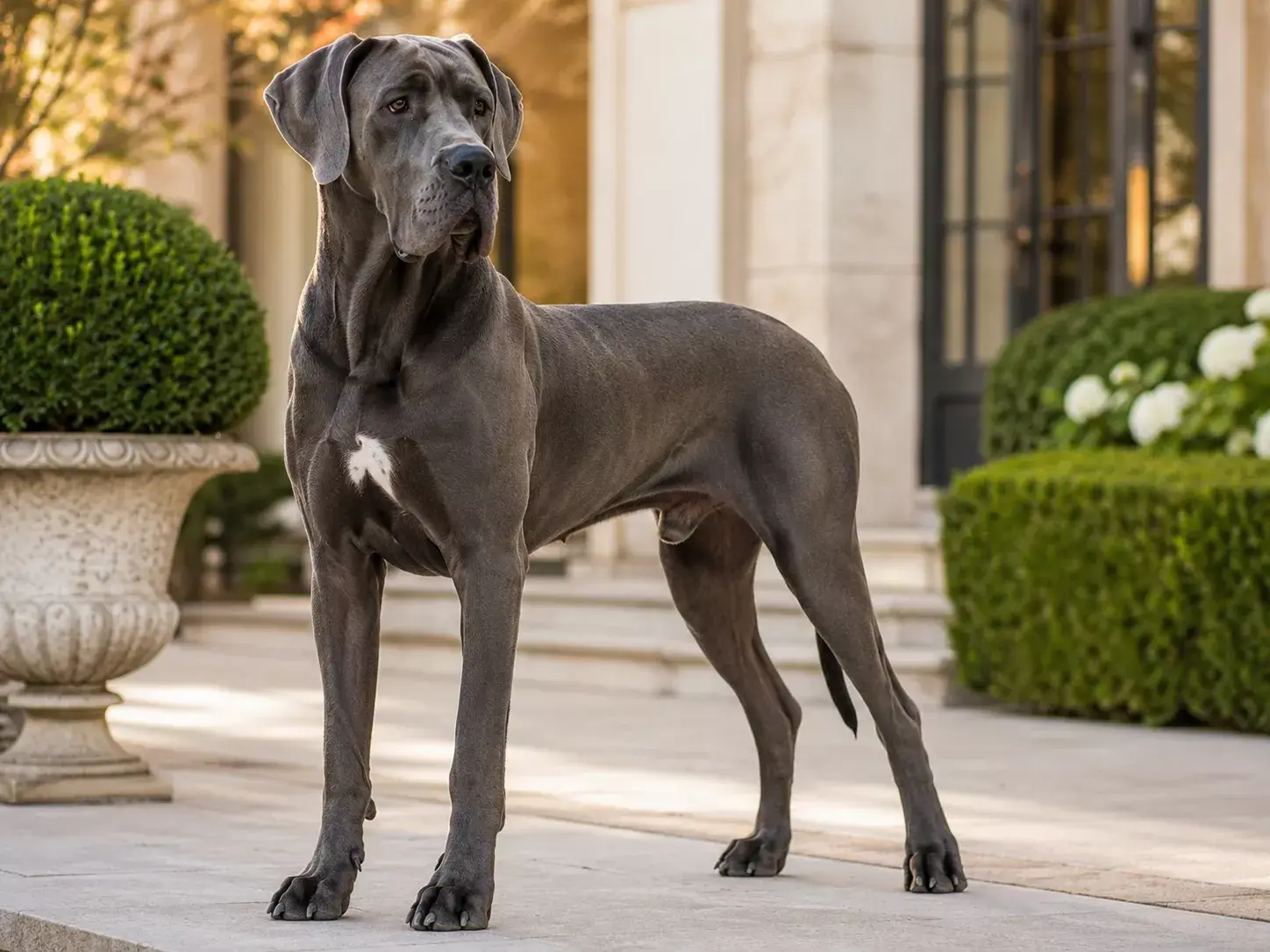
The Great Dane is widely recognised in the UK by its English name, but internationally it may also be associated with names such as Deutsche Dogge. In Turkish, the breed is commonly called Danua. These names can appear different, but they point to the same giant breed.
Despite the word “Dane”, the modern breed is strongly associated with Germany. Its background is linked to large hunting and guarding-type dogs, later refined into the more stable, companionable and dignified Great Dane known today. The breed still carries physical power, but modern ownership is about control, soundness, companionship and responsible handling.
For UK owners, the name matters less than the reality of the breed. A Great Dane is a giant dog with a sensitive side, large living needs and serious health considerations. It should not be chosen only for its impressive appearance or social media presence.
Great Dane physical features
The Great Dane has a long, strong head, deep chest, tall legs, muscular body and smooth short coat. It should give the impression of power and elegance together. A good Great Dane should not look heavy, weak, exaggerated or awkward. It should be large, but also balanced.
Because of its size, the body condition of a Great Dane matters enormously. Extra weight is not harmless. It puts pressure on the joints, spine, heart and overall movement. A giant dog already carries enough mass; adding avoidable fat is one of the easiest ways to make life harder for the dog.
The coat is short and smooth, which makes grooming easier than with long-coated breeds. But easy coat care does not mean easy ownership. Great Dane care is less about brushing for hours and more about feeding correctly, preventing excess weight, protecting joints, managing drool, training early and understanding bloat risk.
How tall is a Great Dane?

The Great Dane is one of the tallest dog breeds. Adult males are usually taller and heavier than females. UK breed standards describe the minimum adult height for males at around 76 cm at the shoulder, while females are generally around 71 cm or above. Some individuals may be taller, but height alone should never be treated as the goal.
A very tall Great Dane with weak movement, poor joint health or an unbalanced body is not better than a slightly smaller, sound dog. With giant breeds, soundness matters more than extreme size. The ideal Great Dane should be big, but still able to move comfortably and confidently.
| Sex | Typical adult height guide | What matters most |
|---|---|---|
| Male Great Dane | Around 76 cm and above at the shoulder | Power, balance, sound movement and healthy body condition |
| Female Great Dane | Around 71 cm and above at the shoulder | Good structure, steady movement and healthy weight |
How much does a Great Dane weigh?

Great Danes are very heavy dogs, but the exact weight depends on sex, height, build, muscle, age, diet and health. Adult males are often heavier than females, and many healthy Great Danes weigh far more than medium-sized family dogs. That size is part of the breed, but it must be managed carefully.
Too much weight is a serious problem in a Great Dane. Extra weight can strain the hips, elbows, knees, spine and heart. It can also make movement, rising from the floor and recovery after exercise more difficult. A Great Dane should be strong and well-muscled, not overweight.
How to tell if a Great Dane is in healthy condition
- You should be able to feel the ribs without pressing hard, but they should not be sharply visible.
- There should be a visible waist when viewed from above.
- The dog should rise, lie down and walk without obvious difficulty.
- Movement should be steady, not laboured or wobbly.
- Puppy growth should be monitored carefully with veterinary guidance.
Great Dane colours
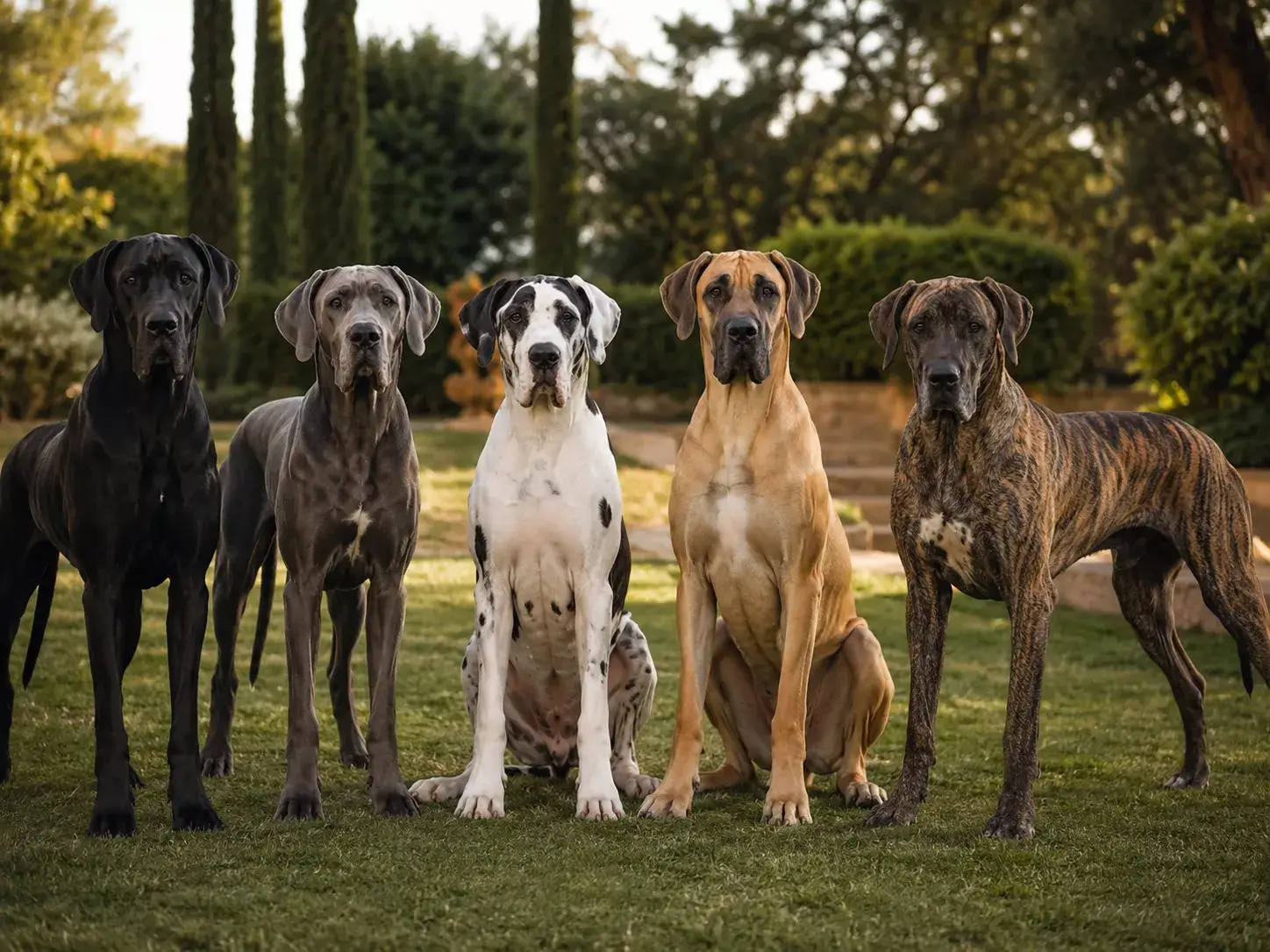
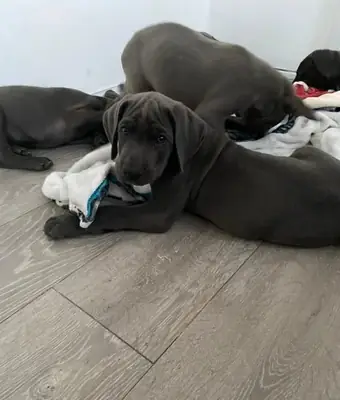
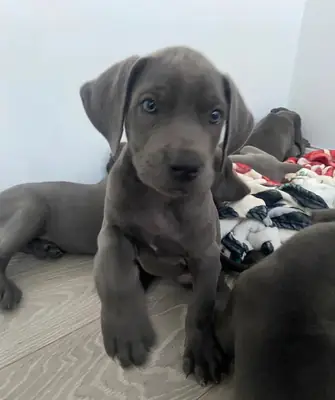
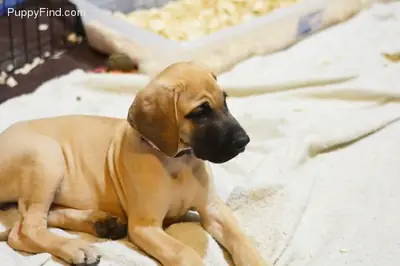
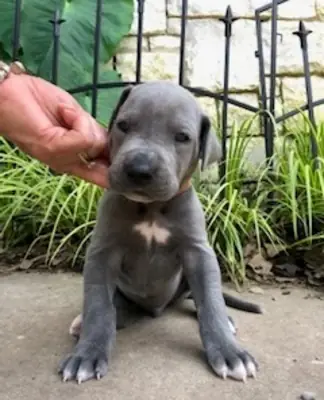
Great Danes can be seen in several recognised colours and patterns, including fawn, brindle, black, blue and harlequin. Harlequin Great Danes are especially eye-catching because of their white base with black patches. Fawn Great Danes are also one of the classic looks people associate with the breed.
Colour is attractive, but it should never be the main reason for choosing a dog. A beautiful Great Dane with poor health, weak movement, poor socialisation or an unstable temperament is not a good choice. With giant breeds, health, structure and character must come first.
Does colour affect temperament?
No colour should be treated as a guarantee of temperament. A black Great Dane is not automatically calmer, a harlequin Great Dane is not automatically more special, and a blue Great Dane is not automatically healthier. Every dog must be assessed as an individual.
Great Dane temperament
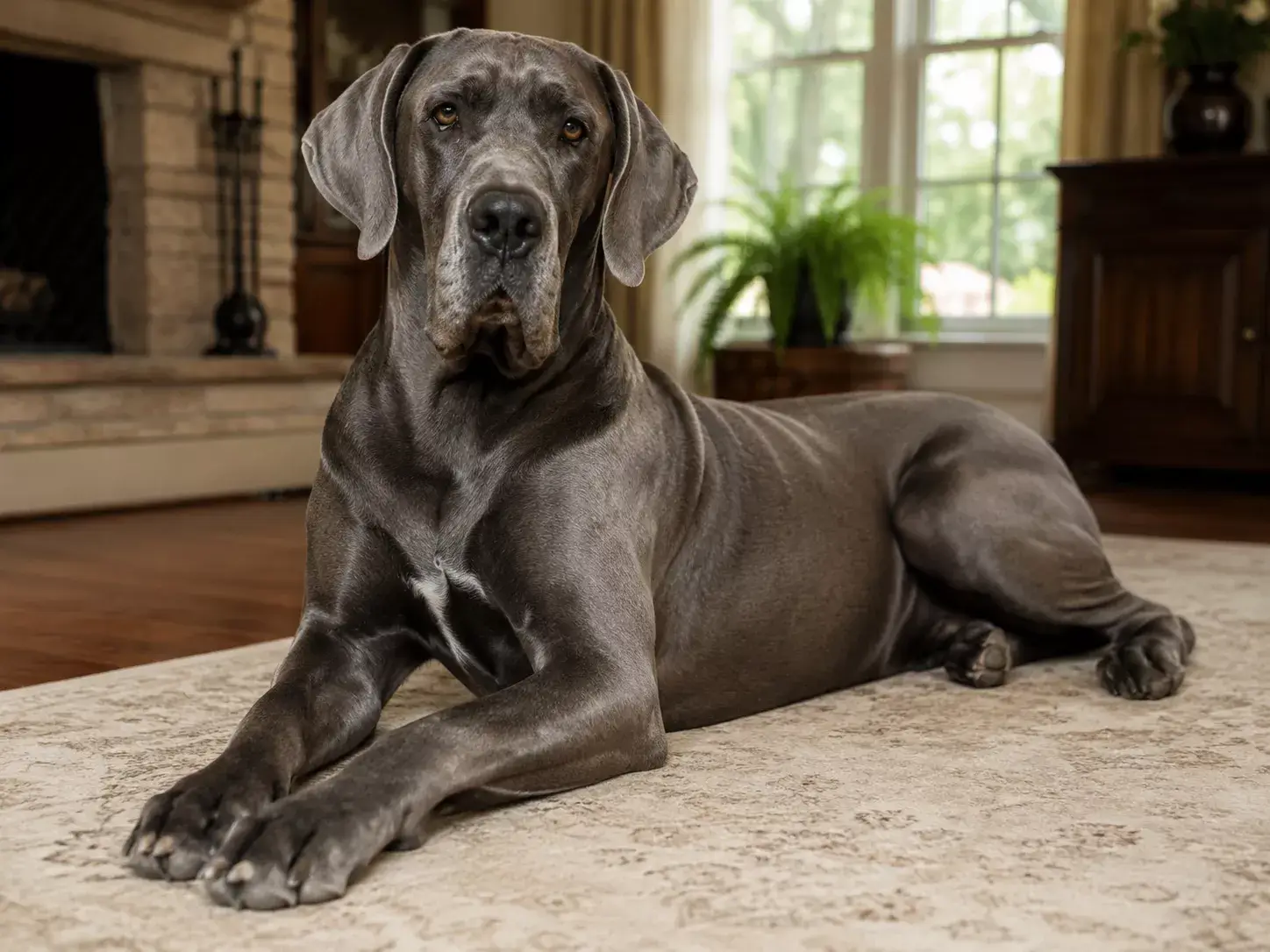
The Great Dane temperament is usually described as friendly, affectionate, dignified and people-focused when the dog is well bred, well socialised and properly trained. A good Great Dane should be confident without being sharp, and friendly without being uncontrolled.
The breed often forms a very strong bond with its family. Many Great Danes want to be close to their people and may not cope well with long periods of isolation. This can make them wonderful companions, but it also means they should be taught calm independence from an early age.
Because of the breed’s size, manners matter more than usual. A small dog jumping up can be annoying. A Great Dane jumping up can knock someone over. A small dog pulling on the lead is inconvenient. A Great Dane pulling on the lead can be dangerous. The dog’s temperament may be gentle, but the owner still needs control.
Are Great Danes protective?
A Great Dane can look very imposing and may alert to unfamiliar people, but it should not be encouraged to become aggressive or suspicious. The ideal Great Dane is steady, confident and controllable. Its size alone is enough to make people take notice.
Are Great Danes affectionate?
Yes, many Great Danes are extremely affectionate and enjoy being close to their family. Some behave like lapdogs despite their size. That closeness is one of the breed’s charms, but it must be balanced with training, space and boundaries.
Can a Great Dane live in a flat?

A Great Dane can technically live in a flat in some exceptional situations, but for most people it is not the best setup. This breed needs space both inside and outside. It needs room to turn, stretch, lie down, move without knocking into furniture and rest without being cramped.
Flat living becomes harder when you add the practical details: lifts, stairs, narrow hallways, neighbours, drool, tail height, large beds, food storage, car access and emergency vet transport. A mature Great Dane may be calm indoors, but calm does not mean small.
When could flat living work?
- The flat is genuinely spacious.
- There is lift access or very limited stair use.
- The owner is home enough and can manage daily walks.
- The dog has a large, comfortable resting area.
- The flooring is safe and not slippery.
- Neighbours and building rules allow a giant dog.
- Outdoor exercise and toilet access are realistic every day.
Why are small homes difficult for Great Danes?
Great Danes are not usually frantic indoors, but their body size alone creates problems. A wagging tail can knock items over. A narrow hallway can become awkward. Stairs can be hard on growing joints. If the dog becomes ill or injured, carrying or moving it is not simple.
Are Great Danes good with children?

Great Danes can be loving family dogs and many are gentle with children when properly trained and socialised. But the main risk is size. A Great Dane can accidentally knock over a child, hit them with its tail, lean into them or become too enthusiastic during play.
For homes with very young children, the breed needs serious thought. Even a friendly Great Dane may be too large and strong for unsupervised contact. Children should be taught to respect the dog’s space, and the dog should learn calm greetings, no jumping and controlled movement around the family.
Rules for Great Danes and children
- Never leave a Great Dane unsupervised with young children.
- Teach children not to climb on, pull or disturb the dog.
- Do not allow children to interrupt the dog while it is eating or sleeping.
- Train the dog not to jump up or barge through doorways.
- Use calm, controlled greetings with visitors and children.
- Give the dog a quiet resting space away from busy play.
Can Great Danes be left alone, and do they bark a lot?
Great Danes are very family-oriented dogs. Many do not cope well when left alone for long periods. A lonely or anxious Great Dane may chew furniture, pace, drool more, bark, scratch doors or become destructive. This is a big problem because a destructive giant dog can cause serious damage very quickly.
Great Danes are not usually known as excessive barkers, but they can bark when they feel the need to alert, when bored, when anxious or when reacting to visitors. Their bark is deep and powerful, so even occasional barking can be noticeable in a close neighbourhood or flat.
How to teach a Great Dane to cope alone
- Start alone-time training with very short periods.
- Build duration gradually and calmly.
- Do not make departures and returns dramatic.
- Provide a large, comfortable resting space.
- Give toilet breaks and exercise before longer absences.
- Do not choose this breed if the dog will be alone all day.
Do Great Danes drool?

Yes, Great Danes can drool. The amount varies from dog to dog, but drool is part of life with the breed. Large lips, drinking water, eating, excitement, warm weather, stress and head-shaking can all make drool more noticeable.
This matters for everyday living. Water may drip around the bowl. Drool may land on clothes, walls, furniture or car seats. If you are extremely house-proud, the Great Dane may not be the right dog for you. A towel near the water bowl and near the door can become part of normal ownership.
When is drooling a warning sign?
- Drooling suddenly increases dramatically.
- The dog is retching but cannot vomit.
- The abdomen looks swollen or tight.
- The dog seems restless, weak or unable to settle.
- There is a bad smell from the mouth.
- You suspect dental pain, injury or something stuck in the mouth.
Do Great Danes shed?

Yes, Great Danes shed. Their coat is short and smooth, so they do not leave long clumps of hair like some breeds, but short hairs can still stick to clothes, sofas, rugs and car upholstery. Shedding may increase in spring and autumn.
The grooming routine is usually simple compared with long-coated dogs. A weekly brush is often enough for many Great Danes, with extra brushing during heavier shedding periods. Brushing also gives you a chance to check the skin, lumps, scratches, dandruff and any sore areas.
Basic Great Dane coat care
- Brush weekly with a tool suited to short coats.
- Brush more often during seasonal shedding.
- Check the skin for redness, flaking, irritation or bald patches.
- Avoid over-bathing, which can dry the skin.
- Keep bedding clean because large dogs can make beds smell quickly.
Do Great Danes smell?

A healthy, well-cared-for Great Dane should not smell strongly all the time. If there is a persistent bad smell, the cause is usually linked to drool, teeth, ears, skin, bedding, diet or moisture rather than the breed itself.
Because Great Danes are large, smell can become more noticeable if care slips. Their bed is bigger, their bowls are bigger, their drool is more noticeable and their body has more surface area. Cleaning the dog but ignoring the bed, collar, ears or mouth will not solve the problem.
Common causes of smell in Great Danes
- Dental disease or bad breath
- Ear irritation or infection
- Skin allergies, infection or soreness
- Drool build-up around the mouth and neck
- Dirty bedding, collars or blankets
- Diet or digestive problems
Great Dane training
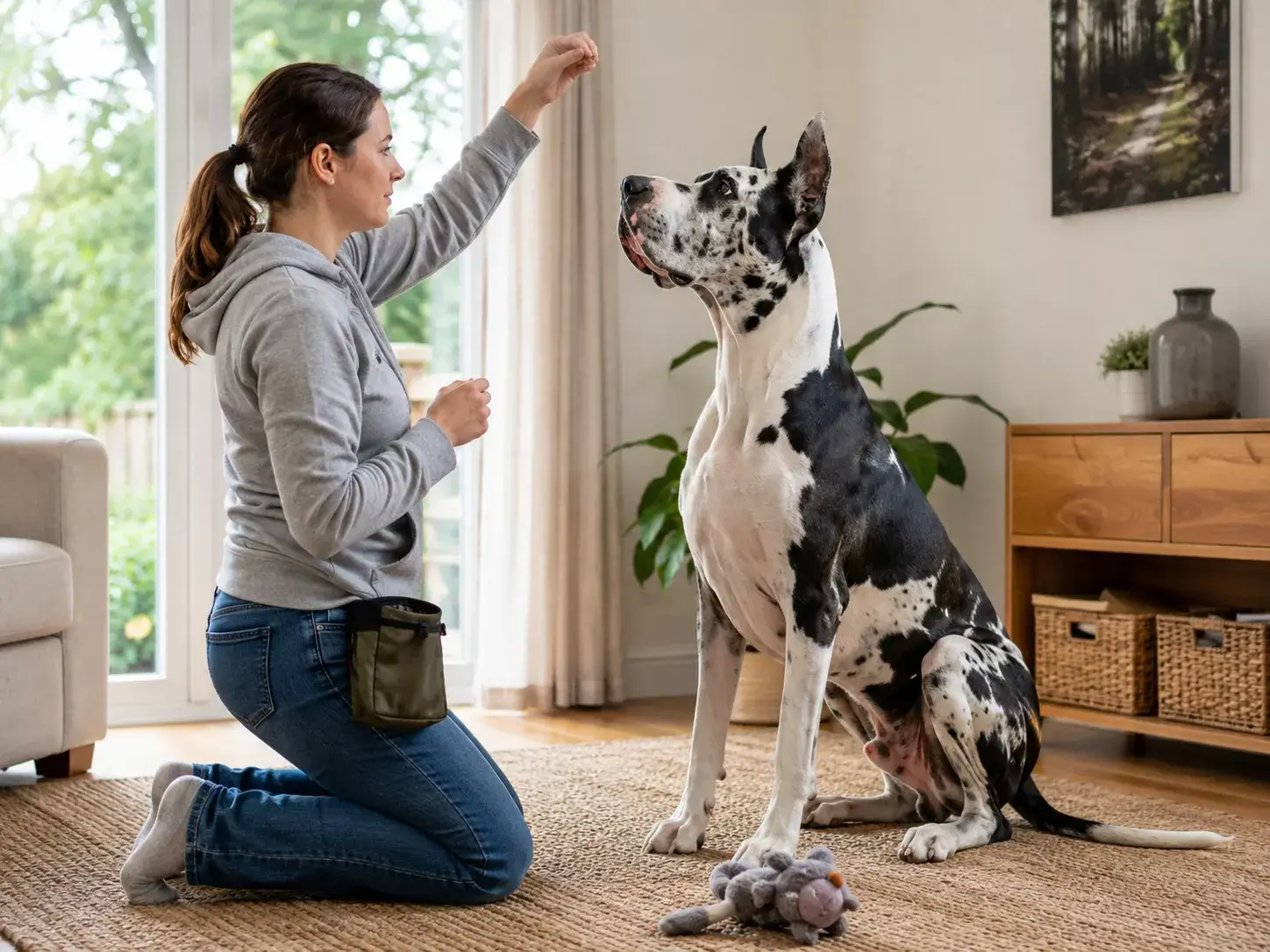
Great Dane training should begin early. This breed grows quickly, and behaviour that seems cute in a puppy can become dangerous in an adult. Jumping up, pulling on the lead, barging through doors, leaning on people and grabbing food from worktops must be handled before the dog becomes enormous.
Great Danes are intelligent and can learn well with calm, positive, reward-based training. Harsh handling is unnecessary and can damage trust, especially because many Great Danes are sensitive dogs. The goal is not to create a robotic dog; the goal is to create a giant dog that is safe, calm and manageable in real life.
Essential Great Dane training priorities
- Loose lead walking
- Calm greetings without jumping
- Waiting at doors and gates
- Settling on a bed
- Reliable response to name
- Food manners around worktops and tables
- Handling for grooming and veterinary checks
- Safe behaviour around children and visitors
- Controlled car entry and exit
Great Dane exercise needs
Great Danes need regular exercise, but it must be suitable for their age and body. Adult Great Danes need daily walks, safe space to move and mental stimulation. However, puppies must not be over-exercised. Too much too soon can harm developing bones and joints.
The best routine is steady and sensible, not extreme. Long, controlled walks, gentle play, sniffing time, training sessions and rest are better than forcing a young or heavy dog into hard running. Exercise should also be separated from mealtimes because of bloat risk.
Good activities for a Great Dane
- Daily walks split across the day
- Controlled time in a secure garden
- Short training sessions
- Scent games and calm enrichment
- Gentle socialisation walks
- Rest after meals
Activities to avoid or manage carefully
- Long forced runs with puppies
- Repeated jumping from furniture or cars
- Fast play on slippery floors
- Hard exercise immediately before or after meals
- Long walks in hot weather
- Frequent stair use in growing dogs
Feeding a Great Dane
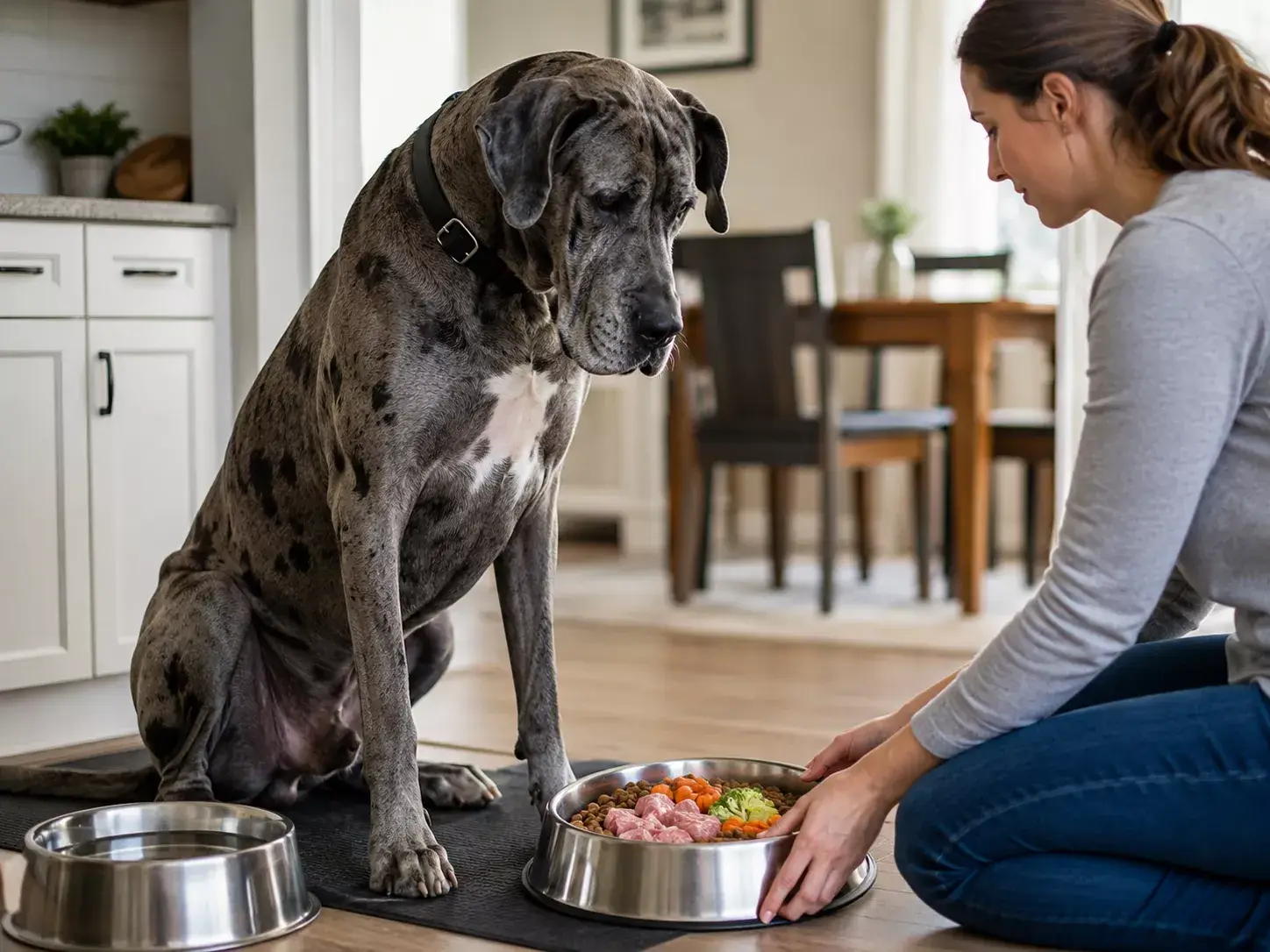
Feeding a Great Dane is one of the most important parts of ownership. This is a giant breed, and poor feeding choices can affect growth, joints, weight, digestion and bloat risk. A Great Dane should not be fed with the simple idea that a bigger dog should grow as fast as possible. Controlled growth is much safer than rushed growth.
Great Dane puppies need careful nutrition designed for large or giant breed growth. Adult Great Danes need a complete, balanced diet that maintains lean body condition without excess weight. Food quantity, meal timing and exercise timing all matter.
| Life stage | Feeding focus | What to watch |
|---|---|---|
| Great Dane puppy | Controlled growth, bone and joint development | Use veterinary guidance and avoid rapid weight gain |
| Young Great Dane | Muscle development, steady weight and joint protection | Avoid overfeeding and excessive treats |
| Adult Great Dane | Lean condition, digestion, energy and stomach health | Split meals and avoid exercise around feeding |
| Senior Great Dane | Joint comfort, heart health, digestion and weight control | Review diet with a vet as needs change |
Practical feeding rules
- Feed measured portions rather than guessing.
- Split daily food into more than one meal.
- Avoid hard exercise immediately before and after meals.
- Do not allow a puppy to gain weight too quickly.
- Count training treats as part of daily calories.
- Keep fresh water available.
- Discuss growth, weight and food changes with a vet.
Great Dane puppy care

A Great Dane puppy grows very quickly. This rapid growth is one of the most important things to manage. The puppy may look clumsy, sweet and oversized, but its bones, joints and muscles are still developing. Poor nutrition, too much exercise, slippery floors and repeated jumping can all create problems.
Puppyhood is also the best time to build manners. Waiting at doors, walking calmly on a lead, not jumping up, accepting handling and settling quietly should all start early. If these behaviours are ignored, the puppy will become an adult giant with habits that are much harder to change.
Great Dane puppy priorities
- Follow a vaccination and parasite programme with a vet.
- Use a suitable large or giant breed growth diet.
- Avoid rapid weight gain.
- Limit stairs, jumping and rough high-impact play.
- Use non-slip flooring where possible.
- Start lead manners early.
- Socialise carefully with people, dogs, sounds and places.
- Teach calm handling for vet visits and grooming.
- Introduce alone-time gradually.
Great Dane bloat risk
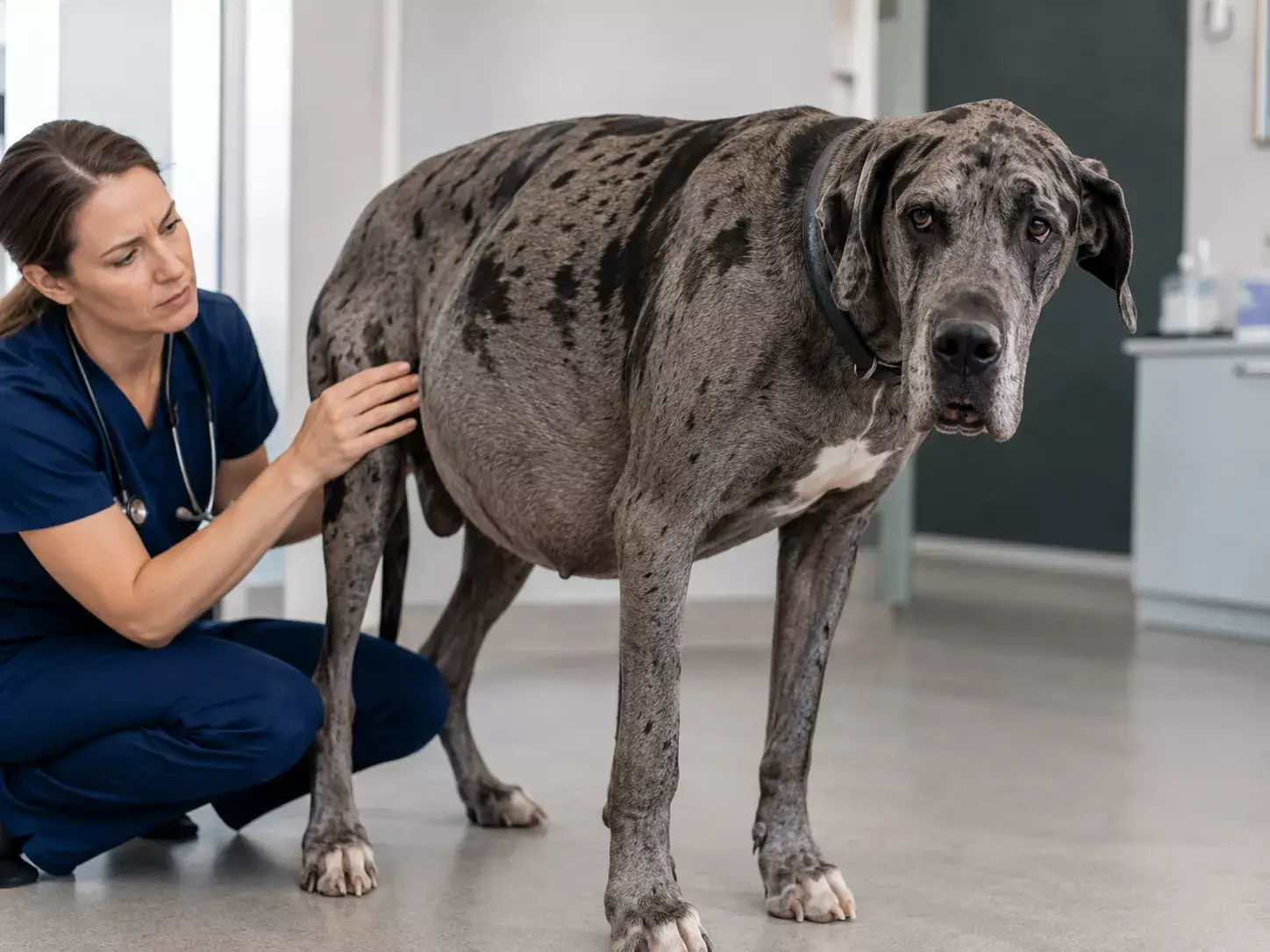
Bloat, also called gastric dilatation-volvulus or GDV, is one of the most serious health risks for Great Danes. It can happen when the stomach fills with gas, fluid or food and twists. This can become life-threatening very quickly and needs urgent veterinary treatment.
Every Great Dane owner should know the warning signs. This is not a situation to watch at home for hours. If a Great Dane is trying to vomit but cannot, has a swollen abdomen, seems restless or suddenly looks weak, treat it as an emergency.
Possible bloat warning signs
- Retching or trying to vomit without bringing anything up
- Swollen or tight abdomen
- Restlessness or pacing
- Unable to settle or lie comfortably
- Heavy drooling
- Weakness, pale gums or collapse
- Sudden distress after eating
Daily habits that may reduce risk
- Split food into more than one meal per day.
- Avoid hard exercise before and after meals.
- Use a slow feeder if the dog eats too quickly.
- Keep feeding routines consistent.
- Let the dog rest calmly after eating.
- Speak to a vet about bloat prevention and emergency planning.
Great Dane health concerns
Great Danes can be wonderful dogs, but they do have serious health considerations. Their giant size puts pressure on joints, heart, digestion and mobility. Responsible ownership means regular vet checks, careful feeding, weight management, sensible exercise and early attention to any change in movement or behaviour.
Health issues to be aware of
- Bloat and GDV: a major emergency risk in deep-chested large breeds.
- Hip and elbow issues: excess weight and poor growth management can increase strain.
- Heart disease: giant breeds need attention to heart health.
- Wobblers and spinal issues: unsteady movement should not be ignored.
- Joint strain: slippery floors, jumping and excess weight can make problems worse.
- Skin and ear problems: short coats are easy to check, but checks still need to happen.
Home health checklist
- Is the dog limping or moving differently?
- Is it struggling to stand up or lie down?
- Is the abdomen swollen or tight?
- Has drooling suddenly increased?
- Has weight changed quickly?
- Are the nails too long and affecting movement?
- Does the dog tire much faster than usual?
- Has appetite, breathing or behaviour changed?
Great Dane lifespan

Great Danes usually have a shorter lifespan than many smaller dog breeds. This is one of the hardest realities of owning a giant breed. They may look powerful, but their long-term health needs careful management and their time with a family may be shorter than many people expect.
Lifespan is influenced by genetics, breeding quality, feeding, growth rate, weight control, heart health, joint management, bloat awareness and regular veterinary care. A Great Dane owner should be emotionally and financially prepared not only for puppyhood, but for senior care as well.
How to support a healthier life
- Keep the dog lean, not overweight.
- Manage puppy growth carefully.
- Use suitable exercise for age and body condition.
- Know the signs of bloat.
- Keep up with routine vet checks.
- Protect joints from slippery floors and repeated jumping.
- Adjust diet and exercise as the dog ages.
Are Great Danes banned in the UK?

No, the Great Dane is not one of the banned dog types listed in the UK. However, that does not mean ownership is free from responsibility. Any dog can cause legal problems if it is dangerously out of control, and a giant dog can frighten people simply because of its size.
Great Dane owners should focus on lead control, safe handling, public manners, secure boundaries and responsible behaviour around children, visitors and other animals. Being legal to own does not make a giant breed easy to manage.
What UK owners should still consider
- Can you control the dog physically on a lead?
- Does your landlord, building or housing agreement allow giant dogs?
- Is your garden secure enough for a large breed?
- Can the dog greet visitors calmly?
- Can you prevent jumping, barging and pulling?
- Do you understand public responsibility around a giant dog?
Great Dane costs in the UK

The cost of owning a Great Dane is much higher than many people expect. The initial cost of getting the dog is only one part of the picture. Food, insurance, vet bills, flea and worming treatments, large beds, strong leads, car space, training, emergency care and possible health problems all need to be planned.
Because the dog is large, many routine costs are also larger. Food bills can rise quickly. Medication doses may be higher. Equipment must be stronger. Transport is harder. Emergency veterinary treatment can be expensive. Anyone considering a Great Dane should plan for the lifetime cost, not just the purchase or adoption fee.
Costs to think about
- High-quality food for a giant breed
- Large beds, bowls and secure equipment
- Strong leads, collars or harnesses
- Pet insurance or emergency savings
- Routine veterinary care
- Possible heart, joint or bloat-related treatment
- Training support, especially for first-time giant breed owners
- A car or travel plan suitable for a giant dog
Who is a Great Dane suitable for?
A Great Dane is suitable for people who understand giant dogs and can offer space, time, training, money and calm handling. It is best suited to homes where someone is around often, where the dog has room to move, and where the owner is ready for drool, large food bills and serious health awareness.
May be suitable for
- Owners with a large home and secure garden.
- People who can physically manage a giant dog.
- Families ready to supervise children and teach calm manners.
- Owners who can afford high food and vet costs.
- People who are home often and do not leave the dog alone all day.
- Owners prepared for drool, short-hair shedding and large dog mess.
- People willing to train from puppyhood and keep training consistent.
May not be suitable for
- Small flats or homes with narrow space and many stairs.
- Owners away from home for long hours every day.
- People who cannot control a strong dog on lead.
- Homes with no realistic budget for giant-breed care.
- Anyone who cannot tolerate drool or large-scale cleaning.
- People choosing the breed only because it looks impressive.
- Owners who will ignore puppy growth, bloat risk or joint care.
Is a Great Dane good for first-time owners?
A Great Dane is not the easiest first dog. A very committed first-time owner can succeed with professional support, research, space and budget, but this is not a casual beginner breed. The size alone makes training and daily management more serious.
Before getting a Great Dane
Before getting a Great Dane, look beyond the impressive photos. This breed affects daily life in a very physical way. The bed is large, the food bowl is large, the car space needs to be large, the vet bills can be large, and the responsibility is large. A Great Dane is a wonderful dog for the right home, but a poor match can become stressful for both dog and owner.
Questions to ask yourself
- Do I have enough space indoors for a giant dog to move and rest?
- Is there safe outdoor space or easy access to suitable exercise areas?
- Can I manage stairs, floors, lifts and car travel safely?
- Can I afford food, insurance, vet care and emergency treatment?
- Can I train loose-lead walking before the dog becomes huge?
- Can I cope with drool, short hair and giant dog cleaning?
- Do I know the signs of bloat and have an emergency plan?
- Will the dog be left alone for long hours?
- Am I choosing this breed for my lifestyle, not just its appearance?
Common Great Dane ownership mistakes
- Choosing for size alone: a giant dog looks impressive, but the responsibility is just as large.
- Underestimating space needs: a calm Great Dane still needs a lot of room.
- Overfeeding puppies: rapid growth can harm joints and long-term soundness.
- Delaying training: puppy habits become giant-dog problems very quickly.
- Ignoring bloat risk: every Great Dane owner should know the warning signs.
- Underestimating cost: food, vet care, equipment and insurance can be expensive.
- Forgetting drool and cleaning: this is not a breed for people who need a spotless home at all times.
Final thoughts
The Great Dane is elegant, affectionate, dignified and unforgettable. In the right home, it can be a deeply loving family companion with a calm and gentle nature. But this breed is not easy simply because it is kind. It is a giant dog with giant needs.
If you have the space, budget, time, training mindset and health awareness, a Great Dane can be a remarkable companion. If you live in a cramped home, work long hours away, dislike drool, cannot manage a strong dog or are choosing only for appearance, this is the wrong breed. The Great Dane is a gentle giant only when the owner is prepared for the giant part as much as the gentle part.