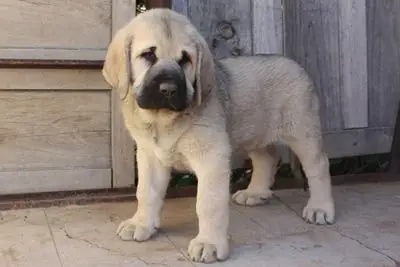
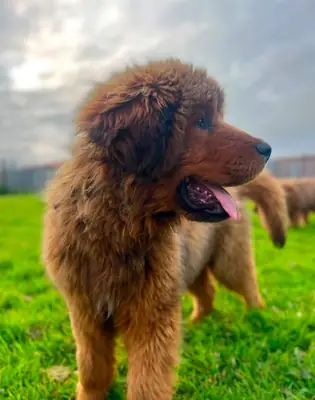
Mastiff quick summary

The Mastiff, often called the English Mastiff in the UK, is a giant dog breed known for its huge frame, broad head, calm presence and strong family loyalty. It looks powerful enough to be intimidating, but a well-bred and well-raised Mastiff should not be randomly aggressive, frantic or hard to approach. The best Mastiffs are steady, affectionate with their family and naturally impressive without needing to be made sharp.
That said, the Mastiff is not an easy dog simply because it can be calm. This is a giant breed with giant responsibilities: drool, heavy food bills, large bedding, strong lead control, high vet costs, heat sensitivity, joint pressure, puppy growth management and a serious risk of bloat. Choosing a Mastiff only because it looks huge and impressive is a poor decision.
In the right home, a Mastiff can be a gentle, loyal and deeply affectionate family companion. It can be patient with children, quiet indoors and strongly bonded to its people. In the wrong home, the same dog can become difficult: too heavy for the owner to control, too large for the property, too bored when left alone, too overweight from poor feeding or too poorly trained to be safe in public.
- Breed name: Mastiff
- Common UK use: English Mastiff
- Breed group: Working
- Origin: England
- Size: Giant
- Temperament: Calm, affectionate, loyal, watchful and capable of guarding
- Coat: Short, close and fairly easy to brush
- Drooling: Very common and should be expected
- Flat suitability: Usually difficult; large homes are more realistic
- Care level: Coat care is simple, but space, feeding, training, weight and health care need serious commitment
- Main concerns: Bloat, joint strain, weight gain, heart health, heat, facial folds and high lifetime costs
Are Mastiff and English Mastiff the same?

In the UK, when people say “Mastiff”, they are usually talking about the English Mastiff. The shorter name is common, but it can cause confusion because the word mastiff is also used more broadly for a family of large, powerful, molosser-type dogs.
This guide focuses on the English Mastiff. So when it explains Mastiff characteristics, Mastiff temperament, Mastiff size, Mastiff drooling, Mastiff puppy care and Mastiff feeding, it is talking about the classic English Mastiff rather than every mastiff-type breed in the world.
This distinction matters. A Bullmastiff, Tibetan Mastiff, Neapolitan Mastiff, Dogue de Bordeaux, Spanish Mastiff, Cane Corso or Fila Brasileiro is not the same dog as an English Mastiff. They may share a powerful build, but their behaviour, handling, coat, independence, legal sensitivity and suitability for families can be very different.
Mastiff types and commonly confused breeds
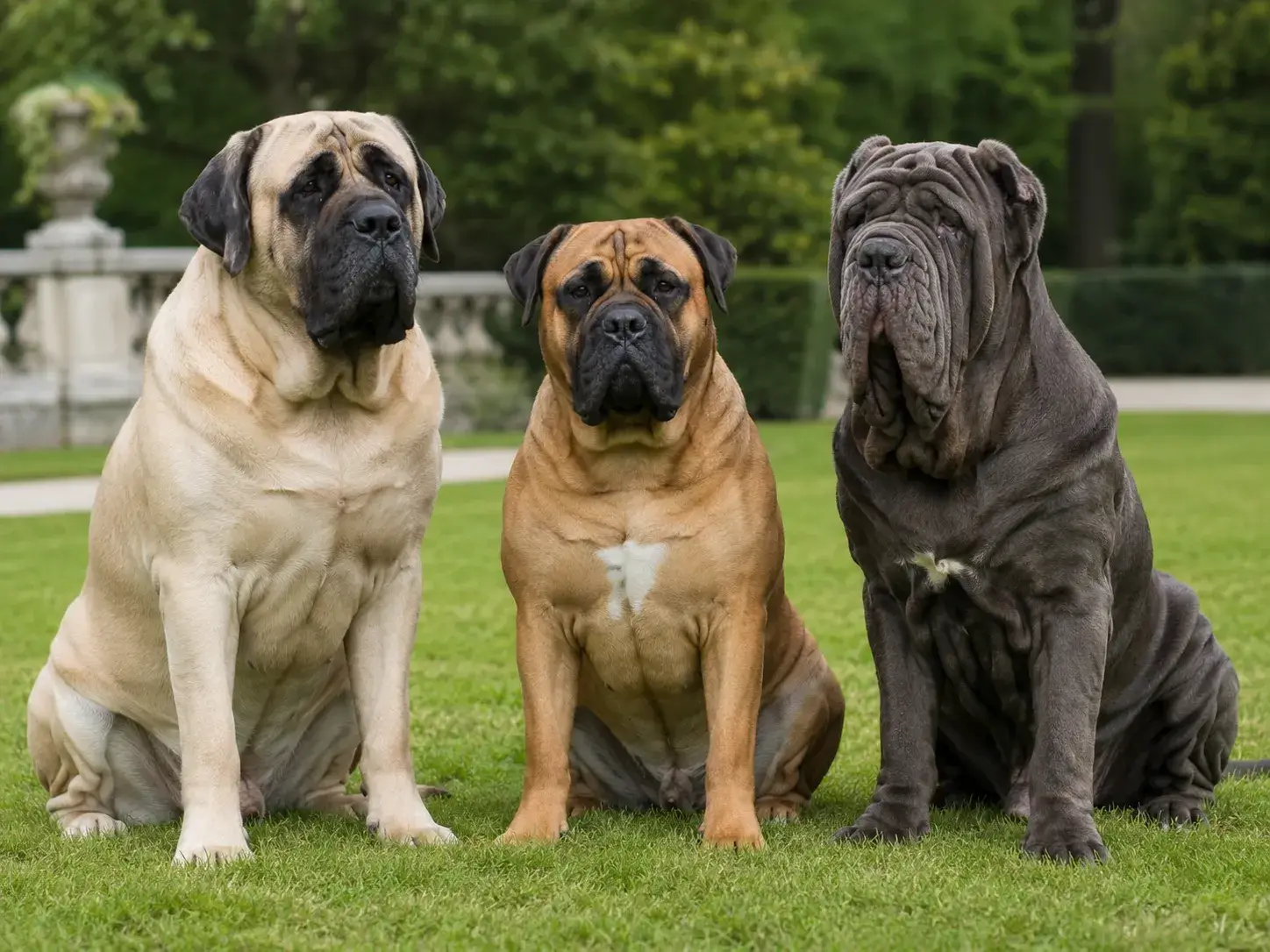
The word Mastiff can refer to the English Mastiff, but it is also used informally for a wider family of large guardian-type dogs. That is why people searching for Mastiff information may also be thinking about Bullmastiffs, Tibetan Mastiffs, Neapolitan Mastiffs, Dogues de Bordeaux, Spanish Mastiffs, Cane Corsos or Fila Brasileiros.
These dogs should not be grouped together carelessly. Some are more independent, some are more intense, some are more territorial, some have very different grooming needs and some may raise legal or insurance concerns depending on where they live and how they are identified. For a pet owner, the exact breed matters.
| Breed or term | What it usually means | Why it matters |
|---|---|---|
| Mastiff / English Mastiff | The main breed covered in this guide: a giant, calm, heavy English breed. | Needs space, training, drool management, weight control and serious health awareness. |
| Bullmastiff | A powerful but more compact breed with Mastiff and Bulldog ancestry. | Not the same as an English Mastiff; energy, size and handling can differ. |
| Tibetan Mastiff | A more independent, heavily coated, territorial guardian breed. | Usually a very different ownership challenge from an English Mastiff. |
| Neapolitan Mastiff | A heavy, loose-skinned Italian mastiff breed. | Skin, health, drool and guarding behaviour need separate consideration. |
| Fila Brasileiro | A Brazilian mastiff-type breed. | It appears on the UK banned dog list, so it must not be confused with the English Mastiff. |
Mastiff general characteristics

The Mastiff is a giant, heavy-boned dog with a broad head, deep chest, powerful body and steady expression. It should look strong and substantial, but not unhealthy, breathless or unable to move properly. In this breed, size is valuable only when it comes with soundness, balance and quality.
The typical Mastiff is calm, courageous, affectionate with its family and naturally watchful. Many adult Mastiffs are relatively low-key indoors. They are not usually high-energy dogs that need constant running, but they still need regular exercise, mental engagement and daily handling.
The breed’s greatest practical issue is power. A friendly Mastiff can still cause problems if it is not trained. Pulling on the lead, jumping at visitors, barging through doors, leaning into children or reacting strongly at the front gate can become unsafe simply because the dog is so large.
A good Mastiff owner does not rely on the dog being naturally calm. They build calm behaviour with early socialisation, sensible routines, weight control, gentle but clear training and a home that is physically suitable for a giant dog.
Where does the Mastiff come from?
The English Mastiff is strongly associated with Britain and has a long history as a large guarding and companion breed. Its ancestors were powerful dogs valued for their size, courage and protective presence. Over time, the modern Mastiff became known less as a fighting or warlike dog and more as a dignified, affectionate and steady giant.
That history still matters. The Mastiff can be naturally protective and may be reserved with strangers, but it should not be encouraged to become aggressive. Its size already makes it imposing. The goal should be a confident, calm and manageable dog, not one that reacts sharply or unpredictably.
A Mastiff’s background explains why the breed needs a responsible owner. It is not a decorative giant and it is not a dog to make “tough”. It is a powerful companion that should be raised with balance, structure and respect for its physical scale.
Mastiff physical features
The Mastiff has a very large head, broad skull, short broad muzzle, strong neck, deep chest, wide body and heavy bone. It should look powerful, well-knit and impressive. But it should not be so exaggerated that it struggles to breathe, walk, rise or live comfortably.
A healthy Mastiff should be able to move steadily, get up without major difficulty and maintain enough fitness for normal daily life. Extreme heaviness, poor movement, excessive facial heaviness or obvious discomfort should never be treated as desirable just because the breed is meant to be large.
The coat is short and close, which makes grooming simpler than with long-coated breeds. But the dog still needs regular skin checks, facial wrinkle cleaning, ear care, nail trimming, dental attention, bedding hygiene and weight monitoring. With a giant dog, small care gaps can become big problems.
How tall is a Mastiff?

The Mastiff is a very tall and substantial dog. Males are usually larger and heavier than females, but both are giant dogs. When judging a Mastiff, height alone is not enough. The body should be broad, deep, strong and balanced, with movement that remains steady and comfortable.
Many people are drawn to the largest possible Mastiff, but extreme size should never be the main goal. A Mastiff that is very tall but weak in movement, overweight, breathless or joint-stressed is not better than a slightly smaller, sounder dog. Health and structure matter more than impressing people with size.
| Sex | General size impression | What matters most |
|---|---|---|
| Male Mastiff | Usually very large, broad and powerful | Sound joints, balanced body, strong muscle and steady movement |
| Female Mastiff | Often slightly more refined but still a giant breed | Healthy weight, good mobility and correct proportions |
How much does a Mastiff weigh?

The Mastiff is one of the heaviest dog breeds. Adult Mastiffs can be much heavier than ordinary family dogs, and that weight affects every part of daily life: food, transport, vet care, exercise, bedding, flooring and lead control.
However, a heavy Mastiff should not be an overweight Mastiff. Excess weight is one of the most damaging problems in the breed. It adds pressure to the hips, elbows, knees, spine, heart and breathing. It can make getting up, lying down, walking, climbing into a car and recovering after exercise more difficult.
How to recognise healthy Mastiff condition
- The ribs should be felt with gentle pressure, not buried under fat.
- The waist should not disappear completely.
- The dog should rise and lie down without major struggle.
- Movement should look steady, not laboured or stiff.
- The dog should not become severely breathless after mild activity.
- A puppy should not be pushed to grow fat quickly.
- Treats should be counted as part of the daily food intake.
Mastiff colours
Mastiffs are most commonly seen in shades such as fawn, apricot and brindle, often with a dark mask on the face. The black mask is one of the classic features that gives the breed its serious, noble expression. The short coat makes the colour and mask stand out clearly.
Colour may influence personal preference, but it should never be the main reason for choosing a Mastiff. Health, temperament, movement, puppy upbringing, the parents’ character, veterinary checks and socialisation are far more important than coat shade.
Does colour affect temperament?
No. A fawn Mastiff is not automatically calmer, a brindle Mastiff is not automatically more protective and an apricot Mastiff is not automatically healthier. Every Mastiff should be assessed as an individual, especially in a giant breed where structure and temperament matter so much.
Mastiff temperament
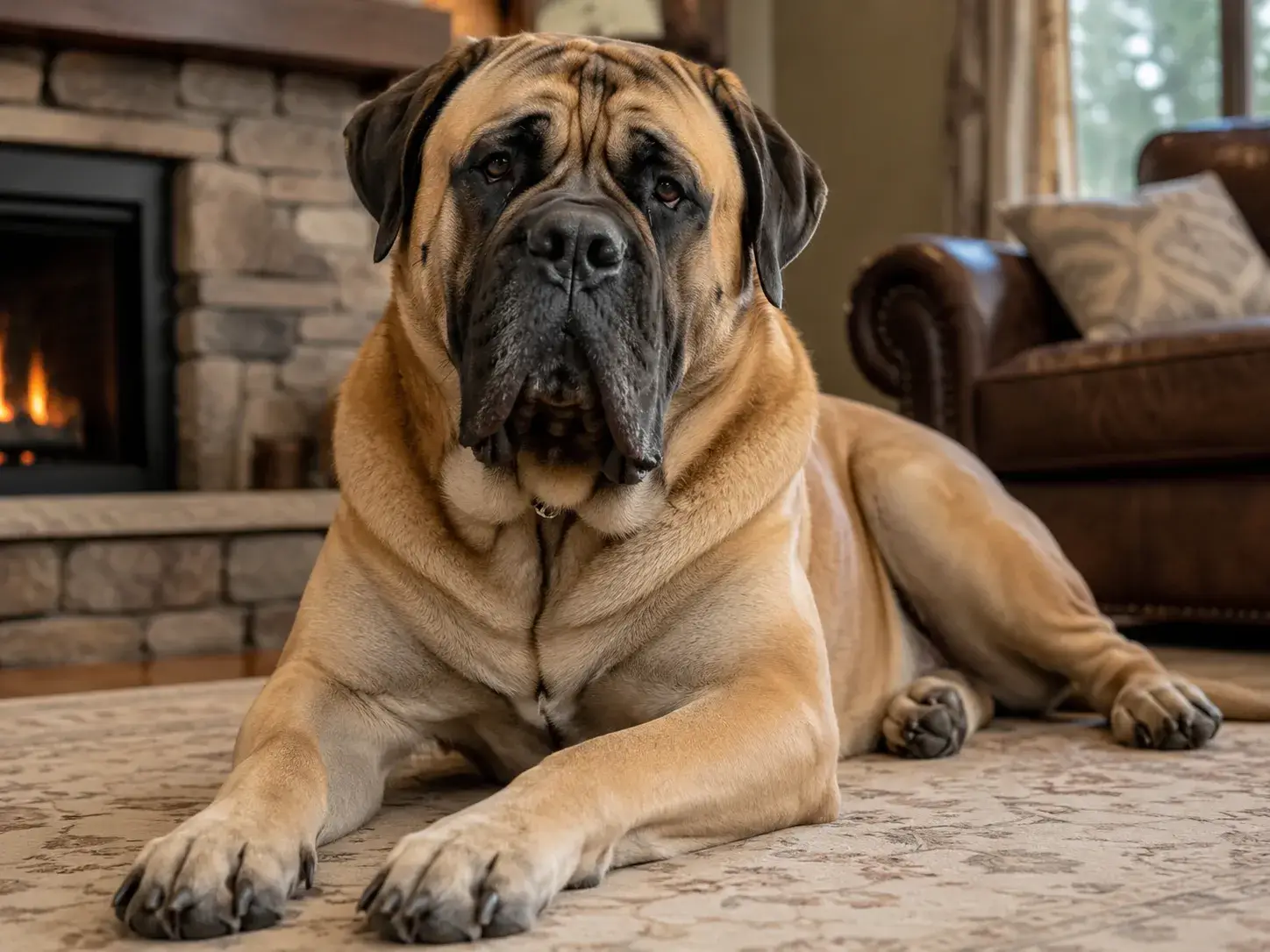
The Mastiff temperament is usually calm, loyal, affectionate and watchful. A well-raised Mastiff can be gentle indoors, devoted to its family and surprisingly soft in its emotional nature. It is often happy to rest near its people rather than constantly demand high-energy activity.
The ideal Mastiff should be confident without being sharp, protective without being unstable and affectionate without being uncontrollable. Timidity, nervousness, poor socialisation and harsh handling can all create problems. This is a giant dog, so emotional stability matters.
Mastiffs may be naturally reserved with strangers. That does not mean they should be suspicious of everything. They need controlled exposure to normal life: visitors, traffic, delivery drivers, children, other dogs, vets, grooming, car travel and household routines. A Mastiff that has not seen enough of the world may become too wary or too difficult to manage.
Are Mastiffs calm?
Many adult Mastiffs are calm at home, but calmness should be taught and supported. A puppy still needs training, boundaries, rest routines and socialisation. Without structure, even a naturally calm breed can develop poor habits.
Are Mastiffs loyal?
Yes, Mastiffs are usually very loyal to their families. They often like being close to their people and may develop a strong bond. That bond is one of the breed’s great strengths, but it should be balanced with independence and calm alone-time training.
Are Mastiffs aggressive?
A properly raised English Mastiff should not be randomly aggressive. The breed is usually calm and affectionate with its family, with a natural ability to guard. The problem comes when size, fear, poor socialisation, isolation, bad breeding or harsh training are allowed to shape the dog’s behaviour.
A Mastiff does not need to mean harm to cause harm. A dog this large can be dangerous if it pulls, lunges, jumps, barges through doors or reacts strongly to strangers. The risk is not only aggression; it is uncontrolled power.
How to reduce behavioural risk
- Start socialisation early and keep it controlled.
- Expose the dog to normal people, places, sounds and handling.
- Teach calm greetings before the puppy becomes huge.
- Use reward-based training and avoid fear-based methods.
- Manage visitors, doorways and public spaces carefully.
- Get professional help early if the dog shows fear, guarding or reactivity.
Is a Mastiff a good guard dog?
The Mastiff has a long association with guarding. Its size, deep voice, broad head and serious expression can be enough to make strangers think twice. Many Mastiffs are naturally watchful around their home and family.
But turning a Mastiff into an aggressive guard dog is a mistake. The best Mastiff is not the one that reacts to everything. It is the dog that notices what is happening, stays steady, listens to its owner and remains manageable around visitors, neighbours and public spaces.
What good guarding should look like
- The dog notices visitors without panicking.
- It can be called away or settled by the owner.
- It does not rush doors uncontrollably.
- It accepts invited guests after proper introduction.
- It is steady, not nervous or reactive.
- It can be safely managed on a lead in public.
Can a Mastiff live in a flat?

A Mastiff can technically live in a flat in some situations, but for most owners it is not ideal. The issue is not only energy level. Many adult Mastiffs are calm indoors, but they are still enormous. They need room to turn, lie down, get up, move safely and rest without being squeezed into narrow spaces.
Flat living also raises practical problems: lifts, stairs, slippery floors, neighbours, drool, short hair, large bedding, food storage, transport and emergency vet access. If a Mastiff injures a leg or becomes too ill to move, you cannot simply pick it up like a small dog.
When flat living might work
- The flat is genuinely spacious and not cluttered.
- There is a large lift or very limited stair use.
- The flooring is not slippery, or it can be made safer.
- The dog has a large, comfortable bed and resting area.
- Daily walks are realistic and consistent.
- The owner can manage drool, hair and cleaning.
- The landlord, building rules and neighbours are considered.
- The dog is not left alone for long hours every day.
Are Mastiffs good with children?

Mastiffs can be good with children when properly bred, socialised and trained. Many are calm, patient and affectionate with their family. But the main risk is often size rather than bad intention. A Mastiff can knock over a child by leaning, turning, wagging its tail or trying to greet them.
Children and Mastiffs should always be supervised. Children must learn not to climb on the dog, pull skin, ears or lips, disturb it while eating or wake it when it is sleeping. The Mastiff must learn calm greetings, no jumping, no barging and slow movement around smaller people.
Family rules for Mastiffs and children
- Never leave a young child alone with a Mastiff.
- Teach children to respect the dog’s bed and resting space.
- Do not allow rough climbing, pulling or wrestling.
- Train calm greetings from puppyhood.
- Do not let children interfere with food bowls or chews.
- Give the dog a quiet place to retreat.
Can Mastiffs be left alone, and do they bark a lot?
Mastiffs bond strongly with their family and should not be treated as dogs that can simply be left alone all day. Long isolation, boredom, lack of exercise and poor alone-time training can lead to stress, barking, destructive behaviour, pacing, chewing and extra drooling.
Mastiffs are not usually known as constant barkers, but when they bark, the sound is deep and powerful. Doorbells, visitors, garden boundaries, strange noises, loneliness or lack of stimulation can trigger barking. In a flat or close neighbourhood, even occasional barking may be noticeable.
How to build alone-time confidence
- Start with very short absences.
- Increase duration gradually.
- Keep departures and returns calm.
- Provide a safe, large and comfortable resting area.
- Meet toilet and walking needs before longer absences.
- Do not choose this breed if the dog will be alone all day.
- Address barking by finding the cause, not just punishing the sound.
Do Mastiffs drool?

Yes, Mastiffs drool. This is one of the realities of living with the breed. The broad muzzle, heavy lips, facial folds, drinking water, eating, warm weather, excitement and stress can all make drool more noticeable.
Drool affects everyday life. You may find wet patches around the water bowl, marks on walls, strings of saliva on clothes, damp bedding or drool on car seats. For some owners this is part of the charm. For others, it becomes a major problem. Be honest about your tolerance before choosing the breed.
When is drooling a warning sign?
- Drooling suddenly becomes much heavier than usual.
- The dog is retching but cannot vomit.
- The abdomen looks swollen or tight.
- The dog is restless, weak or unable to settle.
- There is a strong bad smell from the mouth.
- You suspect dental pain, injury or something stuck in the mouth.
Do Mastiffs shed?

Yes, Mastiffs shed. Their coat is short, so they do not usually leave long clumps of hair like some breeds, but short hairs can still stick to clothes, sofas, carpets, blankets and car upholstery. Shedding may increase seasonally.
The coat is generally low maintenance. A weekly brush is often enough for many Mastiffs, with more frequent brushing during heavier shedding periods. Brushing also gives you a chance to check the skin, facial folds, sore spots, lumps, scratches and areas of hair loss.
Basic Mastiff coat care
- Use a brush or grooming mitt suited to short coats.
- Brush more often during seasonal shedding.
- Check the skin for redness, dandruff, sores or bald patches.
- Avoid over-bathing, which can dry the skin.
- Clean bedding, blankets, collars and car spaces regularly.
Do Mastiffs smell?

A healthy, well-cared-for Mastiff should not smell bad all the time. However, their size, drool, facial folds, mouth, ears, skin, bedding and diet can all affect odour. Because the dog is large, small hygiene issues can become noticeable quickly.
Bathing the dog is not always the answer. Bad breath may come from dental disease. Ear smell may come from infection. Skin smell may come from irritation or moisture. Household smell may come from drool-soaked bedding, dirty collars or unclean feeding areas.
Common causes of smell in Mastiffs
- Dental disease, tartar or gum problems
- Dirty or infected ears
- Skin irritation, allergies or moisture
- Drool build-up around the mouth, neck or bedding
- Dirty beds, blankets, collars or harnesses
- Unsuitable food or digestive upset
Mastiff training
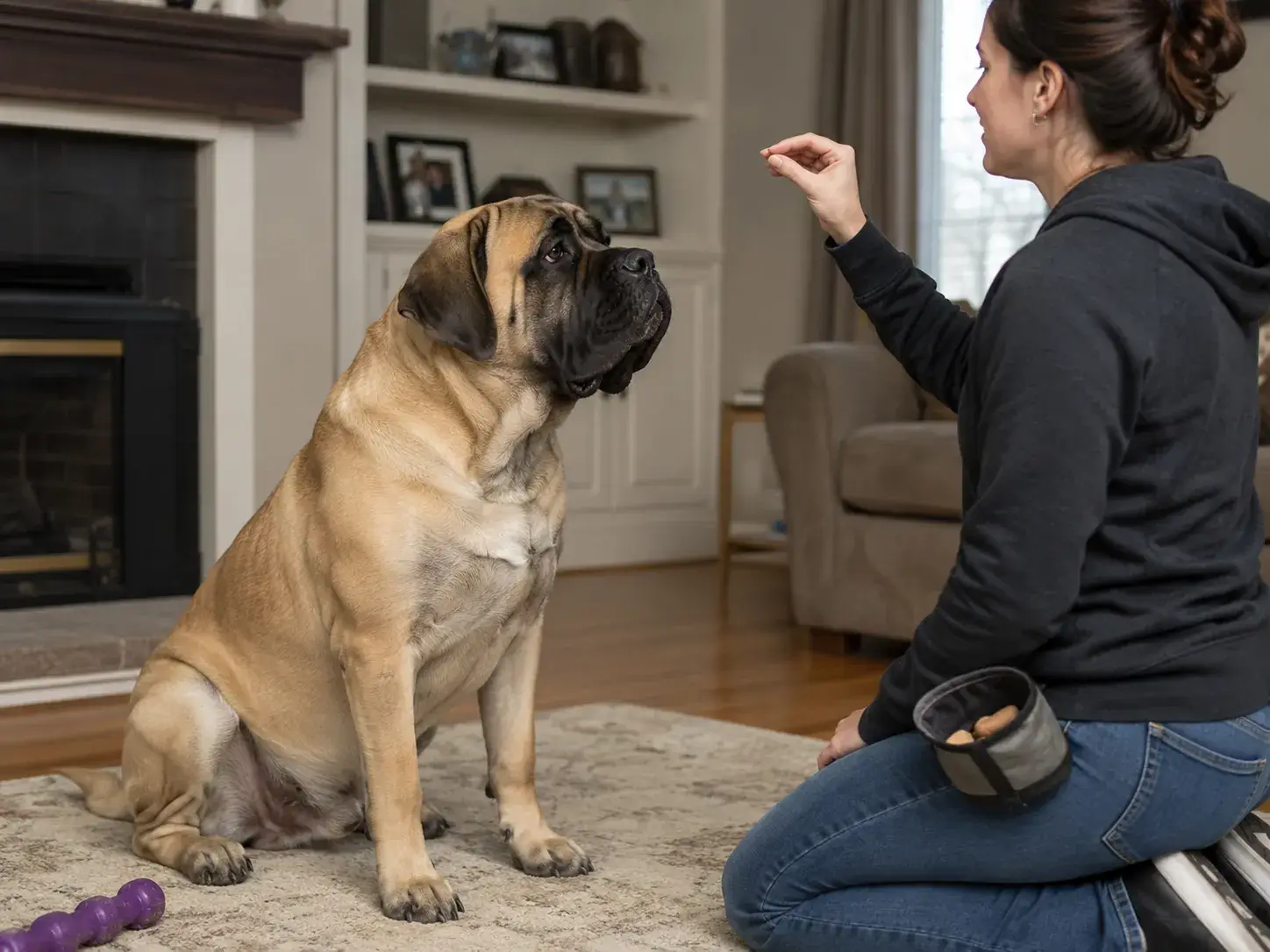
Mastiff training should start early. A Mastiff puppy may look clumsy and sweet, but it will become very large very quickly. Jumping up, pulling, barging through doors, leaning on people and ignoring boundaries must be handled while the dog is still manageable.
Mastiffs can learn well, but they may not behave like fast, high-drive training breeds. They can be steady, thoughtful and sometimes stubborn. Calm consistency works better than shouting or physical pressure. Harsh handling can create fear, resistance or mistrust in a giant dog that needs to feel secure.
Essential Mastiff training priorities
- Loose lead walking
- Calm greetings without jumping
- Waiting at doors, gates and lifts
- Settling on a bed or mat
- Responding to name and owner focus
- Food manners around tables and worktops
- Controlled behaviour when visitors arrive
- Slow, careful movement around children
- Comfort with vet checks, paw handling and mouth checks
Mastiff exercise needs
Mastiffs are not usually high-energy dogs, but they still need regular exercise. Calm daily walks, controlled garden time, short training sessions and gentle mental enrichment help prevent weight gain, boredom and frustration.
Puppy exercise must be handled carefully. Growing Mastiffs should not be pushed into long runs, frequent stairs, repeated jumping or rough high-impact play. Their bones and joints are developing, and too much too soon can cause lasting harm.
Good activities for a Mastiff
- Calm walks split across the day
- Controlled movement in a secure garden
- Short obedience sessions
- Scent games and food-search activities
- Slow socialisation walks
- Quiet rest after meals
Activities to avoid or manage carefully
- Long forced runs during puppyhood
- Frequent stair use in growing dogs
- Fast play on slippery floors
- Jumping from sofas, beds or cars
- Hard exercise immediately before or after meals
- Long walks in hot weather
Feeding a Mastiff
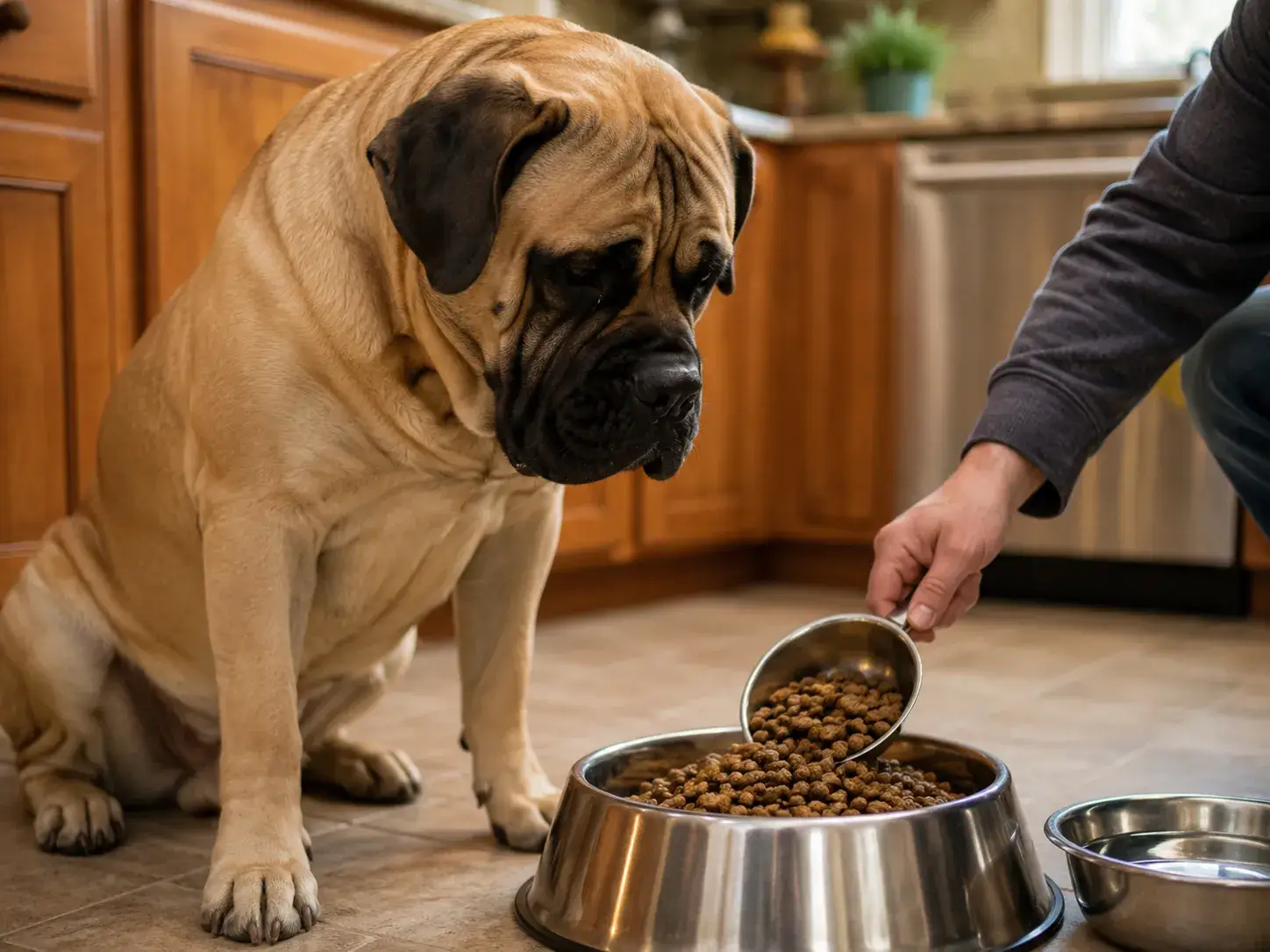
Feeding a Mastiff is one of the most important parts of ownership. This is a giant breed, and poor feeding choices can affect growth, joints, weight, digestion and bloat risk. The aim is not to make a puppy grow as fast as possible. The aim is controlled, healthy development.
A Mastiff puppy needs carefully managed nutrition for giant-breed growth. Too many calories, rapid weight gain and unsuitable supplements can put pressure on developing bones and joints. An adult Mastiff needs a complete diet that maintains muscle without allowing obesity.
| Life stage | Feeding focus | What to watch |
|---|---|---|
| Mastiff puppy | Controlled growth, bone and joint development | Use veterinary guidance and avoid rapid weight gain |
| Young Mastiff | Muscle development, steady weight and joint protection | Do not overfeed or overuse treats |
| Adult Mastiff | Lean condition, digestion, energy and stomach health | Measure portions and monitor body condition |
| Senior Mastiff | Joint comfort, heart health, digestion and weight control | Review diet as health and mobility change |
Practical feeding rules
- Measure food rather than guessing.
- Split food into more than one meal per day.
- Avoid hard exercise immediately before and after meals.
- Do not push a puppy to grow quickly.
- Count treats as part of daily calories.
- Keep the dog lean, not bulky and overweight.
- Keep fresh water available at all times.
Mastiff puppy care

A Mastiff puppy grows into a giant dog, so puppy care must be taken seriously. Large paws, a huge head and fast weight gain can look adorable, but this stage is exactly when mistakes can create long-term problems. Overfeeding, slippery floors, repeated jumping and too much exercise can all affect developing joints.
Puppyhood is also the best time to build manners. A Mastiff should learn lead walking, calm greetings, alone-time confidence, waiting, settling on a bed and not jumping on people while it is still young. Once the dog is fully grown, changing these habits becomes much harder.
Mastiff puppy priorities
- Follow a vaccination and parasite plan with a vet.
- Use a diet suitable for giant-breed puppy growth.
- Avoid rapid weight gain and unnecessary supplements.
- Limit stairs, jumping and slippery-floor play.
- Use short, controlled walks rather than long forced exercise.
- Introduce people, sounds, places and normal life calmly.
- Start basic training and lead manners early.
- Get the puppy used to paw, mouth, ear and body checks.
- Build alone-time gradually.
Mastiff bloat risk
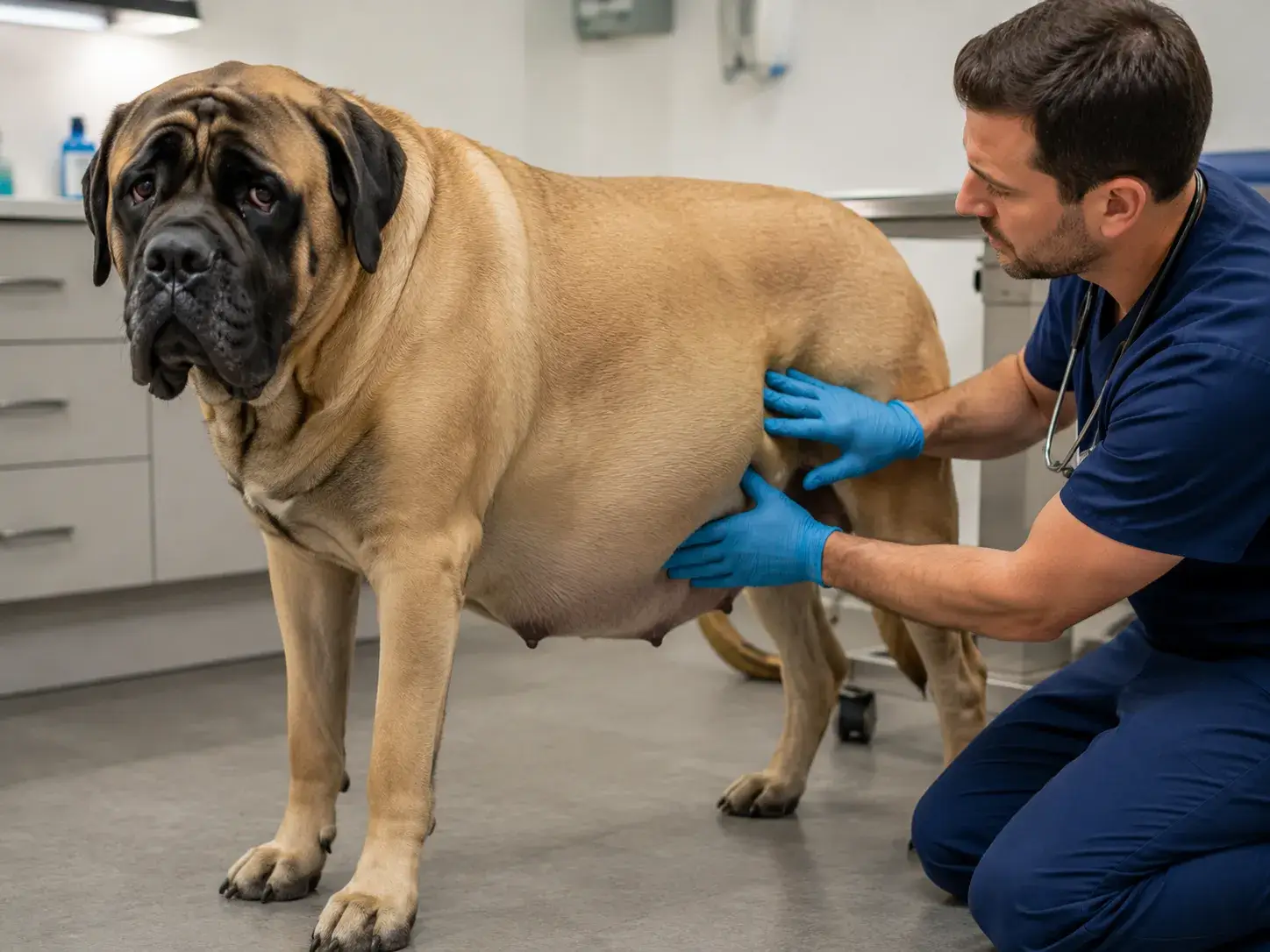
Bloat, also called gastric dilatation-volvulus or GDV, is a serious risk in large, deep-chested breeds such as Mastiffs. The stomach can fill with gas, fluid or food and then twist. This can become life-threatening quickly and needs urgent veterinary attention.
Mastiff owners should know the warning signs before they ever need them. This is not something to watch at home for hours. Retching without bringing anything up, a swollen abdomen, restlessness, heavy drooling or sudden weakness after eating should be treated as an emergency.
Possible bloat warning signs
- Retching or trying to vomit without producing anything
- Swollen, tight or painful abdomen
- Restlessness, pacing or inability to settle
- Heavy drooling
- Weakness or collapse
- Sudden distress after eating
- Fast breathing or panic
Daily habits that may reduce risk
- Split daily food into more than one meal.
- Avoid hard exercise before and after meals.
- Use a slow feeder if the dog eats too quickly.
- Avoid sudden major changes in food or portion size.
- Let the dog rest calmly after eating.
- Know where the nearest emergency vet is.
Mastiff health concerns
Mastiffs are wonderful dogs, but they have serious health considerations. Their giant body puts extra strain on joints, heart, breathing, digestion and mobility. Responsible ownership means weight control, sensible exercise, routine vet care, good breeding choices and early attention to any change in movement or behaviour.
Health issues to be aware of
- Excess weight: puts pressure on joints, heart, spine and general mobility.
- Hip and elbow problems: rapid growth, poor structure and obesity can increase strain.
- Bloat and GDV: a major emergency risk in large, deep-chested breeds.
- Heart disease: giant breeds need attention to exercise tolerance and breathing changes.
- Eye and eyelid issues: facial skin and eyelid shape can cause discomfort in some dogs.
- Facial folds and skin: wrinkles and drool areas need cleaning and monitoring.
- Heat sensitivity: heavy dogs can struggle in warm weather and should not be overexercised in heat.
- Nail and paw care: long nails can affect movement in such a heavy dog.
Home health checklist
- Is the dog limping or moving differently?
- Is it struggling to rise or lie down?
- Is the abdomen swollen, tight or painful?
- Has drooling suddenly increased?
- Has bad breath become stronger?
- Has weight changed quickly?
- Are nails affecting the way the dog walks?
- Is the dog struggling more than usual in warm weather?
Mastiff lifespan

Mastiffs often have a shorter lifespan than many small and medium-sized breeds. This is one of the realities of giant dogs. They may look incredibly strong, but their size places more long-term pressure on the body.
Quality of life depends on genetics, responsible breeding, puppy growth, weight control, joint health, heart health, diet, suitable exercise, bloat awareness and routine veterinary care. Choosing a Mastiff means planning for puppyhood, adulthood and senior care from the beginning.
How to support a healthier life
- Prevent excess weight.
- Manage puppy growth carefully.
- Use joint-friendly exercise.
- Avoid overheating in warm weather.
- Know the signs of bloat.
- Keep up with vet checks.
- Adjust food and activity as the dog ages.
Are Mastiffs banned in the UK?

The English Mastiff is not one of the named banned dog types in the UK. However, this topic needs careful wording because the word mastiff can be confused with other mastiff-type dogs. Fila Brasileiro, for example, is a banned type in the UK, and it is sometimes described as a Brazilian mastiff.
UK rules also focus on dog type and appearance rather than only the name someone gives a dog. This means owners should not rely on casual labels. If a dog is a large mastiff-type cross or has unclear background, it is worth being careful, especially with insurance, public control and legal responsibility.
What UK owners should check
- Confirm the exact breed and background of the dog.
- Do not confuse English Mastiff with banned mastiff-type dogs such as Fila Brasileiro.
- Check tenancy, landlord, building and insurance rules.
- Use proper lead control in public.
- Understand that any dog can cause legal problems if dangerously out of control.
- Consider how strangers, children and other dogs may react to a giant dog.
Mastiff costs in the UK

The cost of getting a Mastiff is only the beginning. The real cost is long-term ownership. Food, insurance, vet care, parasite prevention, large bedding, strong equipment, car space, training support and emergency treatment can all be expensive with a giant breed.
A Mastiff eats far more than a small dog. Equipment must be larger and stronger. Some medications and treatments may cost more because they are weight-based. Emergency vet care can be more expensive. Transport is harder. Before choosing a Mastiff, the lifetime budget must be taken seriously.
Costs to plan for
- High food intake
- Good-quality nutrition for a giant breed
- Large beds, bowls and home equipment
- Strong leads, collars or harnesses
- Routine veterinary care
- Insurance or emergency savings
- Possible joint, heart, eye or bloat-related treatment
- Puppy growth monitoring
- Professional training support if needed
Who is a Mastiff suitable for?
A Mastiff is suitable for people who understand giant dogs and can offer space, budget, time, calm handling and responsible training. This is not a breed for people who want an impressive-looking dog but do not want to manage drool, size, health costs and lead control.
May be suitable for
- Owners with a large home or suitable outdoor access.
- People who can physically manage a giant dog.
- Families ready to supervise children around the dog.
- Owners who can afford high food and vet costs.
- People who can start training early.
- Homes where the dog will not be alone all day.
- Owners who accept drool, short-hair shedding and large dog cleaning.
May not be suitable for
- Small flats or homes with narrow spaces and many stairs.
- Owners who are away from home for long hours every day.
- People who cannot control a strong dog on a lead.
- Homes without budget for giant-breed food and veterinary care.
- People who cannot tolerate drool or regular cleaning.
- Anyone choosing the breed only for its intimidating appearance.
- Owners who will ignore puppy growth, bloat risk or joint care.
Is a Mastiff good for first-time owners?
A Mastiff is not the easiest first dog. A very prepared first-time owner with space, budget, professional support and a calm training plan may succeed, but this is not a casual beginner breed. Its size alone makes ordinary mistakes much more serious.
Before getting a Mastiff
Before getting a Mastiff, look beyond the impressive photos and puppy cuteness. This breed takes up space physically, financially and emotionally. The bed is large, the food bowl is large, the drool is real, the vet bills can be high, the car needs space and the owner must be ready to train and manage a giant dog.
Questions to ask yourself
- Do I have enough space for a Mastiff to move and rest comfortably?
- Are stairs, lifts and flooring suitable for a giant dog?
- Can I afford food, insurance, vet care and emergencies?
- Can I train the dog before it becomes too large to manage easily?
- Can I physically control a Mastiff on a lead?
- Can I tolerate drool, short hair, smell management and regular cleaning?
- Do I know the warning signs of bloat?
- Will the dog be left alone for long hours?
- Am I choosing this breed because it fits my life, or only because it looks impressive?
Common Mastiff ownership mistakes
- Choosing for size alone: a giant dog is impressive, but the responsibility is just as large.
- Confusing mastiff breeds: an English Mastiff is not the same as every mastiff-type dog.
- Assuming flat life is easy: calm does not mean suitable for a cramped home.
- Overfeeding the puppy: rapid growth and excess weight can harm joints.
- Delaying training: puppy habits can become giant-dog problems very quickly.
- Ignoring bloat risk: every Mastiff owner should know the emergency signs.
- Underestimating cost: food, vet care, equipment and transport cost far more than with smaller breeds.
- Ignoring drool and cleaning: Mastiffs physically affect the home environment every day.
Final thoughts
The Mastiff, or English Mastiff, is a powerful, calm and deeply loyal giant breed. In the right home, it can be a gentle family companion, a steady presence and a naturally impressive protector. But it is not a low-effort dog.
If you have the space, budget, time, training discipline and health awareness, a Mastiff can be a remarkable companion. If you live in a cramped home, work long hours away, cannot tolerate drool, cannot control a giant dog or simply want a dog that looks intimidating, this is the wrong breed. A Mastiff is at its best when its owner is prepared for the giant responsibility behind the gentle character.