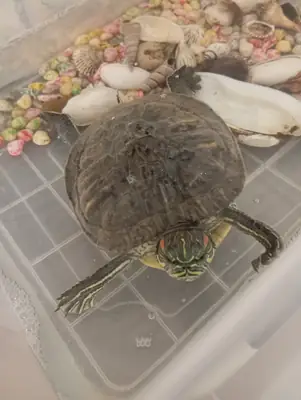
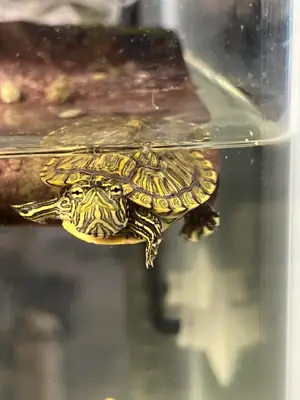
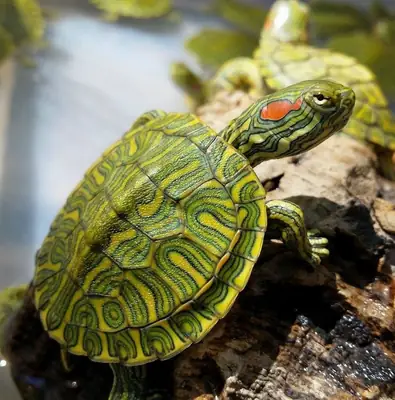
Red Eared Slider

Red-Eared Slider: habitat, husbandry and nutrition playbook

Red-Eared Slider: habitat, husbandry and nutrition playbook

The red-eared slider (Trachemys scripta elegans) is an iconic semi-aquatic turtle that combines charismatic looks with demanding care. Their 30+ year lifespan requires future-proof planning, modern filtration and disciplined nutrition. Here’s how to create a 2026-ready habitat.

1. Species snapshot

  • Scientific name: Trachemys scripta elegans
  • Adult size: females 10-12 in (25-30 cm), males 8-10 in (20-25 cm)
  • Lifespan: 25-40 years (50+ possible under expert care)
  • Behavior: Semi-aquatic basker; enjoys wandering and diving
  • Legal note: Many regions regulate sales/release; always verify local laws

2. Habitat engineering

2.1 Tank dimensions

  • Juvenile: 40+ gallon breeder (150 L)
  • Adult female: 90-125 gallon (340-475 L) minimum
  • Ideal footprint: 48-72 in length, 20-24 in width, water depth 18+ in

2.2 Land & décor

  • Basking platforms: cork bark, magnetic docks, slate ledges
  • Substrate: bare bottom or river rocks > 3 cm to prevent ingestion
  • Live plants (optional): anubias, hornwort, water lettuce reachable for grazing

3. Heating & UVB matrix

  • Water temps: juveniles 76-78 °F; adults 75-77 °F
  • Basking pad: 88-92 °F with halogen flood or ceramic emitter
  • UVB: T5 HO UVB 10-12% tube, 12 hr/day; replace every 6-8 months
  • Photoperiod: mimic natural daylight; 12 hr light / 12 hr dark

Pro tip: Use UV index meters (Solarmeter 6.5) to ensure UVI 3.0-4.0 at basking height.

4. Filtration & water quality

  • High-capacity canister filter rated 4-6x the tank volume per hour
  • Pre-filter sponges ease cleaning; keep biomedia submerged & thriving
  • Surface skimmers eliminate oily film from pellet feeds
  • Weekly 25-30% water change; monthly deep clean of décor & pumps
  • Use dechlorinator with heavy metal detox; monitor ammonia/nitrite (target 0 ppm)

5. Nutrition timeline

Life stage Protein Greens & veggies Supplements
Hatchling (0-12 mo) 60% (pellets, shrimp, insects) 30% 10% (calcium + D3, cuttlebone)
Juvenile (12-36 mo) 45% 45% 10%
Adult (36 mo+) 30% protein offered 2-3x/week 60% dark leafy greens, aquatic plants 10% mineral supplements

Weekly cadence: 3 pellet days, 2 veggie days, 1 live/frozen protein day, 1 fasting day.

6. Health & biosecurity

  • Quarantine newcomers 30 days; monitor appetite, shell integrity, respiration
  • Common ailments: RI (respiratory infections), shell rot, metabolic bone disease
  • Maintain humidity control to prevent shell fungus; dry dock if advised by vet
  • Hygiene: wash hands, sanitize tools to reduce Salmonella risk
  • Annual exam with reptile vet, including fecal parasite screen

7. Enrichment & seasonal care

  • Rotate basking platforms, add driftwood structures for climbing
  • Offer safe outdoor sunlight sessions (protected ponds) during warmer months
  • Use feeding stations to monitor intake and avoid lingering organics

9. FAQ

Can sliders live together?

Only in very large systems; monitor for territorial biting. Provide separate basking spots.

How often to clean the tank?

Spot clean daily, partial water change weekly, deep clean monthly.

Is UVB optional?

No—UVB is essential for calcium metabolism and shell integrity.

Safe with kids?

Supervise interactions, enforce handwashing to mitigate Salmonella.

Do they hibernate?

Brumation occurs in the wild; captive sliders can remain active if kept warm year-round.

10. Closing thoughts

Red-eared sliders thrive when caretakers combine robust habitat design, disciplined feeding and proactive veterinary care. With smart sensors, UVB tracking and eco-friendly filtration, you can deliver a 2026-caliber lifestyle worthy of their longevity.
Latest listings in this category

Breed traits

Character & behavior

Energy level
Playfulness
Intelligence
Trainability
Protectiveness
Sociability
Can stay alone

Lifestyle fit

Apartment-friendly Yes
Good with kids Yes
Good for first-time owners Yes
Shedding
Noise level
Exercise needs

Physical & general

Life span 20–40 years
Weight 1–2 kg
Height 15–25 cm
Origin United States
Grooming effort
Nutrition sensitivity
Health risk
Heat tolerance
Cold tolerance
Red Eared Slider

View adoption listings for this breed

Explore the latest adoption listings for this breed on Petopic.

View Listings
Share this guide
f 𝕏 in W

Questions asked by users about this breed

What should I do if my red eared slider is not basking at all?

Asked by: Akim F.

A lack of basking can indicate an issue with the temperature or lighting. Check that the basking spot is warm enough and that the UVB light is functioning properly.

— petopic Breed Expert

How can I help my red eared slider adjust to a new environment?

Asked by: Mevlüt Ş.

To help your turtle adjust, maintain a stable environment and keep things calm. Allow them time to explore their new space without too much disturbance.

— petopic Breed Expert

Is it okay to feed my red eared slider live food?

Asked by: Aikaterini D.

Feeding live food can be beneficial as a treat, but it shouldn't be the primary diet. Ensure the live food is appropriate and sourced from safe environments.

— petopic Breed Expert

My red eared slider seems to enjoy being petted. Is this okay?

Asked by: Döne K.

While some turtles may tolerate gentle handling, it's essential to be cautious, as too much handling can stress them out. Always observe their reactions.

— petopic Breed Expert

What type of plants can I keep with my red eared slider?

Asked by: kim G.

You can include hardy aquatic plants like anubias and hornwort, which can provide hiding spots and grazing opportunities. Just make sure they are turtle-safe.

— petopic Breed Expert

I heard that red eared sliders need calcium. How do I provide that?

Asked by: Cyril M.

Calcium can be provided through supplements, cuttlebone, or by incorporating calcium-rich foods into their diet. It's crucial for their shell health.

— petopic Breed Expert

How can I tell if my red eared slider is healthy?

Asked by: Brendan C.

A healthy turtle is active, has clear eyes, and a smooth, well-hydrated shell. Regular checks on their eating habits and behavior can also help you gauge their health.

— petopic Breed Expert

Our red eared slider has been shedding skin a lot. Is this normal?

Asked by: micheal t.

Shedding can occur, especially during growth phases, but if it seems excessive or is accompanied by other symptoms, it may be best to consult a vet.

— petopic Breed Expert

Is it safe to take my red eared slider out for short trips?

Asked by: Alistair W.

Yes, but it's important to ensure they are in a secure, suitable container and that the temperature remains stable. Avoid exposing them to direct sunlight for too long.

— petopic Breed Expert

What should I do if my red eared slider is acting unusually aggressive?

Asked by: Nalan B.

Aggressive behavior can be a sign of stress or territoriality. Assess their environment and make sure they have enough space and hiding spots to feel secure.

— petopic Breed Expert

We've noticed our red eared slider's shell is looking a bit dull. What should we do?

Asked by: Kenan B.

A dull shell might indicate a lack of proper UVB exposure or nutritional deficiencies. Ensure they have adequate lighting and consider supplementing their diet.

— petopic Breed Expert

My cousin has a red eared slider that loves to eat only pellets. Is that okay?

Asked by: İbrahim T.

While pellets can be a staple, it's important to provide a variety of foods, including greens and occasional protein, to ensure a balanced diet.

— petopic Breed Expert

My red eared slider seems to float a lot. Is there something wrong?

Asked by: Kübra K.

Floating can indicate that your turtle is experiencing buoyancy issues, often linked to diet or health problems. It's recommended to consult a vet for a proper diagnosis.

— petopic Breed Expert

Can I keep my red eared slider with other fish in the same tank?

Asked by: Roe P.

While some people do keep them together, it's important to choose fish that are not too small or delicate, as sliders may see them as food. Always monitor their interactions closely.

— petopic Breed Expert

How often should I clean my Red Eared Slider's tank?

Asked by: Betül B.

Regular maintenance is crucial. A good rule of thumb is to perform weekly water changes of 25-30% and a thorough cleaning of the tank and equipment monthly.

— petopic Breed Expert

Is it normal for my red eared slider to make a lot of noise while basking?

Asked by: Myra C.

It's not unusual for them to make some sounds, especially when they are stretching or adjusting their position. However, if the noise seems excessive, it may be worth investigating further.

— petopic Breed Expert

We've noticed our Red Eared Slider is not eating as much lately. What could be the issue?

Asked by: Roni U.

A decrease in appetite can be a sign of stress, illness, or improper water conditions. It might be helpful to check the water quality and consult a vet if the problem persists.

— petopic Breed Expert

My friend has a red eared slider, and he mentioned that it can live for decades. Is that true?

Asked by: Yaropolk Z.

Yes, Red Eared Sliders can live for 25 to 40 years, or even longer with proper care. It's essential to plan for their long-term needs, including habitat and dietary requirements.

— petopic Breed Expert

I just got a baby Red Eared Slider, and I'm unsure how to introduce it to its new home. Any tips?

Asked by: Selim A.

When introducing a new hatchling, it's best to keep the tank environment calm and quiet. Give them time to explore and feel secure in their new surroundings without too much disturbance.

— petopic Breed Expert

My Red Eared Slider has been basking a lot more than usual. Should I be worried?

Asked by: Zine N.

Excessive basking can indicate that your turtle is trying to regulate its temperature or may not be feeling well. Check the water temperature and ensure the basking area is properly heated.

— petopic Breed Expert

I'm thinking about getting a red eared slider for my kids. Is this a good idea?

Asked by: Mustafa U.

While Red Eared Sliders can be great pets, they do require a lot of care and attention. It's important to ensure your kids are old enough to help with tasks like feeding and tank maintenance.

— petopic Breed Expert

I have a Red Eared Slider that seems to be very shy and hides a lot. Is this normal behavior?

Asked by: Kerem U.

Actually, it's quite common for Red Eared Sliders to be shy, especially when they are adjusting to a new environment. Make sure their habitat is comfortable and secure, and provide plenty of hiding spots to help them feel safe.

— petopic Breed Expert