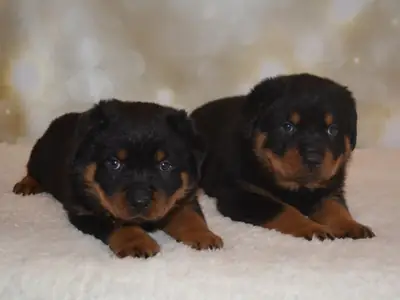
Rottweiler quick summary
The Rottweiler is a powerful, confident and highly recognisable working dog with a strong body, black and tan coat, natural guarding instinct and deep loyalty to its family. But describing a Rottweiler as simply “strong, loyal and protective” is too shallow. That is exactly the kind of thin breed content that does not help a serious owner make a decision. A Rottweiler can be a calm, reliable and impressive family companion in the right home, but it can also become a serious risk in the wrong hands.
This breed is not for casual ownership. A Rottweiler is physically strong, mentally alert and naturally watchful. It may be affectionate with its family, reserved with strangers and serious about its environment. Those traits can be valuable when the dog is well bred, well socialised and well trained. Without structure, they can turn into lead pulling, over-guarding, poor visitor behaviour, resource guarding, reactivity, anxiety, overexcitement and unsafe public handling.
People searching for Rottweiler information in the UK often want practical answers, not empty praise. They ask: What are Rottweiler characteristics? Are Rottweilers aggressive? Are Rottweilers banned in the UK? Can Rottweilers live in a flat? Are Rottweilers good with children? Do Rottweilers shed? Do Rottweilers need a muzzle? How should a Rottweiler be trained? This guide is built around those real search intentions.
- Breed name: Rottweiler
- Breed group: Working dog
- Origin: Germany
- General temperament: Confident, calm, loyal, protective, powerful, observant and trainable
- Coat type: Short, dense, glossy double coat
- Colour: Black with clearly defined tan, rust or mahogany markings
- Shedding: Yes, despite having a short coat
- Flat living: Possible, but only with serious exercise, training and control
- Children: Possible with older children, supervision and strong rules
- Care level: Moderate, but ownership responsibility is high
- Main risk: Poor ownership, weak socialisation, uncontrolled guarding instinct and lack of training
Rottweiler general characteristics

The Rottweiler is a large, muscular and compact dog with a serious presence. Its broad chest, strong neck, powerful body and black coat with tan markings make it easy to recognise. But the breed should not be judged by appearance alone. The important question is not whether a Rottweiler looks impressive. The important question is whether the owner can handle the dog’s strength, confidence and guarding instincts responsibly.
A well-raised Rottweiler can be calm indoors, deeply bonded with its family, responsive to training and naturally watchful without being needlessly aggressive. A poorly managed Rottweiler can become pushy, suspicious, hard to control on the lead, too protective around visitors or unsafe around people who do not understand dogs. The breed is not the problem by default; weak ownership is the problem.
Rottweilers are intelligent, but intelligence does not make them easy. A clever Rottweiler learns good behaviour quickly when the owner is clear and consistent. It also learns bad behaviour quickly when the owner is vague or emotional. If jumping up gets attention, it may continue. If pulling on the lead works, it may pull harder. If barking at guests is rewarded as “good guarding”, the owner is building a future problem.
The best Rottweilers are not the loudest or most intimidating dogs. The best Rottweilers are stable, controlled, confident and guided by their owner. Real strength in this breed is not uncontrolled aggression. Real strength is a powerful dog that can stay calm, listen and make safe choices because it has been trained properly.
Rottweiler origin and breed purpose
The Rottweiler is a German working breed with a long history linked to droving, guarding, pulling and working closely with people. Its background explains much of its modern temperament: strength, endurance, confidence, loyalty, environmental awareness and a natural tendency to protect what it considers important.
This breed was not developed to be a decorative house dog. It was shaped by work. That does not mean every modern Rottweiler needs a farm or police-style training, but it does mean the breed needs purpose. Walking, training, controlled play, scent work, obedience, calm settling and clear household rules all matter.
A Rottweiler that has no job may create its own job. That job might be guarding the front door, watching the fence, reacting to visitors, claiming the sofa, controlling access to food, pulling towards other dogs or deciding who is allowed near the family. That is not “strong character”. That is poor management.
Rottweiler physical features
The Rottweiler has a strong frame, broad chest, muscular body, powerful neck and short glossy coat. It should appear compact, solid and capable rather than loose, clumsy or overweight. A healthy Rottweiler should move with strength and balance, not stiffness or heaviness.
Because the breed is naturally powerful, owners sometimes confuse size with quality. That is a bad mistake. A heavier Rottweiler is not automatically a better Rottweiler. Excess weight places more stress on joints, hips, elbows and the back. The goal is a fit, muscular and mobile dog, not a bulky one.
Body and muscle
The Rottweiler’s broad chest and strong body are part of its identity. But this power must be paired with lead control and obedience. A Rottweiler that drags its owner down the street is not impressive. It is unmanaged.
Head, expression and posture
A Rottweiler often has a serious expression. That does not mean the dog should look tense, nervous or aggressive. A balanced Rottweiler watches the environment, checks in with its owner and does not react to every normal stimulus. Constant barking, lunging or hard staring should not be normalised.
Rottweiler colours and coat type
The Rottweiler is best known for its black coat with clearly defined tan, rust or mahogany markings. These markings are usually seen above the eyes, on the cheeks, muzzle, chest, legs and under the tail. The contrast is one of the breed’s most recognisable visual features.
Colour markings are not a guarantee of temperament, health or quality. A darker coat, brighter markings or more dramatic appearance does not mean the dog is better bred, safer, calmer or more trainable. Behaviour comes from genetics, early handling, socialisation, health, training and daily management.
| Feature | Description | What to remember |
|---|---|---|
| Black base coat | The main coat colour of the Rottweiler is black. | Shine and condition are linked to grooming, health and nutrition. |
| Tan or rust markings | Markings appear on the face, chest, legs and under the tail. | Markings do not prove temperament or training quality. |
| Short coat | The coat is short, dense and glossy. | Short coat does not mean no shedding. |
| Double coat | There is an undercoat, so seasonal shedding can happen. | Regular brushing still matters. |
Rottweiler temperament

The Rottweiler temperament is usually described as confident, calm, loyal, courageous, protective and trainable. These traits can be excellent in the right home. But they can become serious problems when the dog is not socialised, trained and handled properly.
Many Rottweilers bond closely with their family. They may follow their owner around the house, observe visitors carefully and take their role in the home seriously. That natural seriousness must be shaped into stability. If it is not, the dog may become too suspicious, too possessive or too reactive.
Are Rottweilers loyal?
Yes, Rottweilers are often deeply loyal. But loyalty does not mean the dog will automatically make safe decisions. A loyal but untrained Rottweiler may think it needs to manage visitors, strangers, children, other dogs or even normal household movement. That is where problems begin.
Are Rottweilers calm?
A mature, well-exercised and well-trained Rottweiler can be calm at home. But calmness is not automatic. It is built through exercise, structure, confidence, routine, socialisation and clear rules. Without those, the breed can become restless, pushy or overly alert.
Are Rottweilers good for first-time owners?
For most first-time owners, a Rottweiler is not the best starting point. A very serious beginner who is prepared to learn, work with trainers and follow a consistent routine may succeed. But choosing a Rottweiler as a first dog because it looks powerful is a weak and risky decision.
Are Rottweilers aggressive?

Rottweilers are not required to be aggressive by nature. A stable Rottweiler should not be nervous, vicious or out of control. But because this breed is strong, protective and confident, poor ownership can create serious consequences. The honest answer is this: a Rottweiler does not have to be aggressive, but bad handling can make this breed dangerous.
Risk factors include poor socialisation, fear, harsh training, isolation, unclear rules, uncontrolled guarding behaviour, irresponsible breeding, lack of exercise and owners who enjoy the dog looking intimidating. These problems can happen in many breeds, but in a Rottweiler the physical power makes the outcome more serious.
Do not confuse guarding with aggression
A dog that barks at every visitor, lunges on the lead, hard-stares at strangers or cannot be redirected by the owner is not “protecting well”. It is poorly managed. Real control is not a dog that threatens everyone. Real control is a powerful dog that can remain calm because it trusts its owner’s direction.
What does a balanced Rottweiler look like?
A balanced Rottweiler watches the environment without panicking. It can walk on a lead, respond to cues, settle around visitors and avoid unnecessary threat behaviour. Confidence should look quiet and controlled, not loud and chaotic.
Is a Rottweiler a guard dog?

Yes, Rottweilers can have a strong natural guarding instinct. But guarding instinct must be handled carefully. A good guard-capable dog is not a dog that reacts to every person, frightens guests or cannot relax in a normal home. Uncontrolled guarding is not a feature. It is a liability.
A Rottweiler may naturally watch the home, stay close to family and be reserved with unfamiliar people. That can be normal. But if the owner encourages suspicion, the dog may start refusing visitors, barking at neighbours, guarding food, guarding space or deciding who is allowed near the family.
How to manage guarding instinct
- Start socialisation early with people, sounds, places and normal household situations.
- Teach calm behaviour around doorbells, visitors, delivery drivers and neighbours.
- Build reliable cues such as wait, leave it, come, settle and go to bed.
- Do not praise a puppy for barking at strangers as “good protection”.
- Do not attempt protection training without expert help.
- The owner must make decisions, not the dog.
Are Rottweilers banned in the UK?

Rottweilers are not listed as a banned dog type in the UK. The current banned types listed by GOV.UK include Pit Bull Terrier, Japanese Tosa, Dogo Argentino, Fila Brasileiro and XL Bully. However, that does not mean a Rottweiler can be handled carelessly in public or around people.
UK dog control law is not only about banned breeds. Any dog can become a legal problem if it is dangerously out of control. A Rottweiler owner must take public control, lead handling, visitor safety, child safety and environmental responsibility seriously. “Not banned” does not mean “no responsibility”.
What should UK Rottweiler owners think about?
- Keep the dog under control in public.
- Use a strong, suitable lead and equipment.
- Do not allow the dog to approach people or dogs without permission.
- Consider a muzzle where the situation, local rules or behaviour history make it sensible.
- Train calm behaviour around strangers, children, traffic, parks and busy areas.
- Always check current UK and local council guidance if in doubt.
Should a Rottweiler wear a muzzle?

A muzzle should not be treated as punishment. For a Rottweiler, a properly fitted basket muzzle can be a sensible safety tool in certain situations: vet visits, crowded areas, public transport where rules require it, behaviour rehabilitation, stressful environments or any setting where extra safety is appropriate.
But a muzzle is not a replacement for training. A muzzled Rottweiler that pulls hard, ignores cues, reacts to people or cannot settle is still poorly managed. The muzzle reduces risk; it does not fix the underlying behaviour.
How should muzzle training work?
- Introduce the muzzle gradually and positively.
- Use a comfortable basket muzzle that allows panting and drinking where appropriate.
- Never use the muzzle as a punishment.
- Monitor comfort during use.
- Continue training lead manners, recall, calmness and impulse control.
Can a Rottweiler live in a flat?

A Rottweiler can live in a flat, but only if its needs are genuinely met. The real question is not whether the dog physically fits in a flat. The real question is whether the owner can provide enough exercise, training, socialisation, mental stimulation and calm indoor behaviour.
Flat living can expose a Rottweiler to frequent triggers: hallway noise, neighbours, lifts, delivery drivers, visitors, children, other dogs and outside movement. If the dog is under-socialised or under-exercised, these triggers can lead to barking, door rushing, lead tension and over-guarding.
Flat-living requirements for a Rottweiler
- Short toilet walks are not enough.
- Daily structured exercise is necessary.
- Basic obedience and calm behaviour must be strong.
- The dog must be trained around doorbells, visitors and hallway sounds.
- Lead walking must be controlled.
- Alone-time training is important.
- Neighbours and public safety must be respected.
Does a Rottweiler need a garden?
A garden can help, but it is not a solution by itself. A Rottweiler left in a garden without training can become bored, bark, patrol boundaries or develop territorial habits. A garden does not replace walks, training or socialisation.
Are Rottweilers good with children?

Rottweilers can be good with children in the right home, but this depends on training, socialisation, supervision and clear rules. Because the breed is strong, heavy and protective, child-dog interaction must never be left to chance.
A well-raised Rottweiler may be devoted and patient with family members. But it can still knock over a child by accident, play too roughly, guard food or toys, or become protective around unfamiliar children. Adults must manage the relationship. Children should not be expected to manage a Rottweiler.
Rules for homes with children
- Never leave children and dogs unsupervised.
- Teach children not to pull ears, tail or skin.
- Do not disturb the dog while eating or sleeping.
- Manage toys, food bowls and resting areas carefully.
- Do not allow the dog to “protect” children from normal visitors.
- All adults in the home should follow the same rules.
Can a Rottweiler be a good family dog?
Yes, in the right home. But “good family dog” does not mean “easy family dog”. A Rottweiler’s family suitability depends on exercise, training, calm handling, social balance, safe boundaries and adults who take responsibility.
Do Rottweilers shed?

Yes, Rottweilers shed. Their coat is short, but that does not mean it is maintenance-free. Short hairs can still end up on clothing, furniture, car seats and carpets. Shedding may become more noticeable during seasonal coat changes.
Regular brushing helps remove dead hair, keeps the coat looking glossy and gives the owner a chance to check the skin. A Rottweiler does not need the same coat work as a long-haired breed, but ignoring grooming completely is still poor care.
How to manage Rottweiler shedding
- Brush several times a week with a tool suitable for short coats.
- Brush more often during heavier seasonal shedding.
- Check for redness, itching or patchy hair loss.
- Support skin and coat condition with appropriate nutrition.
- Keep a realistic cleaning routine at home.
Rottweiler care
Rottweiler care includes brushing, ear checks, dental care, nail trimming, paw checks, skin monitoring, weight control, exercise and training. The short coat makes grooming easier than with many long-haired breeds, but the overall ownership responsibility is still high.
The coat should be brushed regularly to remove dead hair and keep it glossy. The skin should be checked for irritation, redness, lumps, scratches or unusual odour. Because the breed is heavy and powerful, weight, mobility, paws and joints also need regular attention.
Basic Rottweiler care routine
- Several times a week: brush with a short-coat grooming tool
- Weekly: check ears, eyes, paws, nails and skin
- Regularly: dental care and breath monitoring
- Daily: walking, training, play and mental stimulation
- Always: monitor weight, movement, appetite and behaviour changes
How often should a Rottweiler be bathed?
A Rottweiler should not be shampooed too often unless there is a real need or a veterinary recommendation. Bathing depends on dirt, odour, skin condition and lifestyle. After bathing, the dog should be dried properly and the skin checked for irritation.
Rottweiler feeding
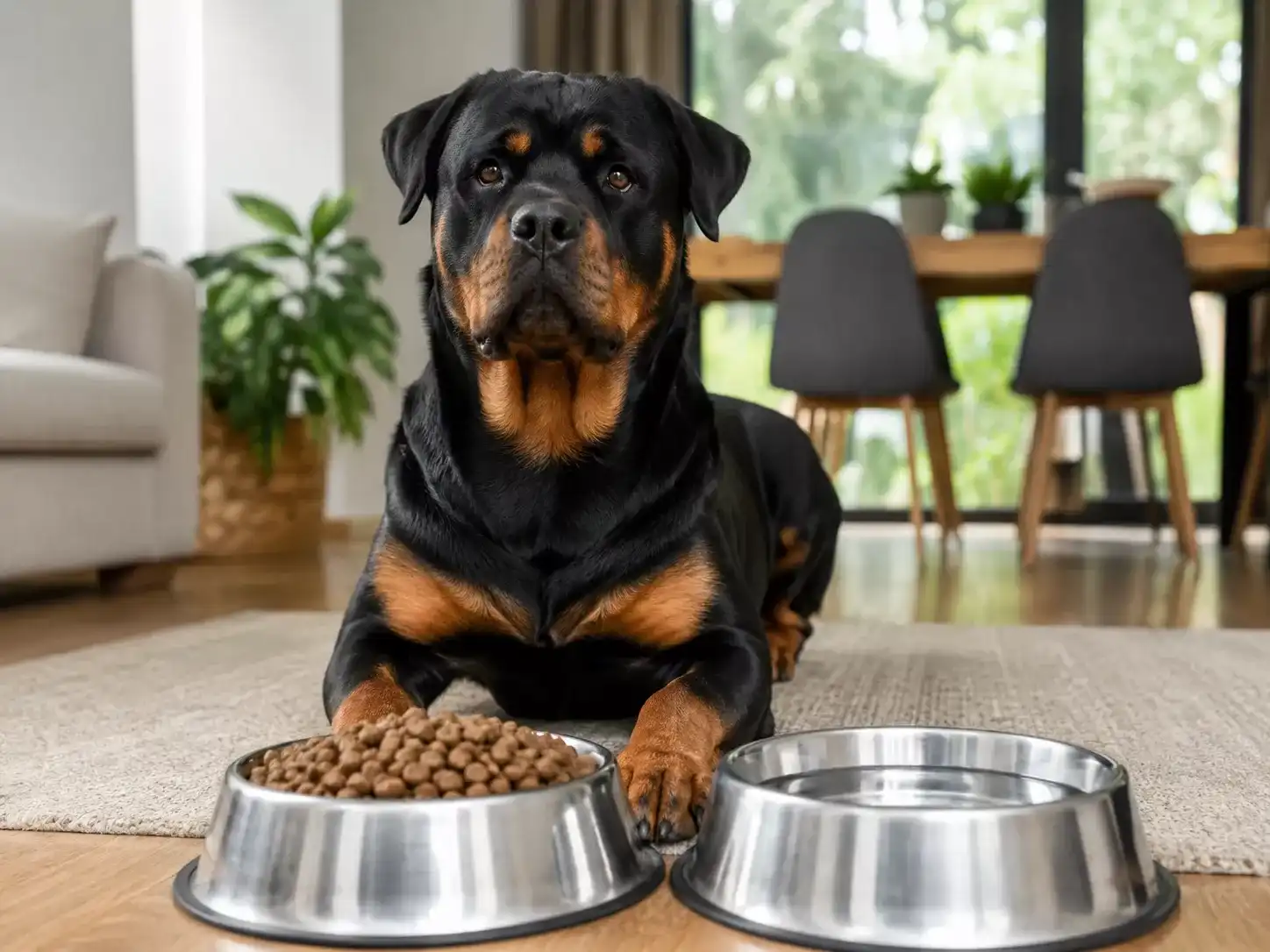
Rottweiler feeding should be based on age, weight, activity level, neuter status, health and veterinary advice. This breed’s muscle condition, joint comfort, energy level, body weight and skin-coat health are all affected by feeding habits.
A Rottweiler needs quality nutrition, but it does not need unlimited food. Overfeeding a powerful breed is one of the fastest ways to damage mobility and long-term comfort. The goal is not a huge Rottweiler. The goal is a strong, fit and well-conditioned Rottweiler.
| Life stage | Feeding focus | What to watch |
|---|---|---|
| Rottweiler puppy | Controlled growth, bones, muscles and joint development | Avoid rapid weight gain and excessive calories |
| Adult Rottweiler | Muscle, energy, skin-coat health and ideal weight | Adjust portions to real activity level |
| Neutered Rottweiler | Calorie control and weight management | Review food amount if activity drops |
| Senior Rottweiler | Joint comfort, digestion, muscle maintenance and quality of life | Adjust diet with veterinary guidance |
What should a Rottweiler not eat?
A Rottweiler should not be given chocolate, onions, garlic, grapes, raisins, alcohol, caffeine, cooked bones, very fatty leftovers, heavily salted food or spicy meals. Training treats can be useful, but they must be counted within the dog’s daily intake.
Rottweiler puppy feeding
A Rottweiler puppy grows into a powerful dog, but pushing fast growth is a bad idea. The aim is controlled, steady development. Too much weight too early can add unnecessary strain to developing joints.
Do Rottweilers gain weight?
Yes, Rottweilers can gain weight if food and exercise are poorly managed. Extra weight is especially damaging in a breed that already has a strong, heavy frame. It can increase pressure on hips, elbows, the back and overall movement.
A healthy Rottweiler should look muscular and fit, not bulky and slow. If the dog tires quickly, avoids stairs, struggles to rise, becomes less willing to walk or loses interest in play, weight and joint comfort should be reviewed.
How to manage weight
- Measure food instead of guessing portions.
- Count training treats in daily calories.
- Avoid table scraps.
- Provide daily walks and controlled play.
- Monitor body condition regularly.
- Speak to a vet if weight gain becomes noticeable.
Rottweiler training
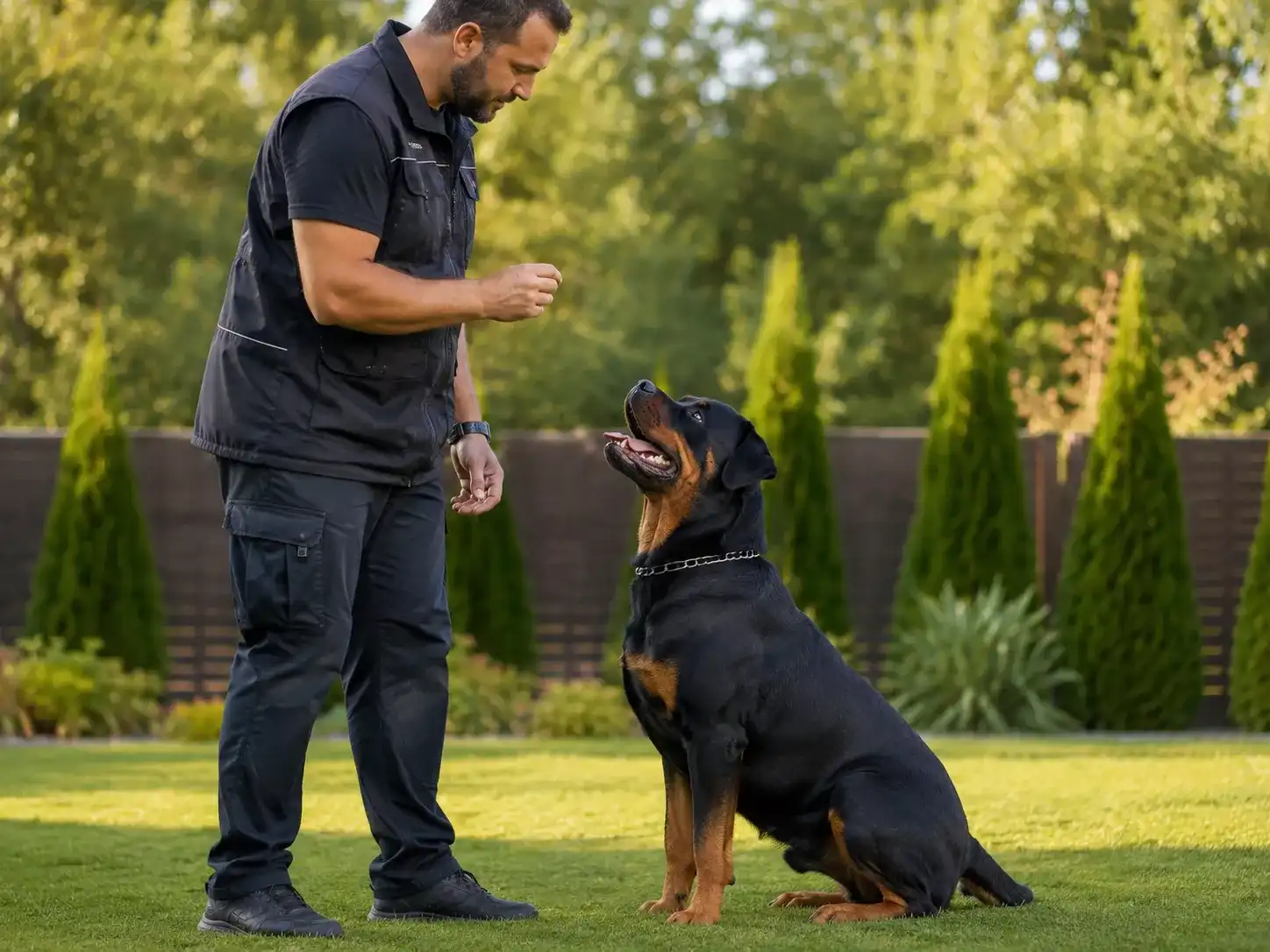
Rottweiler training should start early and stay calm, consistent and firm. Delaying training is one of the worst mistakes with this breed. Jumping, mouthing, lead pulling, barking at visitors, guarding toys or ignoring recall may look manageable in a puppy. In an adult Rottweiler, the same behaviours can become serious.
Firmness does not mean harshness. Shouting, intimidation and physical punishment are not good training. A Rottweiler needs clear rules, consistency, confidence and fair direction. Fear-based handling can create insecurity and defensive behaviour, which is exactly what you do not want in a powerful dog.
Essential Rottweiler commands
- Sit
- Wait
- Come
- Drop
- Leave it
- Settle
- Walk calmly on the lead
- Stay calm around visitors
- Respect food, toys, doors and space
The biggest training mistake
The biggest mistake is encouraging guarding behaviour too early. A Rottweiler puppy that barks at strangers, rushes to the door or looks suspicious should not be praised as “good protection”. First teach calmness, confidence, obedience and trust. Guarding instinct does not need amateur fuel.
Does a Rottweiler need professional training?
Professional support is often valuable for Rottweiler owners, especially if they are new to powerful breeds. Lead control, socialisation, visitor manners, resource guarding prevention, muzzle training and basic obedience should be taken seriously from the start.
Rottweiler exercise and mental stimulation
A Rottweiler is a strong and active dog that needs daily exercise and mental stimulation. Short toilet breaks are not enough. The breed benefits from structured walks, controlled play, obedience work, scent games, problem-solving and calm settling practice.
Without enough activity, a Rottweiler may become restless, mouthy, destructive, noisy, too energetic indoors or difficult on the lead. But simply trying to exhaust the dog with rough, high-intensity play is not the answer. A powerful dog must also learn calmness.
Example daily activity routine
- Morning: controlled walk, toilet break and short obedience session
- Daytime: chew item, scent game or calm rest practice
- Evening: longer walk, controlled play and lead-work session
- Night: low-stimulation wind-down in its own resting area
Exercise mistakes to avoid
Constant rough play can make a Rottweiler stronger and more excited, not calmer. The better plan combines movement, focus, impulse control, obedience and rest.
Can Rottweilers be left alone?
Rottweilers can learn to be left alone for reasonable periods, but alone-time should be introduced gradually. This breed can bond strongly with its family, so long periods of isolation with no preparation, exercise or enrichment can lead to boredom, stress or unwanted behaviour.
Possible signs include barking, door scratching, chewing, pacing, overexcitement when the owner returns or following people constantly around the house. This should not be dismissed as stubbornness. It often means the dog has not learned how to relax alone.
How to teach a Rottweiler to be alone
- Start with short absences and increase time gradually.
- Keep departures and returns calm.
- Create a safe resting area.
- Meet toilet and exercise needs before leaving.
- Use suitable chew items or enrichment.
- Arrange help if long absences are frequent.
Do Rottweilers smell?

A healthy and well-cared-for Rottweiler should not have a strong bad smell. However, odour can develop from skin problems, ear issues, dental disease, dirty paws, poor drying after bathing, digestive problems or poor grooming.
The solution is not perfume or constant bathing. First, find the cause. Check ears, mouth, skin, paws, coat roots and diet. If bad odour continues, a vet should assess the dog.
Common causes of smell
- Skin irritation or allergy
- Ear infection or wax build-up
- Dental disease and bad breath
- Dirty paws and coat debris
- Poor diet or digestion issues
- Not drying properly after bathing or wet walks
Rottweiler health concerns
Rottweilers look strong, but they are not free from health risks. Owners should pay particular attention to weight, movement, hips, elbows, joints, heart health, skin, coat condition and overall energy levels. This section is not a diagnosis guide, but it highlights signs that should be taken seriously.
Hip and elbow concerns
Joint health matters in a powerful, heavy breed like the Rottweiler. Excess weight, unsuitable exercise, rapid puppy growth and genetic risk can all affect long-term comfort and mobility.
Weight and muscle balance
A Rottweiler should be muscular, not overweight. Good condition means a strong dog that moves freely and comfortably. A heavy, slow and easily tired dog should not be considered healthy just because it looks large.
Skin, coat and ears
A short coat does not mean skin problems cannot happen. Itching, redness, patchy hair loss, bad smell and ear discharge should be monitored. Small signs can become bigger problems if ignored.
Home health checklist
- Is the dog limping or moving unevenly?
- Does it struggle with stairs or getting up?
- Does it tire quickly?
- Is weight increasing too fast?
- Is there redness, itching or bad skin odour?
- Do the ears smell bad or show discharge?
- Has appetite, energy or behaviour changed suddenly?
Rottweiler puppy care

A Rottweiler puppy may look soft and playful, but puppyhood is not just the cute stage. It is the stage where confidence, social balance, bite control, toilet training, lead manners, visitor behaviour, calmness and basic obedience are built.
Mistakes in puppyhood become much more serious in an adult Rottweiler. Jumping up, hard mouthing, food guarding, barking at visitors, pulling on the lead and ignoring cues must be managed early.
Rottweiler puppy priorities
- Set up a veterinary plan for vaccinations, parasite control and checks.
- Build toilet training with routine and supervision.
- Redirect mouthing into appropriate toys.
- Start lead manners and calm walking early.
- Introduce people, children, dogs, noises and environments carefully.
- Teach alone-time gradually.
- Do not encourage guarding behaviour.
- Avoid rapid weight gain and harsh exercise.
What to check before choosing a Rottweiler puppy
Look for bright eyes, balanced movement, clean coat, normal body condition, curiosity without extreme fear and a responsible source. Extreme shyness, limping, bad smell, visible discharge or unclear health history should be treated as warning signs.
Rottweiler vs Doberman

Rottweilers and Dobermans are often compared because both are strong, intelligent, protective and serious dogs that need training. But they are not the same type of dog. The Rottweiler is usually more compact, heavier and more physically solid. The Doberman is generally more athletic, lighter-framed and faster in appearance.
| Factor | Rottweiler | Doberman |
|---|---|---|
| Body type | Compact, muscular and heavier-bodied | Sleeker, athletic and more agile-looking |
| Temperament impression | Calm, serious, powerful and protective | Often more reactive, energetic and sensitive |
| Coat care | Short coat, but still needs brushing | Short coat and generally practical grooming |
| Owner needs | Strong control and firm rules | Energy management and consistent training |
The question should not be “which is better?”. The better question is: which dog’s strength, energy, temperament and training needs actually fit your life?
Rottweiler vs Cane Corso

Rottweilers and Cane Corsos are both powerful, serious breeds that require responsible owners. Both can have guarding potential, but their structure and management needs differ. The Cane Corso often looks larger, more mastiff-like and heavier. The Rottweiler is usually more compact, with a strong working-dog background and a clear need for controlled training.
| Factor | Rottweiler | Cane Corso |
|---|---|---|
| General build | Compact, muscular and powerful | Larger, mastiff-like and heavier-looking |
| Guarding instinct | Can be strong and must be controlled through training | Can be very strong and needs experienced handling |
| Movement | Strong working-dog feel with controlled power | More heavy-bodied power impression |
| Owner profile | Consistent, active and controlled owner | Experienced owner with strong management skills |
Neither breed should be chosen just because someone wants a “powerful dog”. If you want a strong breed, first question your own discipline, experience and ability to keep people safe.
Who is a Rottweiler suitable for?
A Rottweiler is suitable for active, disciplined and responsible owners who can train consistently, control a powerful dog and take public safety seriously. It should not be chosen simply because it looks intimidating, can guard the home or gives the owner a tough image.
May be suitable for
- Owners who understand powerful breeds
- People who can build a daily walking and training routine
- Homes that will socialise the dog early and carefully
- Families who can supervise child-dog interactions
- Owners who take lead, muzzle and public control seriously
- People who monitor weight, joints and health
- Owners willing to use professional training support when needed
May not be suitable for
- First-time owners wanting an easy, low-risk dog
- People who will not provide daily exercise
- Owners who confuse protection with aggression
- People who cannot control a strong dog on a lead
- Families who would leave children unsupervised with the dog
- Anyone who plans to leave the dog isolated in a garden
- Owners who do not value training and socialisation
Is a Rottweiler good for beginners?
For most beginners, a Rottweiler is not the ideal first dog. It requires serious ownership. A beginner choosing this breed must be ready for training, socialisation, lead control, muzzle introduction, visitor management and professional help if needed.
Before getting a Rottweiler
Before getting a Rottweiler, be honest about your lifestyle and ability. This is a strong, loyal and impressive breed, but it can become a serious responsibility in the wrong home. The dog’s strength is not the issue. The owner’s discipline is the issue.
Questions to ask before choosing a Rottweiler
- Can I provide real daily walks and exercise?
- Can I commit to obedience training and socialisation?
- Can I control a powerful dog on a lead?
- Can I avoid encouraging uncontrolled guarding?
- Can I manage the dog safely around children, visitors and strangers?
- Can I accept muzzle, lead and public control responsibilities?
- Can I afford food, vet care, training and equipment?
- Do I truly understand the breed, or do I just like the image?
Common Rottweiler ownership mistakes
- Misunderstanding guarding: barking at everyone is not good protection.
- Delaying training: cute puppy behaviour can become dangerous adult behaviour.
- Skipping socialisation: a poorly socialised Rottweiler may become unnecessarily suspicious.
- Underestimating lead control: lead discipline is non-negotiable with a powerful breed.
- Assuming automatic child safety: strong dogs and children need supervision.
- Ignoring weight: excess weight damages mobility and joint comfort.
- Downplaying legal responsibility: not banned does not mean low responsibility.
Final thoughts
A Rottweiler can be calm, loyal, powerful, confident and deeply impressive in the right hands. It can be devoted to its family, enjoyable to train and reliable when managed well. But this breed is not suitable for everyone. Without training, strength becomes risk. Without socialisation, guarding instinct goes wrong. Without exercise, energy becomes frustration. Without control, public safety becomes an issue.
If you want a Rottweiler, test yourself before you judge the dog. Do you have the routine, discipline, patience, training mindset and public responsibility required? If yes, a Rottweiler can be a serious and rewarding choice. If not, the idea is weak. In the right home, a Rottweiler is a quality companion. In the wrong home, it does not just create problems; it creates risk.