Puppy Biting and Teething: What’s Normal and What’s Not?
If you’ve recently brought a puppy home, chances are your hands, ankles, clothes, or furniture have already suffered. Puppy biting is one of the most common — and most misunderstood — behaviors new dog owners face.
The good news? In most cases, biting is not aggression. It’s communication, exploration, and biology working together. The bad news? If handled incorrectly, puppy biting can turn into a long-term behavior problem.
This guide explains why puppies bite, how teething changes their behavior, and most importantly, how to reduce biting in a way that actually works.
🦷 Why Do Puppies Bite So Much?
Puppies experience the world through their mouths. Biting is how they explore, play, relieve stress, and interact with humans and other dogs.
The most common reasons puppies bite include:
- ✔️ Teething discomfort and gum pressure
- ✔️ Excitement during play
- ✔️ Lack of bite inhibition training
- ✔️ Excess energy with no proper outlet
- ✔️ Overstimulation or frustration
Importantly, puppy biting is not dominance and it’s not a sign your dog is “bad.” It’s a developmental phase that requires guidance.
🦴 Puppy Teething Timeline: When Does It Start and End?
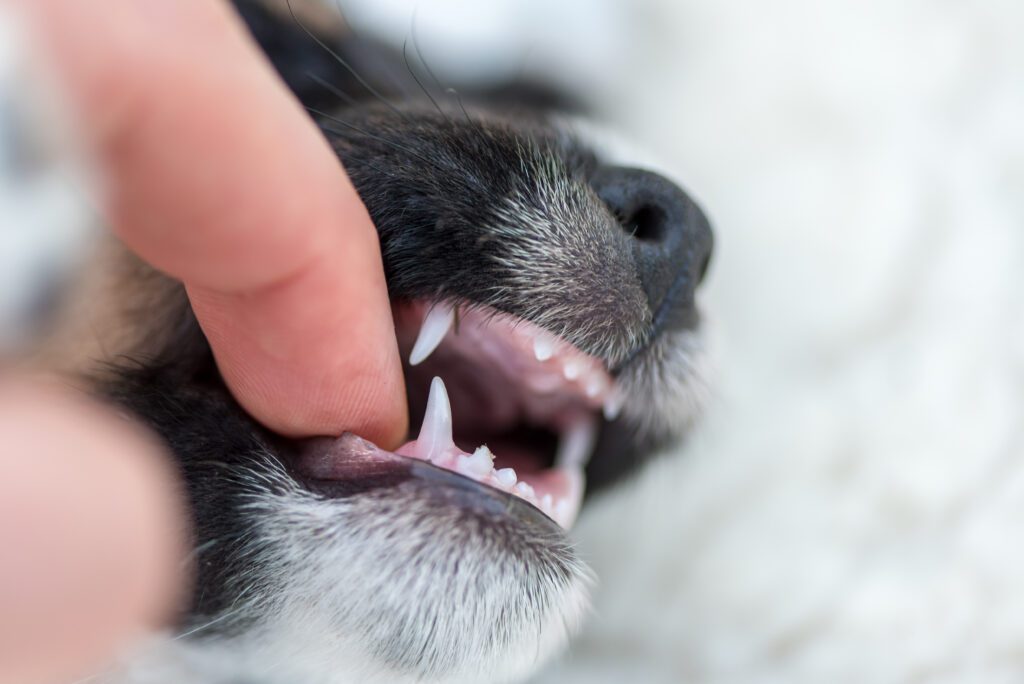
Puppies typically begin teething around 3 to 4 months of age and finish by 6 to 7 months. During this time, baby teeth fall out and adult teeth erupt.
This process causes gum irritation, soreness, and an intense need to chew. Without proper alternatives, your puppy will choose whatever is closest — often your hands.
This phase overlaps heavily with the first six months of puppy care, making early guidance critical.
❌ Common Mistakes That Make Biting Worse
Many well-meaning owners accidentally reinforce biting behavior. The most damaging mistakes include:
- 🚫 Yelling or physically punishing the puppy
- 🚫 Pulling hands away suddenly
- 🚫 Treating biting as a game
- 🚫 Being inconsistent with rules
These reactions can increase anxiety, confusion, and even lead to future behavior problems.
✅ How to Stop Puppy Biting the Right Way
1️⃣ Provide Proper Chewing Alternatives
Offer safe, durable chew toys designed for teething puppies. Rotate them regularly to maintain interest.
2️⃣ Use the “End the Interaction” Method
When your puppy bites, freeze. Don’t pull away. Calmly disengage and remove attention. This teaches that biting ends fun.
3️⃣ Manage Energy Levels
Under-exercised puppies bite more. Age-appropriate walks, play, and mental stimulation reduce excess energy.
4️⃣ Stay Consistent
Everyone in the household must follow the same rules. Mixed signals delay learning.
🏠 Apartment Living and Puppy Biting
Puppies raised in apartments often experience faster energy buildup due to limited space. This makes structured routines essential.
Pair bite training with proper routines outlined in home and apartment puppy training to avoid frustration-based behaviors.
⚠️ When Puppy Biting Becomes a Real Problem
Seek professional guidance if your puppy:
- ⚠️ Continues hard biting after 7–8 months
- ⚠️ Shows growling or snapping outside play
- ⚠️ Bites during handling or resource guarding
These signs may be linked to anxiety, poor early socialization, or separation anxiety.
🧠 Biting Is Temporary — Training Is Permanent
Puppy biting feels overwhelming in the moment, but it’s a phase — not a flaw. With patience, structure, and the right response, most puppies naturally outgrow biting behavior.
What matters most is how you teach, not how fast you stop the behavior.
Remember: Suppressing behavior creates problems. Teaching behavior builds trust — and a better dog. 🐾