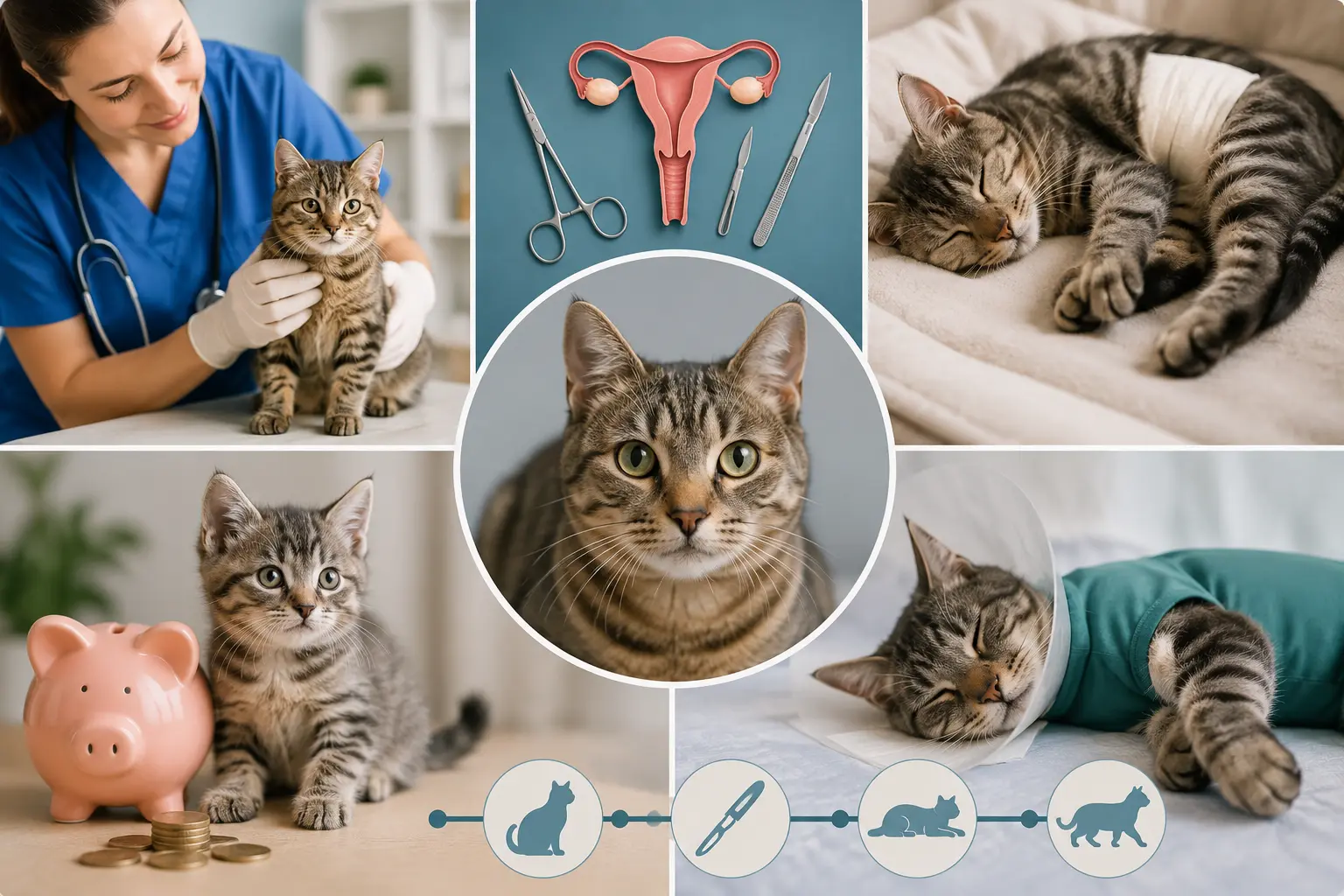
Cat neutering is a routine veterinary surgery used to prevent unwanted litters, stop heat cycles, reduce roaming and mating behaviour, lower the risk of certain reproductive diseases and help make home life more stable. In the UK, many welfare and veterinary organisations advise neutering kittens at around four months old, but the right timing should still depend on your cat’s weight, health, sex, vaccination status, lifestyle and your vet’s examination. This guide explains the best age to neuter a cat, the difference between male cat castration and female cat spaying, typical UK cat neutering costs, surgery risks, neutering a cat in heat, pre-surgery preparation, aftercare and the recovery period.
Cat neutering is one of those topics where lazy advice spreads fast. “Let her have one litter first”, “male cats do not really need it”, “wait until six months no matter what”, “neutered cats always get fat” and “it is only a tiny operation” are all weak ways to think. The proper decision is not based on myths. It is based on your cat’s age, weight, sex, health, behaviour, home setup and your vet’s assessment.
A strong neutering plan is not just booking the surgery. It includes pre-operative checks, fasting instructions, anaesthetic safety, pain control, wound protection, cone or recovery suit use, litter tray access, activity restriction, food portions, weight management and knowing which recovery signs are normal and which are not. If you only compare the price and ignore the rest, your plan is thin.
What Is Cat Neutering?
Cat neutering is the surgical removal of the reproductive organs so a cat can no longer breed. In male cats, the procedure is called castration and involves removing the testicles. In female cats, the procedure is called spaying and usually involves removing the ovaries and often the uterus. That means male cat castration and female cat spaying are not the same operation.
Male cat castration is usually quicker, less invasive and often has a faster recovery. Female cat spaying is abdominal surgery, so the incision, wound protection and recovery period need more careful management. Treating both operations as “just neutering” is sloppy. The purpose is similar, but the surgery, cost, risk profile and aftercare are different.
Why Should Cats Be Neutered?
The main reason for neutering is to prevent unwanted litters, but the benefits go beyond pregnancy prevention. Neutering can reduce heat-related stress in female cats, reduce roaming and mating behaviour in males, reduce urine spraying in some cats, lower fighting and injury risks, and help prevent certain reproductive diseases.
Common reasons to neuter a cat include:
- Preventing unwanted kittens
- Reducing accidental breeding
- Stopping heat cycles in female cats
- Reducing yowling, restlessness and mating behaviour
- Reducing roaming and escape attempts
- Reducing fighting and bite injury risk
- Helping reduce urine spraying and strong tomcat odour
- Preventing uterine infection in female cats
- Reducing the risk of some reproductive cancers
- Creating a more stable indoor routine
Neutering is not magic. It will not automatically fix every behaviour problem. If a cat has been spraying for years, or if the problem is caused by stress, litter tray conflict or urinary disease, neutering alone may not solve it. But when the behaviour is hormone-driven and the timing is right, neutering can make a major difference.
Best Age to Neuter a Cat in the UK
In the UK, cat neutering is commonly discussed around four months of age, or roughly 16 weeks. This timing is often recommended because kittens can become sexually active earlier than many owners expect, and delaying can lead to accidental litters. However, this does not mean every kitten should be booked without a proper check.
The right timing depends on:
- Your cat’s age
- Your cat’s weight
- Overall health
- Vaccination and parasite history
- Whether the cat is male or female
- Whether a female cat has started coming into heat
- Whether there are unneutered cats in the same home
- Whether the cat could get outdoors
- Your vet’s assessment of surgical readiness
The bad approach is copying someone else’s timing without context. If you have male and female littermates together, if your cat is showing early puberty signs, or if your cat could escape outdoors, timing matters more. If your kitten is underweight, unwell or recovering from another issue, your vet may advise waiting.
When Should a Female Cat Be Spayed?
Female cats are often spayed before their first heat cycle. The goal is to prevent pregnancy, avoid heat-related stress and reduce future reproductive health risks. In a home with access to male cats, delaying can become a problem quickly.
Signs a female cat may be in heat include:
- Loud calling or yowling
- Restlessness
- Rolling on the floor
- Rubbing against people or furniture more than usual
- Raising the hindquarters and moving the tail to one side
- Trying to escape outdoors
- Reduced appetite in some cats
- Increased attention-seeking
- Strong interest in male cats
Whether a cat in heat can be spayed depends on the vet’s judgement. During heat, the reproductive tissues may have more blood supply, so some vets prefer to wait until the cycle settles. In other situations, surgery may still be planned. The answer is not “never” and not “always”. It is a clinical decision.
When Should a Male Cat Be Castrated?
Male cats are often castrated before mating behaviour becomes strongly established. As male cats mature, they may start urine spraying, roaming, trying to escape, calling, fighting or showing increased interest in female cats. Neutering before these behaviours become habits is usually a stronger plan.
Male cat behaviours that may be linked to sexual maturity include:
- Urine spraying
- Stronger-smelling urine
- Trying to get outdoors
- Waiting near doors and windows
- Restlessness at night
- Searching for female cats
- Tension with other male cats
- Fighting if allowed outside
Male cat castration is usually shorter than female spaying, and many males recover quickly. But “quick” does not mean “careless”. The cat still receives a general anaesthetic, still needs monitoring and still needs proper aftercare.
Cat Neutering Cost in the UK
Cat neutering cost in the UK varies by location, veterinary practice, whether the cat is male or female, whether pre-anaesthetic blood tests are included, the anaesthetic protocol, pain relief, medication, cone or recovery suit, and whether post-operative checks are part of the package. A single fixed price would be misleading.
As a rough private-practice guide, male cat castration often costs less than female cat spaying because the surgery is shorter and less invasive. Female cat spaying usually costs more because it is abdominal surgery and requires more time, skill and wound management.
UK cat neutering costs may be considered in this broad way:
- Male cat castration: often lower cost than female spaying, with private-practice prices commonly varying by region and clinic.
- Female cat spaying: usually more expensive because it is a more involved abdominal operation.
- Pre-operative blood tests: may be included by some clinics and charged separately by others.
- Pain relief and medication: should be clarified before booking.
- Cone, recovery suit and follow-up: may or may not be included in the quoted price.
- Charity or subsidised schemes: may be available for eligible owners through welfare organisations or low-cost clinics.
- Special cases: pregnancy, cryptorchid male cats, illness, older age or complications can change the cost.
Do not ask only “how much is it?”. That is amateur. Ask what the price includes: consultation, anaesthetic, surgery, monitoring, pain relief, medication, cone or recovery suit, post-operative check and stitch removal if needed. A cheap quote with half the essentials missing is not a smart saving.
Why Does Female Cat Spaying Cost More Than Male Castration?
The price difference exists because the operations are different. Male cat castration involves removing the testicles and is usually a shorter procedure. Female cat spaying involves entering the abdomen to remove the ovaries and often the uterus. That means more surgical time, more tissue handling, a larger wound and more careful recovery.
Price differences can be affected by:
- Length of surgery
- Anaesthetic time
- Complexity of the procedure
- Incision size
- Wound protection needs
- Pre-operative checks
- Medication and pain relief
- Follow-up appointment policy
- Whether a recovery suit or cone is included
- Local clinic pricing and overheads
Choosing the lowest price without understanding the service is a weak strategy. Neutering is routine, but it is still surgery under general anaesthetic. The clinic’s explanation, hygiene, monitoring, pain control and aftercare support matter.
What to Do Before Cat Neutering Surgery
Pre-surgery preparation matters. Your cat should be examined by a vet, and the practice should know about any recent vomiting, diarrhoea, coughing, sneezing, appetite loss, weight loss, previous anaesthetic reaction or medication. A cat that looks fine at home may still need a proper check before surgery.
Before neutering, you should:
- Book a veterinary examination
- Share your cat’s vaccination and parasite history
- Mention any medication or supplements
- Tell the vet about vomiting, diarrhoea, lethargy or appetite changes
- Ask whether pre-anaesthetic blood tests are recommended
- Follow fasting instructions exactly
- Prepare a quiet recovery room at home
- Use a secure, clean carrier
- Plan how to separate your cat from other pets if needed
- Ask what signs require urgent contact after surgery
Ignoring fasting instructions is not a small mistake. Feeding too close to anaesthesia can increase risk. If your cat eats when they should have been fasted, tell the practice. Do not pretend it did not happen.
How Cat Neutering Surgery Is Done
Cat neutering is performed under general anaesthetic. The cat is checked, prepared for surgery and monitored during the procedure. In male cats, the testicles are removed. In female cats, the vet makes an incision and removes the ovaries and often the uterus. The cat is then monitored during recovery before being discharged with aftercare instructions.
The usual process may include:
- Admission to the veterinary practice
- Health check before anaesthesia
- Pre-anaesthetic medication if appropriate
- General anaesthetic
- Clipping and cleaning the surgical area
- Male cat castration or female cat spaying
- Wound closure where needed
- Recovery monitoring
- Discharge instructions
- Follow-up plan if required
Some cats are sleepy, wobbly or quiet after surgery. That can be expected within limits. But a cat that is getting weaker, struggling to breathe, bleeding, repeatedly vomiting or not recovering as expected needs veterinary advice.
Cat Neutering Risks
Cat neutering is commonly performed, but no surgery is zero-risk. Pretending there is no risk is dishonest. A better approach is understanding what the risks are and reducing them through proper veterinary assessment, safe anaesthesia, good surgical technique and careful home care.
Possible risks include:
- Anaesthetic reaction
- Bleeding
- Wound infection
- Swelling or bruising
- Wound opening
- The cat licking or chewing the wound
- Pain that is not well controlled
- Loss of appetite after surgery
- Delayed healing
- Rare internal complications
- Weight gain after neutering if diet is not adjusted
These risks do not mean neutering is a bad decision. They mean the decision should be made properly. The right mindset is not fear. The right mindset is risk management.
How Long Does Cat Neutering Recovery Take?
Recovery time depends on the cat, the type of surgery and whether there are any complications. Male cats often recover faster because castration is less invasive. Female cats need closer monitoring because spaying is abdominal surgery. Many cats seem brighter within a couple of days, but wound healing usually needs a longer window.
A practical recovery timeline may look like this:
- First 6–12 hours: sleepiness, wobbliness and reduced appetite may occur after anaesthesia.
- First 24 hours: quiet rest, warmth, safe flooring and careful monitoring are important.
- Day 2–3: appetite and energy should usually improve.
- Day 3–5: many male cats look much more normal, but they still need sensible monitoring.
- Day 7–10: female cats should have a calmer, more stable incision if healing is going well.
- Day 10–14: many cats are close to full recovery, depending on the vet’s advice and wound status.
If your cat is still clearly deteriorating after the first day, refuses food for too long, will not drink, keeps hiding in a worrying way, vomits repeatedly or the wound looks bad, do not call it normal. Slow recovery can happen. Active worsening is different.
Cat Neutering Aftercare at Home
Aftercare is not optional. A good operation can still be damaged by poor home management. When your cat comes home, they need a quiet, warm, low-stress area away from stairs, high furniture, rough play and other pets.
Aftercare should include:
- Keeping your cat indoors during the recovery period
- Providing a quiet recovery room
- Preventing jumping, climbing and rough play
- Using a cone or recovery suit if recommended
- Checking the wound daily
- Stopping licking or chewing of the incision
- Keeping food, water and the litter tray nearby
- Giving medication exactly as prescribed
- Not giving human painkillers
- Not applying creams, disinfectants or home remedies to the wound unless your vet tells you to
The classic mistake is removing the cone because the cat “looks sad”. That is weak. A cat can open a wound quickly by licking or chewing. The cone or recovery suit is not decoration; it is wound protection.
What Should the Wound Look Like?
The wound should usually stay clean, dry and closed. Mild pinkness or slight swelling can occur early on, but worsening redness, discharge, bad smell, bleeding, heat, gaping or obvious pain is not something to ignore.
Contact your vet if you notice:
- Bad smell from the wound
- Yellow, green, white or thick discharge
- Increasing redness
- Significant swelling
- Bleeding
- Wound opening
- Your cat licking the wound constantly
- The area feeling hot
- Your cat reacting strongly when the area is touched
- Ongoing lethargy or appetite loss
Do not put random creams or antiseptics on the wound. Unless your vet tells you to use something, leave it alone and protect it. Bad home treatment can turn a clean wound into a problem.
When Can a Cat Eat After Neutering?
Many cats are not hungry immediately after surgery because of the anaesthetic. That can be normal. Do not force food while your cat is still very sleepy or uncoordinated. Follow your vet’s instructions on when and how to offer food and water.
General feeding points include:
- Do not feed before your cat is awake enough to swallow safely
- Offer a small first meal
- Do not panic if appetite is reduced for a short period
- Do not force food if your cat feels sick
- Make fresh water easy to reach
- Call your vet if your cat refuses food for too long
- Follow the practice’s medication and feeding advice
Long-term feeding matters after neutering. A neutered cat may need fewer calories and may become more food-motivated. If you keep feeding the same portions without watching weight, do not blame the surgery when the cat gets overweight. Portion control matters. For a better feeding system, read how to choose the best cat food.
Do Cats Gain Weight After Neutering?
Cats can gain weight after neutering because energy needs may drop and appetite may increase. But weight gain is not guaranteed. The real problem is usually uncontrolled portions, free-feeding, too many treats and too little play.
To reduce weight gain risk:
- Measure food portions
- Avoid keeping the bowl constantly full
- Count treats as part of daily calories
- Ask your vet whether neutered cat food is useful
- Weigh your cat regularly
- Increase play and enrichment
- Use puzzle feeders if appropriate
- Do not ignore gradual weight gain
Neutering is not the enemy. Poor feeding after neutering is the enemy. A controlled diet, routine weigh-ins and enough activity can keep a neutered cat in good condition.
Can a Cat Be Neutered While in Heat?
A cat in heat may or may not be spayed immediately depending on the vet’s assessment. During heat, the reproductive tissues may be more active and have more blood supply. That can make surgery more delicate. Some vets prefer to wait until the heat cycle passes, while others may operate depending on the case.
The decision depends on:
- Your cat’s health
- How intense the heat signs are
- Whether there is a pregnancy risk
- Whether your cat could escape
- Whether male cats are in the same home
- Your vet’s surgical judgement
The only serious answer is this: do not decide at home. Call your vet, explain the signs and let them decide whether to operate now or delay.
Should a Female Cat Have One Litter Before Spaying?
No. A female cat does not need to have one litter before being spayed. That idea is a myth, not a medical requirement. Allowing a cat to have kittens creates real responsibilities and risks, especially if there is no proper breeding plan, health screening or guaranteed homes for the kittens.
Letting a cat have a litter can involve:
- Pregnancy complications
- Difficult birth
- Emergency caesarean risk
- Loss of kittens
- Weakness or infection in the mother
- Cost of feeding and veterinary care
- Finding safe homes for kittens
- Adding to unwanted cat numbers
“Let her have one litter” sounds sentimental, but it is often a poor plan. If you are not running a responsible, vet-guided breeding programme, accidental breeding is not kindness. It is avoidable risk.
Can a Pregnant Cat Be Spayed?
Spaying a pregnant cat is more complex and must be discussed with a vet. The further the pregnancy has progressed, the more sensitive the decision becomes. There may be medical, ethical and welfare factors to consider. This is not a decision to make from internet comments.
If pregnancy is possible, tell the vet:
- When your cat was last in heat
- Whether she had access to a male cat
- Whether she has been outdoors
- Whether her abdomen has enlarged
- Whether her nipples have changed
- Whether her appetite or behaviour has changed
- Any history of vomiting, discharge or illness
Your vet may need to examine her and may recommend further checks. Guessing pregnancy status at home is unreliable.
When Do Behaviour Changes Happen After Neutering?
Hormone-driven behaviours may not disappear overnight. Some cats calm down within days, while other changes take weeks. Male cats may gradually show less roaming, less mating drive and less strong urine odour. Female cats should stop heat cycles, which means the calling, rolling and mating postures should not keep returning.
Behaviour change depends on:
- The cat’s age at neutering
- How long the behaviour has been happening
- Whether there are other cats in the home
- Stress levels
- Litter tray setup
- Whether the cat goes outdoors
- Whether urine spraying is hormonal, medical or stress-related
Urine spraying is not always only about sex hormones. It can also be linked to stress, litter tray problems, urinary disease or conflict with other cats. If spraying continues after neutering, do not just say the surgery failed. Look for medical and environmental causes.
Litter Tray Care After Neutering
After surgery, your cat’s litter tray should be easy to reach. A sleepy or sore cat may not want to walk far or climb into a high-sided tray. This is especially important for female cats after spaying.
Good litter tray management includes:
- Keeping the tray nearby
- Making entry easy
- Keeping the tray clean
- Avoiding dusty litter if it irritates the wound area
- Watching for straining or pain
- Checking that your cat is urinating
- Reducing competition if there are other cats
If your cat cannot urinate, strains repeatedly, cries in the tray or seems painful, contact a vet. Do not treat litter tray problems after surgery as just “odd behaviour”.
When to Call the Vet After Cat Neutering
Follow your vet’s discharge instructions. Some practices schedule a check-up. Some use dissolvable stitches. Some want the cat back for wound assessment. Whatever the plan, certain signs should not wait.
Contact your vet quickly if you notice:
- No appetite for longer than advised
- Not drinking
- Repeated vomiting
- Severe lethargy
- Breathing difficulty
- Bleeding from the wound
- Discharge or bad smell from the incision
- Wound opening
- Significant swelling
- Increasing pain
- Fever signs
- Inability to urinate
- Constant licking or chewing at the wound
A quiet cat after surgery can be normal. A cat that is clearly getting worse is not normal. Do not hide behind “she just had surgery” when the signs are pointing the wrong way.
Common Cat Neutering Mistakes
- Waiting too long without a reason: cats can become sexually active earlier than many owners expect.
- Believing a female cat needs one litter first: this is a myth, not a health requirement.
- Ignoring male cats: males can roam, fight, spray and create unwanted litters.
- Choosing only by price: anaesthetic safety, aftercare and follow-up matter.
- Removing the cone too early: wound licking can cause infection or opening.
- Allowing jumping too soon: especially risky after female spaying.
- Giving human painkillers: many are dangerous for cats.
- Using home products on the wound: do not apply creams or antiseptics unless your vet advises it.
- Ignoring weight gain: food portions often need adjustment after neutering.
- Not asking what the price includes: a cheap quote is not useful if important care is missing.
Questions to Ask Your Vet Before Cat Neutering
Good questions prevent bad surprises. Do not walk into surgery day with vague assumptions. Ask clearly and write down the answers.
Useful questions include:
- Is my cat old enough and heavy enough for neutering?
- Do you recommend pre-anaesthetic blood tests?
- How long should my cat fast before surgery?
- When should water be removed, if at all?
- What is included in the price?
- Is pain relief included?
- Will my cat need a cone or recovery suit?
- Will stitches need removing?
- When should I book a post-operative check?
- What signs mean I should call urgently?
- When can my cat eat after surgery?
- How long should jumping and rough play be restricted?
- Should food portions change after neutering?
If you cannot get clear answers, slow down. Neutering is common, but for your cat it is still a real medical procedure.
Cat Neutering and the First Vet Visit
For kittens, neutering should be planned as part of the wider first-year health system. Vaccinations, parasite control, weight checks, microchipping, feeding, litter training, behaviour and neutering timing all connect. Treating neutering as an isolated surgery date is too narrow.
If you have recently adopted a kitten, start with a proper health check and a realistic first-year plan. This is especially important for rescue kittens, kittens with unclear history, kittens that have had diarrhoea or vomiting, underweight kittens, kittens with eye or nose discharge and kittens with unknown vaccination status. For a stronger early-care setup, read the kitten care guide and what should be done during your pet’s first vet visit.
Final Word: Cat Neutering Is a Strong Health Decision When Planned Properly
Cat neutering is not just a way to stop kittens. Done at the right time, with proper preparation and good aftercare, it is a serious health and welfare decision. Done carelessly, with poor planning, weak aftercare or price-only thinking, it can create avoidable problems.
The strongest approach is simple: discuss neutering with your vet as your kitten approaches the recommended age window, understand the difference between male castration and female spaying, ask what the cost includes, follow fasting instructions, protect the wound and manage food portions after recovery.
Do not build the decision on myths. “One litter first”, “male cats do not matter”, “six months is always the rule” and “neutering always makes cats fat” are weak lines. A better plan is veterinary assessment, correct timing, safe anaesthesia, clean surgery, careful recovery and long-term weight control.
Frequently Asked Questions
What is the best age to neuter a cat?
In the UK, many welfare and veterinary organisations advise neutering kittens at around four months old. However, the best timing should still be decided with a vet based on your cat’s weight, health, sex, vaccination status, lifestyle and whether there is any chance of mating or getting outdoors.
When should a male cat be neutered?
Male cats are often castrated before strong sexual behaviours develop, commonly around the kitten neutering age recommended by UK welfare groups. Timing should be confirmed by a vet. Neutering before urine spraying, roaming, fighting and mating behaviour become established can be more effective.
When should a female cat be spayed?
Female cats are often spayed before the first heat cycle to prevent pregnancy and reduce heat-related stress. Many UK organisations support neutering around four months, but the exact timing should depend on your cat’s health, weight, home situation and your vet’s advice.
How much does cat neutering cost in the UK?
Cat neutering cost in the UK varies by region, clinic, sex, procedure type and what is included. Male cat castration is usually cheaper than female cat spaying. Private-practice prices can vary widely, while eligible owners may be able to access charity or subsidised neutering schemes. Always ask what the quoted price includes.
How long does a cat take to recover after neutering?
Many cats seem brighter within a few days, but wound healing often needs around 7–14 days of careful management. Male cats usually recover faster because castration is less invasive. Female cats need closer monitoring because spaying is abdominal surgery. Follow your vet’s recovery instructions and attend any recommended check-up.
Is cat neutering risky?
Cat neutering is a common procedure, but no surgery is completely risk-free. Possible risks include anaesthetic reaction, bleeding, swelling, wound infection, wound opening, pain, poor appetite and delayed healing. These risks are reduced with proper veterinary assessment, safe anaesthesia, good surgery and careful aftercare.
Can a cat be neutered while in heat?
A cat may be spayed while in heat in some cases, but the decision depends on the vet’s assessment. During heat, the reproductive tissues may have more blood supply, so some vets prefer to wait until the cycle ends. If your cat is in heat, call your vet and ask what is safest for her specific situation.
Should a female cat have one litter before being spayed?
No. A female cat does not need to have one litter before being spayed. This is a myth, not a medical requirement. Pregnancy and birth carry risks, and unwanted kittens add welfare and cost responsibilities. Neutering should be planned with a vet before accidental pregnancy occurs.
Why does my cat need a cone after neutering?
A cone or recovery suit stops your cat licking, biting or pulling at the wound. Licking can delay healing, increase infection risk and open the incision. The cone is not optional if your cat is interested in the wound. Your vet will tell you how long it should stay on.
Do cats gain weight after neutering?
Cats can gain weight after neutering because energy needs may fall and appetite may increase. Weight gain is not inevitable. Measuring portions, limiting treats, increasing play and checking weight regularly can help. Some cats may benefit from a diet designed for neutered cats, but this should be chosen sensibly.