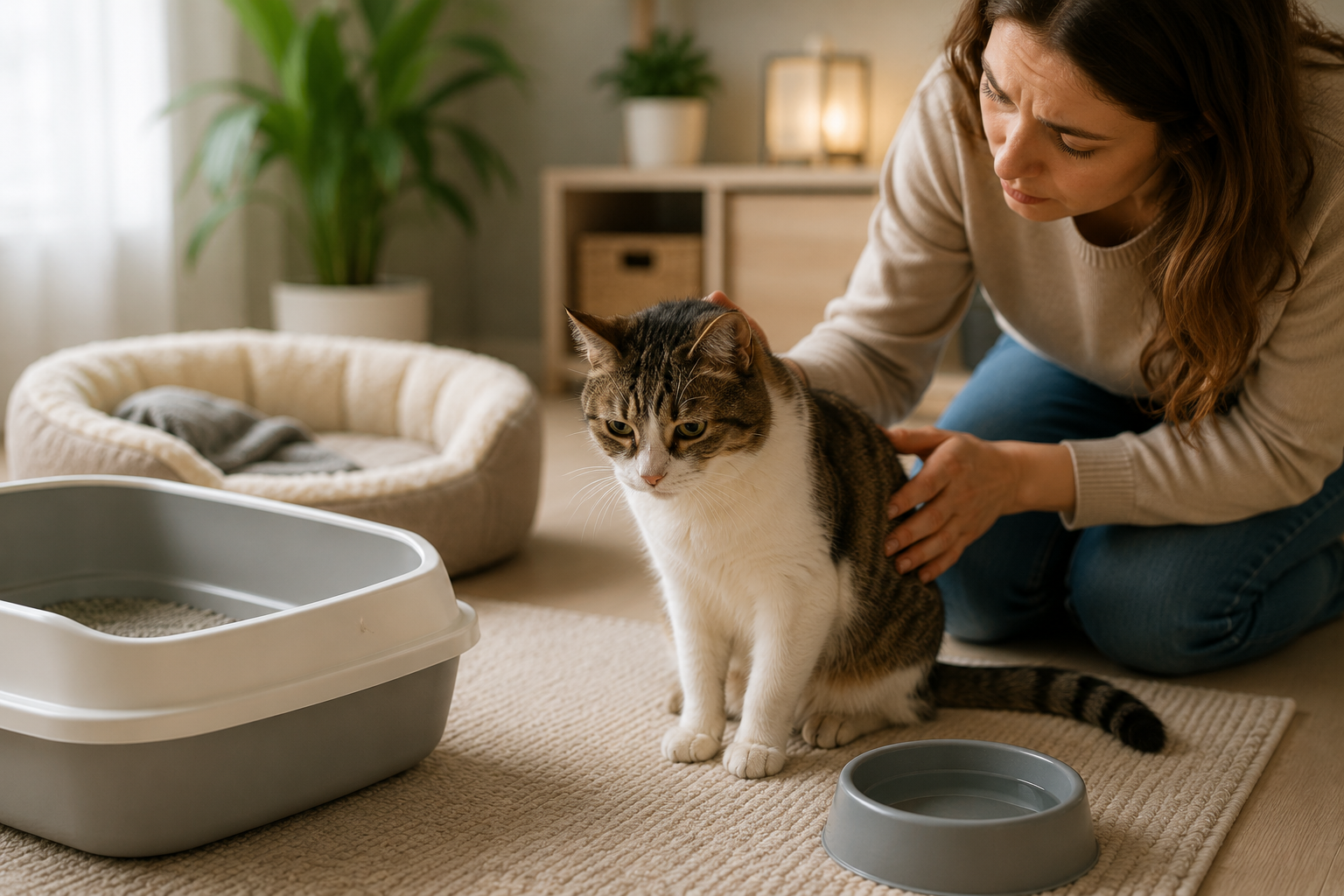
Cat diarrhoea can be caused by a sudden food change, stress, parasites, infections, food intolerance, spoiled food, toxins, medication side effects or underlying bowel disease. A mild, short episode in a bright adult cat may be monitored carefully, but watery diarrhoea, blood or mucus in the poo, diarrhoea lasting more than 24 hours, vomiting, lethargy, loss of appetite, dehydration, weight loss, abdominal pain, kitten diarrhoea, senior cat diarrhoea or suspected poisoning should never be ignored. This guide explains why cats get diarrhoea, what different stool changes may mean, what not to give at home and when to contact a vet.
There are two bad reactions when a cat has diarrhoea. One is panicking over one slightly soft stool when the cat is bright, eating, drinking and acting normally. The other is worse: watching a kitten pass watery diarrhoea, seeing blood in the poo, or noticing vomiting and lethargy, then saying “it will probably pass”. That is not calm decision-making. That is poor risk reading.
Diarrhoea is not a diagnosis. It is a sign. Sometimes it comes from changing food too quickly or from stress after moving home. Sometimes it points to parasites, giardia, infection, poisoning, inflammatory bowel disease, pancreatic disease, liver or kidney problems, or another condition that needs veterinary attention. The useful question is not only “why does my cat have diarrhoea?” The useful question is: “Is this safe to monitor, or does this cat need a vet?”
What Is Cat Diarrhoea?
Diarrhoea means your cat’s stool is looser, wetter, more frequent or harder to control than normal. A healthy cat’s poo is usually formed, brown and not watery. If the stool suddenly becomes runny, soft, very smelly, coated in mucus, streaked with blood or starts sticking to the litter tray and fur, you are dealing with a digestive sign that needs attention.
Indoor cats are usually easier to monitor because the litter tray tells you what is happening. Outdoor cats are harder. If your cat comes in with a dirty bottom, smells unusual, visits the tray more often, strains, leaves small wet spots of stool or starts hiding and eating less, you need to look more closely.
Why Do Cats Get Diarrhoea?
There is no single cause of diarrhoea in cats. A cat may get loose stools after a sudden food change, but that does not mean every case is “just the food”. If there is blood, vomiting, weight loss, dehydration, weakness or repeated episodes, the problem may be more serious.
Common causes include:
- Sudden change of food
- Food intolerance or sensitivity
- Eating spoiled or unfamiliar food
- Too many treats
- Milk, dairy, fatty food or unsuitable human food
- Stress, moving house or routine changes
- Internal parasites
- Giardia and other intestinal organisms
- Bacterial or viral infections
- Medication side effects
- Toxin exposure
- Swallowed foreign material
- Inflammatory bowel disease
- Pancreatic disease
- Liver or kidney disease
- Chronic illness in older cats
- Feeding or weaning problems in kittens
A single soft stool in an otherwise normal adult cat is not the same as repeated watery diarrhoea in a kitten. Treating both as equal is sloppy. The pattern, duration and the cat’s overall condition matter more than one isolated stool.
Can Changing Cat Food Cause Diarrhoea?
Yes, changing cat food suddenly is one of the common reasons cats develop diarrhoea. Cats often do better with routine. A rapid switch in protein, fat level, fibre level, wet-to-dry balance or ingredient profile can upset the gut before it has time to adapt.
Food-change diarrhoea often happens when:
- A new food is introduced overnight
- Wet food is added suddenly after a dry-only diet
- Dry food is changed without a gradual transition
- Several brands are tested in a short period
- Too many treats are given
- A kitten moves from milk to solid food too quickly
- A cat is given milk, dairy, fatty leftovers or rich human food
If diarrhoea started straight after a food change and your cat is otherwise bright, the diet change may be involved. But do not hide behind that explanation if the diarrhoea is watery, lasts more than a day, contains blood or mucus, or comes with vomiting, lethargy or loss of appetite.
If food choice may be part of the issue, read how to choose the best cat food. But be honest: if your cat keeps getting diarrhoea, randomly switching foods every week is not a strong plan. It can make the gut even more unsettled. Rule out medical causes properly.
Kitten Diarrhoea: Why It Is More Risky
Kitten diarrhoea is more concerning than a mild loose stool in a healthy adult cat. Kittens have smaller bodies, lower reserves and can become dehydrated faster. They are also more vulnerable to parasites, infections, feeding mistakes and stress after moving to a new home.
Common causes of diarrhoea in kittens include:
- Fast weaning or sudden diet change
- Unsuitable kitten food
- Overfeeding
- Parasites
- Giardia and other intestinal infections
- Viral or bacterial disease
- Stress after adoption or rehoming
- Early separation from the mother
- Unclear vaccination or worming history
- Toxin exposure or unsuitable food
If a kitten has watery diarrhoea, is vomiting, refuses food, seems weak, has a swollen belly, feels cold, has blood or mucus in the stool, or has an unclear vaccine and worming history, waiting at home is a weak decision. Kittens can deteriorate quickly.
If you have recently brought a kitten home, read the kitten care guide and what should be done at the first vet visit. Kitten diarrhoea is rarely just about one stool; it often connects to diet, parasites, vaccination status, stress and the first health check.
Watery Diarrhoea in Cats
Watery diarrhoea means the stool is very loose or liquid rather than simply soft. This matters because fluid and electrolyte loss can become a real problem, especially in kittens, elderly cats, thin cats and cats with existing illness.
Possible causes include:
- Sudden food change
- Gut infection
- Parasites
- Giardia
- Spoiled food or toxin exposure
- Severe stress
- Food intolerance
- Pancreatic, liver or kidney problems
- Infectious disease in kittens
One soft stool in a cat that is completely normal may be monitored. Repeated watery diarrhoea is different. If your cat keeps passing runny poo, seems tired, refuses food, hides, drinks less or looks unwell, do not keep waiting.
Blood in Cat Poo or Bloody Diarrhoea
Blood in cat poo should always be taken seriously. It may appear as bright red streaks, red drops, a coating on the stool, or very dark, tar-like stool. Bright red blood can be linked to the lower bowel or rectal irritation, while black tar-like stool may suggest digested blood from higher in the digestive tract. You cannot safely diagnose the source at home.
Possible causes include:
- Lower bowel irritation
- Colitis
- Parasites
- Giardia or other infections
- Spoiled food or toxins
- Foreign material
- Rectal irritation or trauma
- Inflammatory bowel disease
- Digestive tract bleeding
If there is blood in your cat’s diarrhoea, do not make “I will see if it happens again” your whole plan. Blood with vomiting, lethargy, appetite loss, pain, weight loss or kitten diarrhoea should be discussed with a vet quickly.
Mucus in Cat Poo
Mucus in cat poo often looks like a shiny, slimy or jelly-like coating. It can be linked to irritation of the large intestine. You may also see frequent litter tray visits, small amounts of stool, straining, fresh blood or urgency.
Possible causes include:
- Large bowel irritation
- Parasites
- Giardia
- Food change
- Stress
- Gut flora disruption
- Inflammatory bowel disease
- Infections
A small amount of mucus once may not be a disaster if the cat is completely well. But repeated mucus, mucus with blood, frequent straining or any decline in your cat’s general condition means the issue deserves veterinary attention.
Very Smelly Cat Diarrhoea
Cat poo can smell strong anyway, but unusually foul, sour, rotten or sharply different diarrhoea should not be ignored if it persists. Smell alone is not a diagnosis, but it can point towards digestive upset, parasites, infection, food intolerance or gut flora changes.
Possible causes include:
- Food intolerance
- Sudden diet change
- Spoiled food
- Parasites
- Giardia or other gut infections
- Gut flora disruption
- Problems digesting fat
- Chronic bowel disease
Changing the litter or using stronger odour control does not solve the problem. Smell is the result. The cause is in the gut. If the smell is new, intense and paired with runny stool, weight loss, vomiting or poor appetite, investigate the cause.
Cat Diarrhoea and Vomiting
Diarrhoea and vomiting together raise the risk because fluid loss can happen from both ends. This matters more in kittens, elderly cats, thin cats and cats with long-term health problems.
Possible causes include:
- Gastroenteritis
- Food change or spoiled food
- Parasites
- Viral or bacterial infections
- Poisoning
- Swallowed foreign material
- Pancreatic, liver or kidney disease
- Inflammatory bowel disease
If your cat has diarrhoea and is also being sick, read why is my cat being sick and when to worry. The practical decision is simple: diarrhoea plus vomiting, lethargy, refusal to eat or inability to keep water down should not be treated as a casual upset stomach.
Can Stress Cause Diarrhoea in Cats?
Yes, stress can contribute to diarrhoea in cats. Cats are routine-driven animals. A house move, new owner, new cat, new dog, visitors, litter tray changes, a noisy home, travel, boarding or a vet visit can all affect the gut.
Stress-related diarrhoea may appear after:
- Moving to a new home
- Adoption or rehoming
- Introducing another pet
- Litter tray location or litter type changes
- Travel
- Vet visits
- Building work, noise or a busy household
- Disruption to feeding routine
Stress can be part of the story, but do not use it as an excuse for every case. If the cat is a kitten, the diarrhoea is watery, blood is present, or vomiting and lethargy are also present, “stress” is not a safe enough explanation.
Can Parasites Cause Diarrhoea in Cats?
Yes, parasites can cause diarrhoea in cats. This is especially important in kittens, rescue cats, cats with outdoor access, multi-cat homes and cats with unknown worming history.
Possible signs linked with parasites include:
- Loose or watery stool
- Very smelly diarrhoea
- Mucus in the stool
- Blood in the stool
- Swollen belly
- Weight loss or poor growth
- Poor coat condition
- Vomiting
- Increased or reduced appetite
The dumb mistake is assuming there are no parasites because you cannot see worms in the poo. Many parasite problems are not visible to the naked eye. A stool test and a vet-led treatment plan are far stronger than guessing with random worming products.
Can Poisoning Cause Diarrhoea in Cats?
Yes, poisoning can cause diarrhoea in cats, often alongside vomiting, drooling, weakness, tremors, breathing changes, seizures or sudden behaviour changes. Cats are sensitive to many substances that owners casually leave around the house.
Possible risks include:
- Human medicines
- Cleaning products
- Disinfectants
- Insecticides
- Some plants
- Incorrect flea or parasite products
- Rodent bait
- Certain foods
- Chemicals in garages, sheds or bathrooms
If poisoning is possible, do not try to make your cat vomit at home. Do not give milk, oil, human medicine or internet remedies. Keep the product packaging or take a photo of the possible toxin and contact a vet. For a wider emergency framework, read pet poisoning symptoms and first aid.
Diarrhoea in Older Cats
Diarrhoea in an older cat should not be dismissed as “just age”. That is lazy thinking. Senior cats are more likely to have kidney disease, liver disease, thyroid problems, pancreatic disease, chronic bowel disease, tumours or other long-term conditions that can affect stool quality.
Take diarrhoea in an older cat more seriously if you notice:
- Weight loss
- Reduced appetite
- Increased appetite but weight loss
- Drinking more
- Changes in urination
- Lethargy
- Poor coat condition
- Vomiting
- Black or bloody stool
- Repeated diarrhoea
An older cat with repeated diarrhoea may need blood tests, urine tests, stool analysis, ultrasound or other diagnostics. Changing food again and again without checking the cat is not a serious plan.
What Cat Poo Colour and Texture May Suggest
Stool colour and texture cannot diagnose the problem on their own. They are clues. The colour, smell, consistency, frequency and your cat’s overall condition need to be read together.
- Light brown soft stool: may be linked to mild digestive upset, food change or stress.
- Yellowish diarrhoea: may occur with fast gut transit, food mismatch or digestive disturbance.
- Greenish stool: may be linked to fast transit, plant material or gut irritation.
- Bright red blood: may suggest lower bowel or rectal irritation and should be taken seriously.
- Black, tar-like stool: may suggest digested blood and needs urgent veterinary advice.
- Mucus-coated stool: may be linked to large bowel irritation, parasites or inflammation.
- Very watery stool: increases the risk of dehydration, especially if repeated.
- Very smelly diarrhoea: may be linked to infection, parasites, food intolerance or gut imbalance.
Colour helps, but it is not the whole decision. Is the stool watery? Is there blood? Is your cat vomiting? Is the cat eating? Is it a kitten? Is it elderly? Has it lasted more than 24 hours? Those questions matter more than a simple colour chart.
When Is Cat Diarrhoea Serious?
This is the most important section. Most owners search “my cat has diarrhoea” because they need to know whether to wait or call a vet. Here is the direct answer.
Contact a vet quickly if:
- Diarrhoea lasts more than 24 hours
- The stool is very watery and repeated
- There is blood in the poo
- There is a lot of mucus
- The stool is black and tar-like
- Your cat is vomiting
- Your cat is lethargic or hiding
- Your cat is not eating
- Your cat is not drinking
- You see signs of dehydration
- There is abdominal pain, swelling or sensitivity
- A kitten has diarrhoea
- An elderly cat has diarrhoea
- Your cat has a chronic illness
- You suspect poisoning
- You suspect your cat swallowed something unsafe
- There is weight loss
- The diarrhoea keeps coming back
A single soft stool and a bright cat is one thing. Watery, bloody, mucusy, repeated diarrhoea with vomiting or lethargy is another. Treating those as the same problem is bad judgement.
What Can I Give My Cat for Diarrhoea?
This search is common, but the answer must be strict: do not give random treatments. Do not give human anti-diarrhoea medicine, antibiotics, painkillers, milk, yoghurt, rice water, oils, herbal mixtures or social media remedies. Cats are not small humans, and many human products are unsafe for them.
If diarrhoea is mild, has lasted less than 24 hours, and your cat is bright, eating, drinking, not vomiting and has no blood in the stool, careful monitoring may be reasonable. Fresh water access is important. If the diarrhoea started after a food change, a controlled return to the previous diet or a vet-advised sensitive digestion plan may be needed.
Do not do these things:
- Do not starve your cat for a long period.
- Do not give human diarrhoea medicine.
- Do not give antibiotics without a vet.
- Do not use milk or yoghurt as a gut “fix”.
- Do not choose random probiotics without advice.
- Do not feed fatty, spicy or rich human food.
- Do not wait at home with bloody diarrhoea.
- Do not treat watery kitten diarrhoea as minor.
Before you call the vet, write down:
- When the diarrhoea started
- How many times your cat has passed stool
- Whether the stool is soft, watery or mucus-coated
- Whether there is blood
- Whether the stool is black or tar-like
- Whether your cat is vomiting
- Whether your cat is eating
- Whether your cat is drinking
- Whether your cat is hiding or lethargic
- Any new food, treats, medicine or human food
- Any possible toxin or foreign material exposure
- Your cat’s age, weight and known medical conditions
This information is much more useful than “my cat has diarrhoea, what should I do?” It helps the vet judge urgency properly.
How to Reduce the Risk of Cat Diarrhoea
Not every case of diarrhoea can be prevented, but many common triggers can be reduced with better routines and cleaner management.
- Change food gradually: do not switch overnight unless your vet tells you to.
- Avoid milk and random human food: many cats do not tolerate them well.
- Limit treats: too many treats can disturb the gut.
- Watch the litter tray: stool changes are early warning signs.
- Keep parasite control organised: especially for kittens, outdoor cats and rescue cats.
- Store chemicals and medicines safely: poisoning can trigger diarrhoea and worse signs.
- Reduce stress triggers: manage new pets, house moves and litter tray changes carefully.
- Do not delay kitten health checks: diet, vaccination and parasite planning matter early.
- Do not normalise recurring diarrhoea: “sensitive stomach” should not become an excuse for ignoring disease.
For prevention planning, pair this article with the kitten care guide, how to choose the best cat food and 2026 cat vaccination schedule. These are natural next steps because diarrhoea risk often connects to diet, kitten development, parasites, infection risk and routine vet care.
What Will a Vet Do for Cat Diarrhoea?
A good vet does not simply try to “stop the diarrhoea” and ignore the cause. Food change, parasites, giardia, infection, poisoning, pancreatic disease and inflammatory bowel disease are not the same problem. They should not be treated as if they are.
Depending on the case, a vet may consider:
- Physical examination
- Temperature and hydration check
- Abdominal examination
- Stool analysis
- Parasite or giardia testing
- Blood tests
- Urine testing
- Ultrasound or X-ray if needed
- Fluid support if dehydrated
- A vet-directed feeding plan
- Digestive support products where appropriate
- Treatment aimed at the actual cause
Antibiotics are not automatically needed for every case of diarrhoea. In the wrong situation, they can disrupt the gut further. Treatment should be based on the cause, not on a guess from the stool’s appearance alone.
Keep a Cat Diarrhoea Diary
If your cat gets diarrhoea now and then, “sometimes” is not a useful description. Sometimes may mean once every six months, once a week, after wet food, after treats, after stress or after every diet change. Those patterns lead to different decisions.
Record:
- Date and time
- Stool consistency
- Stool colour
- Blood or mucus
- Number of litter tray visits
- Whether vomiting is present
- Appetite
- Water intake
- Energy level
- New food, treats, medicine or stress
- Any accidents outside the litter tray
This is especially useful for recurring diarrhoea, suspected food sensitivity, kittens, senior cats and chronic digestive problems. Data beats vague memory.
Common Mistakes Owners Make With Cat Diarrhoea
- Waiting too long: diarrhoea that lasts more than 24 hours or worsens should not be ignored.
- Giving human medicine: many human products are unsafe for cats.
- Giving milk or yoghurt: this can make digestion worse in many cats.
- Ignoring blood: blood in poo is a warning sign.
- Underestimating kitten diarrhoea: kittens can dehydrate quickly.
- Changing food repeatedly: this can make the gut more unstable.
- Assuming no visible worms means no parasites: many parasites are not obvious in the stool.
- Trying home fixes after possible poisoning: wrong actions can make things worse.
- Ignoring lethargy and appetite loss: these signs raise the risk level.
- Giving poor information to the vet: colour, consistency, frequency, blood, mucus and other symptoms matter.
Final Word: Cat Diarrhoea Can Be Mild or Urgent
Why do cats get diarrhoea? There is no single answer. It may be a sudden food change, stress, spoiled food, food sensitivity or too many treats. It may also be parasites, giardia, infection, poisoning, foreign material, pancreatic disease, liver disease, kidney disease or chronic bowel disease.
The strongest approach is simple: a mild, short episode in a bright adult cat can be monitored carefully, but repeated, watery, bloody or mucus-filled diarrhoea is different. If your cat is vomiting, lethargic, not eating, not drinking, losing weight, very young, elderly or already ill, do not wait.
Diarrhoea can be a small digestive warning or the first sign of a serious condition. The difference depends on the stool pattern, your cat’s general condition and how quickly you respond to red flags.
Frequently Asked Questions
Why does my cat have diarrhoea?
Cats can get diarrhoea from sudden food changes, stress, spoiled food, food intolerance, too many treats, parasites, giardia, bacterial or viral infections, poisoning, swallowed material, medication side effects, pancreatic disease, liver disease, kidney disease or chronic bowel problems. A mild short episode may be monitored if the cat is otherwise well, but repeated diarrhoea needs attention.
When should I worry about cat diarrhoea?
Worry if diarrhoea lasts more than 24 hours, is very watery, contains blood or mucus, or comes with vomiting, lethargy, appetite loss, dehydration, abdominal pain, weight loss or black tar-like stool. Diarrhoea in kittens, elderly cats or cats with chronic illness should be taken more seriously and discussed with a vet sooner.
What should I do if my kitten has diarrhoea?
Kitten diarrhoea should be treated carefully because kittens can dehydrate and weaken quickly. Contact a vet if the diarrhoea is watery, repeated, bloody or mucus-filled, or if the kitten is vomiting, not eating, weak, cold, bloated or has an unclear vaccination and worming history. Do not rely on home remedies for a sick kitten.
What can I give my cat for diarrhoea at home?
Do not give human diarrhoea medicine, antibiotics, painkillers, milk, yoghurt, rice water, oils or herbal remedies unless a vet tells you to. If the diarrhoea is mild, has lasted less than 24 hours and your cat is bright, eating, drinking and not vomiting, careful monitoring and fresh water access may be enough. If it persists or worsens, call a vet.
Why is there blood in my cat’s poo?
Blood in cat poo may be linked to lower bowel irritation, colitis, parasites, giardia, infection, spoiled food, toxins, foreign material, rectal irritation, inflammatory bowel disease or digestive tract bleeding. Blood should be taken seriously, especially if there is diarrhoea, vomiting, lethargy, pain, appetite loss or kitten diarrhoea.
What does mucus in cat poo mean?
Mucus in cat poo often suggests large bowel irritation. It can be linked to parasites, giardia, stress, food changes, gut flora disruption, infection or inflammatory bowel disease. A small amount once may not be an emergency if the cat is well, but repeated mucus, mucus with blood, frequent straining or poor general condition should be checked by a vet.
Can changing cat food cause diarrhoea?
Yes, changing cat food suddenly can cause diarrhoea. A cat’s gut often needs time to adapt to a new food, especially if the protein, fat, fibre or wet-to-dry balance changes. A gradual transition is usually safer. But if diarrhoea lasts more than 24 hours or includes blood, vomiting or lethargy, do not blame only the food.
What if my cat has diarrhoea and vomiting?
Diarrhoea and vomiting together increase the risk of dehydration. Causes may include food change, gastroenteritis, parasites, infection, poisoning, swallowed material or organ disease. If your cat is lethargic, not eating, not drinking, passing blood, repeatedly vomiting or unable to keep water down, contact a vet quickly.
Can parasites cause diarrhoea in cats?
Yes, internal parasites and organisms such as giardia can cause diarrhoea in cats. This is especially important in kittens, rescue cats, outdoor cats and cats with unknown worming history. Parasites are not always visible in the stool, so a stool test and vet-guided treatment may be needed.
Will cat diarrhoea go away on its own?
Mild diarrhoea can sometimes settle on its own if the cat is bright, eating, drinking and has no other symptoms. But diarrhoea that lasts more than 24 hours, becomes watery, contains blood or mucus, or comes with vomiting, lethargy, appetite loss, dehydration, pain or weight loss should be discussed with a vet.