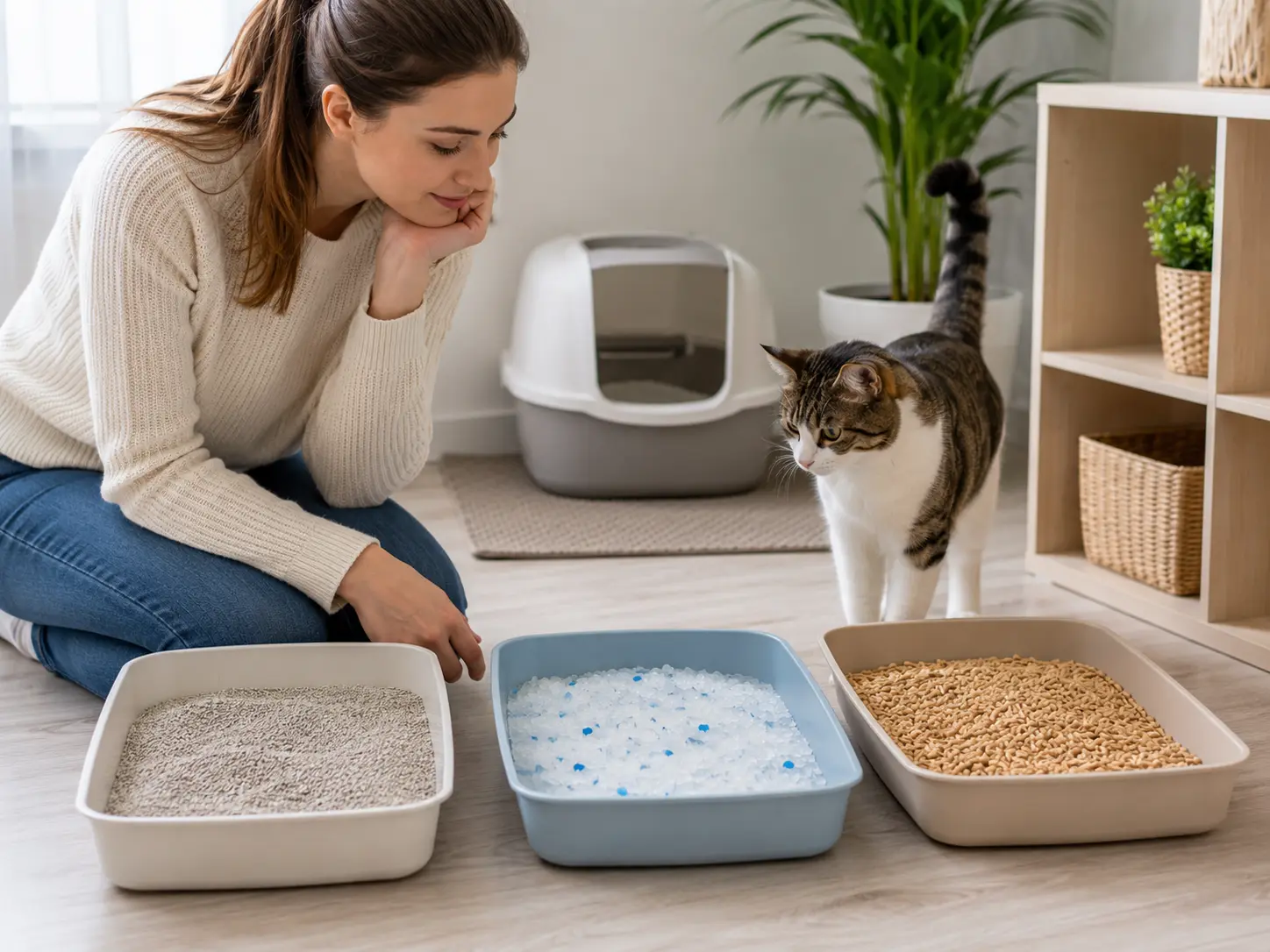
Choosing the right cat litter is not just about keeping your home smelling fresh. It also affects whether your cat uses the litter tray reliably, how much dust spreads around the house, how comfortable the litter feels under your cat’s paws, how easy daily cleaning is and whether toileting problems start later. In the UK, common choices include clumping clay, silica crystals, wood pellets, tofu litter, paper litter and other natural cat litters. The best option depends on odour control, dust level, tracking, clumping strength, kitten safety, multi-cat performance, tray type and your cat’s personal preference. This guide explains how to choose cat litter, which litter controls smell best, whether scented litter is a bad idea, how to change litter safely and what to do if your cat stops using the litter tray.
Cat litter looks like a small purchase until it goes wrong. Then the whole house starts paying for it. Bad litter can smell, turn dusty, stick to paws, scatter across the floor, form weak clumps, irritate sensitive cats and make the litter tray unpleasant. Once a cat starts avoiding the tray, the problem becomes much bigger than choosing a different bag of litter.
The strongest way to choose cat litter is not to chase one magical “best cat litter” label. There is no single perfect product for every cat. A kitten, a senior cat, a long-haired cat, a cat with respiratory sensitivity, a multi-cat household, a small flat and an automatic litter box may all need different setups. The winning choice is the litter your cat accepts, you can clean consistently, and your home can live with long term.
What Matters Most When Choosing Cat Litter?
Most owners focus on smell first. That is understandable, but it is too narrow. Odour control matters, but so do dust, texture, clumping, tracking, tray size, cleaning routine and whether the cat actually likes using it. A litter that smells good to you but feels unpleasant to your cat is not a good litter.
When choosing cat litter, look at:
- Clumping strength
- Odour control
- Dust level
- Tracking around the home
- Texture under the paws
- Absorbency
- Whether it is scented or unscented
- Suitability for kittens
- Suitability for senior cats
- Multi-cat performance
- Compatibility with covered or automatic litter trays
- Ease of daily scooping
- Long-term cost
- Your cat’s acceptance
The mistake is choosing litter only for the human. A heavily scented litter may smell clean to you but feel overpowering to your cat. A cheap litter may look good on the shelf but break into wet sludge at the bottom of the tray. A hard pellet may be tidy for your floor but uncomfortable for a kitten or older cat. Your cat’s behaviour is the final test.
Main Types of Cat Litter
In the UK, cat litter usually falls into a few big groups: clumping clay litter, non-clumping clay litter, silica crystal litter, wood pellet litter, tofu litter, paper litter and other natural or plant-based litters. Each has strengths and weaknesses. Do not think in brand names first. Think in material, texture and cleaning behaviour.
Clumping Clay Cat Litter
Clumping clay is one of the most common choices because it is familiar, widely available and usually easy to scoop. When your cat urinates, the litter forms a clump that can be removed with a scoop. This makes daily cleaning more precise and helps keep the tray fresher if you keep up with the routine.
Advantages of clumping clay litter:
- Usually forms easy-to-remove clumps
- Good daily cleaning control
- Often strong odour control
- Many cats like the sand-like texture
- Widely available in UK shops and online
- Can work well in multi-cat homes if high quality
Disadvantages of clumping clay litter:
- Poor-quality versions can be dusty
- Fine particles may track around the home
- Heavy bags can be inconvenient
- It should not be flushed
- Weak clumps can break apart and make the tray smell
- Some products stick to the bottom if the tray is too shallow
If you choose clumping clay, prioritise low dust, unscented or lightly scented, firm clumping and low tracking. Do not buy the cheapest option if it turns into paste. Cheap litter that needs replacing constantly is not actually cheap.
Non-Clumping Clay Cat Litter
Non-clumping clay absorbs liquid but does not form firm clumps. Some owners still use it, especially when cats are already used to it. However, it can be harder to remove urine precisely, so odour can build if the full tray is not changed often enough.
Non-clumping litter may suit some cats, but it requires discipline. If you do not change the whole tray regularly, smell will become a problem. For owners who want easy daily scooping, good clumping litter is usually more practical.
Silica Crystal Cat Litter
Silica crystal litter absorbs moisture and can control odour well in some homes. It is often marketed as long-lasting and low-maintenance. Some owners like that it does not behave like traditional clay. But cats are not always impressed by the hard crystal texture.
Advantages of silica litter:
- Can offer strong moisture absorption
- May control odour well when used correctly
- Often lighter than clay
- Can be convenient for some owners
- Some products help make urine changes more visible
Disadvantages of silica litter:
- Some cats dislike the hard crystals
- The texture can feel sharp or noisy under paws
- It may not suit kittens that investigate litter with their mouth
- Odour can become strong if the tray is left too long
- It is usually not biodegradable
If your cat steps into the tray, hesitates, shakes their paws, leaves quickly or starts toileting just outside the tray after switching to silica, listen to that behaviour. The litter may be convenient for you but wrong for the cat.
Wood Pellet Cat Litter
Wood pellet litter is a popular natural option in the UK. It can be good for owners who want a lower-dust, less clay-heavy alternative. When wet, many wood pellets break down into sawdust-like material, so the cleaning method is different from clumping clay.
Advantages of wood pellet litter:
- Often lower dust than poor-quality clay
- Natural wood scent can help with odour
- Less fine tracking than some clay litters
- Can be more environmentally appealing
- Often reasonably affordable
Disadvantages of wood pellet litter:
- Some cats dislike the larger pellet texture
- Cleaning is less familiar if you are used to clumping litter
- Wet pellets break down and need the right tray routine
- Not all cats enjoy digging in pellets
- Senior cats or kittens may find large pellets uncomfortable
Wood pellets can be excellent for some homes, but do not force them on a cat that clearly hates the texture. If you are switching from clay to pellets, do it gradually.
Tofu Cat Litter
Tofu cat litter is a plant-based option that has become more popular because it is often lightweight, lower dust and clumping. Many owners like it because it feels cleaner and less harsh than clay. Some products claim to be flushable, but you should be cautious with flushing any cat litter because plumbing, local rules and parasite risk can complicate that advice.
Advantages of tofu litter:
- Often lightweight
- Usually lower dust than poor-quality clay
- Can form clumps
- Plant-based and more eco-conscious
- May feel softer than hard pellets or crystals
Disadvantages of tofu litter:
- Usually more expensive than basic clay
- Clumping performance varies by brand
- Can break down in damp conditions
- Some cats dislike the smell or texture
- Storage matters because plant-based litter can be affected by moisture
Tofu litter can be a strong option if you want low dust and easier handling. But do not assume “natural” automatically means better. The real test is whether it clumps well, controls odour and your cat uses it without hesitation.
Paper Cat Litter
Paper litter is often used for cats with sensitive paws, after certain procedures or when dust needs to be minimised. It can be soft and light, but it may not control odour as strongly as some clumping products. Cleaning frequency becomes very important.
Paper litter may be useful for:
- Kittens with sensitive paws
- Senior cats
- Cats recovering from surgery, if recommended by a vet
- Cats that struggle with dusty litter
- Short-term special care situations
The weakness is usually odour and moisture management. If you use paper litter, keep the tray very clean and monitor whether your cat still digs and covers normally.
Clumping or Non-Clumping Cat Litter?
For most indoor cat households, high-quality clumping litter is easier to manage. It lets you remove urine and faeces more accurately each day, which helps odour control and keeps the tray more acceptable to the cat. The key is quality. Weak clumps that crumble are almost worse than no clumps because they spread dirty material through the tray.
Clumping litter is usually better if you want:
- Daily scooping
- Better urine removal
- Easier odour control
- More visible toileting changes
- A cleaner tray between full changes
Non-clumping litter can work, but only if the tray is changed fully and often enough. If you are not disciplined with cleaning, non-clumping litter can become smelly quickly. Be honest about your routine before choosing it.
Low Dust Cat Litter: Why It Matters
Low dust litter is not a luxury feature. It matters for cleanliness and comfort. Dust can spread around the tray, settle on nearby surfaces, stick to fur and paws, and become worse inside covered trays. It is especially important for kittens, senior cats, cats with respiratory sensitivity and homes where people have allergies.
Dusty litter can cause problems such as:
- Grey dust around the tray
- Dust on paws and fur
- More mess on floors and furniture
- Sneezing or irritation in sensitive cats
- Poor air quality inside covered litter trays
- More cleaning work for the owner
If a litter creates a cloud when you pour it, leaves a powdery layer around the tray or makes your cat sneeze after digging, it is not good enough. The label may say “low dust”, but your home test is what matters.
Scented or Unscented Cat Litter?
Unscented cat litter is usually the safer starting point. Cats have a strong sense of smell, and fragrances that seem fresh to humans can be unpleasant for them. Lavender, powder, floral and “fresh linen” scents may mask odour for the owner but make the tray less attractive to the cat.
Scented litter can cause issues if:
- Your cat avoids the tray after the change
- Your cat enters and leaves quickly
- Your cat toilets just outside the tray
- The smell becomes intense inside a covered tray
- Your cat has respiratory or skin sensitivity
- The scent hides the fact that the tray is not clean enough
If the tray smells bad, stronger perfume is not the solution. The solution is better litter performance, daily scooping, enough litter trays, correct tray placement, full tray changes and proper washing. Perfume is not hygiene.
Which Cat Litter Controls Odour Best?
The best odour control comes from three things working together: good litter, enough tray depth and consistent cleaning. A premium litter cannot save a tray that is left dirty for days. A cheap litter can also fail even if you scoop daily because it does not lock moisture or odour properly.
To reduce litter tray smell:
- Scoop urine clumps and faeces daily
- Use enough litter depth for proper clumping
- Choose low dust, firm-clumping litter
- Avoid relying on perfume
- Wash the tray regularly
- Keep the tray away from food and water bowls
- Do not place the tray in a cramped, airless corner
- Use more than one tray in multi-cat homes
- Replace old scratched trays that hold odour
- Watch for sudden changes in urine smell or frequency
If urine smell suddenly becomes stronger, your cat is visiting the tray more often, straining, crying or toileting outside the tray, do not treat it as a litter problem only. It may be a health issue and should be checked by a vet.
Best Cat Litter for Kittens
Kitten litter should be gentle, easy to access and not overwhelming. Kittens are learning toileting routines, and some may investigate litter with their mouths. A harsh, dusty, heavily scented or hard-textured litter can make training harder.
For kittens, look for:
- Low dust
- Unscented or very mild litter
- Soft texture under the paws
- A shallow, easy-entry tray
- Easy cleaning for the owner
- A calm tray location
- Slow litter changes
- No punishment for accidents
If a kitten tries to eat litter, change the setup and speak to a vet if it continues. Do not ignore litter eating. It may be curiosity, but it can also become risky depending on the litter type and amount. For wider early-care planning, read the kitten care guide.
Cat Litter for Senior Cats
Senior cats need comfort and access. A litter that worked when your cat was young may become uncomfortable later. Arthritis, reduced mobility, kidney disease, constipation, urinary issues and weaker muscles can all affect litter tray use. The problem may not be the cat being difficult; the tray may simply be harder to use.
For senior cats:
- Use a low-entry tray
- Choose soft, low dust litter
- Keep trays close and easy to reach
- Put trays on each floor if needed
- Clean more frequently
- Monitor urine clump size
- Watch for constipation or diarrhoea
- Do not dismiss accidents as “old age”
If an older cat suddenly toilets outside the tray, investigate properly. Pain, urinary disease, kidney issues, constipation, stress or tray access can all be involved. Changing litter alone may not be enough.
Cat Litter for Multi-Cat Homes
Multi-cat homes expose weak litter fast. A product that works for one cat may smell, crumble or track badly when used by three cats. But the bigger issue is often not the litter itself; it is the number and placement of litter trays.
For multi-cat homes:
- Use multiple litter trays
- Do not place all trays side by side in one corner
- Spread trays across different quiet areas
- Scoop at least daily, often more
- Choose strong clumping and good odour control
- Watch for one cat blocking another cat’s access
- Avoid covered trays if they create ambush points
- Track each cat’s toileting behaviour separately
If you are introducing cats to each other or managing a dog-cat household, toileting resources matter. Cats do not always like sharing important resources, and a stressful litter setup can cause avoidance. For wider home harmony, read the dog and cat living together guide.
The Litter Tray Matters as Much as the Litter
A good litter in a bad tray can still fail. The tray must be large enough, easy to enter, clean, quiet and placed where the cat feels safe. A tiny tray with a lid may suit your room layout, but it may not suit your cat’s body or behaviour.
A good litter tray should be:
- Large enough for the cat to turn around comfortably
- Easy to enter and leave
- Placed away from food and water
- Placed in a quiet but accessible area
- Not trapped behind noisy appliances
- Cleaned regularly
- Replaced if the plastic is scratched and holding smell
- Suitable for your cat’s age and mobility
Covered trays are not automatically better. Some cats like privacy, but others dislike being enclosed. Covered trays can trap odour and make the space feel unsafe, especially in multi-cat homes where another cat could block the exit. If your cat avoids a covered tray, try a large open one.
How Often Should You Clean Cat Litter?
Cleaning frequency is where many owners lose the battle. Good litter still needs daily work. With clumping litter, urine clumps and faeces should be removed every day. In multi-cat homes, checking twice daily may be more realistic.
A strong cleaning routine includes:
- Scoop clumps and faeces daily
- Check more often in multi-cat homes
- Top up litter to maintain depth
- Empty the tray fully when the base is dirty or the smell persists
- Wash the tray regularly
- Use mild, cat-safe cleaning methods
- Avoid strong-smelling disinfectants
- Let the tray dry fully before refilling
- Replace old trays that hold odour
If the house smells but you only scoop every few days, the problem is not mysterious. The routine is not good enough. No litter brand can compensate for a dirty tray.
How Deep Should Cat Litter Be?
Litter depth affects clumping, odour and digging comfort. Too little litter means urine hits the tray base quickly and sticks. Too much litter may scatter everywhere when your cat digs. The right depth depends on the litter type and your cat’s digging style.
General depth guidance:
- Clumping litter usually needs enough depth to form full clumps before urine reaches the base
- Silica litter should be used according to the product instructions
- Wood pellets may need a different depth, especially with a sifting tray
- Heavy diggers may need a larger or higher-sided tray
- Kittens and senior cats may need easier tray access more than extra depth
If clumps keep sticking to the bottom, either the litter is weak, the tray is too shallow, or you are not using enough litter. Fix the setup before blaming the cat.
How to Stop Cat Litter Tracking Around the House
Tracking is the litter that leaves the tray on your cat’s paws and spreads across the floor. Fine clay litter often tracks more than larger pellets, but tray design, litter mats and your cat’s coat also matter. Long-haired cats can carry litter between the toes and in the fur around the paws.
To reduce tracking:
- Choose low-tracking litter
- Use a good litter mat outside the tray
- Try a larger tray
- Use higher sides if your cat digs aggressively
- Avoid placing the tray in a narrow hallway
- Check paw fur in long-haired cats
- Vacuum the tray area frequently
- Test slightly larger granules if your cat accepts them
If litter is everywhere, do not automatically blame the cat. A small tray, bad mat, very fine litter and poor tray location can create the mess.
How to Change Cat Litter Safely
Changing cat litter suddenly is one of the easiest ways to create tray avoidance. A cat that has used clumping clay for years may not accept wood pellets overnight. The smell, texture, sound and digging feel all change at once.
A safer litter change process:
- Mix a small amount of the new litter into the old litter
- Increase the new litter gradually over several days
- Slow down if your cat hesitates
- Do not move the tray at the same time
- Do not change tray type at the same time
- Keep the tray very clean during the transition
- Never punish accidents
- If avoidance continues, consider health and stress causes
The worst plan is changing the litter, tray and tray location on the same day. Then you have no idea which change caused the problem. Change one thing at a time.
Why Has My Cat Stopped Using the Litter Tray?
Yes, the litter can be the reason. But do not stop there. A cat avoiding the tray may be reacting to litter smell, texture, dust, dirty conditions, tray location, another cat, stress, pain, diarrhoea, constipation or urinary disease.
Litter-related signs may include:
- Your cat avoids stepping into the tray
- Your cat enters and exits quickly
- Your cat toilets just outside the tray
- The problem started after changing litter
- Your cat does not dig or cover as usual
- Your cat seems bothered by scent or dust
- Your cat prefers another tray with a different litter
Health warning signs are different. If your cat strains, cries, passes very little urine, urinates more often, has blood in urine, has diarrhoea, vomits, seems lethargic or stops eating, do not treat it as a litter preference issue. Call a vet. For related symptoms, read cat diarrhoea causes and warning signs and why your cat is being sick and when to worry.
Open or Covered Litter Tray?
Covered trays look cleaner to humans, but cats do not always agree. A covered tray can reduce visible mess and litter scatter, but it can also trap smell, reduce space and make the cat feel enclosed. Some cats love them. Some cats reject them.
Open tray advantages:
- More space and visibility for the cat
- Less trapped odour
- Easier entry and exit
- Better for large, senior or nervous cats
- Easier for owners to inspect and clean
Covered tray advantages:
- Can reduce litter scatter
- Looks tidier in small spaces
- May give some cats privacy
- Can help contain some odour if cleaned properly
The cat decides. If your cat avoids a covered tray, do not argue with the evidence. Try a large open tray in a quiet location.
Cat Litter for Automatic Litter Boxes
Automatic litter boxes can be useful, but they are not magic. Many systems need a specific litter type to work properly. A litter that is too light, too large, too dusty, too slow to clump or pellet-based may jam, smear or fail to separate waste properly.
For automatic litter boxes:
- Check the manufacturer’s recommended litter type
- Use firm, fast-clumping litter if required
- Avoid dusty litter that coats sensors or mechanisms
- Avoid litter that turns into sticky paste
- Check whether pellets or tofu litter are compatible
- Introduce the machine slowly if your cat is nervous
- Keep a normal tray available during transition
If your cat stops using the tray after you buy an automatic system, the issue may be sound, movement, enclosed space, smell, litter type or fear. Technology can create a new problem if the cat does not accept it.
Cat Litter and Health Monitoring
The litter tray is one of the best daily health monitors in your home. It shows urine size, frequency, stool quality, diarrhoea, constipation, blood, mucus, smell changes and changes in toileting behaviour. Owners who clean daily notice problems earlier.
Watch for:
- Much larger urine clumps
- Very small or frequent urine clumps
- Straining in the tray
- Blood in urine or stool
- Very loose stools
- Hard, dry stools
- Crying in the tray
- Sudden toileting outside the tray
- Strong change in urine smell
- Reduced appetite or vomiting alongside tray changes
Sudden litter tray changes can be medical. If you recently adopted a cat or kitten, build the litter setup into a proper first health plan. The guide on what should be done during your pet’s first vet visit can help you think through that first check-up properly.
Cat Litter After Neutering
Most neutered cats do not need a special litter just because they are neutered. But after surgery, comfort and wound cleanliness matter. If your cat has just been spayed or castrated, follow your vet’s advice about litter, wound protection and activity restriction. Some cats may need a softer or less dusty setup during recovery.
For neutered cats long term:
- Keep the tray easy to access
- Monitor urine clumps regularly
- Use a tray large enough for weight changes
- Choose low dust litter
- Clean consistently
- Watch for urinary behaviour changes
- Do not ignore weight gain
Neutering can affect appetite and weight, and weight gain can make litter tray access harder over time. For surgery, aftercare and weight control details, read the cat neutering age, cost, risks and recovery guide.
Cat Litter and Pet Allergies
If someone in the home has allergies or respiratory sensitivity, cat litter choice becomes more important. Dusty litter can make the environment feel worse, even if the cat itself is not the only issue. Low dust, unscented litter and consistent cleaning are usually better than heavily fragranced products.
For allergy-sensitive homes:
- Choose low dust litter
- Avoid strong fragrances
- Keep trays out of bedrooms if possible
- Scoop daily
- Ventilate the tray area
- Use a good mat to reduce tracking
- Wash hands after cleaning
- Replace dusty products quickly
If allergies are part of your household reality, litter is only one part of the system. You may also need grooming, cleaning and room management. For the wider setup, read living with pet allergies.
So, What Is the Best Cat Litter?
The best cat litter is the one your cat uses comfortably, that controls odour without heavy perfume, creates minimal dust, does not track excessively, clumps or absorbs reliably, suits your tray system and fits your cleaning routine. That may be clumping clay for one home, wood pellets for another, tofu litter for another and silica for another.
Use this quick decision guide:
- For easy daily cleaning: choose high-quality clumping litter.
- For low dust priority: consider low dust clay, tofu, paper or wood pellet options.
- For strong odour control: choose firm clumping, good absorbency and clean daily.
- For kittens: use soft, low dust, unscented litter and an easy-entry tray.
- For senior cats: prioritise soft texture and low-entry trays.
- For multi-cat homes: use multiple trays and strong-performing litter.
- For less tracking: test low-tracking litter, a bigger tray and a proper litter mat.
- For automatic boxes: follow the machine’s litter compatibility rules.
The smartest approach is controlled testing. Change one thing at a time. If you change the litter type, tray location and tray style all at once, you will not know what caused success or failure.
Common Cat Litter Mistakes
- Choosing only by price: cheap litter can cost more if it smells, crumbles or needs frequent replacement.
- Using strong scented litter: your cat may hate the smell even if you like it.
- Ignoring dust: dust affects cleanliness and sensitive cats.
- Using a tiny tray: cats need room to turn, dig and cover.
- Not having enough trays: multi-cat homes need more resources.
- Changing litter suddenly: sudden changes can trigger tray avoidance.
- Cleaning too rarely: no litter works well in a dirty tray.
- Forcing a covered tray: some cats dislike enclosed toilets.
- Blaming behaviour before checking health: urinary and digestive problems can look like litter refusal.
- Thinking one brand solves everything: tray placement, cleaning and cat preference matter too.
Questions to Ask Before Buying Cat Litter
Before buying a new litter, ask practical questions. This cuts through marketing and gets you closer to the right choice.
- Is my cat a kitten, adult or senior?
- Does my cat have respiratory sensitivity?
- Does anyone at home struggle with dust or allergies?
- Is the tray open, covered or automatic?
- How many cats are in the home?
- Can I scoop every day?
- Is smell, dust or tracking the biggest problem?
- Does my cat prefer fine, sand-like litter or larger pellets?
- Has my cat rejected scented litter before?
- Can I transition gradually?
- Will this litter still be affordable long term?
If you cannot answer these questions, you are not choosing; you are guessing. Guessing is how litter tray problems start.
Final Word: Cat Litter Is a Core Part of Cat Care
How do you choose cat litter? You choose it by balancing your cat’s comfort, your cleaning routine, odour control, dust, tracking, tray type and health monitoring. Clumping clay can be practical, silica can control moisture well in some homes, tofu can be lightweight and low dust, wood pellets can be natural and tidy, and paper can suit sensitive paws. None of them is automatically best for every cat.
The strongest setup is simple: choose low dust, unscented or gently scented litter that your cat accepts; use a tray large enough for normal digging and turning; place it somewhere quiet and accessible; scoop every day; change litter gradually; use enough trays in multi-cat homes; and take sudden toileting changes seriously.
Cat litter is not just a cleaning product. It is part of your cat’s daily welfare system. Get it wrong and you invite smell, mess and toileting problems. Get it right and your cat feels safer, your home stays cleaner and you spot health changes earlier.
Frequently Asked Questions
What is the best cat litter?
The best cat litter is the one your cat uses comfortably and you can keep clean every day. For many homes, a low dust, unscented, clumping litter works well. However, some cats prefer wood pellets, tofu litter, paper litter or silica. Cat preference, odour control, dust, tracking, tray type and cleaning routine all matter.
How do I choose cat litter?
Choose cat litter by checking clumping strength, odour control, dust level, tracking, texture, absorbency, scent, kitten safety, multi-cat performance and whether your cat accepts it. Do not choose by price or brand alone. A good litter should be comfortable for the cat and easy for you to clean consistently.
Is clumping cat litter better?
Clumping cat litter is often easier for daily cleaning because urine forms clumps that can be removed with a scoop. This can help odour control and tray hygiene. The quality matters: weak clumps that break apart can spread dirty litter through the tray. Low dust, unscented clumping litter is often a strong starting point.
Is scented cat litter bad for cats?
Scented cat litter is not ideal for every cat. Some cats dislike strong fragrance and may avoid the litter tray. Unscented litter is usually a safer starting point, especially for kittens, senior cats, sensitive cats or cats with toileting problems. Odour should be controlled through cleaning and absorbency, not heavy perfume.
Which cat litter is best for odour control?
The best odour control usually comes from high-quality clumping or highly absorbent litter combined with daily scooping. Clay, silica, tofu and wood pellets can all work in different homes. If the tray is dirty, no litter will control smell properly. Use enough litter depth, scoop daily and wash the tray regularly.
What cat litter is best for kittens?
For kittens, choose a low dust, unscented or very mild litter with a soft texture and an easy-entry tray. Avoid overwhelming fragrances and hard textures if the kitten hesitates. If a kitten tries to eat litter, change the setup and speak to a vet if it continues. The goal is safe, calm litter training.
How often should cat litter be cleaned?
Cat litter should be scooped daily, removing urine clumps and faeces. Multi-cat homes may need checking more than once a day. The tray should be emptied and washed regularly, especially if odour remains after scooping. A dirty tray is one of the most common reasons cats avoid using it.
How do I change my cat’s litter type?
Change litter gradually by mixing a small amount of the new litter into the old litter, then slowly increasing the amount over several days. Do not change the tray type or tray location at the same time. If your cat hesitates or avoids the tray, slow the transition and keep the tray very clean.
Why has my cat stopped using the litter tray?
A cat may stop using the litter tray because of litter texture, scent, dust, a dirty tray, poor tray location, stress, another cat blocking access, pain, urinary disease, constipation or diarrhoea. If your cat strains, cries, passes little urine, has blood, vomits, has diarrhoea or seems unwell, contact a vet rather than treating it as a litter preference issue.
Is wood pellet cat litter good?
Wood pellet cat litter can be good for owners who want a natural, lower-tracking and often lower-dust option. It may control odour well in some homes. However, some cats dislike the larger pellet texture, and cleaning works differently from clumping clay. Transition slowly and watch whether your cat accepts it.