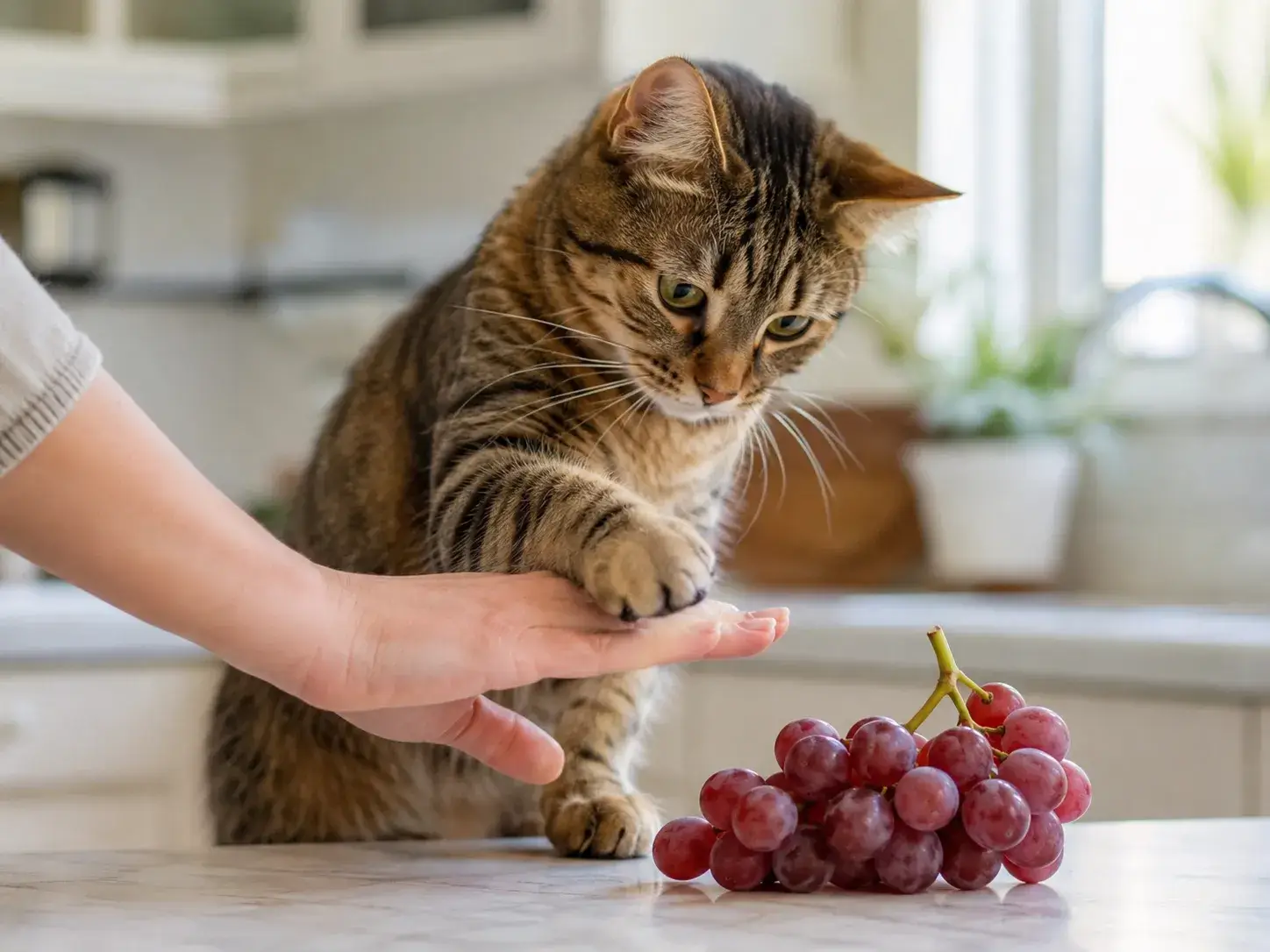
Can cats eat grapes? The safest answer is no. Grapes, raisins, sultanas, currants, seedless grapes, red grapes, green grapes, black grapes, grape juice, raisin bread, hot cross buns, mince pies, Christmas cake, Christmas pudding and dried-fruit mixes should not be treated as safe foods for cats. Grape and raisin toxicity is better documented in dogs, but cats are also advised to avoid these foods because of the potential risk of kidney injury or kidney failure. The difficult part is that there is no reliable safe amount for cats, and a cat can look normal at first even after eating something risky. If your cat ate a grape, stole a raisin, ate a hot cross bun, licked grape juice, swallowed sultanas from a fruit loaf, or ate a dessert containing dried fruit, note what was eaten, how much may have been eaten, when it happened, your cat’s weight and the ingredient list, then call your vet or an emergency vet clinic. Watch for being sick, diarrhoea, reduced appetite, tiredness, tummy pain, drinking more, changes in urination, not passing urine, dehydration, bad breath, mouth discomfort, trembling, hiding or collapse. However, do not wait for symptoms before asking for veterinary advice. This guide explains why grapes and raisins are risky for cats, what symptoms to watch for, what to do first, what not to do at home and when urgent veterinary care is needed.
Grapes can be confusing for cat owners because some cats ignore them completely, while others bat them around like toys, bite them, or steal dried fruit from a bowl. The issue is not whether cats usually like grapes. The issue is that grapes and dried vine fruits are not safe treats for cats and should not be offered deliberately.
This article is not a substitute for veterinary care. It is written to help you act quickly, avoid unsafe home remedies and give your vet the right information. If your cat has eaten grapes, raisins, sultanas, currants or a food containing them, the safest first step is to contact a vet.
Can Cats Eat Grapes?
No, cats should not eat grapes. Grapes are not a safe fruit treat for cats. A cat sniffing, licking or playing with a grape does not mean it is suitable for them to eat. Even if your cat seems interested, grapes should be kept out of reach.
Grapes and grape-containing foods to keep away from cats include:
- green grapes;
- red grapes;
- black grapes;
- seeded grapes;
- seedless grapes;
- raisins;
- sultanas;
- currants;
- dried-fruit mixes;
- grape juice;
- raisin bread and fruit loaf;
- hot cross buns;
- mince pies;
- Christmas cake and Christmas pudding;
- granola, muesli and cereal bars containing dried fruit.
Do not rely on “it was only one grape” as a safety rule. There is no practical safe amount that owners can use confidently at home. The safest approach is simple: do not feed grapes or dried vine fruits to cats at all.
Can Cats Eat Raisins?
No, cats should not eat raisins. Raisins are dried grapes, so they are a concentrated form of the same fruit. They are small, easy to steal and often hidden inside human foods. A cat may eat raisins from a snack bowl, a hot cross bun, a fruit loaf, a mince pie, a cereal bar, a biscuit or a bowl of muesli.
Raisins are especially concerning because:
- they are small and easy to swallow quickly;
- it can be hard to know how many were eaten;
- they are often hidden in cakes, buns and biscuits;
- they may be mixed with other risky ingredients;
- a small cat may be exposed to a meaningful amount;
- owners may not notice the ingestion immediately;
- kidney-related signs may be delayed.
If your cat ate raisins, do not wait to see if they become unwell. Estimate how many may have been eaten, note the time and contact your vet.
Can Cats Eat Sultanas or Currants?
No, cats should not eat sultanas or currants. In the UK, these dried fruits are common in hot cross buns, mince pies, Christmas pudding, Christmas cake, fruit loaf, tea cakes, flapjacks, granola and dried-fruit mixes. They should be treated with the same caution as raisins.
Foods that may contain sultanas or currants include:
- hot cross buns;
- mince pies;
- Christmas cake;
- Christmas pudding;
- fruit loaf;
- tea cakes;
- scones with dried fruit;
- flapjacks;
- granola;
- muesli;
- cereal bars;
- trail mix.
If your cat ate any of these, read the ingredient list and tell your vet exactly what was eaten. The word “dried fruit” on a label can matter.
What Happens If a Cat Eats Grapes?
If a cat eats grapes, they may appear normal at first, or they may develop early digestive signs such as being sick, diarrhoea, drooling, reduced appetite or tummy discomfort. The main concern is possible kidney injury. Kidney problems can become serious, especially if treatment is delayed.
Possible signs after grape or raisin ingestion include:
- being sick;
- diarrhoea;
- drooling;
- reduced appetite;
- tummy pain;
- restlessness;
- tiredness;
- hiding;
- drinking more than usual;
- urinating more than usual;
- urinating less than usual;
- not passing urine;
- dehydration;
- bad breath;
- mouth discomfort;
- trembling;
- collapse or severe weakness.
These signs can also occur with other illnesses, but if you know your cat ate grapes, raisins, sultanas or currants, you should treat the situation as a potential poisoning risk and speak to a vet.
Why Are Grapes Risky for Cats?
The exact reason grapes and dried vine fruits can be dangerous to pets is not simple for an owner to judge at home. The best-known concern is kidney injury, which can become life-threatening if severe. In cats, the evidence is less extensive than in dogs, but veterinary advice is still to avoid grapes, raisins, sultanas and currants because the possible consequence is serious and the fruit offers no necessary benefit.
Grape and raisin risk is difficult because:
- there is no clear safe amount for cats;
- individual sensitivity may vary;
- raisins and sultanas are concentrated dried forms;
- the cat may look normal at first;
- kidney signs may not be obvious immediately;
- small cats have low body weight;
- dried fruit can be hidden inside human food;
- other ingredients in cakes or desserts may add extra risk.
For cat owners, the practical rule is not to try to calculate a safe dose. Keep grapes and dried vine fruits away from cats, and call a vet if ingestion happens.
My Cat Ate a Grape: What Should I Do First?
If your cat ate a grape, act quickly and calmly. Do not try to solve it with milk, oil, salt water or home vomiting attempts. Your first job is to remove the food, collect details and call your vet.
First steps:
- Remove grapes or grape-containing food from your cat’s reach.
- Check exactly what your cat ate.
- Work out whether it was a fresh grape, raisin, sultana, currant, juice or baked product.
- Estimate how much may have been eaten.
- Note when it happened.
- Write down your cat’s approximate weight.
- Keep packaging, labels, recipes or photos of the food.
- Watch for being sick, diarrhoea, tiredness, appetite changes, drinking and urination changes.
- Call your vet or an emergency vet clinic.
A useful call sounds like this: “My cat weighs about 4 kg and ate one green grape about 20 minutes ago. She seems normal so far.” Or: “My cat ate part of a hot cross bun and I do not know how many raisins were in it.” That information helps your vet assess the risk.
My Cat Ate Raisins: What Should I Do?
If your cat ate raisins, take it seriously. Raisins are small, concentrated and often eaten without the owner seeing exactly how many were swallowed. They may also be mixed with chocolate, alcohol, nuts, spices or sweeteners in cakes and desserts.
Before calling your vet, prepare:
- your cat’s weight;
- how many raisins may have been eaten;
- whether they were eaten alone or inside food;
- whether the food also contained chocolate, alcohol, nuts or sweeteners;
- when it happened;
- whether your cat has been sick;
- whether there is diarrhoea;
- whether your cat is drinking normally;
- whether your cat is passing urine;
- whether your cat is tired, hiding or refusing food.
If you do not know how many raisins were eaten, say that clearly. Do not guess confidently if you are unsure. Your vet needs honest information, not a tidy story.
My Cat Ate One Grape. Is That Dangerous?
If your cat ate one grape, call your vet for advice. Do not panic, but do not dismiss it either. Because there is no reliable safe amount, it is not accurate to say that one grape is always harmless. Your cat’s weight, age, kidney health, whether the grape was swallowed, and how long ago it happened all matter.
Important questions include:
- Did your cat swallow the whole grape or only bite it?
- Was it a fresh grape or a raisin?
- How much does your cat weigh?
- Is your cat a kitten, adult or senior?
- Does your cat have kidney disease or another chronic illness?
- How long ago did it happen?
- Has your cat been sick or had diarrhoea?
- Is your cat eating, drinking and urinating normally?
Have these details ready and let your vet decide the safest next step.
Can Cats Eat Green Grapes?
No, cats should not eat green grapes. The colour does not make grapes safe. Green grapes, red grapes, black grapes, seeded grapes and seedless grapes should all be kept away from cats.
Green grapes can be risky because:
- they are often left in bowls on tables;
- they roll on the floor and attract play behaviour;
- children may offer them to cats;
- they can be bitten or swallowed quickly;
- seedless does not mean safe;
- symptoms may not appear immediately.
If your cat ate a green grape, note the amount and time, then contact your vet.
Can Cats Eat Red or Black Grapes?
No, cats should not eat red or black grapes either. Do not look for a safer colour. For cats, all grapes should be avoided, regardless of whether they are green, red, black, organic, washed, seeded or seedless.
The same safety approach applies:
- there is no reliable safe amount;
- your cat may look fine at first;
- raisins and other dried forms are especially concerning;
- being sick and diarrhoea can be early warning signs;
- drinking and urination changes matter;
- veterinary advice is recommended.
Do not offer any type of grape as a treat or enrichment toy.
My Cat Ate a Grape Seed. What Happens?
If your cat ate a grape seed, the main concern is not just the seed. The bigger issue is that your cat has been exposed to grape. A seed may also irritate the digestive system, but grape ingestion should be assessed as a potential poisoning risk.
Write down:
- how many grapes were involved;
- whether the cat swallowed the seed;
- whether the cat swallowed grape flesh;
- when it happened;
- your cat’s weight;
- whether there is gagging, being sick or diarrhoea;
- whether drinking and urination are normal.
Do not rely on seeded versus seedless as a safety distinction. If your cat ate grape, speak to your vet.
Can Cats Drink Grape Juice?
No, cats should not drink grape juice. Grape juice is not a suitable drink for cats. It may carry the same grape-related concerns, and it can also contain sugar, concentrates, flavourings or other ingredients that are not appropriate for cats.
If your cat drank grape juice, check:
- how much was consumed;
- whether it was pure grape juice or a mixed juice;
- whether it was concentrated;
- whether it contained added sugar or sweeteners;
- whether there were other fruit juices or additives;
- whether your cat has been sick or had diarrhoea;
- whether drinking and urination have changed.
Keep the carton or bottle and call your vet with the ingredient details. Cats should have fresh water, not fruit juice.
Can Cats Eat Raisin Bread, Fruit Loaf or Hot Cross Buns?
No, cats should not eat raisin bread, fruit loaf or hot cross buns. These foods can contain raisins, sultanas or currants, and they may also contain spices, sugar, butter, milk products or other ingredients that can upset the stomach.
Hot cross buns and fruit breads are common UK risks because they are often left on kitchen counters, breakfast tables or Easter spreads. Cats may steal a small piece, lick crumbs or eat a fallen chunk.
If your cat ate one of these foods, check:
- how much of the bread or bun was eaten;
- whether raisins, sultanas or currants were visible;
- whether the product also contained chocolate;
- whether there were spices, nuts or sweeteners;
- when it happened;
- your cat’s weight;
- whether symptoms have started.
Do not say “it was only bread” if the product contained dried fruit. The dried fruit is the key concern.
Can Cats Eat Mince Pies, Christmas Cake or Christmas Pudding?
No, cats should not eat mince pies, Christmas cake or Christmas pudding. These festive foods commonly contain raisins, sultanas or currants. They may also contain alcohol, spices, nuts, butter, sugar and other ingredients that are not suitable for cats.
These foods are especially risky because:
- dried fruit may be spread throughout the product;
- the number of raisins or sultanas eaten may be unknown;
- alcohol may be present in some recipes;
- chocolate may be present in some versions;
- cats may eat crumbs or filling from plates;
- Christmas food is often left within reach during gatherings.
If your cat ate mince pie, Christmas cake or Christmas pudding, keep the packaging or recipe and call your vet. The ingredient list matters.
Symptoms of Grape or Raisin Poisoning in Cats
Grape or raisin ingestion may first cause digestive signs, but kidney-related signs are the bigger concern. Changes in drinking, urination and energy level are especially important to watch.
Early signs may include:
- being sick;
- diarrhoea;
- drooling;
- loss of appetite;
- tummy discomfort;
- restlessness;
- quiet behaviour;
- refusing food.
More serious signs may include:
- marked tiredness;
- hiding;
- drinking much more than usual;
- urinating more or less than usual;
- not passing urine;
- dehydration;
- bad breath;
- mouth discomfort;
- trembling;
- collapse;
- severe weakness.
If your cat is being sick or has diarrhoea after eating grapes or raisins, do not treat it as a simple stomach upset. You can also read why is my cat being sick and when to worry and cat diarrhoea causes and warning signs, but grape or raisin ingestion should still be discussed with a vet.
How Long After Eating Grapes Do Cats Show Symptoms?
Symptoms do not always appear immediately. Some cats may be sick or have diarrhoea earlier, while kidney-related signs can take longer to become obvious. This delay is one reason owners should not rely on the cat looking normal at first.
After grape or raisin ingestion, monitor:
- whether your cat has been sick;
- whether diarrhoea has started;
- whether your cat is refusing food;
- whether your cat is more tired than usual;
- whether drinking has increased;
- whether urination has increased or decreased;
- whether your cat goes to the litter tray but passes little or no urine;
- whether there is bad breath or mouth discomfort;
- whether your cat is hiding;
- whether there is collapse or severe weakness.
Monitoring is useful, but it is not a replacement for veterinary advice. Call your vet as soon as you know your cat ate grapes, raisins, sultanas or currants.
My Cat Ate Grapes but Seems Fine
Your cat seeming fine is reassuring, but it does not prove they are safe. The wrong approach is to do nothing because the cat is still walking, eating or acting normally. Kidney-related signs may not be obvious straight away.
Do not wait at home without advice if:
- you do not know how much was eaten;
- your cat ate raisins, sultanas or currants;
- your cat ate a hot cross bun, mince pie, fruit loaf or Christmas cake;
- your cat is a kitten;
- your cat is senior;
- your cat is small or underweight;
- your cat has kidney disease or another chronic illness;
- being sick, diarrhoea or appetite loss has started;
- drinking or urination has changed.
“My cat seems fine” should not become “I do not need to call the vet.” Early advice is safer than delayed treatment.
Can Grapes Cause Kidney Failure in Cats?
The main concern with grapes, raisins, sultanas and currants is possible kidney injury or kidney failure. Cats are discussed less often than dogs in grape toxicity reports, but the potential consequence is serious enough that these foods should be avoided.
Kidney-related warning signs may include:
- drinking more than usual;
- urinating more than usual;
- urinating less than usual;
- not passing urine;
- frequent litter tray visits with little result;
- loss of appetite;
- being sick;
- marked tiredness;
- bad breath;
- dehydration;
- collapse.
Not passing urine, repeated vomiting, severe tiredness, dehydration and major drinking or urination changes should be treated as urgent signs.
How Many Grapes Are Toxic to Cats?
There is no reliable safe number of grapes for cats. This is why owners should avoid confident statements like “half a grape is fine” or “one raisin cannot hurt”. Individual sensitivity may vary, and raisins, sultanas and currants are concentrated dried forms.
Risk assessment depends on:
- your cat’s weight;
- your cat’s age;
- whether the food was a grape, raisin, sultana or currant;
- how many may have been eaten;
- whether the dried fruit was inside cake, bread or dessert;
- how long ago it happened;
- whether your cat has been sick or had diarrhoea;
- whether drinking or urination has changed;
- whether your cat has kidney disease;
- whether other toxic ingredients were present.
Do not try to calculate a safe dose at home. Call your vet with the facts.
What If a Kitten Eats Grapes or Raisins?
If a kitten eats grapes or raisins, call a vet promptly. Kittens weigh very little, so a small amount may be more significant compared with body weight. Kittens can also become weak or dehydrated more quickly if they start being sick or have diarrhoea.
If a kitten has eaten grapes or raisins, prepare:
- the kitten’s age;
- the kitten’s approximate weight;
- whether it was a grape, raisin, sultana or currant;
- how many may have been eaten;
- when it happened;
- whether the kitten has been sick or had diarrhoea;
- whether the kitten is eating;
- whether the kitten is drinking and passing urine.
Do not wait to see whether a kitten “gets over it”. For wider early-life care, read the kitten care guide.
What If a Senior Cat or Cat with Kidney Disease Eats Grapes?
Senior cats, cats with known kidney disease, cats with chronic illness and cats taking regular medication should be treated with extra caution. If kidney function is already reduced, any possible kidney stress may be more serious.
Higher-risk cats include:
- kittens;
- senior cats;
- small or underweight cats;
- cats with kidney disease;
- cats with liver or heart disease;
- cats with chronic illness;
- cats taking regular medication;
- pregnant or nursing cats;
- cats with recent appetite loss or vomiting.
When you call your vet, mention any known illnesses and medicines. These details can affect whether blood tests, urine checks, fluid support or monitoring are recommended.
Can Cats Die from Eating Grapes?
Severe kidney injury after grape or raisin ingestion can be life-threatening. Not every cat that eats a grape will die, but it is also unsafe to say nothing can happen. Because the possible outcome is serious and the safe amount is unclear, grapes should not be treated casually.
Risk may be higher if:
- raisins, sultanas or currants were eaten;
- the amount is unknown;
- the cat is a kitten or very small;
- the cat is senior or has kidney disease;
- there is repeated vomiting;
- urination decreases;
- the cat cannot pass urine;
- there is severe tiredness;
- dehydration is present;
- veterinary care is delayed.
Do not try to decide at home whether the amount was “enough to be fatal”. Call your vet and let them assess your cat’s real risk.
Why Do Some Cats Show Interest in Grapes?
Cats do not need grapes, but some may still be curious. A grape is small, round and rolls across the floor, so a cat may treat it like a toy. Other cats may be interested in food left on plates, snack bowls, children’s lunchboxes or desserts.
Cats may reach grapes or dried fruit when:
- a fruit bowl is left uncovered;
- a grape rolls onto the floor;
- children offer food to the cat;
- raisins are left in a snack bowl;
- hot cross buns are left on the counter;
- mince pies or Christmas cake are left on plates;
- granola or muesli bowls are left out;
- a cat gets into shopping bags or food packaging;
- guests feed table scraps.
Because grapes roll and dried fruit is small, prevention matters. Pick up dropped grapes and keep dried fruit sealed away.
Safe Alternatives to Grapes for Cats
If you want to give your cat a treat, choose cat-specific treats or food that is known to be safe for cats. Cats do not need grapes, raisins or fruit snacks. Their main diet should be a complete cat food appropriate for their age and health.
Safer options may include:
- cat-specific treats;
- vet-recommended diet products;
- a tiny piece of plain cooked chicken with no salt or seasoning;
- a tiny piece of plain cooked turkey with no salt or seasoning;
- a complete cat food suitable for your cat’s life stage.
For a broader food safety guide, read what can cats eat: safe and toxic foods. If you want to review your cat’s daily diet, see how to choose the best cat food.
What Will the Vet Do If My Cat Ate Grapes?
Your vet’s plan depends on what your cat ate, how much may have been eaten, how long ago it happened, your cat’s weight and whether symptoms are present. Some cats may need monitoring, while others may need tests and supportive care.
Your vet may consider:
- a physical examination;
- weighing your cat;
- assessing the food and amount eaten;
- checking hydration;
- checking whether your cat has been sick or had diarrhoea;
- blood tests;
- kidney value checks;
- urine checks;
- monitoring urine output;
- inducing vomiting if appropriate and safe;
- activated charcoal if the vet considers it useful;
- fluid therapy;
- anti-sickness support;
- hospital monitoring if needed.
These are veterinary procedures, not home instructions. Do not decide yourself whether to make your cat sick or give charcoal. Call your vet and follow their guidance.
What Information Should I Give the Vet?
When you call your vet, clear information makes risk assessment easier. Keep packaging, labels, recipes or photos of the food if available.
Prepare:
- your cat’s age;
- your cat’s weight;
- whether your cat ate grapes, raisins, sultanas or currants;
- the estimated number eaten;
- when it happened;
- whether the dried fruit was inside bread, cake, buns, mince pies or pudding;
- whether chocolate, alcohol, sweeteners or nuts were present;
- whether your cat has been sick or had diarrhoea;
- your cat’s appetite;
- how much your cat is drinking;
- whether your cat is passing urine;
- any known kidney disease or chronic illness;
- any medicines your cat takes.
If you are nervous about an urgent visit, read what should be done at the first vet visit so you know what information matters.
What Not to Do at Home
Some home actions can make the situation more dangerous. If your cat ate grapes or raisins, do not experiment with internet remedies.
Do not:
- try to make your cat sick unless a vet tells you to;
- give salt water;
- give milk to “dilute” the toxin;
- give yoghurt, oil or butter;
- give human medicine;
- give activated charcoal without veterinary advice;
- force your cat to eat;
- force your cat to drink large amounts of water;
- throw away packaging before photographing the ingredients;
- wait for severe symptoms before calling;
- ignore reduced urination or extreme tiredness.
The safest home action is to remove the food, keep your cat calm, collect the information and contact your vet.
First Aid for a Cat That Ate Grapes or Raisins
First aid does not mean treating poisoning at home. Safe first aid means preventing more ingestion, preserving useful information and preparing for veterinary care.
Safe first aid steps:
- remove grapes, raisins, sultanas or currants from your cat’s reach;
- keep the remaining food or packaging;
- take photos of the ingredient list;
- move your cat to a quiet, safe room;
- watch for being sick, diarrhoea, tiredness, drinking and urination changes;
- note the time and appearance of any vomit;
- prepare your cat carrier;
- do not give medicine or home remedies unless your vet instructs you.
For a broader emergency overview, read pet poisoning symptoms and first aid.
How to Stop Your Cat Eating Grapes or Raisins
Prevention is easier than an emergency vet call. Grapes and dried fruits are small, easy to drop and easy to leave within reach. They are common in fruit bowls, lunchboxes, baking ingredients, festive foods and snack mixes.
Practical prevention tips:
- do not leave grapes in open bowls within reach;
- pick up dropped grapes immediately;
- store raisins, sultanas and currants in sealed containers;
- keep hot cross buns away from cats;
- keep mince pies, Christmas cake and Christmas pudding covered and out of reach;
- do not leave fruit loaf or raisin bread on the counter;
- keep granola, muesli and cereal bars sealed;
- use a lidded bin;
- teach children not to feed grapes to cats;
- ask guests not to offer table scraps;
- check floors after preparing fruit or dried fruit.
Many grape and raisin incidents are preventable. The safest home is one where cats cannot reach risky human food at all.
Common Myths About Cats and Grapes
Grape myths can delay veterinary advice. Do not use internet anecdotes to decide that your cat is safe.
Common myths include:
- “Cats do not eat grapes anyway.” False. Some cats bite them, play with them or steal dried fruit.
- “One grape can never matter.” Not a safe rule. The safe amount is not reliable enough for home decisions.
- “Seedless grapes are safe.” False. Seedless does not mean safe.
- “Raisins are tiny, so they are less risky.” False. Raisins are concentrated dried grapes and should be taken seriously.
- “If my cat is not being sick, everything is fine.” False. Kidney-related signs may be delayed.
- “Milk will help.” False. Milk does not remove the risk.
- “I should make my cat sick at home.” False unless a vet specifically instructs you.
The safest rule is simple: if your cat ate grapes, raisins, sultanas or currants, call your vet.
Quick Summary: Can Cats Eat Grapes?
Cats should not eat grapes. Fresh grapes, raisins, sultanas, currants, seedless grapes, green grapes, red grapes, black grapes, grape juice, hot cross buns, mince pies, Christmas cake, Christmas pudding and dried-fruit mixes should not be treated as safe foods for cats. The main concern is possible kidney injury.
If your cat ate grapes or raisins, watch for being sick, diarrhoea, reduced appetite, tiredness, tummy pain, drinking more, changes in urination, not passing urine, dehydration, bad breath, trembling and collapse. However, do not wait for symptoms before contacting a vet.
Do not make your cat sick at home. Do not give salt water, milk, yoghurt, oil, human medicine or activated charcoal unless your vet tells you to. Remove the food, keep packaging, estimate the amount eaten, note the time, prepare your cat’s weight and call your vet.
Frequently Asked Questions
Can cats eat grapes?
No. Cats should not eat grapes. Fresh grapes, green grapes, red grapes, black grapes, seeded grapes and seedless grapes should all be avoided. Grapes are not a safe cat treat because of the possible risk of kidney injury. If your cat ate a grape, contact your vet for advice.
Can cats eat raisins?
No. Cats should not eat raisins. Raisins are dried grapes and can be hidden in hot cross buns, fruit loaf, mince pies, Christmas cake, cereal bars, muesli and dried-fruit mixes. If your cat ate raisins, estimate how many were eaten, note the time and call your vet.
My cat ate a grape. What should I do?
Remove the grapes, note whether your cat ate a fresh grape or dried fruit, estimate the amount, write down the time and prepare your cat’s weight. Keep packaging or ingredient lists if available. Do not try to make your cat sick at home. Call your vet or an emergency vet clinic for advice.
My cat ate one grape. Will they be OK?
Your cat may be OK, but one grape should not be dismissed as automatically safe. There is no reliable safe number of grapes for cats. Your cat’s weight, age, kidney health, whether the grape was swallowed and whether symptoms have started all matter. Call your vet for case-specific advice.
Are green grapes safe for cats?
No. Green grapes are not safe for cats. The colour of the grape does not make it safe. Green, red, black, seeded and seedless grapes should all be kept away from cats. If your cat ate a green grape, note the amount and time, then contact your vet.
Are black grapes safe for cats?
No. Black grapes should not be given to cats. There is no safe colour or type of grape for cats. Organic, washed or seedless grapes are still not suitable. If your cat ate black grapes, contact your vet, especially if the amount is unknown or symptoms have started.
What are grape poisoning symptoms in cats?
Possible symptoms include being sick, diarrhoea, reduced appetite, drooling, tummy pain, tiredness, hiding, drinking more, urinating more or less than usual, not passing urine, dehydration, bad breath, trembling, collapse and severe weakness. Kidney-related signs may be delayed, so contact your vet after ingestion even if your cat seems fine.
Can grapes cause kidney failure in cats?
Grapes, raisins, sultanas and currants are avoided in cats because of the potential risk of kidney injury or kidney failure. Watch drinking, urination, vomiting, appetite and energy level closely, but do not wait for signs before asking for veterinary advice.
Can cats die from eating grapes?
Severe kidney injury after eating grapes or raisins can be life-threatening. Not every cat that eats a grape will die, but the risk should not be ignored. Raisins, sultanas, unknown amounts, kittens, senior cats, cats with kidney disease, repeated vomiting, reduced urination and severe tiredness increase concern.
Should I make my cat sick after eating grapes?
No. Do not try to make your cat sick at home unless a vet specifically tells you to. Do not give salt water, milk, oil, yoghurt, human medicine or activated charcoal without veterinary advice. Remove the food, keep packaging, note the time and amount, and call your vet.