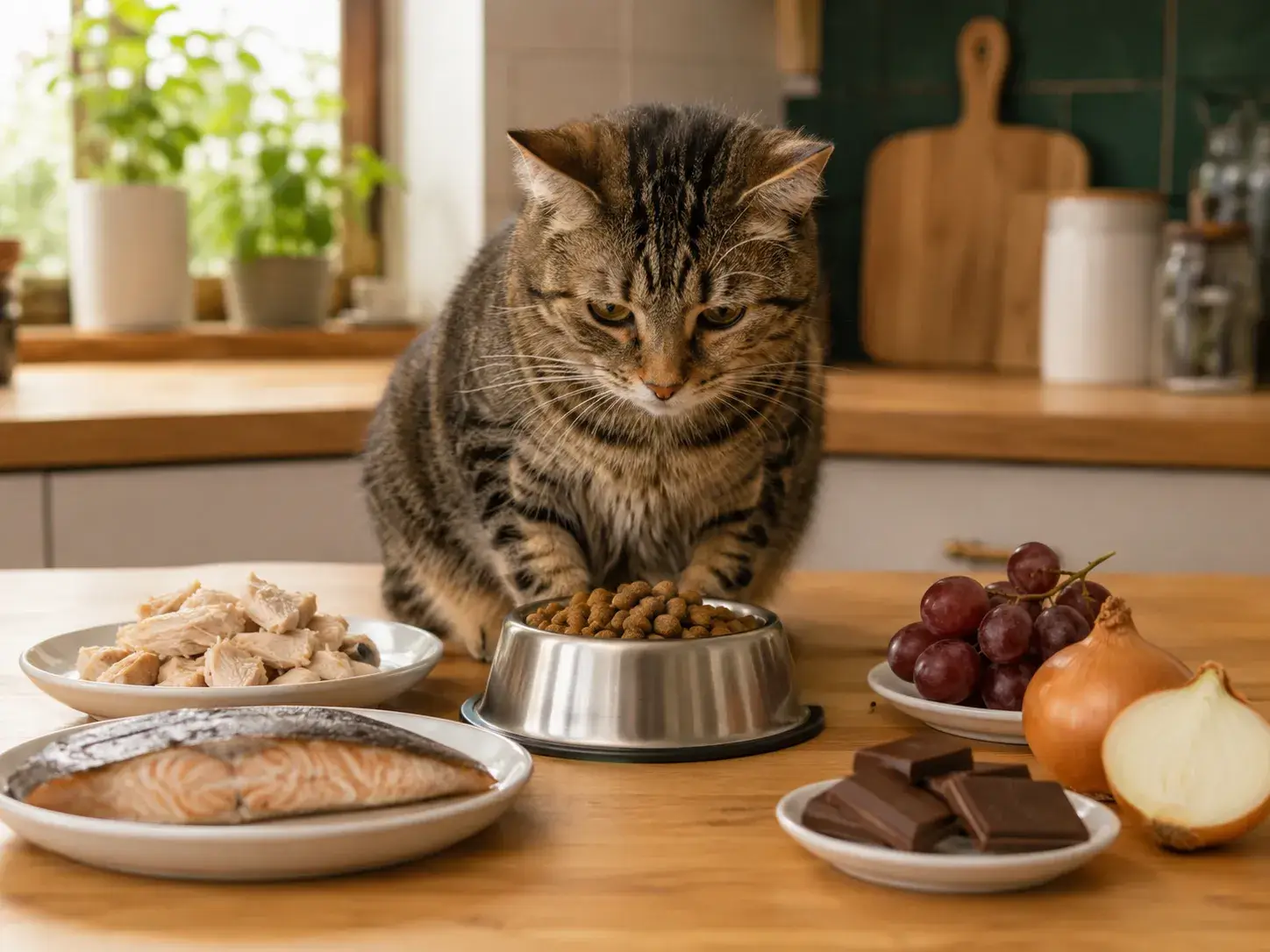
What can cats eat? The answer is not as simple as “cats eat meat”. Cats are obligate carnivores, which means their everyday diet needs suitable animal-based protein, fat, taurine, vitamins, minerals and enough water. For most cats, the safest foundation is a complete and balanced cat food chosen for their age, weight, neutering status, lifestyle and health needs. Small amounts of plain cooked chicken, turkey, well-cooked egg or plain cooked boneless fish may be suitable as occasional extras for some cats, but they should not replace proper cat food. At the same time, chocolate, onion, garlic, leeks, chives, grapes, raisins, alcohol, caffeine, xylitol, raw dough, cooked bones, salty leftovers, spicy food, raw meat, raw fish and spoiled food can be dangerous. This guide explains what cats can eat, which human foods are safer in tiny portions, which foods are toxic to cats, whether cats can drink milk, eat tuna, chicken, eggs, cheese, yoghurt, bread, fruit and vegetables, what kittens and neutered cats should eat, and what to do if your cat eats something harmful.
Cats are curious around food. Your cat may sniff roast chicken, stare at tuna, lick a yoghurt pot, steal a crumb of bread or investigate whatever is on your plate. But curiosity is not the same as safety. A food that is normal for people can be useless, upsetting or dangerous for a cat. Cats have different nutritional needs, a different digestive system and a different tolerance for certain ingredients.
The safest way to answer “what can cats eat?” is to separate everyday nutrition from occasional extras. A cat’s main diet should be complete cat food. Human food, if used at all, should be plain, tiny, occasional and safe. The common mistake is turning little extras into the main diet, or assuming that “natural” and “homemade” automatically means healthy.
What Do Cats Eat?
Cats need a diet built around animal-based nutrients. They are obligate carnivores, so their bodies are adapted to use nutrients from animal tissues. That does not mean every piece of meat is automatically a complete meal. A bowl of plain chicken may contain protein, but it does not provide the full balance a cat needs every day.
A healthy cat diet should usually include:
- a complete cat food suitable for the cat’s life stage;
- animal-based protein;
- essential amino acids such as taurine;
- appropriate fats and fatty acids;
- vitamins and minerals in the right balance;
- fresh water at all times;
- portions that match the cat’s body condition and activity level.
The key word is complete. In the UK, “complete” food is designed to provide the nutrients a cat needs as a main diet. “Complementary” food is not the same thing; it may be a treat, topper or snack that should be fed alongside a complete diet rather than instead of one.
What Is the Best Main Food for Cats?
The best main food for most cats is a complete cat food chosen for their age, body condition and health needs. This may be wet food, dry food or a combination. The right answer depends on the individual cat, not on a single rule that applies to every home.
When choosing a main cat food, consider:
- whether your cat is a kitten, adult or senior;
- whether your cat is neutered;
- whether your cat is underweight, ideal weight or overweight;
- whether your cat drinks enough water;
- whether your cat has urinary, kidney, digestive, allergy or dental concerns;
- whether the label says “complete” or “complementary”;
- whether your vet has recommended a specific diet.
Do not choose a cat food only because it looks premium, has attractive packaging or contains ingredients that sound appealing to humans. What matters is whether the food is complete, suitable and tolerated well by your cat. For a deeper buying guide, read how to choose the best cat food.
Can Cats Eat Human Food?
Some human foods can be offered to cats in tiny amounts, but human food should not become a cat’s main diet. Many meals cooked for people contain salt, oil, butter, sauces, onion, garlic, spices or sweeteners. Even if the main ingredient sounds safe, the full dish may not be.
If you offer a small piece of human food, it should be:
- plain;
- fully cooked where appropriate;
- unseasoned;
- unsalted;
- free from onion, garlic, leeks and chives;
- free from bones and fish bones;
- served in a very small portion;
- used as an occasional extra, not a meal replacement.
For example, a tiny piece of plain cooked chicken breast may be suitable for many cats. Chicken from a curry, takeaway, roast dinner with gravy, garlic butter, stuffing, onion sauce or salty leftovers is not the same thing. With cats, the preparation matters as much as the ingredient.
Human Foods Cats Can Eat in Small Amounts
Some human foods are lower-risk for many cats when they are plain and offered in tiny portions. “Lower-risk” does not mean “good as a daily meal” or “safe for every cat”. Cats with allergies, digestive sensitivity, pancreatitis, kidney disease, urinary problems, obesity or a prescription diet may need stricter rules.
Some foods many cats may tolerate in small amounts include:
- plain cooked chicken;
- plain cooked turkey;
- small pieces of plain cooked lean meat;
- a little well-cooked egg;
- plain cooked boneless fish;
- a tiny amount of plain cooked pumpkin or squash;
- a very small amount of plain cooked carrot;
- a small amount of plain cooked rice in specific situations;
- a tiny amount of plain yoghurt for cats that tolerate dairy.
These foods should be occasional extras. If your cat starts refusing their complete food because they are waiting for chicken, tuna or table scraps, the extra food is already becoming a problem.
Safe Foods for Cats: Quick Table
This table gives a practical overview of common foods people ask about. It does not replace veterinary advice, especially if your cat is young, old, unwell or on a special diet.
| Food | Can Cats Eat It? | Important Note |
|---|---|---|
| Plain cooked chicken | Yes, in small amounts | Must be boneless, skinless, unseasoned and unsalted. |
| Plain cooked turkey | Yes, in small amounts | No bones, skin, gravy, stuffing, garlic or onion. |
| Well-cooked egg | Yes, a little | Do not feed raw egg. Avoid butter, oil, salt and seasoning. |
| Plain cooked fish | Sometimes, in small amounts | Must be boneless and not oily, salty, smoked or seasoned. |
| Tinned tuna | Only rarely, if suitable | Prefer tuna in spring water, not brine or oil. Do not use as a main diet. |
| Plain yoghurt | Only tiny amounts for some cats | Dairy can cause diarrhoea in cats that cannot digest lactose well. |
| Cheese | Generally not recommended | Often salty, fatty and dairy-based. |
| Milk | Usually not recommended | Many adult cats get digestive upset from milk. |
| Bread | Not useful | Plain cooked bread is not nutritionally helpful. Raw dough is dangerous. |
| Chocolate | No | Toxicity risk. Contact a vet if eaten. |
| Onion and garlic | No | Dangerous raw, cooked, powdered or hidden in meals. |
| Grapes and raisins | No | Should be treated as unsafe. |
| Cooked bones | No | Can splinter and injure the mouth, throat, stomach or intestines. |
| Raw meat or raw fish | Not recommended | Bacteria, parasites and nutritional imbalance are concerns. |
Can Cats Eat Chicken?
Yes, many cats can eat a small amount of plain cooked chicken. Chicken is an animal protein, and cats often enjoy it. The important part is how it is prepared. Chicken for cats should be cooked through, plain, boneless and free from salt, seasoning, skin, gravy, onion and garlic.
When giving chicken to a cat:
- remove bones completely;
- remove skin and excess fat;
- avoid salt, spices, sauces and marinades;
- do not feed chicken from curry, gravy or takeaway meals;
- cut it into tiny pieces;
- use it as an occasional extra, not a complete diet.
A cat cannot live well on chicken alone. Plain chicken may be useful as a small treat, training reward or short-term bland protein under veterinary guidance, but it does not replace complete cat food.
Can Cats Eat Turkey?
Cats can eat small amounts of plain cooked turkey, but many turkey dishes made for people are not cat-safe. Festive turkey, roast dinner leftovers, turkey with stuffing, gravy, onion, garlic, butter or herbs should not be given to cats.
Turkey should be:
- plain;
- fully cooked;
- boneless;
- skinless if fatty;
- free from stuffing and gravy;
- free from onion, garlic and seasoning;
- served in tiny pieces.
The safest rule is simple: if the turkey was cooked for people with flavourings, it is probably not suitable for your cat.
Can Cats Eat Fish?
Cats can eat small amounts of plain cooked boneless fish, but fish should not become the whole diet. Many cats love the smell of fish, especially tuna, but liking a food does not mean it is nutritionally complete or safe in large amounts.
Fish for cats should be:
- fully cooked;
- plain;
- boneless;
- unsalted;
- not smoked;
- not fried;
- not served in sauce, brine, oil or spices.
Fish bones are a real risk, especially small bones. Remove them carefully. If your cat coughs, gags, drools, paws at the mouth or seems distressed after eating fish, contact a vet.
Can Cats Eat Tuna?
Cats often love tuna, but tuna should be treated as an occasional extra, not a regular main meal. Tinned tuna made for people is not the same as complete cat food. It may be too salty, packed in oil or brine, and it does not provide the full nutritional balance your cat needs.
If you give tuna at all:
- choose plain tuna in spring water where possible;
- avoid tuna in brine;
- avoid tuna in oil;
- avoid flavoured tuna, sauces and spices;
- offer only a very small amount;
- do not make tuna a daily habit.
Some cats become fussy if tuna is offered too often. They may start refusing their balanced food and waiting for the stronger-smelling option. That is not a harmless preference; it can gradually unbalance the diet.
Can Cats Eat Eggs?
Cats can eat a small amount of well-cooked egg. Egg contains protein, but it should be plain, cooked through and served only occasionally. Raw egg is not recommended because of food safety concerns and because it is not a balanced meal.
If you offer egg:
- cook it fully;
- do not add salt;
- do not add butter or oil;
- do not add pepper, herbs or spices;
- serve only a very small amount;
- watch for being sick, diarrhoea or reduced appetite afterwards.
Scrambled egg cooked with butter, milk, salt or seasoning is not the same as plain cooked egg. Omelette, breakfast leftovers and egg dishes with onion or garlic should not be offered.
Can Cats Drink Milk?
Milk is one of the most common cat myths. Many people imagine a cat happily drinking a saucer of milk, but adult cats usually do not need milk, and many cannot digest lactose well. Milk can cause gas, stomach discomfort, soft poo or diarrhoea.
Important points about milk:
- adult cats do not need cow’s milk;
- milk does not replace water;
- milk can cause diarrhoea in many cats;
- kittens should not be given ordinary cow’s milk;
- orphaned kittens need proper kitten milk replacer under veterinary guidance.
Your cat’s main drink should be fresh water. If a cat does not drink enough, the solution is not to give milk as a daily drink. Instead, look at water bowl placement, bowl type, wet food and veterinary advice if thirst or urination changes.
Can Cats Eat Yoghurt?
Some cats may tolerate a tiny amount of plain yoghurt, but it is not necessary in a cat’s diet. Dairy can still upset the stomach, and flavoured yoghurt often contains sugar, sweeteners, fruit mixtures or additives that are not suitable for cats.
If yoghurt is offered, it should be:
- plain;
- unsweetened;
- free from artificial sweeteners;
- free from fruit, chocolate, honey and flavourings;
- given only in a tiny amount;
- stopped if it causes being sick, diarrhoea, gas or discomfort.
Yoghurt is not a required probiotic plan for cats. If your cat has digestive problems, repeated diarrhoea or vomiting, do not try to fix it with dairy. Get veterinary advice.
Can Cats Eat Cheese?
Cheese is not an ideal cat food. Many cats are interested in it because of the fat and smell, but cheese is often salty, fatty and dairy-based. It can contribute to weight gain and digestive upset, especially in cats that are lactose-sensitive.
Cheese can be a problem because it may be:
- high in salt;
- high in fat;
- difficult for some cats to digest;
- unhelpful for weight control;
- flavoured with onion, garlic, herbs or other risky ingredients.
Do not use cheese as a regular reward. This matters even more for neutered cats, overweight cats, cats with pancreatitis history, digestive sensitivity or cats on a prescription diet.
Can Cats Eat Bread?
Bread is not useful for cats. A tiny piece of plain cooked bread is not usually the biggest emergency, but it does not provide what a cat needs. It is mainly carbohydrate and does not make a good cat treat.
Be careful with bread and dough because:
- raw dough can be dangerous;
- garlic bread should never be given;
- onion bread is unsafe;
- sweet baked goods are unsuitable;
- raisin bread is dangerous;
- bread can add unnecessary calories;
- it may encourage begging at the table.
If you want to reward your cat, use a cat-safe treat or a tiny piece of plain cooked protein instead of bread, pastries or bakery leftovers.
Can Cats Eat Rice?
Cats do not need rice as a normal part of their diet. In some situations, a vet may suggest a small amount of bland food for a short period, but that is different from adding rice to every meal. Rice is not a complete food for cats and should not replace proper cat food.
If rice is used at all, it should be:
- plain;
- well cooked;
- unsalted;
- unseasoned;
- served in a small amount;
- used only when it makes sense for that cat.
Rice from curry, fried rice, pilau, takeaway meals, stock, sauce or buttered dishes is not suitable for cats.
Can Cats Eat Vegetables?
Cats are obligate carnivores, so vegetables are not the foundation of their diet. Some cats may tolerate a small amount of plain cooked vegetable, but vegetables should not replace animal-based nutrition or complete cat food.
Vegetables that may be tolerated by some cats in small amounts include:
- plain cooked pumpkin or squash;
- a little plain cooked carrot;
- small amounts of plain cooked courgette;
- a tiny piece of cucumber for cats that like it.
The more important rule is what to avoid. Onion, garlic, leeks and chives are dangerous for cats. They are risky raw, cooked, powdered, dried or hidden inside soups, sauces, gravy, stuffing and leftovers.
Can Cats Eat Fruit?
Fruit is not necessary for cats. Cats do not need sweet foods, and fruit can add sugar, fibre and digestive upset without offering much benefit. Some fruits may be tolerated in tiny amounts, but others are unsafe.
Small amounts some cats may tolerate include:
- a tiny piece of apple with core and seeds removed;
- a very small piece of banana;
- a tiny seedless piece of watermelon.
Grapes and raisins should not be given to cats. Also avoid fruit stones, pips, stems and sweetened fruit products. Fruit yoghurt, fruit cake, mince pies, fruit loaf and raisin-containing baked goods are not suitable cat treats.
Foods That Are Toxic to Cats
Some foods are not just “not ideal”; they can be dangerous. These should not be offered as treats, and if your cat eats them, it may be safer to contact a vet rather than waiting for symptoms.
Foods and ingredients cats should avoid include:
- chocolate;
- cocoa products;
- coffee, tea, energy drinks and caffeine;
- alcohol;
- onion;
- garlic;
- leeks;
- chives;
- grapes;
- raisins;
- xylitol-containing products;
- raw dough;
- cooked bones;
- raw meat and raw fish;
- mouldy or spoiled food;
- salty, spicy, fatty leftovers;
- dog food as a long-term diet.
The risk depends on the food, the amount eaten, the cat’s size, the cat’s health and when it happened. But with known harmful foods, do not wait for your cat to look seriously ill before asking for help.
Toxic Foods for Cats: Quick Table
This table summarises the highest-risk foods that cat owners commonly search for.
| Food or Ingredient | Why It Is Risky | What to Do |
|---|---|---|
| Chocolate and cocoa | Can cause poisoning signs in cats. | Contact a vet if eaten. |
| Coffee, tea and caffeine | Can affect the heart and nervous system. | Do not wait for symptoms. |
| Alcohol | Very small amounts can be dangerous. | Seek urgent veterinary advice. |
| Onion, garlic, leeks and chives | Can damage red blood cells and cause serious illness. | Treat as risky even when cooked or powdered. |
| Grapes and raisins | Should be treated as unsafe for cats. | Contact a vet if eaten. |
| Xylitol | Found in some sugar-free products and other items. | Keep packaging and call a vet. |
| Raw dough | Can expand and may produce alcohol during fermentation. | Urgent advice may be needed. |
| Cooked bones | Can splinter and injure or block the digestive tract. | Do not induce vomiting; call a vet. |
| Raw meat and raw fish | Bacteria, parasites and diet imbalance are concerns. | Avoid unless specifically planned with veterinary expertise. |
| Mouldy food | May contain harmful toxins. | Contact a vet if eaten. |
Can Cats Eat Chocolate?
No. Cats should not eat chocolate. Chocolate and cocoa products can be toxic to cats. Dark chocolate, cocoa powder, baking chocolate and high-cocoa desserts are especially concerning, but milk chocolate and chocolate-flavoured foods should also be kept away.
Possible signs after eating chocolate may include:
- being sick;
- diarrhoea;
- restlessness;
- fast breathing;
- tremors;
- increased heart rate;
- weakness;
- seizure-like episodes.
If your cat eats chocolate, keep the packaging, estimate how much was eaten and contact a vet. Do not assume a small cat will be fine just because the piece looked small to you.
Can Cats Eat Onion or Garlic?
No. Onion, garlic, leeks and chives should not be given to cats. They can be dangerous whether raw, cooked, powdered, dried or hidden inside a meal. This is one of the biggest problems with leftovers because onion and garlic appear in so many sauces, gravies, soups and seasonings.
Risky examples include:
- onion gravy;
- garlic butter;
- soups made with onion;
- stock or broth containing onion or garlic;
- stuffing;
- takeaway meat with sauce;
- garlic yoghurt dips;
- seasoning mixes containing onion or garlic powder.
If your cat ate something containing onion or garlic, note the time, amount and ingredients, then contact a vet. Do not try to make your cat sick at home.
Can Cats Eat Grapes or Raisins?
No. Grapes and raisins should not be fed to cats. They can be hidden in many foods that people may not immediately think about, such as fruit loaf, cakes, biscuits, cereal mixes, mince pies and some sweet breads.
Foods to watch for include:
- fresh grapes;
- raisins;
- sultanas;
- currants;
- fruit cake;
- raisin bread;
- mince pies;
- cereal or snack mixes with dried fruit.
If your cat eats grapes, raisins, sultanas or currants, contact a vet promptly. If you do not know the amount, say that clearly.
Can Cats Eat Raw Meat?
Raw meat is not recommended as a casual food for cats. It may sound natural because cats are carnivores, but raw meat can carry bacteria and parasites, and raw homemade diets can be nutritionally incomplete if not planned by a qualified professional.
Raw meat risks include:
- bacterial contamination;
- parasites;
- nutritional imbalance;
- incorrect calcium and phosphorus balance;
- cross-contamination in the kitchen;
- higher risk for kittens, senior cats, pregnant cats and unwell cats;
- risk to people in the home, especially children or immunocompromised people.
If you want to feed meat as an occasional treat, plain cooked meat is usually a safer option. If you are considering a raw diet, discuss it with your vet or a veterinary nutrition professional first.
Can Cats Eat Bones?
Cats should not be given cooked bones. Cooked bones can splinter into sharp pieces and may damage the mouth, throat, stomach or intestines. Small bones and fish bones can also cause choking or injury.
Bone-related risks include:
- choking;
- mouth injury;
- throat injury;
- stomach or intestinal damage;
- blockage;
- constipation;
- blood in vomit or poo.
If your cat eats a cooked bone, do not try to make them vomit. Vomiting can cause more damage. Call your vet and explain what type of bone it was, how much may have been eaten and when it happened.
Can Cats Eat Dog Food?
Cats should not eat dog food as their regular diet. A cat may steal a bite from a dog’s bowl, but dog food is not designed to meet a cat’s nutritional needs. Cats have specific requirements, including nutrients that must be supplied appropriately in their diet.
Long-term dog food feeding can lead to problems such as:
- nutrient deficiencies;
- poor coat and skin condition;
- weight and muscle problems;
- eye and heart health concerns;
- general poor nutrition;
- reduced interest in proper cat food.
If cats and dogs live together, feed them separately and remove bowls after meals where needed. For household management, read the dog and cat living together guide.
What Should Kittens Eat?
Kittens need food designed for growth. Their bodies need more energy and a different nutrient balance than adult cats. A kitten should usually eat complete kitten food until they are ready to move to adult food, based on age, growth and veterinary advice.
Kitten feeding should focus on:
- complete kitten food;
- small, regular meals;
- fresh water;
- careful weaning at the right age;
- no cow’s milk;
- no sudden food changes;
- quick action if the kitten is being sick, has diarrhoea or stops eating.
Orphaned kittens need a proper kitten milk replacer, not cow’s milk. Young kittens can become unwell quickly if they are fed wrongly or develop diarrhoea. For early care basics, use the kitten care guide.
What Should Neutered Cats Eat?
After neutering, many cats are more prone to weight gain because appetite and energy needs can change. That does not mean every neutered cat must eat the same food, but it does mean portions, treats, activity and body condition should be watched carefully.
For neutered cats, consider:
- a complete food suitable for neutered adults if appropriate;
- measured portions rather than guessing;
- limiting treats;
- regular play and movement;
- wet food if helpful for hydration;
- routine weight checks;
- veterinary advice if weight changes quickly.
Neutering is not just about the surgery day. Long-term weight and diet management matter. For more detail, read cat neutering: age, cost, risks and recovery.
What Should Senior Cats Eat?
Senior cats need a diet that matches their health, not just their age. Some older cats gain weight, while others lose weight. Some develop kidney disease, thyroid disease, dental pain, digestive sensitivity or reduced appetite. A senior cat that suddenly becomes fussy or loses weight should not simply be called “old”.
Senior cat feeding should consider:
- body weight changes;
- muscle loss;
- water intake;
- tooth and gum health;
- being sick or diarrhoea;
- litter tray changes;
- kidney, thyroid or other medical conditions;
- whether wet food is easier to eat;
- whether a veterinary diet is needed.
If an older cat starts drinking more, eating less, losing weight, being sick, having diarrhoea or changing litter tray habits, book a vet check before making big diet changes.
What Can Stray or Outdoor Cats Eat?
If you want to help a stray or community cat, the safest practical option is usually cat food and clean water. Leftovers, milk, bones, spicy food, salty meat, fish bones and processed meats are not good choices. Outdoor feeding also needs hygiene because food can spoil, attract pests or upset neighbours if left carelessly.
Safer options include:
- dry cat food;
- wet cat food;
- clean water;
- tiny pieces of plain cooked chicken if needed;
- small amounts of plain cooked boneless fish if appropriate.
Do not leave wet food or cooked meat outside for long, especially in warm weather. Keep feeding areas clean and avoid anything with bones, seasoning, onion, garlic, sauces or dairy.
How Much Should a Cat Eat?
There is no single portion size for every cat. The right amount depends on age, weight, body condition, neutering status, activity level, the calorie density of the food and health needs. The feeding guide on the food pack is a starting point, not a perfect rule for every cat.
To manage portions:
- know your cat’s ideal body condition;
- weigh food rather than guessing;
- include treats in the daily calorie total;
- watch for weight gain after neutering;
- feed kittens more frequently if needed;
- avoid constant topping up if your cat overeats;
- ask your vet if your cat is gaining or losing weight.
If your cat suddenly eats much more or much less than usual, do not only adjust the food bowl. Appetite changes can be a health sign.
Why Water Matters in a Cat’s Diet
Cat nutrition is not only about food. Water matters. Some cats are not enthusiastic drinkers, so bowl placement, wet food, water freshness and the number of water stations can all affect daily intake.
To support water intake:
- keep fresh water available at all times;
- clean water bowls daily;
- try placing water away from the food bowl;
- use wide bowls if your cat dislikes whisker contact;
- offer more than one water station;
- consider a pet water fountain if your cat prefers moving water;
- use wet food if suitable for your cat;
- watch for sudden drinking changes.
Drinking much more than usual, drinking much less, straining to wee, visiting the litter tray often or passing very little urine can be serious and should be discussed with a vet.
How to Introduce a New Food to a Cat
Cats can have sensitive stomachs, and sudden changes may lead to being sick, diarrhoea or food refusal. Even a food that is generally safe should be introduced carefully. This is especially important for kittens, senior cats and cats with chronic health conditions.
A sensible new-food plan:
- check that the food is not toxic to cats;
- offer a tiny amount only;
- do not introduce several new foods on the same day;
- watch for being sick, diarrhoea, itching, swelling or reduced appetite;
- stop if your cat reacts badly;
- ask a vet before changing diet in a cat with medical problems;
- transition complete cat food gradually rather than suddenly.
If a new food causes diarrhoea or repeated vomiting, do not keep testing it. Your cat’s digestive system is telling you something.
What If My Cat Ate Something Harmful?
If your cat ate chocolate, onion, garlic, grapes, raisins, alcohol, caffeine, xylitol, raw dough, cooked bones or an unknown substance, act quickly and calmly. Do not wait for dramatic symptoms if the food is known to be risky.
First steps:
- identify what your cat ate;
- estimate the amount;
- note the time it happened;
- keep packaging, ingredient labels or photos;
- note your cat’s approximate weight;
- do not try to make your cat sick unless a vet tells you to;
- do not give milk, oil, salt water or human medicine;
- contact your vet or an emergency vet clinic.
Home remedies can make things worse. If you are unsure whether a food is dangerous, it is safer to ask. For a broader emergency overview, read pet poisoning symptoms and first aid.
Warning Signs After a Cat Eats the Wrong Food
Some food-related problems show quickly. Others take longer. A cat may look normal at first and then become unwell later. That is why knowing what was eaten and when matters so much.
Warning signs can include:
- being sick;
- diarrhoea;
- drooling;
- loss of appetite;
- weakness;
- restlessness;
- tremors;
- breathing changes;
- pale or yellow gums;
- collapse;
- seizure-like episodes;
- blood in vomit or poo;
- straining in the litter tray;
- drinking much more or less than usual.
Vomiting and diarrhoea are common search topics because owners see them first. They can be mild in some cases, but they can also become serious, especially in kittens, senior cats or cats with existing illness. For more detail, use why is my cat being sick and when to worry and cat diarrhoea causes and warning signs.
How to Choose Cat Treats Safely
Treats can be useful for bonding, training, grooming and vet handling practice, but they should stay small. Too many treats can cause weight gain, fussy eating and reduced interest in complete food.
Choose treats by asking:
- Is this made for cats?
- Is it suitable for my cat’s age?
- Does my cat have a health condition or prescription diet?
- How many calories does it add?
- Will this encourage begging or food stealing?
- Does it contain milk, cheese, salt, sugar, onion, garlic or flavourings?
- Has my cat reacted badly to it before?
Treats are not the only way to show love. Play, routine, gentle handling, safe spaces, grooming and attention often matter more than another snack.
What About Homemade Cat Food?
Homemade cat food is risky if it is not professionally formulated. A recipe from social media, a bowl of meat and rice, or a “natural” homemade mix may be missing critical nutrients. Cats can develop serious deficiencies if their diet is unbalanced over time.
Homemade diets can go wrong because of:
- missing taurine;
- incorrect calcium and phosphorus balance;
- too little or too much fat;
- missing vitamins and minerals;
- overuse of liver or fish;
- raw food contamination;
- inconsistent portions;
- recipes not designed by qualified professionals.
If your cat needs a special diet, work with your vet. Do not replace a medical diet with a homemade recipe because it “looks healthier”.
Common Feeding Mistakes Cat Owners Make
Many feeding problems come from good intentions. Owners want to share food, add variety or make the cat happy. The issue is that cats do not need human-style variety, and their bodies do not process many foods the way ours do.
Common mistakes include:
- feeding too many table scraps;
- using tuna as a daily meal;
- giving milk because it seems traditional;
- feeding dog food regularly;
- not checking whether food is complete or complementary;
- changing foods suddenly;
- giving cooked bones;
- letting cats lick plates with onion, garlic or gravy;
- overusing treats;
- ignoring weight gain after neutering;
- trying to treat vomiting or diarrhoea with random foods;
- waiting too long after a toxic food is eaten.
The safest feeding routine is usually boring in a good way: complete food, measured portions, fresh water, limited treats and quick action when something goes wrong.
A Simple Daily Feeding Plan for Cats
A daily feeding plan should match your cat, but the basic structure is simple. Complete food is the foundation, fresh water is always available, treats are limited, and human foods stay occasional.
- Morning: give a measured portion of complete cat food.
- During the day: refresh water and avoid constant table scraps.
- Play time: use a tiny cat-safe treat only if needed.
- Evening: give the next measured meal according to the feeding plan.
- Weekly: monitor weight, appetite, being sick, diarrhoea and litter tray habits.
- Monthly: reassess body condition and treat amounts.
- Vet review: discuss diet if your cat is gaining weight, losing weight, drinking more or refusing food.
If you are preparing for a new cat or your first vet appointment, it helps to bring food details with you: brand, amount, feeding times, treats and any human foods given. Use what should be done at the first vet visit to get organised.
What Can Cats Eat? Quick Summary
What can cats eat? Cats should mainly eat complete cat food that matches their age, weight, neutering status and health needs. Small amounts of plain cooked chicken, turkey, well-cooked egg or plain cooked boneless fish may be suitable as occasional extras for some cats, but they should not replace balanced cat food.
Cats should not eat chocolate, onion, garlic, leeks, chives, grapes, raisins, alcohol, caffeine, xylitol, raw dough, cooked bones, raw meat, raw fish, mouldy food, salty leftovers, spicy meals or fatty table scraps. Milk, cheese, yoghurt, bread, fruit and vegetables are often misunderstood: some are not toxic in tiny amounts, but they are not necessary and can upset the stomach or add calories.
The safest approach is to build your cat’s diet around complete food, keep fresh water available, limit treats, avoid risky human foods and contact a vet quickly if your cat eats something harmful. If your cat is a kitten, senior, neutered, overweight or has a health condition, diet choices matter even more.
Frequently Asked Questions
What can cats eat?
Cats should mainly eat complete cat food that suits their age, weight, neutering status and health needs. Some cats can have tiny amounts of plain cooked chicken, turkey, well-cooked egg or plain cooked boneless fish as occasional extras. Human food should not replace a complete and balanced cat diet.
What foods are toxic to cats?
Foods cats should avoid include chocolate, cocoa, coffee, tea, caffeine, alcohol, onion, garlic, leeks, chives, grapes, raisins, xylitol, raw dough, cooked bones, raw meat, raw fish, mouldy food, salty leftovers and spicy food. If your cat eats a harmful food, contact a vet promptly.
Can cats eat chicken?
Yes, many cats can eat a small amount of plain cooked chicken. It should be boneless, skinless, unsalted and unseasoned. Do not give chicken cooked with onion, garlic, gravy, curry, sauces, butter or spices. Chicken should be an occasional extra, not the whole diet.
Can cats drink milk?
Milk is usually not recommended for adult cats. Many cats cannot digest lactose well and may develop gas, stomach discomfort, soft poo or diarrhoea after drinking milk. Fresh water should be the main drink. Orphaned kittens need proper kitten milk replacer, not ordinary cow’s milk.
Can cats eat tuna?
Cats can have a tiny amount of plain tuna occasionally, but tuna should not be a daily meal. Tinned tuna for people is not complete cat food and may be too salty or packed in oil or brine. If used, choose plain tuna in spring water and keep it rare and small.
Can cats eat eggs?
Cats can eat a very small amount of well-cooked egg. It should be plain, fully cooked and free from salt, butter, oil, spices and seasoning. Raw egg is not recommended. Egg should be an occasional treat, not a regular main food.
Can cats eat cheese?
Cheese is generally not recommended for cats. It is often salty, fatty and dairy-based, and some cats get digestive upset from dairy. Cheese can also add unnecessary calories. Avoid flavoured cheeses containing onion, garlic, herbs or other seasonings.
Can cats eat bread?
Plain cooked bread is not usually the most dangerous food in a tiny amount, but it is not useful or nutritious for cats. Raw dough, garlic bread, onion bread, raisin bread, sweet pastries and flavoured baked goods should not be given to cats.
What should kittens eat?
Kittens should eat complete kitten food designed for growth. They need a different nutrient balance from adult cats. Orphaned kittens need proper kitten milk replacer under veterinary guidance, not cow’s milk. If a kitten is being sick, has diarrhoea or stops eating, contact a vet quickly.
What should I do if my cat ate something poisonous?
Identify what your cat ate, estimate the amount, note the time and keep packaging or ingredient labels. Do not try to make your cat sick, and do not give milk, oil, salt water or human medicine. Contact your vet or an emergency vet clinic promptly, especially for chocolate, onion, garlic, grapes, raisins, alcohol, caffeine, xylitol, raw dough or bones.