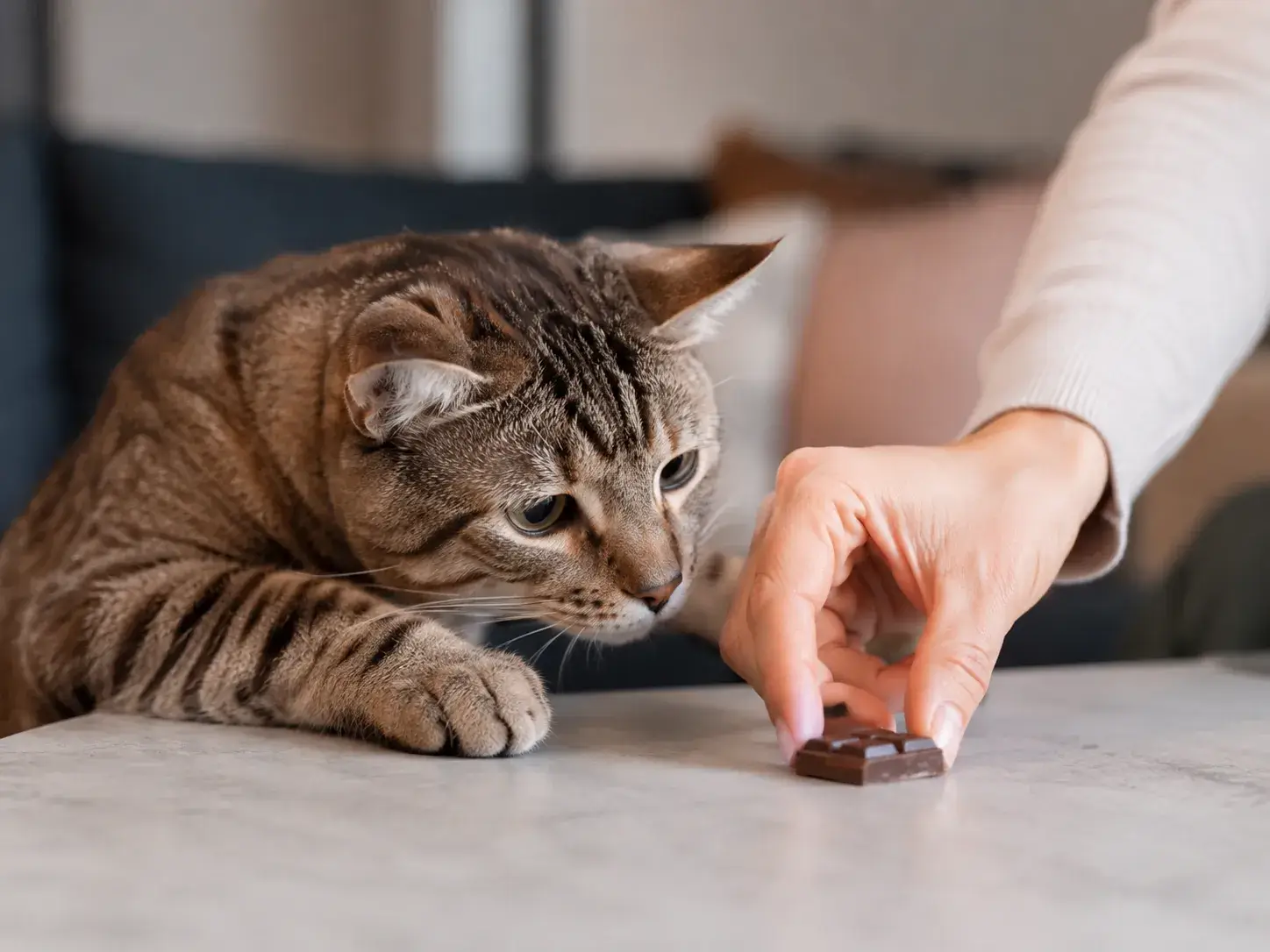
If your cat ate chocolate, treat it as a potential emergency. Chocolate is not safe for cats because cocoa products contain theobromine and caffeine, which can cause poisoning. The risk depends on your cat’s weight, the type of chocolate, the cocoa content, how much was eaten, when it happened and whether your cat already has health problems. Dark chocolate, cocoa powder, baking chocolate, chocolate cake, brownies, chocolate spread, coffee-flavoured desserts and high-cocoa products can be especially concerning, but milk chocolate and white chocolate should not be treated as safe. Signs of chocolate poisoning in cats may include being sick, diarrhoea, drooling, restlessness, hyperactivity, drinking and weeing more than usual, a fast heart rate, rapid breathing, tremors, twitching, poor coordination, weakness and seizures. This guide explains what happens if a cat eats chocolate, which types are most dangerous, what to do in the first few minutes, what not to do at home, when to call an emergency vet and what information to prepare before speaking to your vet.
The moment you realise your cat has eaten chocolate, the safest response is not to panic, but not to ignore it either. You need to work out what type of chocolate it was, roughly how much your cat ate, when it happened and how much your cat weighs. These details help your vet judge how serious the risk may be.
This article is not a substitute for veterinary treatment. It is designed to help you act quickly, avoid dangerous home remedies and speak to your vet with the right information. If your cat has eaten chocolate, call your vet or an emergency vet clinic for advice. Do not wait for symptoms to appear before asking for help.
Can Cats Eat Chocolate?
No, cats should not eat chocolate. Chocolate is not a safe treat, snack or “tiny taste” for cats. Even if your cat seems interested in chocolate cake, chocolate spread, a brownie or a chocolate wrapper, it should be kept away from them.
The main concern is that chocolate contains theobromine and caffeine. These substances are stimulants. A cat’s body cannot handle them in the same way a human body can. Depending on the amount eaten and the type of chocolate, they can affect the gut, heart, nervous system and general body balance.
Chocolate is unsafe for cats because it may:
- contain theobromine and caffeine;
- stimulate the nervous system;
- increase heart rate;
- cause being sick and diarrhoea;
- cause restlessness, tremors or seizures;
- contain high levels of sugar and fat;
- include extra dangerous ingredients such as raisins, coffee, alcohol or sweeteners.
Some cats are less interested in sweet foods than dogs are, but that does not make chocolate safe. Cats may still lick chocolate spread, chew chocolate cake, steal a chocolate biscuit or nibble a dropped piece out of curiosity.
What Happens If a Cat Eats Chocolate?
If a cat eats chocolate, the outcome can range from mild stomach upset to serious poisoning. The exact risk depends on the type of chocolate, the amount eaten, the cat’s size and how quickly veterinary advice is sought.
Possible signs after eating chocolate include:
- being sick;
- diarrhoea;
- drooling;
- restlessness;
- hyperactivity;
- abdominal discomfort;
- drinking more than usual;
- weeing more than usual;
- rapid breathing;
- a fast heart rate;
- tremors;
- muscle twitching;
- poor coordination;
- weakness;
- seizures;
- life-threatening poisoning in severe cases.
A cat may look normal at first. That does not mean the chocolate was harmless. Some signs can take time to develop, and waiting until your cat is obviously unwell can make the situation more dangerous.
Why Is Chocolate Poisonous to Cats?
Chocolate is poisonous to cats mainly because of theobromine and caffeine. Both are methylxanthines, a group of stimulant substances found in cocoa products. These can overstimulate a cat’s body and lead to gut signs, nervous system signs and heart-related signs.
The risk is affected by:
- the cocoa content;
- the chocolate type;
- the amount eaten;
- your cat’s weight;
- whether your cat is a kitten, senior or unwell;
- whether your cat has heart, kidney, liver or neurological problems;
- whether the product also contains coffee, raisins, alcohol, xylitol or other risky ingredients.
Dark chocolate, cocoa powder and baking chocolate are usually more concerning than milk chocolate because they tend to contain more cocoa. White chocolate may contain much less cocoa, but it is still not a suitable food for cats because of its fat, sugar and dairy content, and because some products contain other ingredients.
My Cat Ate Chocolate: What Should I Do First?
If your cat ate chocolate, act quickly and calmly. Your goal is to stop further access, collect the right information and contact a vet. Do not waste time trying random home remedies.
First steps:
- Move the chocolate away from your cat immediately.
- Check what type of chocolate or chocolate product it was.
- Estimate how much your cat may have eaten.
- Note when it happened.
- Keep the wrapper, box, ingredient list or recipe information.
- Write down your cat’s approximate weight.
- Watch for being sick, diarrhoea, drooling, restlessness, tremors or fast breathing.
- Call your vet or an emergency vet clinic straight away.
Your vet may ask about the chocolate type, cocoa percentage, amount eaten, your cat’s weight and whether there are any symptoms. They may advise urgent treatment, monitoring, or a specific next step based on the risk. Do not make that decision by guessing at home.
My Cat Ate Chocolate but Seems Fine: Is It Still Dangerous?
Yes, it can still be dangerous. A cat seeming fine immediately after eating chocolate does not prove that everything is safe. Some signs may appear later, and the highest-risk cases are often the ones where owners wait too long because there are no early symptoms.
Do not wait at home without advice if:
- you do not know how much chocolate your cat ate;
- your cat ate dark chocolate, cocoa powder or baking chocolate;
- your cat ate chocolate cake, brownies, chocolate spread or a coffee-chocolate dessert;
- the product contains raisins, alcohol, coffee, xylitol or unknown sweeteners;
- your cat is a kitten, senior, very small or unwell;
- your cat has heart, kidney, liver or neurological disease;
- your cat has started being sick, having diarrhoea, trembling or breathing fast.
Early contact with a vet gives your cat the best chance of getting help before signs become severe.
Cat Chocolate Poisoning Symptoms
Chocolate poisoning in cats can affect several body systems. The first signs may look like a stomach upset, but they can progress to more serious problems involving the heart and nervous system.
Early signs may include:
- being sick;
- diarrhoea;
- drooling;
- restlessness;
- hyperactivity;
- tummy discomfort;
- loss of appetite;
- drinking more than usual;
- weeing more than usual.
More serious signs may include:
- rapid breathing;
- a racing heart;
- tremors;
- muscle twitching;
- poor coordination;
- high body temperature;
- weakness;
- collapse;
- seizures;
- changes in consciousness.
If your cat has eaten chocolate and shows any of these signs, contact a vet immediately. For related warning signs, you can also read why is my cat being sick and when to worry and cat diarrhoea causes and warning signs.
How Long After Eating Chocolate Do Cats Show Symptoms?
The timing can vary. Some cats may start being sick or acting unsettled relatively soon, while other signs may develop later. The delay depends on the chocolate type, the amount eaten, your cat’s size and your cat’s individual health.
While monitoring your cat, watch for:
- being sick;
- diarrhoea;
- drooling;
- restlessness;
- unusual excitement;
- fast breathing;
- tremors or twitching;
- weakness;
- hiding or unusual behaviour;
- drinking or weeing more than normal;
- poor coordination;
- seizure-like movements.
Do not wait for a specific number of hours before calling your vet. If your cat has eaten chocolate, especially dark chocolate or an unknown amount, contact a vet straight away.
Which Chocolate Is Most Dangerous for Cats?
In general, the higher the cocoa content, the more concerning the chocolate is likely to be. This means dark chocolate, cocoa powder and baking chocolate are usually higher risk than many milk chocolate products. However, no chocolate should be offered to cats.
Higher-risk chocolate products include:
- cocoa powder;
- dark chocolate;
- high-cocoa chocolate bars;
- baking chocolate;
- cooking chocolate;
- chocolate brownies;
- rich chocolate cake;
- chocolate truffles;
- coffee and chocolate desserts;
- chocolate spreads and fillings.
Milk chocolate and white chocolate are not safe treats. Milk chocolate can still contain theobromine and caffeine, and white chocolate is high in fat and sugar. Packaged chocolate products may also contain other ingredients that are unsafe for cats.
What If My Cat Ate Dark Chocolate?
Dark chocolate is one of the more worrying types of chocolate for cats because it usually contains more cocoa than milk chocolate. More cocoa generally means more theobromine and caffeine, which increases the risk of poisoning.
If your cat ate dark chocolate, prepare these details for your vet:
- the cocoa percentage;
- the brand or product name;
- the estimated amount eaten;
- when your cat ate it;
- your cat’s weight;
- whether your cat has any symptoms;
- whether the product also contains coffee, alcohol, raisins or sweeteners.
Do not try to calculate the risk on your own and decide it is safe. Dark chocolate should be assessed quickly by a vet.
What If My Cat Ate Milk Chocolate?
Milk chocolate is often lower in cocoa than dark chocolate, but it is still not safe for cats. The risk depends on how much was eaten, your cat’s weight and the exact product. A small cat eating what looks like a small amount to a person can still be a concern.
Milk chocolate can be a problem because it may contain:
- theobromine;
- caffeine;
- sugar;
- fat;
- dairy ingredients;
- flavourings;
- nuts, raisins, fillings or sweeteners in some products.
If your cat ate milk chocolate, keep the wrapper and call your vet. Do not assume it is harmless just because it was not dark chocolate.
What If My Cat Ate White Chocolate?
White chocolate usually contains much less cocoa than dark or milk chocolate, so the theobromine risk may be lower. But white chocolate is still not a suitable cat food. It contains fat, sugar and dairy-based ingredients that can upset a cat’s stomach, and some products may include other risky additives.
If your cat ate white chocolate, consider:
- how much was eaten;
- your cat’s weight;
- whether your cat is a kitten, senior or unwell;
- whether your cat is being sick or has diarrhoea;
- whether the product contains fillings, nuts, raisins, coffee or sweeteners;
- whether your cat is behaving normally.
White chocolate should not be used as a treat. If your cat ate a lot, is showing signs, or you are unsure about the product, call your vet.
What If My Cat Ate Chocolate Cake, Brownie or Biscuits?
Chocolate cake, brownies, cookies, biscuits, wafers and desserts can be risky even if they do not look like a plain chocolate bar. They may contain cocoa, chocolate chips, coffee, sugar, butter, cream, raisins, alcohol flavourings, nuts or sweeteners.
With chocolate desserts, your vet may need to know:
- the type of dessert;
- how chocolatey it was;
- how much your cat ate;
- whether it contained dark chocolate or cocoa powder;
- whether it contained coffee;
- whether it contained raisins or sultanas;
- whether it contained alcohol, liqueur or sweeteners;
- when it happened.
Do not dismiss the risk by saying “it was only cake”. Chocolate cake and brownies can contain concentrated cocoa, and other ingredients may add extra hazards.
What If My Cat Ate Chocolate Spread?
Chocolate spreads and hazelnut-cocoa spreads are not safe for cats. They can contain cocoa, sugar, fat, dairy ingredients, nuts and other additives. Even if your cat only licked some from a spoon, the amount and product type still matter.
If your cat ate chocolate spread, write down:
- the product name;
- how much your cat may have eaten;
- when it happened;
- whether it contains cocoa;
- whether it contains nuts, milk, sweeteners or other ingredients;
- whether your cat is being sick, has diarrhoea or seems restless.
Chocolate spread should not be left on tables, worktops or breakfast plates where cats can lick it.
What If My Cat Ate Chocolate Ice Cream?
Chocolate ice cream is not safe for cats. It may contain cocoa, sugar, milk, cream, fat, flavourings and sometimes sweeteners. Even if the cocoa content is lower than in a chocolate bar, it is still not a cat-safe treat.
Chocolate ice cream can cause concern because of:
- cocoa-derived theobromine and caffeine;
- dairy ingredients that may upset digestion;
- high fat content;
- high sugar content;
- flavourings and additives;
- possible sweeteners in some products.
If your cat ate chocolate ice cream, check the ingredients, estimate the amount and call your vet for advice.
How Much Chocolate Is Toxic to Cats?
There is no single safe gram amount that applies to every cat and every chocolate product. Risk is not based on weight alone. A small amount of dark chocolate may be more concerning than a larger amount of a lower-cocoa product, and a small kitten is at higher risk than a larger adult cat.
To judge risk, your vet will consider:
- your cat’s weight;
- the type of chocolate;
- the cocoa percentage;
- the estimated amount eaten;
- the time since eating;
- whether your cat has symptoms;
- whether your cat has existing health problems;
- whether the product contains other toxic ingredients.
Do not rely on a general online number to decide your cat is safe. Use the packaging and your cat’s weight to get advice from a vet.
Should I Make My Cat Vomit After Eating Chocolate?
No. Do not try to make your cat vomit at home unless a vet specifically tells you what to do. Home vomiting attempts can be dangerous, stressful and ineffective. Cats are not small dogs, and many home remedies are unsafe.
Do not do these things at home:
- do not give salt water;
- do not put fingers into your cat’s mouth or throat;
- do not give hydrogen peroxide;
- do not give milk to “dilute” the chocolate;
- do not give oil, butter or yoghurt;
- do not give human medicines;
- do not give activated charcoal unless your vet instructs you;
- do not wait for severe symptoms before calling.
If vomiting, activated charcoal, fluids or monitoring are needed, your vet will decide based on the case. The safest first aid is to call a vet quickly and follow their instructions.
What Will the Vet Do If My Cat Ate Chocolate?
What your vet does depends on how much chocolate was eaten, what type it was, how long ago it happened and whether your cat is showing signs. There is no single treatment that fits every case.
Your vet may consider:
- a physical examination;
- weighing your cat;
- calculating risk from the chocolate type and amount;
- inducing vomiting if suitable and safe;
- activated charcoal if appropriate;
- fluid therapy;
- heart rate monitoring;
- temperature monitoring;
- treatment for tremors, seizures or abnormal heart rhythm;
- hospital observation if the risk is significant.
These are veterinary procedures, not home instructions. The reason to call early is that some treatments work best when given before the toxin has had more time to affect the body.
What Information Should I Give the Vet?
When you call your vet, be ready with clear, practical details. The more accurate your information is, the better your vet can assess the risk.
Prepare:
- your cat’s weight;
- your cat’s age;
- the chocolate type;
- the cocoa percentage if known;
- the product brand or packaging;
- the estimated amount eaten;
- the time your cat ate it;
- whether your cat has been sick or had diarrhoea;
- whether your cat is restless, trembling or breathing fast;
- any known health conditions;
- any medicines your cat takes;
- whether the product includes raisins, alcohol, coffee, nuts or sweeteners.
A useful phone call might sound like this: “My cat weighs about 4 kg and ate part of a dark chocolate brownie around 30 minutes ago. I have the packaging and can read the ingredients. She is not being sick yet.” This gives your vet far more to work with than “my cat ate chocolate”.
What If a Kitten Eats Chocolate?
A kitten eating chocolate should be taken very seriously. Kittens are small, so even a little chocolate can represent a bigger dose for their body weight. They can also become dehydrated or weak more quickly if they start being sick or have diarrhoea.
If a kitten eats chocolate, note:
- the kitten’s age;
- the kitten’s approximate weight;
- what type of chocolate it was;
- how much may have been eaten;
- when it happened;
- whether the kitten is being sick or has diarrhoea;
- whether there is tremor, weakness or unusual behaviour.
Do not wait to see whether a kitten “gets over it”. Call your vet quickly. For wider early-life care, read the kitten care guide.
What If a Senior or Unwell Cat Eats Chocolate?
Senior cats and cats with existing illness may be more vulnerable if they eat chocolate. A cat with heart disease, kidney disease, liver disease, neurological problems or a long-term medication plan should be assessed carefully.
Higher-risk cats include:
- kittens;
- senior cats;
- small or underweight cats;
- cats with heart disease;
- cats with kidney disease;
- cats with liver disease;
- cats with neurological problems;
- pregnant or nursing cats;
- cats taking regular medication.
When you speak to your vet, mention any medical history and medication. This can change how urgently your cat needs to be seen and what treatment may be safest.
Can Cats Die from Eating Chocolate?
Yes, severe chocolate poisoning can be life-threatening. That does not mean every cat that eats chocolate will die, but it does mean chocolate should never be treated as harmless. The risk is much higher with dark chocolate, cocoa powder, large amounts, small cats, sick cats and delayed treatment.
Life-threatening risk is more concerning if:
- your cat ate dark chocolate or cocoa powder;
- your cat ate baking or cooking chocolate;
- your cat is very small or a kitten;
- the amount eaten is unknown;
- the product contains coffee, raisins, alcohol or sweeteners;
- your cat has tremors, seizures or rapid breathing;
- your cat has a racing heart or collapses;
- veterinary help is delayed.
The safest message is simple: if your cat ate chocolate, call a vet. Do not wait for your cat to become seriously unwell.
Why Don’t Cats Usually Eat Chocolate?
Cats are often less drawn to sweet foods than dogs or people, but this does not protect every cat. Cats may eat chocolate by accident, curiosity or because the product is creamy, fatty or mixed with something else they find interesting.
Cats may eat chocolate when:
- a chocolate wrapper is left on the floor;
- a brownie or biscuit is left on a plate;
- chocolate spread is left open;
- children drop chocolate pieces;
- a cat licks chocolate ice cream or dessert;
- chocolate cake is left on a worktop;
- a kitten explores food by chewing it;
- festive chocolates are left under a tree or on a low table.
“Cats do not like chocolate” is not a safety plan. Chocolate and chocolate products should be stored where cats cannot reach them.
Other Dangerous Foods Often Found with Chocolate
Chocolate is dangerous enough on its own, but some chocolate products include other ingredients that add extra risk. This is especially common with cakes, desserts, Christmas foods, Easter treats and party snacks.
Extra risky ingredients include:
- raisins;
- sultanas;
- grapes;
- coffee;
- alcohol or liqueur;
- xylitol or other sweeteners;
- macadamia nuts;
- high-fat cream or butter;
- onion or garlic in savoury chocolate-containing dishes;
- mouldy or stale food.
For a broader list of safe and unsafe foods, read what can cats eat: safe and toxic foods.
Chocolate Products to Keep Away from Cats
Many chocolate risks in the home do not come from plain chocolate bars. Cats may get into bags, wrappers, bins, plates and gift boxes. Some products smell buttery, creamy or milky, which may attract a curious cat.
Keep these away from cats:
- dark chocolate bars;
- milk chocolate bars;
- white chocolate;
- cocoa powder;
- baking chocolate;
- chocolate chips;
- brownies;
- chocolate cake;
- chocolate biscuits;
- chocolate spread;
- chocolate cereal;
- chocolate ice cream;
- chocolate protein snacks;
- chocolate desserts with coffee or alcohol;
- seasonal chocolate boxes.
If your cat has a habit of stealing food, assume that tables and worktops are not safe storage places.
How to Keep Chocolate Away from Cats
Prevention is much easier than emergency treatment. Cats can jump onto tables, open bags, investigate bins and chew packaging. A chocolate bar left “just for a minute” can still be reached by a determined or curious cat.
Practical prevention tips:
- store chocolate in closed cupboards;
- do not leave chocolate on coffee tables or bedside tables;
- keep Easter eggs and Christmas chocolates away from cats;
- put chocolate cakes and brownies in sealed containers;
- use a lidded bin;
- throw wrappers away immediately;
- teach children not to share chocolate with pets;
- keep chocolate gift boxes out of reach;
- do not leave dessert plates unattended;
- close the kitchen door if your cat steals food.
Households with children, guests or festive treats need extra care because chocolate may be left in unusual places.
How Should I Monitor My Cat After Chocolate?
Only monitor at home if your vet says it is appropriate. Home monitoring is not the same as deciding to do nothing. If the risk is low, your vet may advise what to watch for and when to call back.
During monitoring, check for:
- being sick;
- diarrhoea;
- drooling;
- restlessness;
- fast breathing;
- tremors;
- muscle twitching;
- hiding or unusual behaviour;
- weakness;
- poor coordination;
- drinking more than usual;
- weeing more than usual;
- seizures.
If any symptoms start or your cat seems worse, contact your vet again immediately or go to an emergency vet clinic.
What Not to Do at Home
Some well-meant home actions can make a poisoning situation worse. Cats are delicate, and many internet “fixes” are unsafe. When chocolate is involved, your job is to get veterinary advice, not to experiment.
Do not:
- make your cat vomit at home;
- give salt water;
- give milk to dilute the chocolate;
- give oil, butter or yoghurt;
- give human medicine;
- give activated charcoal without veterinary advice;
- force-feed your cat;
- force large amounts of water;
- wait for seizures before calling;
- throw away the wrapper before taking a photo of it;
- punish or scare your cat.
Stay calm, put your cat somewhere safe, collect the details and contact a vet.
First Aid for a Cat That Ate Chocolate
First aid does not mean treating chocolate poisoning yourself. Safe first aid means preventing more chocolate from being eaten, keeping your cat calm and getting professional advice quickly.
Safe first aid steps:
- remove the chocolate and any wrappers;
- keep the packaging or take photos of the ingredients;
- move your cat to a quiet, safe room;
- do not offer more food unless your vet advises it;
- do not give home remedies;
- watch breathing, movement and behaviour;
- use a secure carrier if travelling to the vet;
- bring the packaging to the clinic.
For a wider emergency overview, see pet poisoning symptoms and first aid.
When Should I Call an Emergency Vet?
You should call a vet as soon as you realise your cat has eaten chocolate. Emergency help is especially important if the chocolate type is high-risk, the amount is unknown or your cat is showing symptoms.
Call urgently if:
- your cat ate dark chocolate;
- your cat ate cocoa powder or baking chocolate;
- your cat ate a large or unknown amount;
- your cat is a kitten or very small;
- your cat is senior or unwell;
- your cat is being sick or has diarrhoea;
- your cat is restless, trembling or twitching;
- your cat is breathing fast;
- your cat seems weak or uncoordinated;
- your cat has a seizure;
- the product contains raisins, alcohol, coffee or sweeteners.
When in doubt, phone. A vet can help decide whether this is a monitor-at-home situation or an emergency clinic visit.
Feeding After a Cat Eats Chocolate
Do not rush to feed your cat after chocolate ingestion unless your vet tells you to. If your cat is being sick or has diarrhoea, random food changes can make things worse. Your vet may give specific feeding advice depending on the risk and symptoms.
General rules:
- do not give milk;
- do not give yoghurt to “settle the stomach”;
- do not give oil or butter;
- do not force food if your cat is being sick;
- do not suddenly change diet without advice;
- follow the vet’s plan if a bland diet or monitoring is recommended;
- watch appetite, poo, energy and drinking over the next day or two.
If your cat has repeated digestive issues or you are reviewing their normal diet, read how to choose the best cat food.
Common Myths About Cats and Chocolate
Chocolate emergencies are often made worse by myths. These can cause owners to wait too long or try unsafe home treatments.
Common myths include:
- “Cats do not like sweet food, so they will not eat chocolate.” Some cats still lick or chew chocolate products out of curiosity.
- “A tiny amount is always safe.” Risk depends on the chocolate type, amount, cocoa content and cat’s weight.
- “Milk will dilute the poison.” Milk does not treat chocolate poisoning and can upset digestion.
- “I should make my cat vomit at home.” This can be dangerous and should only be considered under veterinary direction.
- “White chocolate is a cat treat.” It is not a safe or healthy cat food.
- “No symptoms means no problem.” Symptoms can be delayed, and risk should be assessed early.
For cat safety, it is better to be cautious and call a vet than to trust a myth.
A Home Safety Plan for Chocolate
Chocolate is common in UK homes, especially around Easter, Christmas, birthdays, Halloween, school holidays and family gatherings. A simple home plan helps reduce the chance of your cat eating it.
- Keep chocolate in closed cupboards, not on open shelves.
- Do not leave Easter eggs on the floor or under low furniture.
- Keep Christmas chocolate tins sealed and out of reach.
- Put brownies and cakes in containers with lids.
- Ask guests not to feed the cat.
- Teach children that chocolate is for people, not pets.
- Use a lidded kitchen bin.
- Clean up crumbs and wrappers quickly.
- Do not leave chocolate spread open on the breakfast table.
- Keep handbags and gift bags containing chocolate away from cats.
The best treatment for chocolate poisoning is prevention. Once a cat has eaten chocolate, the next best step is fast veterinary advice.
Quick Summary: Cat Ate Chocolate
If your cat ate chocolate, call your vet. Chocolate can be poisonous to cats because it contains theobromine and caffeine. Signs may include being sick, diarrhoea, drooling, restlessness, hyperactivity, drinking and weeing more than usual, rapid breathing, a fast heart rate, tremors, twitching, poor coordination and seizures.
The risk depends on the chocolate type, cocoa content, amount eaten, your cat’s weight, your cat’s health and how long ago it happened. Dark chocolate, cocoa powder, baking chocolate, brownies, chocolate cake and chocolate spreads can be especially concerning. Milk chocolate and white chocolate should not be considered safe.
Remove the chocolate, keep the packaging, estimate the amount eaten, note the time and prepare your cat’s weight before calling your vet. Do not make your cat vomit at home. Do not give salt water, milk, oil, human medicine or activated charcoal unless a vet tells you to.
Frequently Asked Questions
What happens if a cat eats chocolate?
If a cat eats chocolate, they may develop chocolate poisoning because cocoa products contain theobromine and caffeine. Signs can include being sick, diarrhoea, drooling, restlessness, hyperactivity, drinking and weeing more than usual, fast breathing, a racing heart, tremors, twitching, poor coordination and seizures. Call your vet if your cat ate chocolate.
My cat ate chocolate, what should I do?
Move the chocolate away, keep the wrapper, estimate how much your cat ate, note when it happened and write down your cat’s weight. Do not make your cat vomit or give milk, oil, salt water or human medicine. Call your vet or an emergency vet clinic straight away for advice.
Can cats die from eating chocolate?
Yes, severe chocolate poisoning can be life-threatening for cats. Not every cat that eats chocolate will die, but the risk can be serious, especially with dark chocolate, cocoa powder, baking chocolate, large amounts, small cats, kittens, unwell cats or delayed veterinary care.
Is dark chocolate worse for cats?
Dark chocolate is usually more dangerous for cats because it tends to contain more cocoa, which means more theobromine and caffeine. If your cat ate dark chocolate, cocoa powder or baking chocolate, contact your vet urgently with the packaging, amount eaten, time and your cat’s weight.
Is milk chocolate dangerous for cats?
Yes, milk chocolate can still be dangerous for cats. It may contain theobromine and caffeine, and also has sugar, fat and dairy ingredients that are not suitable for cats. If your cat ate milk chocolate, keep the wrapper and call your vet for advice.
Is white chocolate safe for cats?
White chocolate usually contains much less cocoa than dark chocolate, but it is still not a safe cat treat. It is high in fat, sugar and dairy ingredients, and some products may contain other additives. If your cat ate a lot or seems unwell, contact your vet.
What are the symptoms of chocolate poisoning in cats?
Symptoms of chocolate poisoning in cats can include being sick, diarrhoea, drooling, restlessness, hyperactivity, drinking and weeing more than usual, abdominal discomfort, rapid breathing, a fast heart rate, tremors, muscle twitching, poor coordination, weakness, collapse and seizures.
How long after eating chocolate will a cat show symptoms?
The timing varies. Some cats may show signs such as being sick, diarrhoea or restlessness relatively soon, while other signs may develop later. Do not wait for a set number of hours. If your cat ate chocolate, call your vet even if your cat currently seems fine.
My cat ate chocolate but did not vomit. Is that okay?
Not vomiting does not prove your cat is safe. Chocolate poisoning signs can be delayed, and some serious signs may not start with vomiting. If your cat ate chocolate, especially dark chocolate or an unknown amount, contact your vet for advice.
Should I make my cat vomit after eating chocolate?
No. Do not try to make your cat vomit at home unless a vet specifically instructs you. Home vomiting attempts can be dangerous. Do not give salt water, milk, oil, human medicine or activated charcoal without veterinary advice. Call your vet instead.