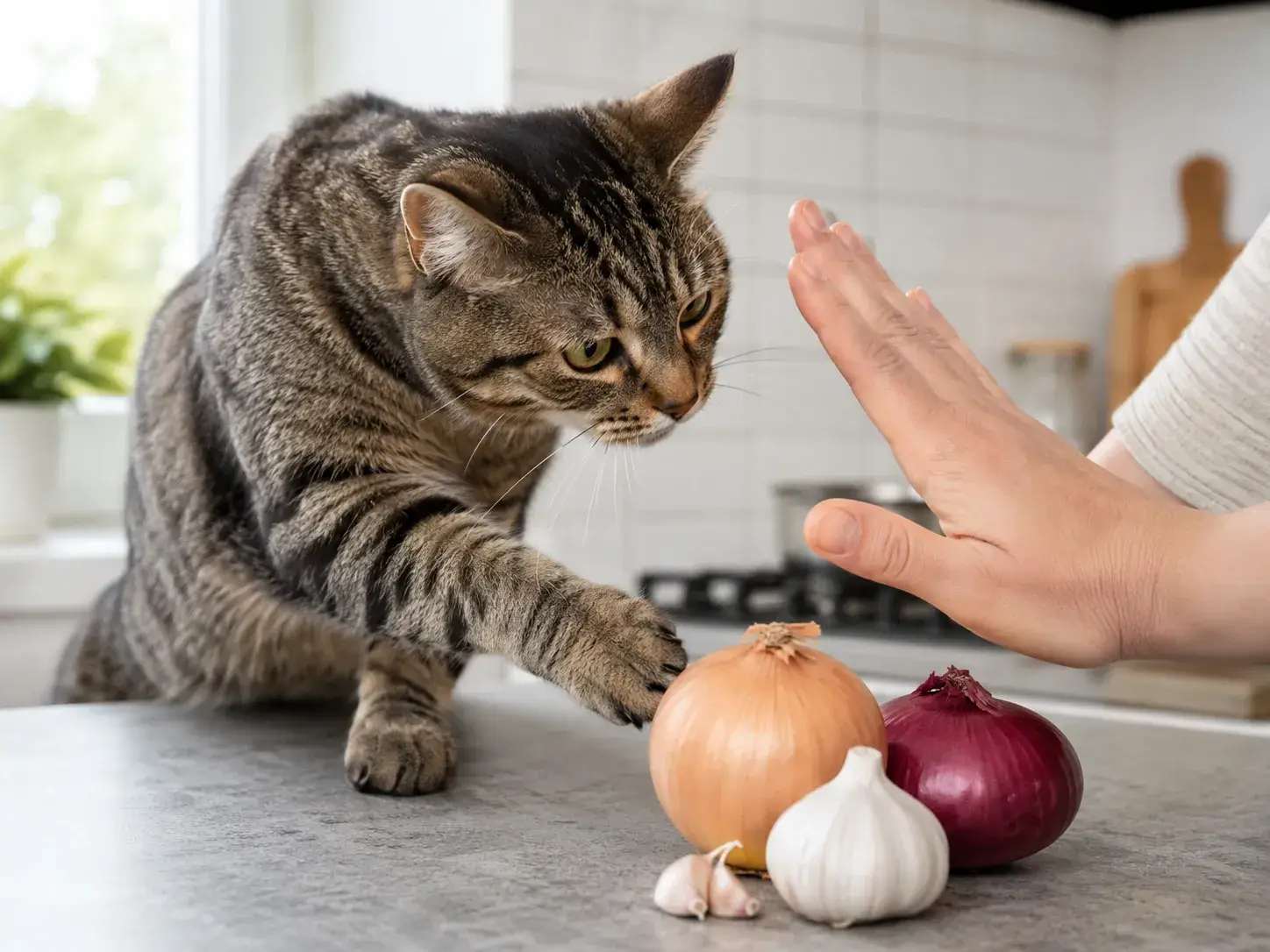
If your cat ate onion or garlic, treat it as a poisoning risk and contact a vet for advice. Onions, garlic, leeks, shallots, spring onions and chives belong to the allium family, and they can be harmful to cats whether they are raw, cooked, fried, dried, powdered or hidden inside human food. These ingredients can damage a cat’s red blood cells and may lead to haemolytic anaemia, which can cause weakness, pale gums, fast breathing, a rapid heartbeat, dark urine, jaundice, collapse and, in severe cases, life-threatening illness. Early signs may include being sick, diarrhoea, drooling, a sore tummy, reduced appetite and unusual tiredness, but one of the dangerous things about onion and garlic poisoning is that anaemia signs may be delayed. A cat can seem fine at first and still be at risk. If your cat has eaten onion gravy, stuffing, garlic sauce, curry, takeaway, stock, soup, baby food, meat cooked with onion, food seasoned with garlic powder or any product containing onion or garlic, note the amount, time, ingredients and your cat’s weight, then call your vet or an emergency vet clinic. This guide explains why onions and garlic are toxic to cats, what symptoms to watch for, what to do first, what not to do at home and when urgent veterinary care is needed.
Onion and garlic poisoning is different from a simple upset stomach. Your cat may be sick or have diarrhoea, but the bigger concern is damage to red blood cells. That damage can lead to anaemia, which means your cat’s body may struggle to carry enough oxygen. This is why a cat that ate onion or garlic should not simply be watched casually at home without veterinary guidance.
This article is not a substitute for veterinary care. It is written to help you act quickly, avoid unsafe home remedies and give your vet the information they need. If your cat has eaten onion, garlic or any allium-containing food, the safest first step is to call your vet or an emergency vet clinic.
Can Cats Eat Onions?
No, cats should not eat onions. Onion is not a safe treat, seasoning or occasional table scrap for cats. It can be harmful whether it is raw, cooked, fried, roasted, boiled, dried or powdered. Cooking does not make onion safe for cats.
In the UK, many everyday foods contain onion, so the risk is not limited to a cat eating a slice of raw onion. A cat may lick onion gravy, eat a piece of stuffing, steal meat cooked with onions, lick a plate of curry, chew a sausage roll filling, or eat leftovers from a Sunday roast. Even if the onion is not obvious, it may still be present in sauces, stock, ready meals or seasoning mixes.
Onion forms that can be risky for cats include:
- raw onion;
- cooked onion;
- fried onion;
- roasted onion;
- caramelised onion;
- dried onion flakes;
- onion powder;
- onion gravy;
- onion soup;
- stock or broth containing onion;
- human meals cooked with onion;
- ready-made sauces and seasonings containing onion.
Do not assume a food is safe just because the onion was cooked into it. If your cat ate food containing onion, call your vet with the details.
Can Cats Eat Garlic?
No, cats should not eat garlic. Garlic is part of the same allium family as onion, leek, shallot and chives. It can be harmful to cats in raw, cooked, dried, powdered or sauce form. Garlic should not be used as a natural flea treatment, worming method, immune booster or home supplement for cats.
Garlic can be especially concerning because it is concentrated and often hidden in small amounts inside human food. A cat may not eat a whole garlic clove, but they may lick garlic sauce, garlic butter, garlic mayonnaise, garlic bread, a takeaway sauce, seasoned meat or food containing garlic powder.
Garlic forms that can be risky for cats include:
- raw garlic;
- cooked garlic;
- crushed garlic;
- garlic paste;
- garlic powder;
- dried garlic flakes;
- garlic butter;
- garlic sauce;
- garlic mayonnaise;
- garlic bread;
- meat marinated with garlic;
- crisps, crackers or snacks seasoned with garlic powder.
Garlic is not a safe “natural remedy” for cats. If you are worried about fleas, worms, appetite, immunity or skin problems, speak to a vet rather than using garlic at home.
What Happens If a Cat Eats Onion or Garlic?
If a cat eats onion or garlic, they may first develop digestive signs such as being sick, diarrhoea, drooling, reduced appetite or tummy discomfort. The more serious risk is damage to red blood cells, which can lead to haemolytic anaemia. Anaemia signs may not appear immediately, so a cat can look fine at first and still become unwell later.
Possible effects include:
- being sick;
- diarrhoea;
- drooling;
- reduced appetite;
- abdominal discomfort;
- red blood cell damage;
- haemolytic anaemia;
- weakness;
- pale gums;
- fast breathing;
- a rapid heartbeat;
- dark, orange, red or brown urine;
- yellowing of the gums, eyes or skin;
- collapse;
- life-threatening illness in severe cases.
The key point is that onion and garlic are not just “hard to digest”. They can affect the blood. This is why it is safer to call your vet early rather than waiting to see whether your cat becomes obviously ill.
Why Are Onions and Garlic Toxic to Cats?
Onions, garlic, leeks, shallots, spring onions and chives are all alliums. These plants contain compounds that can cause oxidative damage to a cat’s red blood cells. Red blood cells carry oxygen around the body. When they are damaged and destroyed faster than the body can replace them, anaemia can develop.
Cats are particularly sensitive to red blood cell damage. Their smaller body size also means that a small amount of a concentrated seasoning can matter more than it looks to a person. Onion powder, garlic powder and dried allium ingredients can be especially easy to underestimate because they may be hidden inside processed food.
The risk depends on:
- what your cat ate;
- whether it was onion, garlic, leek, shallot, spring onion or chives;
- whether it was raw, cooked, dried or powdered;
- how much was eaten;
- your cat’s weight;
- whether your cat is a kitten, senior or unwell;
- whether your cat has existing anaemia, heart disease, kidney disease or liver disease;
- how long ago the food was eaten;
- whether symptoms have started.
Because these factors vary, there is no reliable one-size-fits-all answer for every cat. The safest approach is to contact a vet with the exact details.
My Cat Ate Onion: What Should I Do First?
If your cat ate onion, act quickly and calmly. Do not try to treat the situation with milk, oil, salt water or home vomiting attempts. Your first job is to remove the food, collect information and call your vet.
First steps:
- Remove the onion-containing food from your cat’s reach.
- Check what your cat ate.
- Estimate how much may have been eaten.
- Work out whether it contained raw onion, cooked onion, onion powder or onion gravy.
- Note when it happened.
- Write down your cat’s approximate weight.
- Keep packaging, labels, takeaway receipts or ingredient lists if available.
- Watch for being sick, diarrhoea, lethargy, pale gums, fast breathing or dark urine.
- Call your vet or an emergency vet clinic.
A useful call sounds like this: “My cat weighs about 4 kg and ate a small amount of cooked mince with onion about 30 minutes ago. I have the ingredients. She seems normal so far.” That gives your vet far more useful information than simply saying “my cat ate onion”.
My Cat Ate Garlic: What Should I Do First?
If your cat ate garlic, call your vet for advice. Garlic can be more concentrated than onion, and garlic powder or garlic sauce can be difficult to judge. A cat licking a small amount of garlic sauce is not the same as eating a large amount of garlic butter or food heavily seasoned with garlic powder, but both should be taken seriously.
Before calling your vet, prepare:
- whether the garlic was raw, cooked, powdered, dried or in a sauce;
- how much your cat ate or licked;
- whether the food was garlic sauce, garlic bread, curry, takeaway, gravy, soup or seasoned meat;
- when it happened;
- your cat’s approximate weight;
- whether your cat is a kitten, senior or unwell;
- whether there is being sick, diarrhoea, weakness, pale gums or fast breathing.
Do not try to wash your cat’s mouth out, force water, make them sick or give home remedies. Keep your cat calm and let your vet guide the next step.
My Cat Ate Food Cooked with Onion
This is one of the most common situations. Cats do not always eat a visible piece of onion. They may lick gravy, stock, sauce, curry, stew, pasta sauce or the juices from cooked meat. Onion flavour can be spread through the whole dish, even if the cat did not swallow a chunk of onion.
UK foods that may contain onion include:
- onion gravy;
- Sunday roast leftovers;
- stuffing;
- stock cubes;
- gravy granules;
- soups;
- stews;
- casseroles;
- curries;
- bolognese sauce;
- meatballs;
- burgers;
- sausages and sausage rolls;
- pizza;
- takeaway sauces;
- ready meals;
- baby food containing onion.
If your cat ate food cooked with onion, call your vet with the amount eaten and the ingredient list. Do not assume the risk disappears because the onion was cooked.
My Cat Ate Garlic Sauce, Garlic Bread or Garlic Butter
Garlic sauce, garlic bread and garlic butter are not safe for cats. They may contain garlic, garlic powder, salt, dairy ingredients, fat, herbs and other seasonings. The garlic is the main poisoning concern, but the fat, salt and dairy can also upset your cat’s stomach.
With garlic-containing foods, check:
- how much your cat ate;
- whether your cat only licked the sauce or swallowed food;
- whether garlic powder was used;
- whether the food was heavily seasoned;
- whether there were other ingredients such as onion, chives or leek;
- your cat’s weight;
- how long ago it happened;
- whether symptoms have started.
Do not give milk or yoghurt to “settle the stomach”. Dairy does not treat garlic poisoning and may make digestive upset worse.
Are Onion Powder and Garlic Powder Worse?
Onion powder and garlic powder are especially important because they are concentrated and easy to hide inside food. Your cat may not eat a visible piece of onion or garlic, but they may eat seasoning from crisps, crackers, soup, gravy, stock, sauces, ready meals or baby food.
Products that may contain onion or garlic powder include:
- stock cubes;
- gravy granules;
- packet soups;
- seasoning mixes;
- crisps;
- crackers;
- ready-made sauces;
- salad dressings;
- marinades;
- takeaway sauces;
- ready meals;
- baby food jars or pouches;
- meat pastes or savoury spreads;
- processed meat products.
If your cat ate a packaged product, keep the packaging. Read the ingredients to your vet, especially if you see onion powder, garlic powder, dried onion, dried garlic, flavourings, stock, broth, seasoning or spice mix.
Cat Onion and Garlic Poisoning Symptoms
Symptoms can be divided into early digestive signs and later anaemia-related signs. This matters because a cat may only seem mildly sick at first, while the more serious blood-related signs appear later.
Early signs may include:
- being sick;
- diarrhoea;
- drooling;
- reduced appetite;
- tummy pain;
- restlessness;
- quiet behaviour;
- hiding;
- refusing food.
More serious anaemia-related signs may include:
- weakness;
- lethargy;
- tiring quickly;
- pale gums;
- yellow gums, eyes or skin;
- fast breathing;
- a rapid heartbeat;
- dark brown, orange or red urine;
- collapse;
- not wanting to stand or move.
If your cat is being sick or has diarrhoea after eating onion or garlic, do not treat it as a simple stomach upset. You can also read why is my cat being sick and when to worry and cat diarrhoea causes and warning signs, but onion and garlic ingestion should still be discussed with a vet.
How Long After Eating Onion or Garlic Do Cats Show Symptoms?
Symptoms do not always appear immediately. Digestive signs such as being sick or diarrhoea may appear earlier, but anaemia signs can take longer to become obvious. This delay is one of the reasons onion and garlic poisoning can be easy to underestimate.
After onion or garlic ingestion, monitor for:
- being sick;
- diarrhoea;
- loss of appetite;
- unusual tiredness;
- hiding;
- pale gums;
- yellow gums or eyes;
- fast breathing;
- a faster heartbeat than normal;
- dark or discoloured urine;
- weakness;
- collapse.
Do not wait for a fixed number of hours before calling your vet. If your cat ate onion, garlic or an allium-containing food, contact a vet as soon as you can, especially if the amount is unknown or the food contained powder, sauce or concentrated seasoning.
My Cat Ate Onion or Garlic but Seems Fine
Your cat seeming fine is reassuring, but it does not prove they are safe. With onion and garlic poisoning, anaemia-related signs can be delayed. A cat may play, sleep or behave normally soon after eating the food, then become weak or unwell later.
Do not rely on “they seem fine” if:
- you do not know how much was eaten;
- your cat ate garlic or garlic powder;
- your cat ate onion powder;
- your cat ate gravy, stock, stuffing, soup, curry or takeaway food;
- your cat is a kitten;
- your cat is small or underweight;
- your cat is senior or unwell;
- your cat has a history of anaemia;
- your cat has heart, kidney or liver disease;
- being sick, diarrhoea, weakness or pale gums have started.
The safest approach is to call your vet with the details and follow their advice. Early advice can prevent dangerous waiting.
Can Onion or Garlic Cause Anaemia in Cats?
Yes. Onion and garlic can damage red blood cells and may lead to haemolytic anaemia. In haemolytic anaemia, red blood cells are damaged and destroyed faster than the body can replace them. Since red blood cells carry oxygen, this can make a cat weak, tired and short of breath.
Possible anaemia signs include:
- weakness;
- lethargy;
- sleeping more than normal;
- tiring quickly;
- pale gums;
- fast breathing;
- a rapid heartbeat;
- reduced appetite;
- dark urine;
- yellow gums or eyes;
- collapse.
Pale gums, fast breathing, dark urine, collapse or extreme weakness should be treated as urgent warning signs.
Which Is More Dangerous: Onion or Garlic?
Both onion and garlic are dangerous for cats. Garlic is often considered more concentrated and can be more potent, but this does not make onion safe. Onion can also harm cats, especially if the amount is significant, the cat is small, or the onion is in dried or powdered form.
The safest rule is:
- do not feed cats onion;
- do not feed cats garlic;
- do not feed cats leeks;
- do not feed cats shallots;
- do not feed cats spring onions;
- do not feed cats chives;
- do not assume cooked alliums are safe;
- do not ignore powdered alliums in packaged food.
Garlic being more concentrated should not be interpreted as “a little onion is fine”. For cats, the safest option is to avoid the whole allium family.
What If a Kitten Eats Onion or Garlic?
If a kitten eats onion or garlic, call a vet promptly. Kittens weigh very little, so small amounts can matter more. They can also become weak or dehydrated faster if they start being sick or have diarrhoea.
If a kitten has eaten onion or garlic, prepare:
- the kitten’s age;
- the kitten’s approximate weight;
- what was eaten;
- whether it was onion, garlic, powder, sauce or cooked food;
- how much may have been eaten;
- when it happened;
- whether there is being sick, diarrhoea, weakness or reduced appetite.
Do not wait to see if a kitten “gets over it”. If your kitten has eaten onion, garlic or an allium-containing food, speak to a vet. For wider early-life care, read the kitten care guide.
What If a Senior or Unwell Cat Eats Onion or Garlic?
Senior cats and cats with existing health problems may be more vulnerable. A cat with a history of anaemia, heart disease, kidney disease, liver disease or long-term medication should be assessed carefully after eating onion or garlic.
Higher-risk cats include:
- kittens;
- senior cats;
- small or underweight cats;
- cats with previous anaemia;
- cats with kidney disease;
- cats with liver disease;
- cats with heart disease;
- cats with chronic illness;
- cats taking regular medication;
- pregnant or nursing cats.
When you speak to your vet, mention any known conditions and medicines. These details may affect how urgently your cat needs to be seen and what monitoring is recommended.
Can Cats Die from Eating Onion or Garlic?
Severe onion or garlic poisoning can be life-threatening. Not every cat that eats onion or garlic will die, but the risk should not be dismissed. The danger depends on the amount, form, cat’s weight, health status and how quickly veterinary advice is sought.
Life-threatening risk is more concerning if:
- a large amount was eaten;
- garlic powder or onion powder was involved;
- a concentrated sauce, soup, stock or gravy was eaten;
- the cat is a kitten or very small;
- the cat already has a health condition;
- symptoms have started and care is delayed;
- there are pale gums, fast breathing, dark urine or collapse;
- veterinary help is not sought.
Do not try to decide at home whether the amount was “enough to be fatal”. Call your vet and let them assess the real risk.
Are Cooked Onions or Cooked Garlic Safe for Cats?
No. Cooked onions and cooked garlic are not safe for cats. Frying, roasting, boiling, baking or simmering them in a sauce does not make them suitable for cats. Food cooked with onion or garlic should not be shared with your cat.
Cooked allium risks include:
- onion gravy;
- fried onions;
- roast vegetables with onion;
- garlic chicken;
- garlic butter;
- garlic bread;
- stock containing onion or garlic;
- soups and stews;
- curry sauces;
- pasta sauces;
- stuffing;
- Sunday roast leftovers.
If you want to give your cat a small treat, choose something plain and cat-safe, such as a tiny piece of cooked, unseasoned chicken, rather than food cooked for people.
Can Cats Eat Baby Food with Onion or Garlic?
Be careful with baby food, purées and soft human foods. Some baby foods contain onion powder, garlic powder, stock, broth or seasoning. People sometimes use baby food to tempt an unwell pet to eat, but it should never be used without checking the ingredients carefully.
Ingredient labels to watch for include:
- onion;
- garlic;
- onion powder;
- garlic powder;
- dried onion;
- dried garlic;
- stock;
- broth;
- seasoning;
- spice mix;
- flavourings;
- vegetable powder.
If your cat ate baby food or a packaged purée containing onion or garlic, keep the packaging and call your vet.
My Cat Ate a Tiny Amount of Onion or Garlic. Should I Still Call the Vet?
Yes, it is sensible to call your vet, especially if you are unsure about the amount, the form or your cat’s weight. A tiny lick of sauce may be lower risk than eating a large amount of onion powder, but the difference is not always easy to judge at home.
Important questions include:
- How much does your cat weigh?
- Was it onion, garlic, leek, shallot, spring onion or chives?
- Was it powdered or dried?
- Was it in a concentrated sauce, stock or gravy?
- Did your cat lick it or swallow food?
- Were there other toxic ingredients?
- Is your cat a kitten, senior or unwell?
- Are any symptoms present?
If it was genuinely a tiny amount, your vet may advise monitoring. If the risk is higher, they may want to see your cat. The decision should be based on details, not guesswork.
What Will the Vet Do If My Cat Ate Onion or Garlic?
Your vet’s plan depends on what your cat ate, how much was eaten, how long ago it happened and whether there are symptoms. Some cats may need monitoring, while others may need blood tests and supportive care.
Your vet may consider:
- a physical examination;
- weighing your cat;
- assessing the food and amount eaten;
- checking gum colour and breathing;
- blood tests;
- red blood cell evaluation;
- urine checks;
- kidney and liver values;
- inducing vomiting if suitable and safe;
- activated charcoal if appropriate;
- fluid therapy;
- oxygen support;
- hospital monitoring;
- advanced support such as a blood transfusion in severe anaemia cases.
These are veterinary procedures, not home instructions. The reason to call early is that the vet can decide whether treatment is needed before your cat becomes seriously unwell.
What Information Should I Give the Vet?
When you call your vet, be as clear as possible. Keep packaging, labels, takeaway receipts or photos of the meal if you have them. The ingredient list can be extremely useful.
Prepare:
- your cat’s age and weight;
- what your cat ate;
- whether it contained onion, garlic, leek, shallot, spring onion or chives;
- whether it was raw, cooked, dried or powdered;
- the estimated amount eaten;
- when it happened;
- the packaging or ingredient list;
- whether your cat has been sick or had diarrhoea;
- whether your cat is weak, quiet or refusing food;
- whether the gums look pale or yellow;
- whether the urine looks dark;
- any known health conditions;
- any medicines your cat takes.
If you are nervous about speaking to a vet or it is your first urgent visit, read what should be done at the first vet visit so you know what information matters.
What Not to Do at Home
Some home actions can make a poisoning situation worse. Cats are sensitive, and many internet remedies are unsafe. If your cat ate onion or garlic, do not experiment.
Do not:
- try to make your cat vomit unless a vet tells you to;
- give salt water;
- give milk to “dilute” the toxin;
- give yoghurt, oil or butter;
- give human medicine;
- give activated charcoal without veterinary advice;
- force your cat to eat;
- force your cat to drink large amounts of water;
- wait for severe symptoms before calling;
- throw away the packaging before photographing the ingredients;
- punish or scare your cat.
The safest home action is to remove the food, keep your cat calm, collect the information and call your vet.
First Aid for a Cat That Ate Onion or Garlic
First aid does not mean treating poisoning at home. Safe first aid means preventing more ingestion, preserving useful information and preparing for veterinary care.
Safe first aid steps:
- remove the food from your cat’s reach;
- keep the remaining food or packaging;
- take photos of the ingredient list;
- move your cat to a quiet, safe room;
- watch for being sick, diarrhoea, weakness and gum colour changes;
- note any vomit, diarrhoea or dark urine;
- prepare your cat carrier;
- do not give medicine or home remedies without veterinary advice.
For a wider emergency overview, read pet poisoning symptoms and first aid.
Foods with Onion or Garlic to Keep Away from Cats
Many onion and garlic risks come from ordinary human food. Cats may lick plates, steal leftovers or get into bins. The food may smell meaty, creamy or savoury, which can make it tempting even if it contains dangerous seasoning.
Keep these away from cats:
- onion gravy;
- stuffing;
- stock cubes;
- gravy granules;
- soups;
- stews;
- curries;
- takeaway food;
- garlic sauce;
- garlic bread;
- garlic butter;
- pizza;
- pasta sauce;
- bolognese;
- meatballs;
- burgers;
- sausages;
- sausage rolls;
- crisps with onion or garlic powder;
- ready meals;
- baby food with onion or garlic.
If your cat steals food from worktops, tables or bins, these items need extra care in your home.
Safe Alternatives for Cats
If you want to give your cat a treat, avoid anything seasoned with onion, garlic, salt, spices, sauces or gravy. Cats do best on a complete cat food appropriate for their life stage and health status. Human food, if offered at all, should be plain, simple and only given in very small amounts.
Safer options may include:
- a tiny piece of plain cooked chicken with no seasoning;
- a tiny piece of plain cooked turkey with no seasoning;
- cat-specific treats;
- vet-recommended diet products;
- a complete cat food suitable for your cat’s age and health.
For a broader food safety guide, read what can cats eat: safe and toxic foods. If you want to review your cat’s daily diet, see how to choose the best cat food.
How to Stop Your Cat Eating Onion or Garlic
Prevention is easier than emergency treatment. Onion and garlic are common in UK kitchens, takeaways, roast dinners, sauces and packaged foods. A simple kitchen safety plan can reduce the risk.
Practical prevention tips:
- store onions and garlic in a cupboard your cat cannot access;
- do not leave chopped onion or garlic on the worktop;
- keep cats out of the kitchen while cooking;
- do not leave onion gravy or garlic sauce uncovered;
- put leftovers away quickly;
- use a lidded bin;
- clear plates before your cat can lick them;
- check labels on baby food, stock, gravy and ready meals;
- tell guests not to feed your cat table scraps;
- teach children that human food with seasoning is not for pets;
- keep takeaway bags and containers out of reach.
Most onion and garlic incidents are preventable. The safest home is one where cats cannot access seasoned human food.
Common Myths About Cats, Onion and Garlic
Myths can delay treatment. Onion and garlic are not harmless kitchen scraps for cats, and they should not be used as home remedies.
Common myths include:
- “Cooked onion is safe.” False. Cooked onion can still be harmful to cats.
- “Garlic is a natural flea treatment.” False. Garlic is not a safe flea treatment for cats.
- “A tiny amount can never hurt.” Not always true. Risk depends on amount, form, concentration and cat size.
- “If my cat is not being sick, everything is fine.” False. Anaemia signs may be delayed.
- “Milk will dilute the toxin.” False. Milk does not treat onion or garlic poisoning.
- “I should make my cat vomit with salt water.” False. This can be dangerous.
- “There was no visible onion, so the food was safe.” False. Onion powder, garlic powder, stock and sauces may be hidden.
The safest rule is simple: if your cat ate onion, garlic or an allium-containing food, call your vet.
Quick Summary: Cat Ate Onion or Garlic
If your cat ate onion or garlic, contact your vet. Onions, garlic, leeks, shallots, spring onions and chives can be toxic to cats. They may cause being sick, diarrhoea, drooling, reduced appetite and tummy pain, but the more serious concern is red blood cell damage and haemolytic anaemia.
Watch for weakness, pale gums, fast breathing, a rapid heartbeat, dark urine, yellow gums or eyes, collapse and extreme tiredness. These signs can be delayed, so do not assume your cat is safe just because they look normal at first.
Remove the food, keep packaging, estimate the amount eaten, note the time and prepare your cat’s weight before calling your vet. Do not make your cat vomit at home. Do not give salt water, milk, oil, yoghurt, human medicine or activated charcoal unless your vet instructs you.
Frequently Asked Questions
What happens if a cat eats onion?
If a cat eats onion, they may develop stomach upset such as being sick, diarrhoea, drooling and reduced appetite. More seriously, onion can damage red blood cells and lead to haemolytic anaemia. Signs such as weakness, pale gums, fast breathing, dark urine or collapse need urgent veterinary attention. Call your vet if your cat ate onion.
What happens if a cat eats garlic?
Garlic can be toxic to cats and may damage red blood cells, leading to anaemia. Garlic powder, garlic sauce, garlic bread, garlic butter and food cooked with garlic can all be risky. If your cat ate garlic, note the amount, time, form and your cat’s weight, then contact your vet for advice.
My cat ate onion gravy. What should I do?
Remove the gravy, keep any packaging or recipe information, estimate how much your cat ate and note when it happened. Onion gravy may contain onion, onion powder, stock and seasoning. Do not give milk or try to make your cat vomit. Call your vet or an emergency vet clinic with your cat’s weight and the ingredient details.
My cat licked garlic sauce. Is it dangerous?
Garlic sauce is not safe for cats. The risk depends on how much your cat licked, how concentrated the garlic was, your cat’s weight and whether any symptoms have started. Even a small amount is worth discussing with a vet. Do not try home remedies; keep the product information and call your vet.
Are cooked onions toxic to cats?
Yes. Cooked onions can still be toxic to cats. Frying, roasting, boiling or cooking onion into gravy, sauces, soup, stuffing or meat dishes does not make it safe. If your cat ate food containing cooked onion, call your vet with the amount eaten, time and your cat’s weight.
Is garlic powder dangerous for cats?
Yes. Garlic powder can be dangerous for cats because it is concentrated and may be hidden in packaged foods, sauces, crisps, crackers, stock, gravy granules and seasoning mixes. If your cat ate a product containing garlic powder, keep the packaging and contact your vet for risk assessment.
What are onion and garlic poisoning symptoms in cats?
Symptoms can include being sick, diarrhoea, drooling, reduced appetite, tummy pain, lethargy, weakness, pale gums, fast breathing, a rapid heartbeat, dark brown, orange or red urine, yellow gums or eyes and collapse. Anaemia signs may be delayed, so call your vet even if your cat seems fine at first.
How long after eating onion or garlic do symptoms appear in cats?
Digestive signs such as being sick or diarrhoea may appear earlier, but anaemia-related signs such as weakness, pale gums, fast breathing and dark urine can be delayed. Do not wait for symptoms to appear. If your cat ate onion, garlic or an allium-containing food, contact your vet for advice.
Can cats die from eating onion or garlic?
Severe onion or garlic poisoning can be life-threatening for cats, especially if a large amount, onion powder, garlic powder or a concentrated sauce was eaten, or if the cat is a kitten, small, senior or unwell. Pale gums, fast breathing, dark urine, collapse or extreme weakness are urgent warning signs.
Should I make my cat vomit after eating onion or garlic?
No. Do not try to make your cat vomit at home unless a vet specifically tells you to. Do not give salt water, milk, oil, yoghurt, human medicine or activated charcoal without veterinary advice. Remove the food, keep the packaging, note the time and amount, and call your vet.