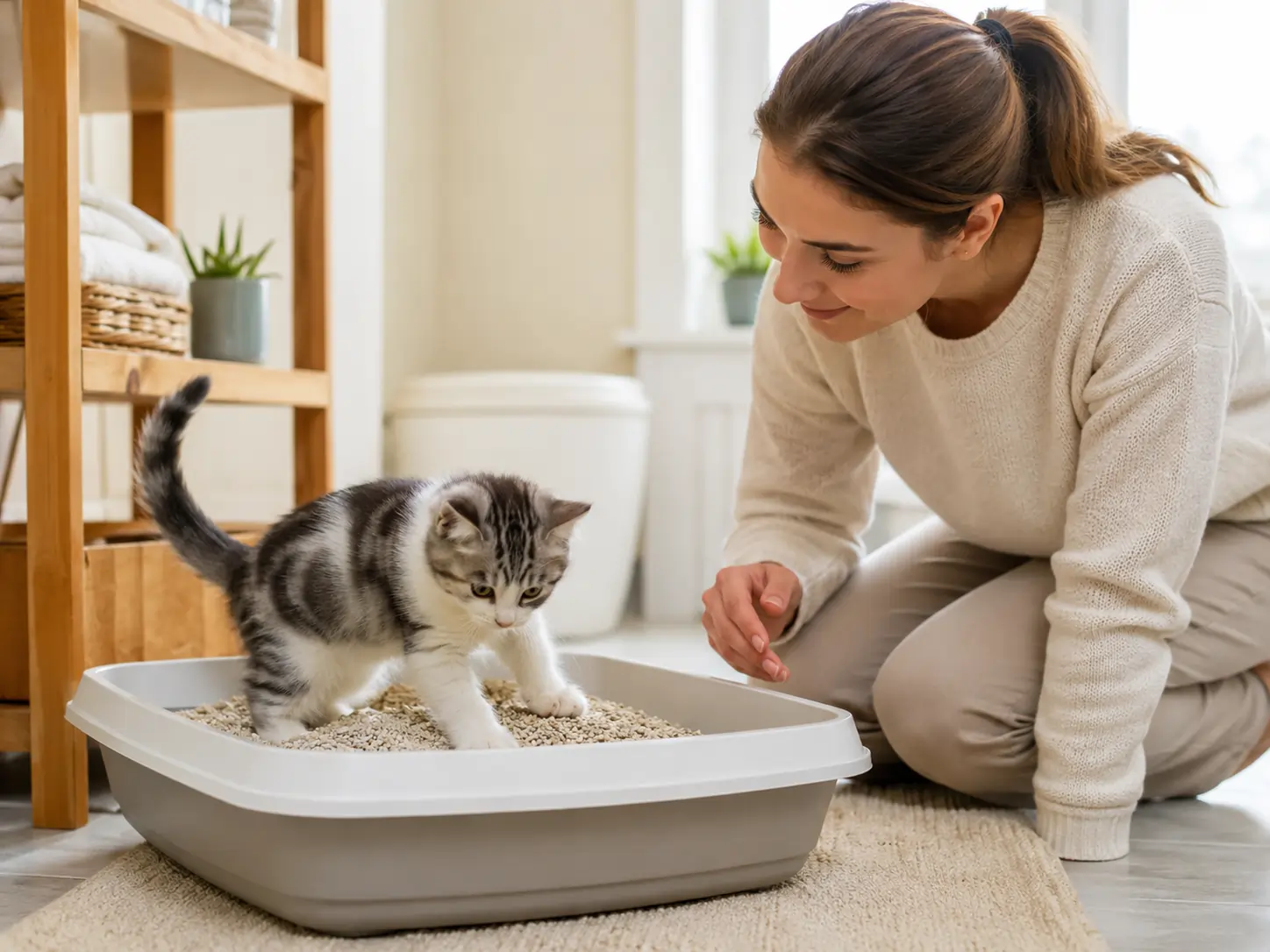
Cat litter training is one of the first practical steps for anyone bringing home a kitten, adopting an adult rescue cat or trying to solve litter tray accidents. Most cats naturally prefer to dig, toilet and cover their waste, but that instinct can fail if the litter tray is dirty, too small, hard to reach, badly placed, too strongly scented, uncomfortable under the paws or linked to stress or illness. This guide explains how to litter train a kitten, how to help an adult cat use a litter tray, where to place the tray, which litter to choose, how many trays you need, how to clean accidents, what mistakes to avoid and what to do if your cat suddenly stops using the litter tray.
Cats are not usually toilet trained in the same way dogs are. Many kittens learn from their mother and littermates, and many adult cats already understand the idea of digging and covering. Your job is not to force the behaviour. Your job is to build a toilet setup that makes sense to the cat: clean, quiet, easy to reach, comfortable under the paws and predictable every day.
When litter tray problems happen, the weak answer is “the cat is being naughty”. That is rarely useful. A cat toileting outside the tray is telling you something: the tray may be wrong, the litter may feel bad, the location may be stressful, the tray may smell dirty, another pet may be blocking access, or there may be pain, diarrhoea, constipation or a urinary problem. Good litter training starts with reading the situation properly.
What Is Cat Litter Training?
Cat litter training means helping a cat understand where to toilet and making the litter tray the easiest, safest and most comfortable option. For kittens, this often means introducing the tray, placing them near it after meals and naps, and keeping accidents low-stress. For adult cats, especially rescue cats or cats used to toileting outdoors, it may also mean rebuilding trust in a tray system they have not used before.
A good litter training setup includes:
- A tray that is large enough for the cat
- An easy entry point, especially for kittens and senior cats
- A quiet, accessible location
- Litter the cat accepts
- Daily cleaning
- Calm guidance at the right moments
- Gentle praise for success
- No punishment for accidents
- Medical checks when signs suggest pain or illness
The goal is not to frighten the cat into using the tray. Shouting, rubbing a cat’s nose in mess, trapping them in the tray or forcing their paws into the litter can create fear. Fear makes toileting problems worse. A calm, clean and consistent setup works better.
When Should Kitten Litter Training Start?
Very young kittens need their mother’s help at first, but as they grow, they start to learn toileting habits. Many kittens already have some litter tray experience before they arrive in a new home. Others, especially kittens found outdoors, separated early or raised without a normal tray setup, may need more guidance.
For a new kitten, the litter tray should be ready before they arrive. Do not wait until the first accident. The first day should already include a low-sided tray, suitable litter and a small, calm room where the kitten can find the tray easily.
For kittens, the safest starting setup is:
- A low-entry litter tray
- Low dust, unscented or very mildly scented litter
- A quiet room with limited space at first
- Food and water kept away from the tray
- A warm sleeping area separate from the toilet area
- Gentle tray introductions after meals, naps and play
- No punishment for mistakes
One of the biggest mistakes is giving a tiny kitten full access to a large home and expecting them to find one tray on their own. If the kitten is small, the house is busy and the tray is far away, accidents are predictable. Start with a smaller area, build the habit, then gradually increase access. For wider early care, read the kitten care guide.
How to Litter Train a Kitten Step by Step
Kitten litter training should feel calm and repetitive. Some kittens use the tray immediately. Others need a few days of reminders. What matters is that you make the right behaviour easy and the wrong places less attractive.
Use this step-by-step process:
- 1. Prepare the tray before the kitten arrives: Choose a low-sided tray that the kitten can enter without climbing.
- 2. Choose gentle litter: Start with low dust, unscented litter that feels comfortable under small paws.
- 3. Show the tray calmly: Place the kitten in or beside the tray and let them sniff, step out and explore.
- 4. Guide after meals and naps: Kittens often need to toilet after eating, waking or active play.
- 5. Demonstrate digging: Gently scratch the litter with your finger if needed, but do not force the kitten’s paws.
- 6. Praise calmly: If the kitten uses the tray, use quiet praise or a small reward without overwhelming them.
- 7. Clean accidents properly: Remove smell so the kitten is not drawn back to the same spot.
- 8. Expand the home slowly: Do not give full access until the litter habit is stable.
Do not expect the kitten to toilet every time you place them in the tray. The purpose is to create association. If you keep placing the kitten near the tray at sensible times and keep the tray clean, most kittens learn quickly.
How to Litter Train an Adult Cat
Adult cat litter training is different from kitten training. An adult cat may have a history: outdoor toileting, a different litter type, bad experiences, pain, stress, other cats, or previous punishment around accidents. Rescue cats and stray cats may need more patience because the home itself is new.
For an adult cat, start with a simple and secure setup:
- Use one quiet room for the first few days
- Place the litter tray in that room from the beginning
- Keep food and water away from the tray
- Use a large, open tray unless you know the cat likes a covered one
- Choose litter similar to what the cat used before, if known
- Let the cat explore the tray without pressure
- Keep the tray extremely clean
- Do not punish accidents
- Watch for signs of illness or stress
A newly adopted adult cat should not be rushed into the whole house immediately. A safe room helps them learn where the food, water, bed and litter tray are. Once they are confident and using the tray, you can slowly open up more of the home.
Where Should You Put a Cat’s Litter Tray?
Litter tray location can make or break training. Cats are vulnerable when they toilet, so they prefer somewhere quiet, safe and easy to reach. A tray beside a washing machine, behind a door, in a busy hallway, next to food bowls or in a place where another pet can ambush them is a bad setup.
A good litter tray location should be:
- Quiet but easy to access
- Away from food and water
- Away from sleeping areas
- Away from noisy appliances
- Not trapped behind a door
- Not in a busy walkway
- Safe from dogs or bullying cats
- Easy for kittens and senior cats to reach
Do not keep moving the tray around once the cat has learned its location. If you must move it, do it gradually. Predictability helps cats feel safe. A tray that disappears from one room and reappears somewhere else overnight can create confusion and accidents.
How to Choose the Right Litter Tray
If a cat is not using the tray, the problem may be the tray itself. Many trays sold for cats are too small. A cat should be able to enter, turn around, dig, squat and cover comfortably. If the tray is cramped, dirty, too high-sided or too enclosed, the cat may avoid it.
A good litter tray should be:
- Large enough for the cat to turn around
- Easy to enter and exit
- Low-sided for kittens, senior cats or cats with mobility issues
- Stable and not slippery
- Easy to clean
- Replaced if old plastic is scratched and holding odour
- Placed somewhere the cat feels safe
Covered litter trays are not automatically better. They may look tidier to humans, but they can trap odour, reduce space and make a nervous cat feel enclosed. In multi-cat homes, a covered tray can also create an ambush point. If your cat avoids a covered tray, try a large open tray.
Which Litter Is Best for Litter Training?
During litter training, litter texture and smell matter a lot. Strongly scented, dusty, sharp, hard or unfamiliar litter can make the tray less attractive. A cat that dislikes the feel under their paws may step in, step out and toilet elsewhere.
For litter training, choose litter that is:
- Low dust
- Unscented or very mildly scented
- Comfortable under the paws
- Easy to dig in
- Absorbent
- Easy to keep clean
- Accepted by the cat
- Appropriate for kittens if training a young cat
For most training situations, do not start with strong fragrance or a dramatic texture change. If the cat is already used to one type of litter, make changes gradually. For a full comparison of clay, silica, tofu, wood pellets and low dust options, use the how to choose cat litter guide.
How Many Litter Trays Do You Need?
Tray number matters more than many owners realise. A single tray can work for some single-cat homes, but if the home is large, has multiple floors, includes a kitten or senior cat, or has more than one cat, one tray may not be enough.
Use this practical approach:
- Provide at least one easy-to-access tray for a single cat
- Add another tray if the home is large or split across floors
- Use multiple trays in multi-cat homes
- Do not place all trays side by side
- Spread trays across quiet, safe areas
- Clean every tray daily
- Watch whether one cat blocks another cat’s access
Two trays placed directly next to each other may still feel like one toilet station to a cat. Resource placement matters. In multi-cat homes, spread trays so a nervous cat can access one without passing another cat.
How Long Does Cat Litter Training Take?
There is no single timeline. Some kittens use the tray on day one. Some need a few days of reminders. Adult cats, outdoor cats, rescue cats, stressed cats and cats with past negative experiences may take longer. The goal is steady progress, not forcing a deadline.
Training speed depends on:
- The cat’s age
- Whether the kitten learned from the mother
- Previous litter tray experience
- Stress from moving home
- Litter tray location
- Litter texture and scent
- Cleaning frequency
- Other pets in the home
- Diarrhoea, constipation or urinary pain
- Your consistency and patience
If there is no progress after several days, do not panic, but do not keep repeating the same failing setup either. Check the tray, litter, location, cleaning routine, stress level and health signs one by one.
Should You Reward a Cat for Using the Litter Tray?
Yes, but keep it calm. Praise, a gentle voice or a small reward after successful tray use can help, especially with kittens. However, do not crowd the cat, shout with excitement or interrupt while they are toileting. Many cats want privacy.
Good reward habits include:
- Reward after the cat has finished
- Use calm praise, not loud celebration
- Do not touch or lift the cat while they are toileting
- Keep food rewards small if used
- Never punish mistakes
Cats do not need intense training sessions for litter tray use. They need a setup that makes the tray the obvious choice and a calm owner who does not create fear around toileting.
What to Do if Your Cat Toilets Outside the Tray
If your cat wees or poos outside the litter tray, do not shout. Punishment does not teach the cat where to go. It teaches the cat that toileting near you is unsafe. That can make the problem more hidden and harder to solve.
Instead, do this:
- Stay calm
- Clean the area immediately
- Use an enzymatic pet cleaner where possible
- Remove lingering smell so the cat is not drawn back
- Check whether the tray is dirty
- Check whether the tray is too far away
- Check whether the litter recently changed
- Consider adding a tray near the accident spot temporarily
- Watch for signs of pain, diarrhoea or urinary problems
Cleaning is part of training. If urine smell remains in carpet, bedding or soft furnishings, the cat may return to the same place. The area must smell neutral to the cat, not just acceptable to a human nose.
Why Won’t My Cat Use the Litter Tray?
A cat may refuse the tray for environmental, behavioural or medical reasons. The mistake is assuming there is only one cause. You need to separate tray preference from stress and health problems.
Common reasons include:
- The tray is dirty
- The litter is too strongly scented
- The litter is dusty
- The texture feels uncomfortable
- The tray is too small
- The sides are too high
- The tray is covered and feels unsafe
- The tray is in a noisy or exposed location
- Another cat is blocking access
- A dog is bothering the cat near the tray
- The cat has diarrhoea, constipation, pain or urinary disease
Be especially careful with urinary signs. If your cat repeatedly visits the tray, strains, cries, passes only a little urine, has blood in the urine or cannot pass urine, this is not a training problem. Contact a vet urgently, especially with male cats.
How to Tell When a Kitten Needs the Toilet
With kittens, timing helps. If you notice the signs before an accident, you can gently guide the kitten to the tray. Do not grab them in a panic. Move calmly and let the kitten finish the behaviour in the right place.
Signs a kitten may need the toilet include:
- Sniffing the floor
- Looking for corners
- Scratching or digging at the floor
- Restless wandering
- Moving around shortly after eating
- Searching after waking from a nap
- Squatting posture
- Trying to get behind furniture
When you see these signs, place the kitten gently in or near the tray and step back. Do not hover over them. Some kittens will not toilet while being watched closely.
If Your Cat Keeps Toileting in the Same Wrong Place
If a cat repeatedly toilets in the same spot, that area may now smell or feel like a toilet location. The surface may be soft, quiet, hidden or still carrying odour. You need to remove the attraction and make the litter tray easier to choose.
Try this plan:
- Clean the area with an enzymatic cleaner
- Remove rugs, mats or soft items temporarily
- Block access if safe and practical
- Place a litter tray near the chosen spot temporarily
- Once the cat uses that tray, move it gradually
- Improve the main tray setup
- Check for stress or bullying
- Consider a vet check if the behaviour continues
Do not drag the cat to the accident and scold them. The cat will not understand the lesson you think you are teaching. They may simply become more anxious around toileting.
Litter Training a Newly Adopted Cat
A newly adopted cat is dealing with a major change. New smells, new people, new noises, new rooms and sometimes new pets can all affect toileting. A safe room makes the first days easier and reduces accidents.
For a newly adopted cat:
- Start in one quiet room
- Set up the litter tray before the cat arrives
- Keep food and water away from the tray
- Provide hiding spaces
- Do not force introductions to other pets
- Keep the tray clean
- Use familiar litter if you know what the cat used before
- Open the rest of the home gradually
If you have adopted a kitten or adult cat, organise health checks early. Parasites, diarrhoea, urinary discomfort, stress and diet changes can all affect litter tray use. For the wider first-week plan, read what should be done at the first vet visit.
Can Diarrhoea or Vomiting Affect Litter Training?
Yes. If a cat has diarrhoea, the need to toilet can be sudden. They may not reach the tray in time. Vomiting, poor appetite, stomach upset and lethargy can also disrupt normal routines. In that case, calling it a training issue is too simple.
Watch carefully if you see:
- Watery stools
- Blood or mucus in faeces
- Very foul-smelling diarrhoea
- Repeated vomiting
- Loss of appetite
- Lethargy
- Accidents because the cat cannot reach the tray
- Signs of abdominal discomfort
If digestive signs are present, stabilising the cat’s health matters more than “training harder”. For more detail, read cat diarrhoea causes and warning signs and why your cat is being sick and when to worry.
Litter Tray Use After Neutering
After neutering, some cats may be sleepy, sore or less confident for a short time. The litter tray should be easy to reach, clean and comfortable. Female cats recovering from spay surgery may find high-sided trays uncomfortable because the abdomen is sensitive.
After neutering, make sure:
- The tray is close and easy to reach
- The entry side is not too high
- The litter is low dust
- The tray is kept very clean
- The cat can toilet without jumping
- Urination and bowel movements are monitored
- You call a vet if the cat strains, cries or cannot pass urine
Neutering aftercare, wound protection and weight changes can all affect litter tray comfort. For the full surgery and recovery guide, read cat neutering age, cost, risks and recovery.
Litter Training in Multi-Cat Homes
In multi-cat homes, litter training is also resource management. A cat may know how to use a tray but avoid it because another cat is guarding it, waiting nearby or making the area unsafe. Toileting requires vulnerability, so social pressure matters.
For multi-cat homes:
- Use multiple litter trays
- Spread trays across different areas
- Do not place all trays in one row
- Use open trays if covered trays create ambush points
- Clean more often
- Watch whether one cat blocks access
- Give nervous cats safe routes to trays
- Track each cat’s toileting behaviour separately
If dogs and cats live together, the tray must be protected from the dog but still easy for the cat to reach. A dog disturbing the tray, eating from it or chasing the cat near it can create avoidance. For wider home planning, read the dog and cat living together guide.
Should You Train a Cat to Use the Human Toilet?
Toilet training a cat to use a human toilet is popular online, but it is not the best goal for most cats. A normal litter tray allows cats to dig, toilet and cover. It also lets owners monitor urine, faeces, blood, diarrhoea, constipation and changes in frequency.
Problems with human toilet training include:
- It removes the cat’s natural digging and covering behaviour
- It makes urine and stool monitoring harder
- It can be risky for senior or unwell cats
- The cat may slip or become frightened
- Multi-cat homes can create queueing or access stress
- Health changes may be noticed later
For welfare and health monitoring, a clean, well-placed litter tray is usually the stronger solution. The goal of cat litter training should be safe and reliable tray use, not forcing a cat into a human bathroom routine.
Common Litter Training Mistakes
- Punishing accidents: This creates fear and does not teach the correct place.
- Rubbing the cat’s nose in mess: This is cruel and unhelpful.
- Using a dirty tray: Many cats will avoid a tray that smells or feels dirty.
- Using strong scented litter: Cats may reject overpowering fragrance.
- Choosing a tiny tray: Cats need space to turn and dig.
- Forcing a covered tray: Some cats dislike enclosed toilets.
- Placing the tray by food: Cats prefer toilet areas separate from feeding areas.
- Changing litter suddenly: Sudden texture or scent changes can trigger refusal.
- Using too few trays: This is especially risky in multi-cat homes.
- Ignoring health signs: Urinary pain, diarrhoea and constipation are not training issues.
Daily Litter Training Plan
For kittens and newly adopted cats, structure helps. You do not need to monitor the cat every second, but the first days should be consistent.
- Morning: Check and clean the tray.
- After meals: Gently guide kittens to the tray.
- After naps: Place the kitten near the tray if they seem restless.
- After play: Offer another calm tray opportunity.
- During the day: Watch for sniffing, scratching, corner-searching or squatting.
- If an accident happens: Clean without punishment and note the pattern.
- Evening: Clean the tray again and keep the setup predictable.
The point of the plan is not to control the cat. It is to make the correct option easy to repeat until it becomes habit.
When Should You Call a Vet?
Some litter tray problems are not training problems. They are medical signs. This matters most with urinary problems, because a cat that cannot pass urine may need urgent help.
Contact a vet if you see:
- Straining to pee
- Repeated tray visits with little or no urine
- Crying in the tray
- Blood in urine
- Sudden toileting outside the tray
- Repeated diarrhoea
- Blood in faeces
- Constipation or painful pooing
- Vomiting with lethargy
- Loss of appetite
- New litter tray problems in a senior cat
A cat in pain does not need stricter training. They need assessment and treatment. Fixing the litter tray setup is important, but it should not delay veterinary help when red flags are present.
Final Word: Cat Litter Training Is a System, Not a Battle
Cat litter training is not about forcing a cat to obey. It is about giving the cat a clean, safe, comfortable and predictable place to toilet. The right tray, right litter, right location, daily cleaning and calm guidance solve most training problems before they become habits.
For kittens, start small, use a low-sided tray and guide them after meals, naps and play. For adult cats, respect stress, previous habits and health. For multi-cat homes, provide enough trays in different places. If accidents happen, clean properly and investigate the cause instead of punishing the cat.
The strongest summary is simple: if a cat avoids the litter tray, they are not trying to annoy you. Something about the tray, litter, environment, stress level or health may be wrong. Read the signal correctly and the solution becomes much easier.
Frequently Asked Questions
How do you litter train a kitten?
To litter train a kitten, set up a low-sided litter tray in a quiet, easy-to-reach place before the kitten arrives. Use low dust, unscented litter, place the kitten near the tray after meals, naps and play, and praise calm successful use. Do not punish accidents. Clean them properly and keep the first living area small until the habit is reliable.
How long does kitten litter training take?
Some kittens use the litter tray on the first day, while others need a few days of calm reminders. The timeline depends on age, previous learning, stress, litter type, tray location and health. If there is no progress after several days, check the tray, litter, cleaning routine, location and possible medical issues.
Can you litter train an adult cat?
Yes, an adult cat can be litter trained, but the process may need more patience. Start in a quiet room with a large, accessible tray and litter similar to what the cat used before if known. Keep the tray clean, avoid punishment and watch for stress or medical signs if the cat continues avoiding the tray.
Why won’t my cat use the litter tray?
A cat may avoid the litter tray because it is dirty, too small, badly placed, too strongly scented, uncomfortable under the paws, covered in a way the cat dislikes, blocked by another pet or linked to stress. Medical causes such as urinary pain, diarrhoea, constipation or arthritis can also cause litter tray avoidance.
What should I do if my cat wees outside the litter tray?
Do not punish your cat. Clean the area thoroughly with an enzymatic pet cleaner, check whether the tray is clean, accessible and large enough, and think about recent changes in litter, location or household stress. If your cat strains, cries, passes little urine, has blood in urine or seems unwell, contact a vet promptly.
Where should I put my cat’s litter tray?
Put the litter tray in a quiet, accessible place away from food, water, sleeping areas, noisy appliances and busy walkways. Avoid doorways, washing machines and places where another pet can block access. In larger homes or multi-cat homes, use more than one tray in different safe locations.
Should I use a covered litter tray for a kitten?
A covered litter tray is not usually the easiest starting point for a kitten. A low-sided open tray is often easier to enter, explore and clean. Some cats later accept covered trays, but if a kitten hesitates, seems trapped or avoids the tray, use a large open tray instead.
Should you punish a cat for toileting outside the tray?
No. Punishment can make a cat fearful and may worsen litter tray problems. Do not shout, rub the cat’s nose in mess or force them into the tray. Clean the accident properly, improve the tray setup, reward successful use calmly and rule out pain, stress or illness if the problem continues.
How many litter trays does a cat need?
A single cat should have at least one easy-to-reach tray, but many homes benefit from an extra tray, especially if the house is large or has more than one floor. Multi-cat homes need multiple trays in different locations. Do not place all trays side by side, because cats may still see that as one toilet area.
When should I call a vet for litter tray problems?
Call a vet if your cat strains to pee, cries in the tray, passes little or no urine, has blood in urine, suddenly toilets outside the tray, has repeated diarrhoea, constipation, vomiting, lethargy or loss of appetite. These signs may be medical, not training-related, and urinary blockage can be an emergency.