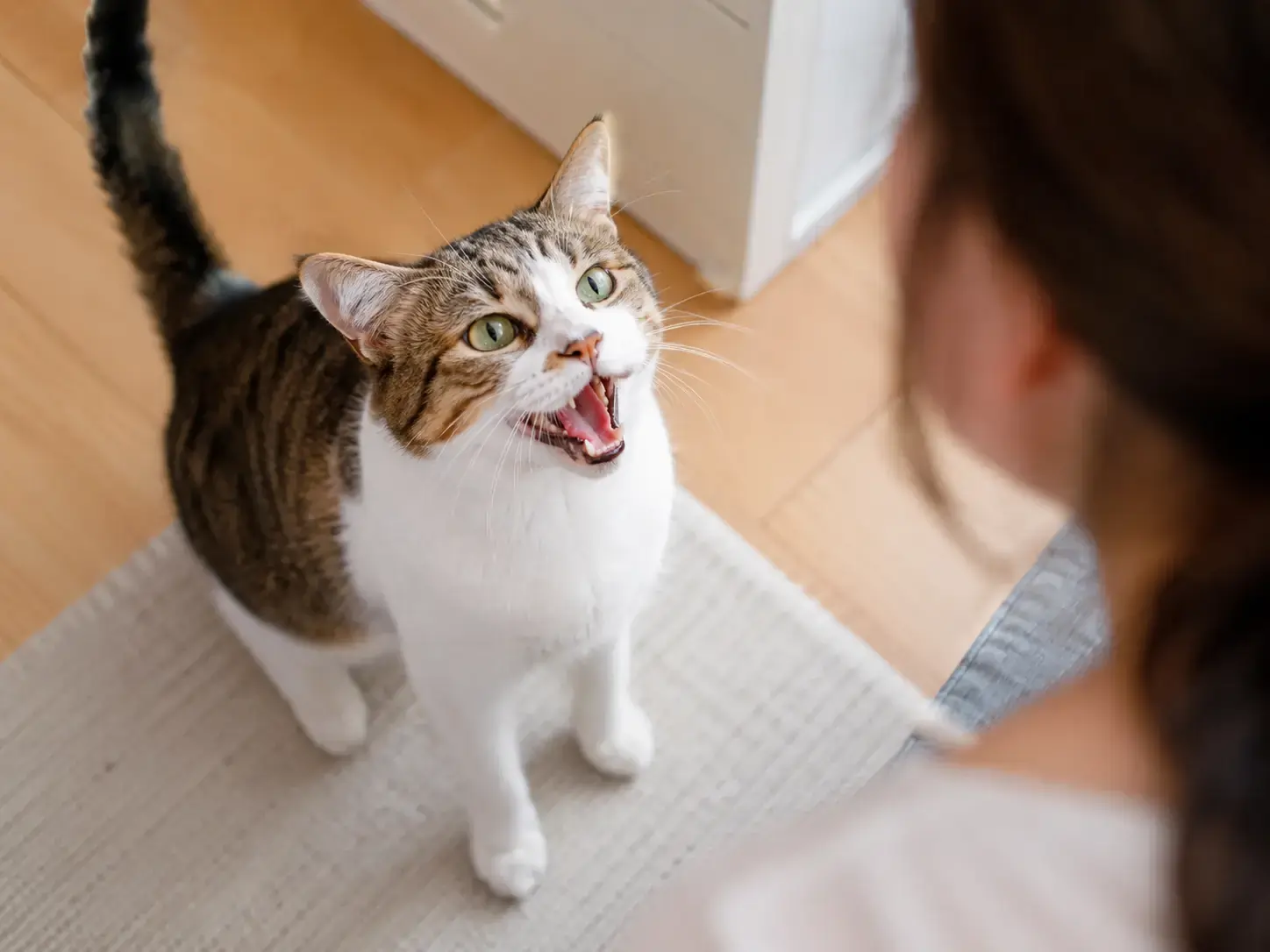
Why do cats meow? There is no single answer. A cat may meow because they are hungry, want attention, feel bored, want a door opened, are stressed, are in season, are getting older, are in pain or are dealing with a health problem. Some meowing is normal everyday communication, especially between cats and humans. But meowing that starts suddenly, becomes constant, sounds like crying or yowling, happens at night, occurs in the litter tray or appears alongside being sick, diarrhoea, loss of appetite, lethargy, weight loss, drinking more, straining to wee or not passing urine should be taken seriously. This guide explains why cats meow, what different meows can mean, why kittens and elderly cats may vocalise more, why cats meow at night, how stress and being in season affect vocalisation, and when to contact a vet.
A cat’s meow is not just a random noise. In many homes, it is a direct message to a human: “look at me”, “feed me”, “open this door”, “play with me”, “I am worried” or “something is wrong”. The hard part is that the same sound can mean different things depending on the cat, the time of day, the place, the body language and what has changed recently.
A short chirpy meow at the front door is very different from a long yowl in the middle of the night. A cat meowing by the food bowl is not the same as a cat crying in the litter tray. A kitten calling after arriving in a new home needs a different response from an elderly cat suddenly yowling after years of being quiet. To understand meowing properly, you need to read the whole picture, not just the sound.
What Does It Mean When a Cat Meows?
Cats often use meowing as a way to communicate with people. Some cats are naturally chatty, while others are quiet. Some breeds and individual cats vocalise more than others. A cat that has learned that meowing gets food, attention, play or access to a room may use that sound more often.
A cat may meow to communicate:
- hunger or food expectation;
- thirst or an empty water bowl;
- a greeting when you come home;
- a request for attention;
- a request to play;
- a desire to go through a closed door;
- frustration or boredom;
- stress or insecurity;
- a problem with the litter tray;
- being in season;
- pain or discomfort;
- age-related confusion;
- a medical problem.
The first question should always be: when does the meowing happen? By the food bowl, at night, at the front door, in the litter tray, after moving house, during play, when touched or when your cat is alone? The context usually gives the strongest clue.
Why Does My Cat Keep Meowing?
If your cat keeps meowing, the reason may be simple, such as food, attention or a routine they have learned. But constant meowing can also point to stress, pain, hormonal behaviour, ageing or illness. That is why it is risky to dismiss every noisy cat as “demanding”.
Common reasons for constant meowing include:
- being hungry or expecting food;
- wanting attention;
- wanting play or stimulation;
- boredom;
- loneliness;
- wanting a door, window or cat flap opened;
- stress after a change in the home;
- a dirty or unsuitable litter tray;
- being in season;
- pain or discomfort;
- urinary, digestive, dental or joint problems;
- age-related confusion in senior cats.
If your cat has always been vocal, frequent meowing may be part of their normal personality. If your normally quiet cat suddenly becomes noisy, or your vocal cat suddenly sounds different, that change matters. Sudden vocalisation should always be checked against appetite, thirst, weight, toileting, activity, vomiting, diarrhoea and general behaviour.
Do Cats Meow Because They Are Hungry?
Yes, many cats meow for food. This is one of the most common reasons owners notice. Your cat may follow you to the kitchen, sit by the food cupboard, meow at breakfast time or call whenever they hear a pouch, tin or biscuit bag.
But feeding every time your cat meows can teach the behaviour very quickly. If the pattern becomes “meow equals food”, some cats start meowing earlier, louder and more often, even when they are not truly hungry.
For food-related meowing:
- feed at predictable times;
- measure the daily amount rather than topping up constantly;
- avoid giving treats after every meow;
- use puzzle feeders or slow feeders for enrichment;
- check whether your cat is losing or gaining weight;
- contact a vet if hunger increases suddenly with weight loss, thirst or restlessness.
If your cat seems hungry all the time but is losing weight, drinking more or acting unusually restless, do not treat it as a training problem. It may need a vet check. For the food side of the routine, use the guide on how to choose the best cat food.
Do Cats Meow for Attention?
Yes. Cats may meow because they want to interact with you. They may want a stroke, a conversation, a play session, a lap, or simply to know where you are. Some cats greet their owners at the door with a short meow. Others walk into the room and “talk” whenever they want company.
Attention-seeking meowing may happen when your cat:
- greets you when you come home;
- jumps on your desk while you work;
- follows you from room to room;
- sits beside toys and calls;
- looks at your face and meows;
- answers when you speak;
- meows more when ignored.
This can be completely normal. The goal is not to stop your cat communicating. The goal is to avoid accidentally teaching constant meowing as the only way to get interaction. Give your cat planned play, affection and enrichment before the demanding meowing starts.
Can Boredom Make Cats Meow More?
Yes. Indoor cats need stimulation. A cat’s natural behaviour includes hunting, stalking, chasing, climbing, scratching, hiding, exploring and watching movement. If life is too empty, meowing may become a way to create activity.
Bored cats may also show:
- night-time activity;
- following people around;
- meowing at doors;
- attention-seeking behaviour;
- scratching furniture more often;
- overexcitement during play;
- restless wandering;
- waking people early in the morning.
The answer is not simply to say “be quiet”. Give the cat something better to do. Wand toys, climbing spaces, window perches, scratching posts, food puzzles, cardboard boxes, scent games and short daily play sessions can reduce boredom-driven meowing.
Why Do Cats Meow at Night?
Night meowing is one of the most frustrating problems for owners. It can happen because the cat is active at night, bored, hungry, expecting attention, reacting to a closed bedroom door, in season, stressed, elderly, confused or unwell.
Common causes of night meowing include:
- not enough activity during the day;
- not enough play before bedtime;
- a learned early-morning feeding routine;
- closed doors;
- loneliness;
- stress after moving home or changes in the household;
- being in season;
- age-related confusion;
- pain or illness.
A strong evening routine often helps. Try active play before bed, followed by a suitable meal or planned portion, a clean litter tray, access to water and a calm sleeping environment. If the problem is specifically early morning waking, read why cats wake you up early in the morning.
Why Do Kittens Meow a Lot?
Kittens meow because they need help. A kitten may be hungry, cold, lonely, looking for their mother or littermates, adjusting to a new home, trying to find the litter tray, needing comfort or feeling unwell. A young kitten’s meow should be taken seriously because kittens can deteriorate quickly if they are not eating, are cold or have diarrhoea.
Common reasons kittens meow include:
- hunger;
- being cold;
- looking for their mother or littermates;
- new home stress;
- loneliness;
- needing the litter tray;
- not being able to find the litter tray;
- tummy discomfort;
- diarrhoea;
- wanting comfort or play.
If a kitten is crying for a long time, not eating, not drinking, seems weak, has diarrhoea, is being sick or feels cold, do not wait and see for too long. Young kittens need prompt help. For wider early care, read the kitten care guide.
Why Do Elderly Cats Meow or Yowl More?
In older cats, new or increased vocalisation needs careful attention. Senior cats may meow or yowl because of reduced hearing, reduced vision, confusion, pain, high blood pressure, thyroid disease, kidney disease, arthritis or cognitive changes. Night yowling in an elderly cat should not automatically be treated as normal ageing.
Older cats may vocalise more because of:
- confusion or disorientation;
- changes in sleep patterns;
- reduced hearing;
- reduced vision;
- joint pain;
- dental pain;
- kidney disease;
- thyroid problems;
- high blood pressure;
- cognitive decline;
- increased insecurity at night.
If your older cat has started yowling at night, drinking more, losing weight, eating more or less than usual, seeming confused, bumping into things, toileting differently or acting restless, book a vet check. Behaviour change can be one of the first visible signs that something medical is changing.
Why Do Female Cats Meow Constantly?
An unneutered female cat may meow, cry or yowl when she is in season. This sound can be loud, persistent and distressing to hear, but it is usually linked to hormonal and mating behaviour. It may be much more noticeable at night.
Signs a female cat may be in season include:
- loud, long meowing or yowling;
- restlessness;
- rolling on the floor;
- rubbing against people or furniture;
- raising the back end;
- trying to get outside;
- more affection than usual;
- calling near doors or windows.
Do not punish a cat for this. It is not bad behaviour. If repeated seasons are causing stress, talk to your vet about neutering. For timing, recovery and practical care, read cat neutering age, cost, risks and recovery.
Why Do Male Cats Meow Loudly?
Unneutered male cats may become more vocal if they smell or hear other cats, especially females in season. They may call at doors, patrol windows, try to escape or become restless. However, male cats also need special attention when meowing is linked to urination.
Loud meowing in male cats may be linked to:
- mating behaviour;
- wanting to go outside;
- territorial frustration;
- seeing or smelling other cats;
- stress;
- urinary discomfort.
If a male cat is repeatedly visiting the litter tray, straining, crying, passing only a small amount of urine or not passing urine at all, treat it as urgent. Do not assume it is mating behaviour. Urinary blockage can become life-threatening.
Why Does My Cat Meow at the Door?
Door meowing is very common. Cats often dislike being blocked from places they normally access. A cat may meow at a door because they want to enter a room, go outside, reach a balcony, find a person, follow a routine or investigate smells and sounds from the other side.
Door meowing may mean:
- “I want to come in”;
- “I want to go out”;
- “I know you are in there”;
- “This door is usually open”;
- “I hear or smell something outside”;
- “I am in season and trying to get out”;
- “I have learned that meowing opens doors”.
If you open the door every time your cat meows, the behaviour may become stronger. That does not mean you should ignore genuine distress, but it does mean the home needs clear rules. Safe access, secure windows, cat-proof balconies and predictable routines work better than random responses.
Why Does My Cat Meow in the Litter Tray?
Meowing in or around the litter tray should always be taken seriously. Some cats vocalise briefly before or after toileting, but crying, straining, repeated tray visits, small amounts of urine, blood, diarrhoea or constipation are warning signs.
Litter tray meowing may be linked to:
- a dirty litter tray;
- litter the cat dislikes;
- a tray that is too small;
- stress around the tray location;
- constipation;
- diarrhoea;
- urinary tract pain;
- blocked bladder;
- general pain or discomfort.
If your cat cries while trying to wee, keeps entering and leaving the tray, produces little or no urine, has blood in urine or seems unwell, contact a vet urgently. For the setup side, also read the cat litter training and litter tray guide.
Can Stress Make Cats Meow More?
Yes. Stress can increase vocalisation. Cats are sensitive to changes in their environment, routine and social relationships. Moving home, new furniture, visitors, building work, a new baby, a new cat, a dog, changes in feeding or a different litter can all affect a cat.
Stress-related meowing may appear with:
- hiding;
- reduced appetite;
- overgrooming;
- aggression;
- toileting outside the litter tray;
- spraying;
- restlessness at night;
- following the owner constantly;
- being jumpy or easily startled;
- tension with other pets.
Do not solve stress by shouting. Reduce pressure. Provide hiding places, high resting spots, predictable feeding, clean litter trays, safe routes, daily play and slow introductions to new pets. If dogs and cats live together, use the dog and cat living together guide to plan the home more safely.
Can Cats Meow Because They Are in Pain?
Yes. Cats may meow because something hurts, although many cats hide pain very well. A painful cat may not always cry loudly. They may simply move less, hide, stop jumping, eat less, react when touched, change posture or become more irritable.
Possible pain signs include:
- crying when touched;
- hiding more than usual;
- not jumping onto furniture;
- limping;
- reluctance to climb stairs;
- reduced appetite;
- toileting discomfort;
- overgrooming one area;
- aggression when handled;
- quiet withdrawal or sudden clinginess.
Do not give human painkillers to a cat. Many medicines that are common in human homes are dangerous or even fatal for cats. If you suspect pain, speak to a vet.
Can Illness Make Cats Meow More?
Yes. Increased meowing can be associated with health problems, especially when it is new, intense, happens at night or appears with other symptoms. Cats often hide illness, so vocal changes can be an important clue.
Medical issues that may increase vocalisation include:
- urinary tract problems;
- blocked bladder;
- kidney disease;
- overactive thyroid;
- high blood pressure;
- dental pain;
- arthritis or joint pain;
- digestive pain;
- constipation;
- diarrhoea;
- reduced hearing or vision;
- cognitive changes in older cats.
If meowing appears alongside being sick, diarrhoea, loss of appetite, lethargy, weight loss, drinking more, toileting changes or hiding, arrange a vet check. For digestive signs, read why your cat is being sick and when to worry and cat diarrhoea causes and warning signs.
What Do Different Cat Meows Mean?
Meow tone can help, but it is not an exact translation. Every cat has a different voice and personality. One cat’s short meow may be a greeting; another cat’s short meow may mean food. Always combine the sound with the situation.
Common vocal clues:
- Short meow: greeting, attention or a small request.
- Repeated meows: stronger request for food, attention, play or access.
- Long meow: frustration, discomfort or insistence.
- Loud meow: urgent request, distress, pain or being in season.
- Yowling: stress, mating behaviour, confusion, pain or ageing-related changes.
- Crying in the litter tray: possible pain, constipation or urinary problem.
- Changed or hoarse voice: throat, respiratory or health issue if persistent.
The most important thing is knowing your cat’s normal. A naturally vocal cat may be fine. But a sudden change in amount, tone, timing or behaviour should not be ignored.
What Should You Do When Your Cat Meows?
Do not immediately panic, but do not automatically ignore it either. First, check the basics: food, water, litter tray, access, safety, body language and recent changes. Then decide whether the meow is a normal request, a learned habit or a possible warning sign.
Use this quick checklist:
- Is the food routine clear?
- Is fresh water available?
- Is the litter tray clean?
- Is your cat asking for play or attention?
- Is a door or cat flap blocked?
- Has anything changed at home?
- Is your cat in season?
- Is there stress with another pet?
- Is there vomiting, diarrhoea, weight loss or lethargy?
- Is your cat straining to wee or crying in the tray?
Do not reward every meow with food. That can make food-demand meowing worse. Instead, meet real needs on a predictable routine, provide play before demanding behaviour builds, and seek veterinary help if the pattern is new or worrying.
How to Reduce Excessive Meowing
To reduce excessive meowing, you need to understand the cause. Hunger, boredom, stress, being in season, pain and illness all need different solutions. Trying to “stop the noise” without solving the reason usually fails.
Helpful steps may include:
- feed on a consistent schedule;
- avoid giving food after every meow;
- add daily interactive play;
- use puzzle feeders;
- create climbing and hiding spaces;
- keep the litter tray clean;
- provide a calm night routine;
- reduce household stress;
- manage door access consistently;
- talk to a vet about neutering if your cat is in season;
- book a vet check for sudden, painful or unexplained vocalisation.
The goal is not to silence a cat completely. Cats communicate. The goal is to make sure your cat’s needs are met and that any medical or emotional problem is not being missed.
Owner Mistakes That Can Make Meowing Worse
Sometimes owners accidentally train cats to meow more. If a cat meows and immediately gets food, attention, a door opened or a treat, the behaviour can become stronger. The cat learns that louder and longer meowing works better.
Common mistakes include:
- feeding after every meow;
- getting up every time the cat meows at night;
- giving treats to stop noise;
- shouting at the cat;
- providing no daytime play and expecting quiet nights;
- leaving litter trays dirty;
- ignoring stress after moving house;
- forcing interaction with other pets;
- treating being in season as bad behaviour;
- ignoring sudden changes in vocalisation.
The better approach is consistent care. Meet your cat’s needs before they have to shout for them, but avoid rewarding every demand meow. Routine matters.
When Should You Contact a Vet?
You should contact a vet if the meowing is sudden, unusual, painful-sounding, linked to toileting, happening in an elderly cat for the first time or paired with other symptoms. Medical causes should be ruled out before treating the problem as behaviour.
Contact a vet if your cat:
- suddenly starts meowing much more;
- has a changed, hoarse or weak voice;
- cries in the litter tray;
- strains to wee;
- passes little or no urine;
- has blood in urine;
- is being sick repeatedly;
- has diarrhoea or blood in poo;
- stops eating;
- becomes lethargic;
- loses weight;
- drinks more than usual;
- hides or becomes aggressive;
- is an elderly cat with new night yowling.
A cat in pain does not need stricter behaviour training. They need assessment and treatment. If you are unsure how to prepare for a check-up, use the guide on what should be done at the first vet visit.
Why Do Cats Meow? Quick Summary
Why do cats meow? Cats meow because it is one of their main ways to communicate with humans. They may be hungry, bored, playful, lonely, stressed, in season, older, confused, in pain or unwell. The meaning depends on the situation.
Meowing by the food bowl, at the door or when you come home is often everyday communication. But crying, yowling, sudden constant meowing, night vocalisation in an elderly cat, litter tray crying or meowing alongside being sick, diarrhoea, appetite changes, weight loss, drinking more or urinary signs should be treated as important.
The best response is not to silence the cat. It is to understand what changed. Meet normal needs with routine and enrichment. Reduce stress. Avoid rewarding every demand meow. And if there are health warning signs, speak to a vet.
Frequently Asked Questions
Why do cats meow?
Cats meow to communicate with people. They may be asking for food, attention, play, access through a door or comfort. They may also meow because they are stressed, in season, elderly, in pain or unwell. The meaning depends on the timing, body language, routine and whether there are other symptoms.
Why does my cat keep meowing?
A cat may keep meowing because they want food, attention, play, a door opened or a change in routine. Constant meowing can also be linked to boredom, stress, being in season, pain, urinary problems, digestive issues or age-related confusion. If the behaviour is new or intense, arrange a vet check.
Why does my cat meow at night?
Cats may meow at night because they are bored, active, hungry, lonely, reacting to closed doors, in season, stressed or elderly. A bedtime routine with play, a planned meal, fresh water and a clean litter tray may help. New night yowling in an older cat should be checked by a vet.
Why is my kitten meowing so much?
Kittens may meow because they are hungry, cold, lonely, looking for their mother or littermates, adjusting to a new home, needing the litter tray or feeling unwell. If a kitten cries for a long time, is not eating, seems weak, has diarrhoea or is being sick, contact a vet promptly.
What does it mean if my cat sounds like they are crying?
Crying or yowling can be linked to stress, loneliness, being in season, ageing, confusion, pain or illness. If the sound is new, happens at night, occurs in the litter tray or appears with appetite changes, vomiting, diarrhoea, lethargy, weight loss or urinary signs, contact a vet.
Why does my female cat keep meowing?
An unneutered female cat may meow or yowl loudly when she is in season. This may come with rolling, rubbing, raising the back end, restlessness and trying to get outside. It is hormonal behaviour, not bad behaviour. Speak to your vet about neutering if repeated seasons are causing stress.
Why does my cat meow in the litter tray?
A cat may meow in the litter tray because the tray is dirty, the litter is uncomfortable, they are constipated, have diarrhoea or have urinary pain. If your cat strains, cries, passes little or no urine, has blood in urine or seems unwell, contact a vet urgently.
Why does my cat meow at the door?
A cat may meow at a door because they want to enter a room, go outside, reach a person, access a balcony or investigate sounds and smells. If every meow opens the door, the behaviour can become learned. Use safe, consistent access rules instead of random responses.
Why do elderly cats yowl at night?
Elderly cats may yowl at night due to confusion, reduced hearing or vision, pain, high blood pressure, thyroid disease, kidney disease, arthritis or cognitive changes. New or worsening night yowling in a senior cat should be assessed by a vet, especially if appetite, thirst, weight or toileting has changed.
When is cat meowing a warning sign?
Cat meowing is a warning sign if it starts suddenly, sounds painful, becomes constant, happens in the litter tray or appears with being sick, diarrhoea, loss of appetite, lethargy, weight loss, drinking more, blood in urine, straining to wee or not passing urine. These signs need veterinary advice.